chicken

thai style chicken noodle soup

March is here, which means that winter is finally on it’s way out!

thai style chicken noodle soup | Brooklyn Homemaker

The other day I got off the train after work and looked up to notice the last warm fingers of daylight still touching the tops of the buildings in my neighborhood. I can’t tell you how warm and fuzzy that made me feel after walking home in the dark all winter long.

The days are getting longer, the air is getting (ever so slightly) warmer, and while the snow still seems to keep falling, spring will be here in just a few short weeks.

thai style chicken noodle soup | Brooklyn Homemaker

For now though, it’s still winter. If I ever had any doubt, all I’d have to do is look out my bedroom window to see the blanket of white snow perforated in tight tracks by the paws of little pups.

thai style chicken noodle soup | Brooklyn Homemaker

I’m no stranger to long winters. I lived in the Adirondacks for my college years, and grew up in Central New York, the land of lake effect snow and highway clogging blizzards.

Winters in the city have always paled in comparison, being more about rain and slush than actual snow accumulation. When I first moved to Brooklyn I would laugh when people complained about winter weather, but after living through more than a few New York City winters, I realize that freezing rain and grey haze are just as depressing and awful as snow that won’t quit piling up.

thai style chicken noodle soup | Brooklyn Homemaker

This winter has been one of the coldest on record here in Brooklyn, and has felt like one of the longest.

I have to admit, I’m over it.
Officially.

thai style chicken noodle soup | Brooklyn Homemaker

The idea for this recipe came from my desire for something warm and homey and satisfying, like old fashioned chicken noodle soup, mixed with my yearning for bright summery flavors that might draw me out of my cold weather funk.

I thought it was worth a shot to try marrying the idea of chicken noodle soup with the flavors of a Thai Tom Kha Gai coconut soup.

thai style chicken noodle soup | Brooklyn Homemaker

Let me tell you, this soup is amazing. It’s rich and satisfying while somehow also feeling light and healthy.

It’s got a mildly sweet tanginess from the acidic lime juice, a nice bright tropical creaminess from the coconut milk, and just a hint of spice from the fresh ginger and sriracha. The chicken thighs and stock add a nice richness and the carrots give it that traditional chicken soup feeling. The torn cilantro and green onion round out the flavor with green summery freshness, and the al dente rice noodles add a nice bit of texture and substance.

All together every bite is a bright vibrant burst of the tropics in the midst of a dreary grey winter.

thai style chicken noodle soup | Brooklyn Homemaker

2 tablespoons coconut oil (or olive oil)
4 cloves garlic, minced
2 tablespoons finely grated ginger
4 carrots, thinly sliced into disks
1 1/2 lbs skinless boneless chicken thighs
sea salt to taste
4 cups chicken stock
1 14 oz can coconut milk
juice of 1 to 4 limes *see note
1 1/2 tablespoons fish sauce
1 1/2 tablespoons sriracha
1/2 cup sliced scallions
1/2 cup torn cilantro leaves
6 oz package of rice noodles, softened or cooked according to package

Preheat oil over high heat in a large heavy bottom stockpot. Add garlic & ginger and cook, stirring often, for 1 minute. Add carrots and cook for 1 minute more. Add chicken thighs and cook for about 3 or 4 minutes. Add chicken stock & salt bring to simmer. Cover and simmer for 15 minutes. Remove chicken thighs with a slotted spoon and set aside to cool for 5 minutes or until cool enough to handle. Skim any foam off of the stock. Slice or shred chicken into bite sized pieces. Add the chicken pieces back to the stock along with coconut milk, lime juice, fish sauce, & sriracha. Taste and adjust seasoning if necessary. Bring just back to a simmer, remove from heat, add scallions and cilantro. Ladle into bowls, serve with a generous handful of rice noodles.

*cooks note: I am crazy for citrus so when I developed this recipe I used the juice of 4 limes. I was thrilled with the flavor and posted the recipe the way I liked it.
Over time, a few readers expressed that it was too much for them and they’d prefer it with less lime if they made it again. I’d suggest you that start with the juice of one lime and give it a taste before deciding if you’d enjoy more.

classic coq au vin

Since Christmas is coming soon, and I’ve been a very good boy, I decided to buy myself a little present.

classic coq au vin | Brooklyn Homemaker

I went ahead and bought myself a fancy pants French braising pan. I’ve had my eye on one for years so I decided that I deserved to treat myself this year. I justified the cost (to myself) with the knowledge that I love braising, especially in cooler months, and this pan is so sturdy and solid that it should last a life time if I take care of it.

And it’s pretty.

classic coq au vin | Brooklyn Homemaker

I knew before I even got it home that I wanted Coq au Vin to be the first meal I prepared in my new favorite toy. I’ve made countless variations on chicken braised in wine, but I’ve actually never made a classic coq au vin before and I knew that that had to change.

classic coq au vin | Brooklyn Homemaker

We had a lot of red wine left over from our Thanksgiving celebration, so the timing couldn’t have been better. I really don’t know how this happened, by the way. I’m more than a little disappointed in myself and my dinner guests for not sucking down every last drop of booze that night.

classic coq au vin | Brooklyn Homemaker

I don’t own a copy of Julia Child’s Mastering the Art of French Cooking (for shame, I know), so instead I looked to the modern queen of classic cooking, Ina Garten. As it turns out, her recipe is reaaaallly similar to Julia’s anyway. I made just a few tiny tweaks to make her recipe my own, and to thicken up the sauce just a wee bit.

classic coq au vin | Brooklyn Homemaker

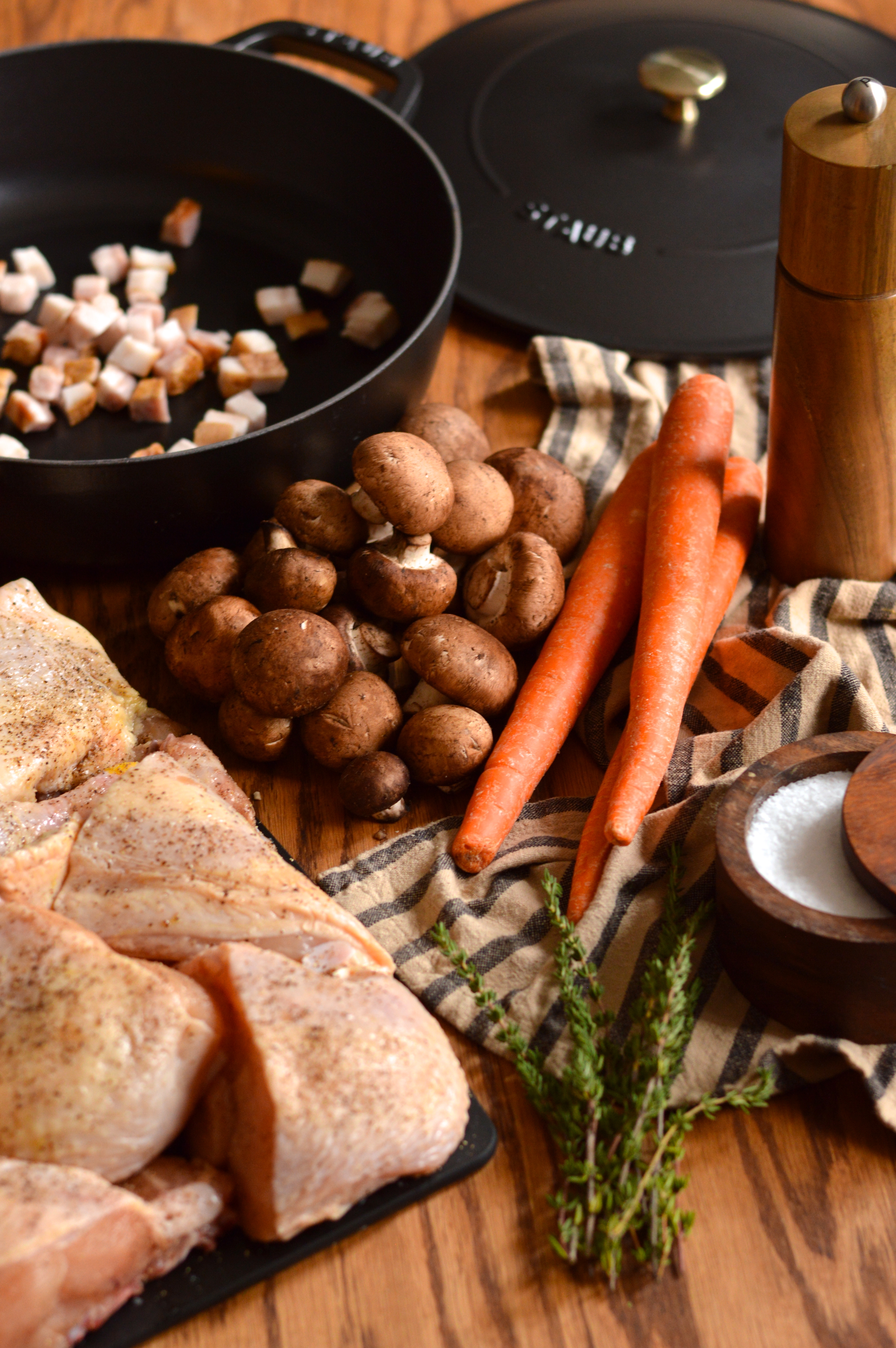
I’m going to channel my inner Ina and tell you that if you’re going to make this recipe, it pays to splurge on good ingredients. Use good wine, fresh thyme, and nice plump fresh mushrooms. If you can, get a nice thick whole chunk of bacon and dice it into thick lardons yourself. The size and texture just stands up better to low and slow cooking. If you can’t though, don’t let the bacon stop you. Seriously.

And, if you can, get a really really good chicken. If you can find an organic air-chilled chicken, go for it. They’re a little bit pricier but they have a much better flavor and the fat renders out of the skin better since the chicken hasn’t soaked in (and absorbed) water during processing. I won’t get into the specifics of chicken processing, but rest assured that (for many reasons) it’s worth your while to look for chicken that says “air chilled” on the package.

classic coq au vin | Brooklyn Homemaker

I was looking forward to butchering the chicken myself and showing you the process, but my market was out of whole air-chilled chickens but did have them pre-butchered for the same price. Sorry guys! Some other time.

If you don’t want to butcher your own chicken, your butcher will probably do it for you. Ask them to split the breasts. If you don’t want to use all the parts of the chicken, you can also do this with a mix of breast and thighs, or all thighs, or all breasts. It is important for flavor though, that everything is still on the bone with skin, and for even cooking you’ll need to have all the breasts cut in half.

classic coq au vin | Brooklyn Homemaker

This recipe is definitely worth all the hype. It’s rustic and homey and rich and sublimely satisfying.

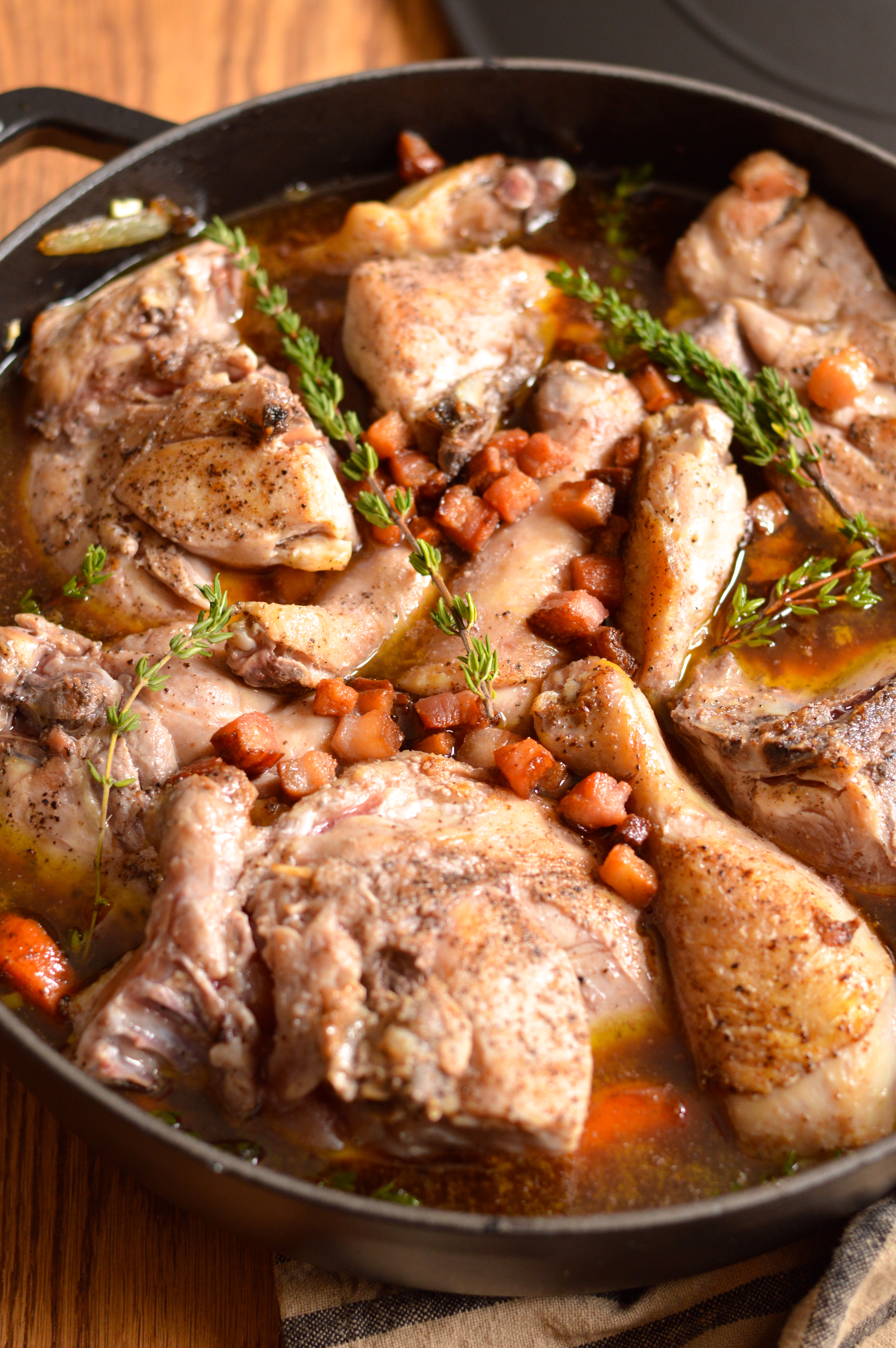
I know that people always assume that all French food is fussy and stuffy and unattainable, but it’s not (always) true! French country dishes like Coq au Vin or Boeuf Bourguignon are actually really simple, comforting and filling. If you’re completely unfamiliar, Coq au Vin is a country chicken stew made with carrots, bacon, red wine, and mushrooms. It’s incredibly hearty and earthy, like some of the best comfort food you could ever want; like a warm cozy blanket made of chicken braised in red wine. The chicken is falling-off-the-bone tender and bursting with the rich bold flavors of the wine and thyme and mushrooms, and the sweet tender carrots and pearl onions balance the richness perfectly.

Just make sure you have enough wine to last you while you’re cooking and still have some left for serving!

classic coq au vin | Brooklyn Homemaker

Classic Coq Au Vin

  • Servings: 4 to 6-ish
  • Print
adapted from Ina Garten for Food Network

4 ounces thick cut bacon or pancetta, diced
1 (3 to 4-pound) chicken, cut into 8 pieces (breasts sliced in halves)
Kosher salt and freshly ground black pepper
1/2 pound carrots, cut into thick rustic pieces
1 yellow onion, sliced
1 teaspoon chopped garlic
1/4 cup Cognac
2 cups good dry red wine (preferably Burgundy)
1 cup chicken stock (homemade if possible)
10 fresh thyme sprigs
5 tablespoons unsalted butter, divided
1/4 cup all-purpose flour
1/2 pound frozen pearl onions
1/2 pound cremini mushrooms, stems removed and thickly sliced

Preheat the oven to 250 degrees F.

Pat the chicken pieces dry with paper towels and season liberally on both sides with salt and pepper.

Heat a large heavy-bottom Dutch oven or braising pan over medium heat. Add the bacon and cook for 8 to 10 minutes, until fat is rendered and bacon is crisp. Remove the bacon to a plate with a slotted spoon. If you have more than a tablespoon or two of bacon fat in the pan, pour off and reserve to use later in place of the butter.

When the bacon is removed, brown the chicken pieces in batches in a single layer for about 5 minutes, turning to brown evenly. Don’t crowd the chicken, just do two batches. Remove the chicken to the plate with the bacon and continue to brown until all the chicken is done. Set aside.

Add the carrots and sliced onions to the pan with 2 teaspoons salt and 1 teaspoon pepper and cook over medium heat for 10 to 12 minutes, stirring occasionally. Add the garlic and cook for 1 more minute. Add the Cognac and put the bacon, chicken, and any juices that collected on the plate back into the pot along with the wine, chicken stock, and thyme. Bring to a simmer on the stovetop, cover the pot with a tight fitting lid, and place in the oven for about 40 minutes, or until the chicken is just done. Remove from the oven and move back to the stovetop.

Mash 4 tablespoons of butter (or reserved bacon fat) and the flour together and stir into the stew. Add the frozen onions and bring the stew back up to a very low simmer. Add the remaining 1 tablespoon of butter (or bacon fat) to a separate medium saute pan, and cook the mushrooms over medium-low heat for 5 to 10 minutes, until browned and liquid cooks off. Stir the mushrooms into the stew and simmer for another 10 minutes. Season to taste.

Serve over mashed potatoes, rice, pasta, or cous cous.

braised chicken thighs with mushrooms and creamy polenta

When I first met my husband he was convinced that he was “allergic” to mushrooms.

braised chicken thighs with mushrooms and creamy polenta | Brooklyn Homemaker

He had somehow lived his entire life believing that mushrooms, along with a few other foods, caused a very slight allergic tingle in his throat that (in his words) made him go “eh”. When he described the reactions to his “allergies” to me, I knew immediately that he was full of it. I myself have always loved mushrooms though, so I made it my mission to convince him that these food allergies were all in his head.

braised chicken thighs with mushrooms and creamy polenta | Brooklyn Homemaker

I was relentless. We had just started dating, so he didn’t yet know just how stubborn and determined I can be when I think know I’m right, and he was eventually forced to give in to reason and logic. While he finally admitted that most of the foods in question were ones that he just didn’t like, mushrooms ended up being something that he decided were worth giving another try.

braised chicken thighs with mushrooms and creamy polenta | Brooklyn Homemaker

To my surprise (and delight) he ended up loving them! I don’t even really understand where he’d picked up the idea he didn’t like (or was allergic to) mushrooms in the first place, but now we eat them all the time! No throat tingle, no “eh”.

I think that adding mushrooms to a dish is an easy and affordable way to add a hearty richness to foods that might otherwise be bland and boring. I always find myself wanting to “beef up” my dinners with the meaty earthiness of mushrooms as soon as the weather starts to turn cold. As much as they’re kind of assertive and distinct, mushrooms also seem to be incredibly versatile and go with a huge variety of foods and flavors.

braised chicken thighs with mushrooms and creamy polenta | Brooklyn Homemaker

Back when I was single, and tended to spend more of my money on barhopping than recipe planning, I used to use mushrooms as a way to either stretch whatever protein I was cooking, or replace it altogether. When I was in the mood for something that felt sort of decadent and “fancy”, but didn’t have much time or money to spend on it, I loved to sauté mushrooms in butter and pile them up over some creamy polenta.

If you’re not familiar with polenta, you need to be. It’s super easy and cheap to make, and only takes about 20 minutes. It’s little more than cornmeal porridge, but the addition of chicken stock and a little butter and cheese make it somehow seem wonderfully rich and elegant. Creamy polenta tends to be the simplest and easiest preparation, but if you let it set up and get firm after cooking you can even slice it and grill, bake, or fry the wedges or sticks.

braised chicken thighs with mushrooms and creamy polenta | Brooklyn Homemaker

While white buttons used to have the mushroom monopoly, these days you have a few more options at the grocery store than that. While I do like their texture, I think that buttons tend to be a bit bland, so if you want to use them I’d suggest mixing them with another, more flavorful, variety. If you’re really into mushrooms and want to play with flavors and textures, go wild and use a mix of trumpets, hen-of-the-woods, and shiitakes (just be sure to remove the stems). Some of those varieties can be a bit on the pricier side though, so to get a big bang for a little buck I like to use a mix of creminis and portobellos.

braised chicken thighs with mushrooms and creamy polenta | Brooklyn Homemaker

The best part of this meal is how cheap and easy it is to throw together. You can have dinner on the table in under an hour, and everything that goes into it is super affordable. I’m sure I sound like a broken record here, but chicken thighs are my absolute favorite. Besides being cheap, they’re also way more flavorful than breasts and have a much nicer texture and don’t dry out when they’re cooked through.

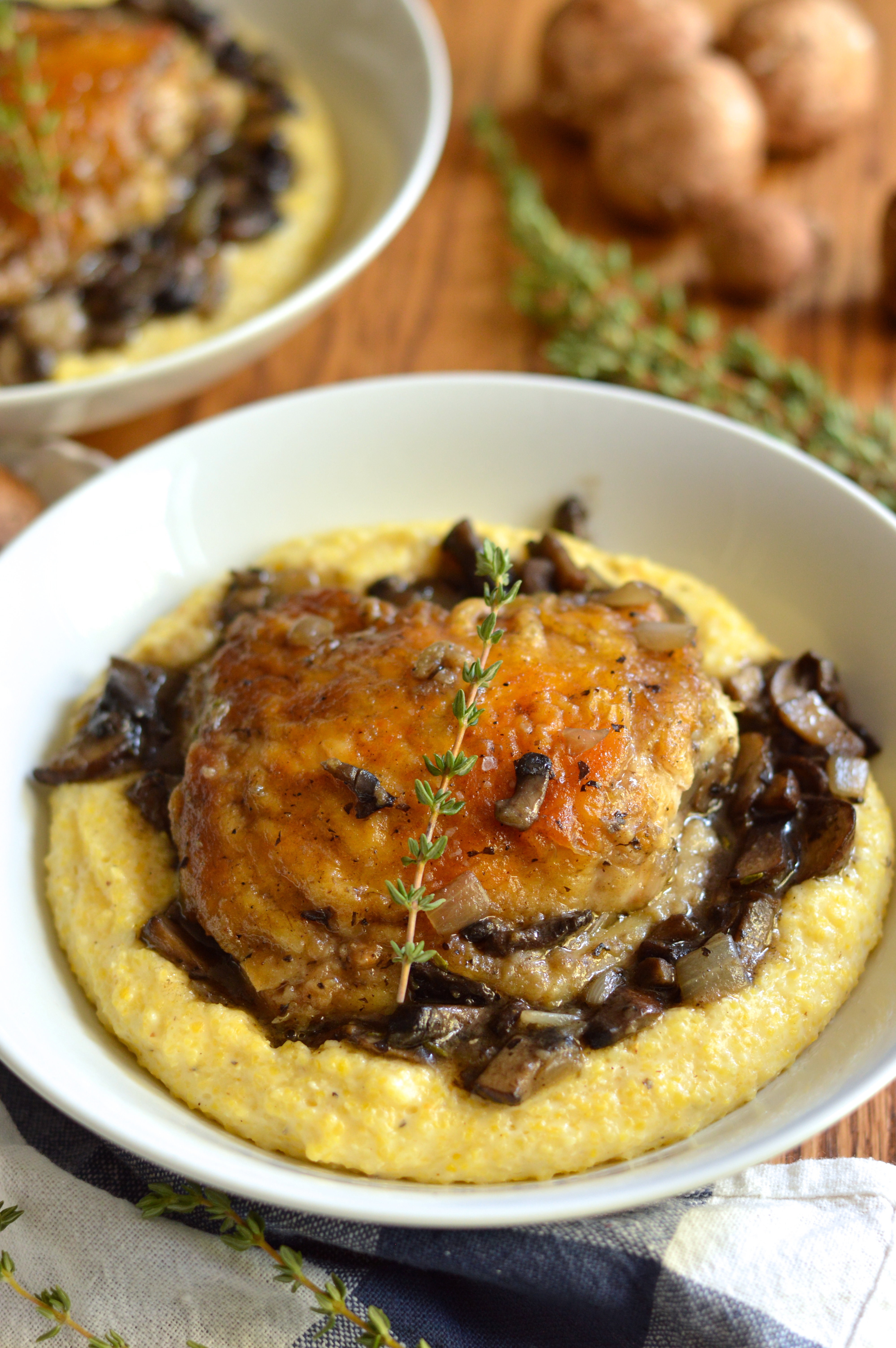
This meal is perfect for fall. The chicken thighs are tender, rich, and super flavorful. The mushrooms have a great rustic meaty flavor and texture and help make this meal feel really filling and substantial. The wine adds a really subtle fruitiness and helps build depth, while the thyme adds a distinctive earthiness. Polenta is the perfect creamy complement to all the rich and solid flavor going on here.

braised chicken thighs with mushrooms and creamy polenta | Brooklyn Homemaker

Braised Chicken Thighs with Mushrooms and Creamy Polenta

2 lbs (about 4 large or 8 small) chicken thighs, bone in & skin on
salt and pepper
1/4 cup flour
1 tablespoon butter
1 medium onion, finely chopped
1 lb (16 oz) mushrooms, thinly sliced (I used a mix of cremini and portobello)
3 or 4 sprigs fresh thyme
1/2 cup white wine
1/2 cup chicken stock

Creamy Polenta:
2 cups chicken stock
1 cup water
1 cup milk
2 tablespoons butter
1 cup coarse yellow cornmeal
1/4 cup grated parmesan cheese

Generously season chicken thighs with salt and pepper. Coat each piece with flour in a small dish and set aside. Preheat a large cast iron skillet over high heat, melt the butter and add the chicken pieces, skin side down. Brown each piece for 5 minutes on each side and remove to a plate to rest. Add onions and mushrooms to pan and season with salt and pepper. Sauté until the mushrooms give off their liquid, and continue to cook over high heat until liquid is almost completely reduced, about 10 minutes. Stir in the wine and chicken stock. Gently press the chicken pieces down into the mushrooms, and add the thyme sprigs. Reduce heat to just shy of medium and let simmer until liquid is reduced and chicken is cooked through, about 20 or 25 minutes.

Meanwhile, make the creamy polenta. Heat the stock, water, & milk to a low simmer in a medium saucepan. Generously season with salt and pepper. Gradually whisk in the cornmeal making sure there are no lumps. Stir regularly until the polenta is very thick and creamy, about 20 minutes. Remove from heat and stir in grated cheese. Taste and adjust seasoning if necessary.

Once chicken is cooked through, remove thyme sprigs. Spoon polenta into a bowl and top with mushroom mixture and some reduced liquid. Top with a piece (or two if small) of chicken.

roasted chicken and wild rice soup

So I mentioned this last week, but I recently came down with a nasty case of the flu.

roasted chicken and wild rice soup | Brooklyn Homemaker

Work has been really crazy lately with all kinds of things in transition and I’ve been feeling a little run down. We just hired two new people, and on their first day I woke up feeling pretty terrible. I thought it was just my allergies so I took a Zyrtec and went about my day, but few hours in I knew that it was worse than that. Being in the midst of training new staff I didn’t have any other option than to stick it out and hope things would turn around, so I just tried to power through. I ended up leaving work early anyway though, and I didn’t return for several days.

roasted chicken and wild rice soup | Brooklyn Homemaker

As soon as I got home I knew I was in real trouble. Up until that point I assumed I’d just caught a cold and that all I needed was to take it easy and get a good night’s sleep. When I got home though, I hit the couch like a ton of bricks, and didn’t move for hours. When I tried to pull myself up to get some water, I could barely walk. Every muscle in my body felt sore, painful and weak, and I felt as if my legs might give out on my way to the kitchen. I went back to the couch and pretty much remained there for the next few days.

When I say pretty much though, I mean that I did get up a few times to cook myself some food and maybe do some cleaning.

roasted chicken and wild rice soup | Brooklyn Homemaker

Even with my head in a total fog, I make a terrible sick person. I’m very easily distracted and can’t sit still for very long. I find it virtually impossible to nap, sick or not, and even though I was well aware that rest and sleep were the best things for me, I spent most of my time watching old movies and finding things to keep my mind off of being sick. You already know about the brownies, but there was also some seriously tasty chicken soup.

roasted chicken and wild rice soup | Brooklyn Homemaker

Part of me thinks that there’s something kind of depressing about making your own chicken soup when you’re sick, but Russell was at work, and I was bored out of my mind. A man can only watch Steel Magnolias on Netflix so many times before he needs to get up and do something, drippy nose and jelly muscles or not. Having something to do helped me take my mind off of how horrible I felt, and when I was done I had something to eat that made me feel a little bit better.

roasted chicken and wild rice soup | Brooklyn Homemaker

Being sick, I instantly craved chicken soup. There’s a lot of debate on whether chicken soup is actually good for you when you’re sick, or if it’s just an old wive’s tale. If you really look into the research though, it appears that chicken soup is called Jewish Penicillin for good reason.

Any hot liquid will help open up nasal passages and soothe a sore throat, while also hydrating people in need of plenty of fluids, but there are other benefits specific to chicken soup that you can’t get from tea or hot water. Homemade chicken stock is packed with vitamins, minerals, and nutrients that are great for the immune system. It’s also packed with gelatin which does wonders for your body, and lots of schmaltz (chicken fat) that has great immune boosting powers and is packed with much needed energy to help fight illness. There are even studies that say eating chicken soup helps encourage white blood cells to stay where they need to be to fight infection.

roasted chicken and wild rice soup | Brooklyn Homemaker

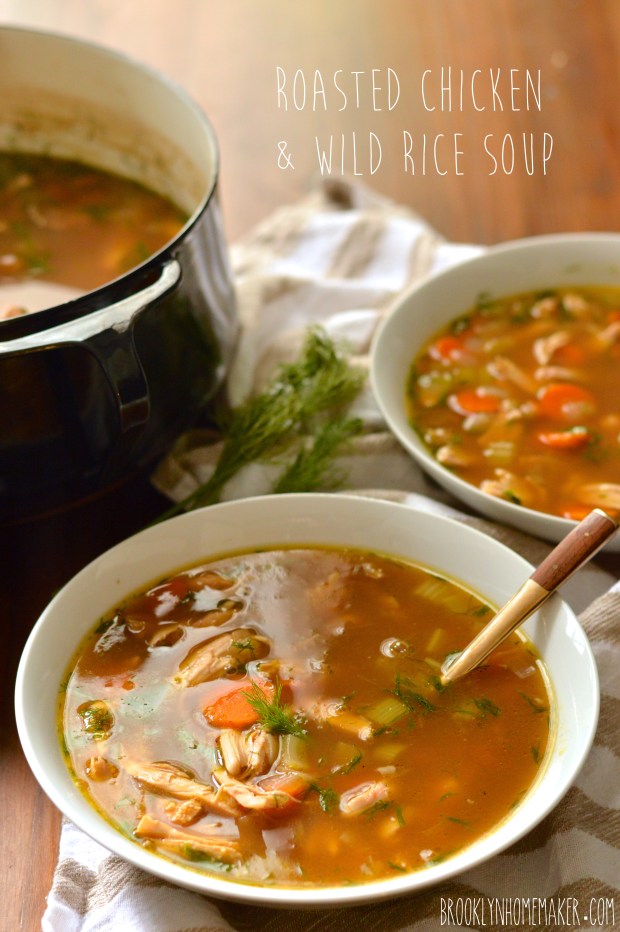
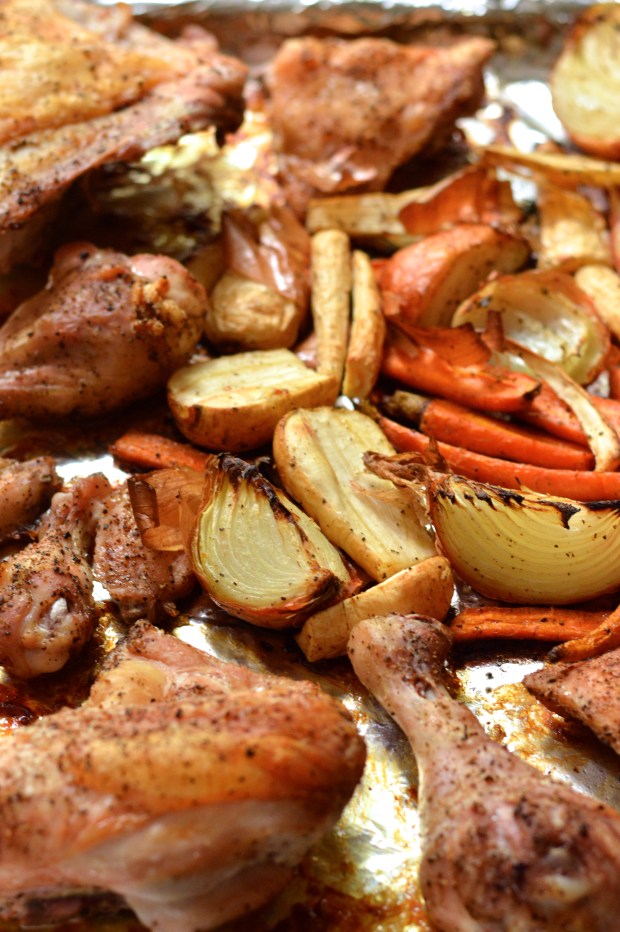
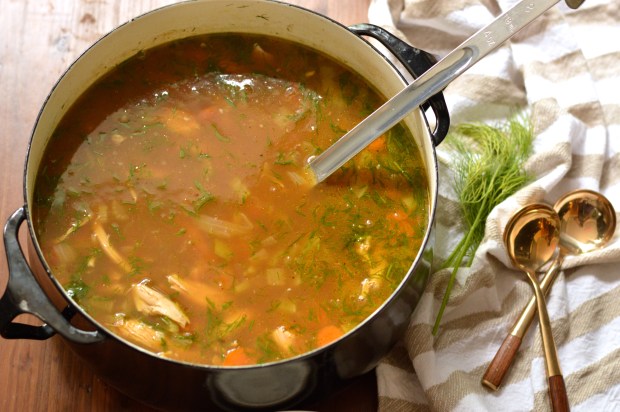
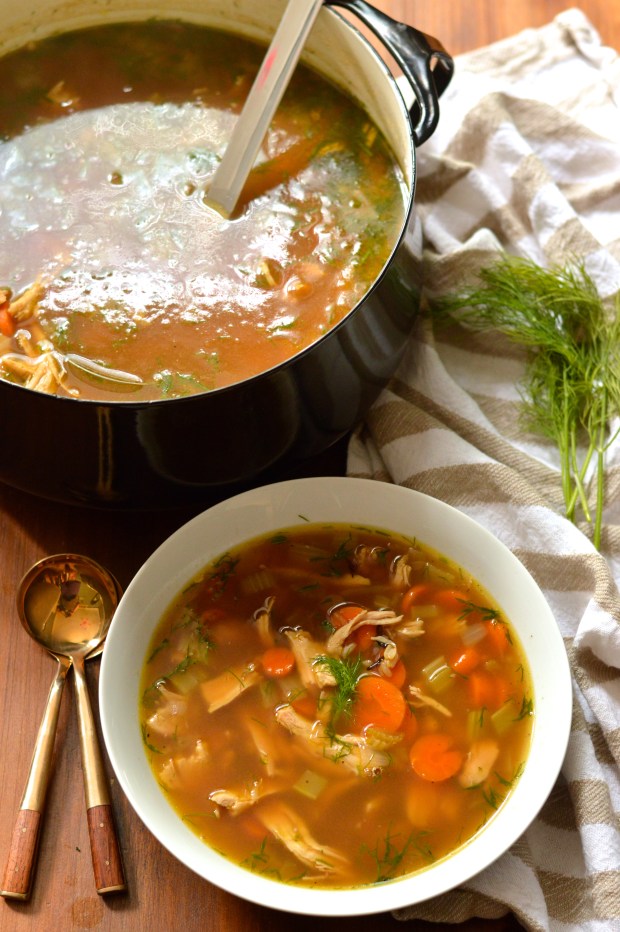
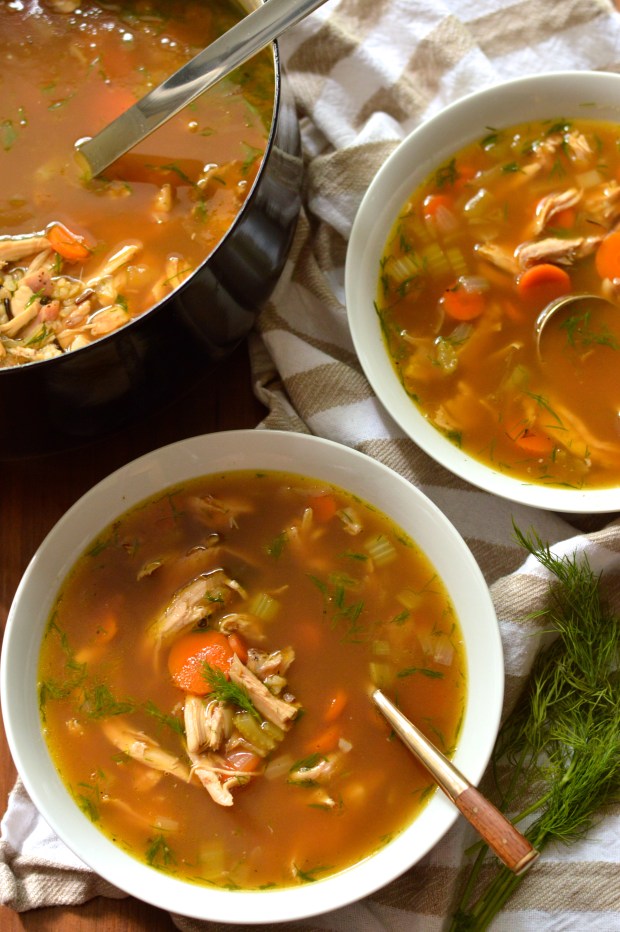
Whether my soup actually helped me get over the flu or not, it certainly hit the spot. Roasting the chicken and the vegetables before making the stock gives the soup a really rich and concentrated flavor. Once the chicken is roasted, the bones and skin can be used to make the stock, and the meat can be refrigerated and added back in once the stock is finished simmering. This ensures that the meat has a great texture, and that it’s super tasty since the flavor isn’t pulled out in the stock making process. Add in tender fresh vegetables, wild rice with a just a hint of bite, and freshly torn dill for some bright summery freshness, and you’ve got a soup that will make anyone feel great, whether they’re sick or not!

roasted chicken and wild rice soup | Brooklyn Homemaker

Roasted Chicken and Wild Rice Soup

3 to 4 pounds of chicken, bone-in & skin-on *see note
3 medium onions
4 carrots
2 parsnips, optional (I just like the earthy flavor it gives the stock)
2 tablespoons olive oil, divided
salt & pepper, to taste
4 stalks of celery
2 bay leaves
1/8 teaspoon celery seeds (optional)
generous fist-full of parsley
1 cup wild rice or wild rice & brown rice medley
2 or 3 tablespoons finely chopped fresh dill

Preheat oven to 450 degrees and line a baking sheet with aluminum foil or parchment. Generously season the chicken pieces with salt and pepper and arrange on the baking sheet, leaving some room for vegetables. Chop two whole onions (skin on) into quarters and place in a medium bowl. Roughly chop 2 parsnips and 2 carrots and add to the bowl with the onions, along with 1 tablespoon olive oil and a generous sprinkle of salt and pepper. Toss to coat and spread evenly on baking sheet with chicken pieces.
Roast chicken and vegetables until well browned and crispy looking, about 40 minutes, being careful nothing burns. Let cool, at least until you can handle the chicken without burning yourself.

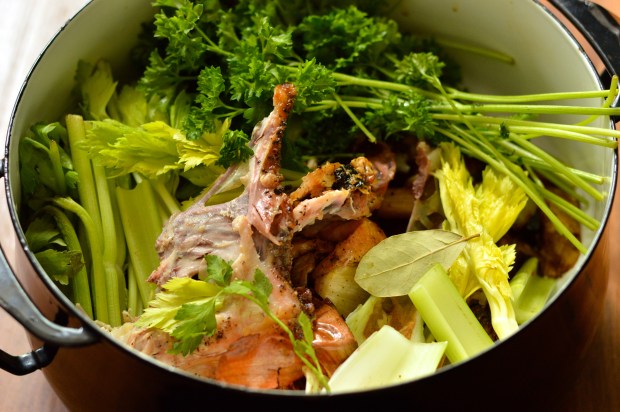
Transfer vegetables to a large (at least 6 quarts) heavy bottom stockpot. Remove skin from chicken and add to pot (resist the urge to eat it all). Pull meat from bones and chop or tear into bite-size pieces; place in a bowl, cover and refrigerate. Add chicken bones to stockpot along with parsley, bay leaves, & celery seed. Roughly chop 2 celery stalks (with leaves on), add to the pot, and cover everything with 12 cups of water. Place over high heat, bring to a low boil, and turn heat down to a simmer. Cover pot and let simmer low and slow for at least 2 hours.

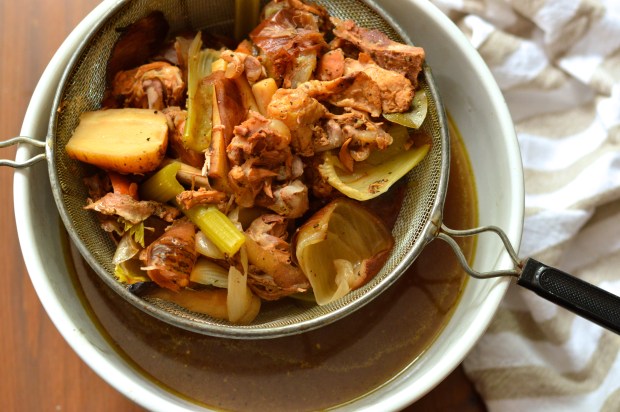
Meanwhile, dice remaining onion and celery stalks, and slice carrots into small bite-sized disks. Strain finished stock into a large bowl with a fine mesh strainer or a colander layered with cheesecloth, discarding boiled chicken bones and vegetables. Wipe out stockpot, add remaining tablespoon of olive oil, and heat over medium high heat. Add chopped onion, celery, & carrot, and sautée until translucent and beginning to brown, stirring regularly, about 5 minutes. Add wild rice or rice medley, stir, and cook for 2 minutes more. Add strained stock, bring to a boil, and reduce heat to a simmer. Simmer until rice is about 10 minutes from being cooked, about 30 minutes. See your rice’s cooking instructions for how long this should take. Add chicken meat to pot along with half of the chopped dill and simmer for 10 minutes more.

Taste and adjust seasoning if necessary. Stir in remaining dill and serve immediately.

*cooks note: I find that dark meat pieces will give your stock the best flavor, but white meat is the nicest meat for the soup, so I like to use a whole chicken cut up into pieces. If you can’t find a broken down whole chicken and don’t want to do it yourself, you can use a mix of thighs and breasts, legs and breasts, or whatever you like.