Updated with new photos and a slightly revised recipe on 9/29/2014 here.
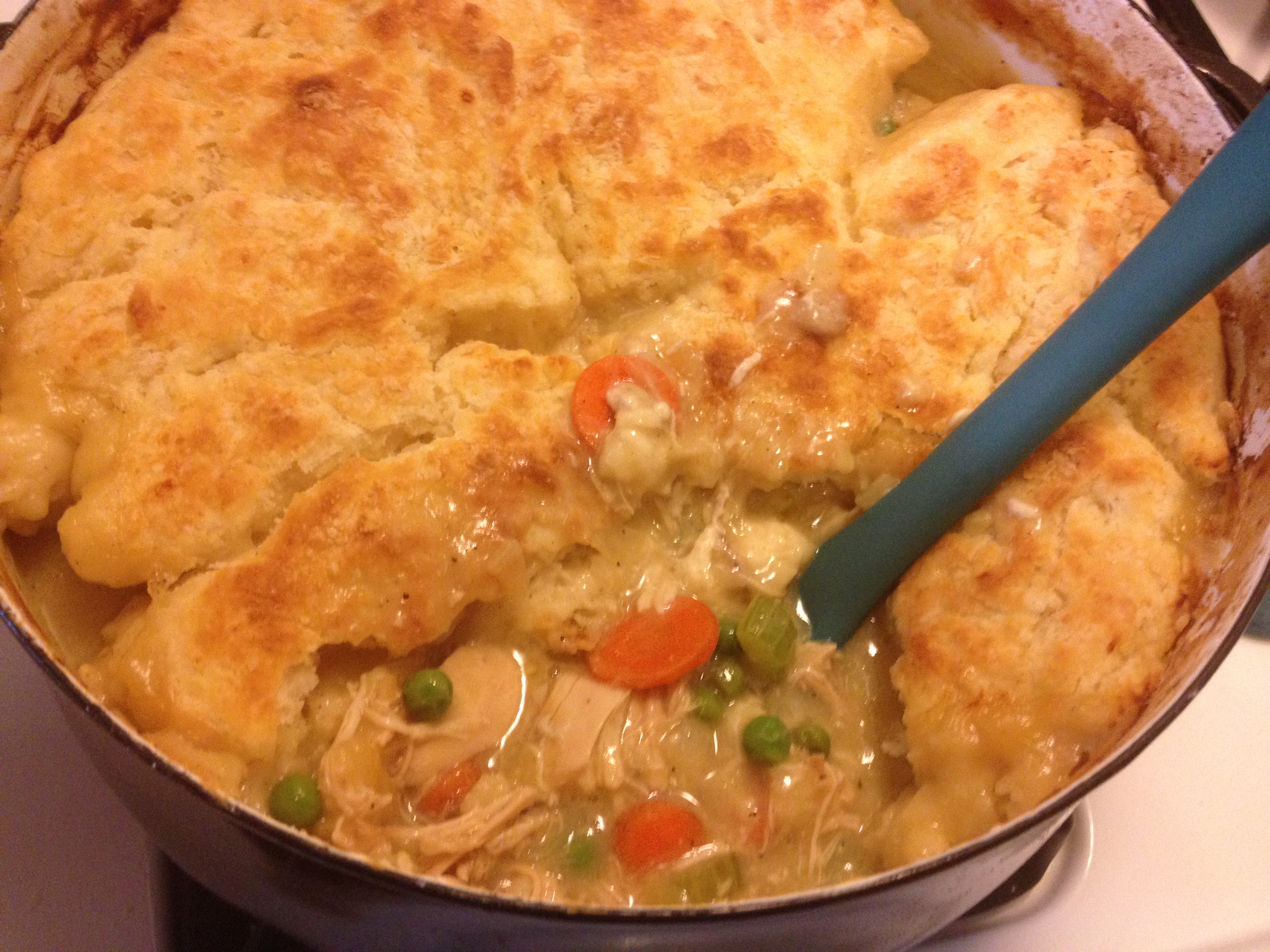
This is not your standard chicken pot pie. There is only top crust here, just resting on top of the filling; and this is no standard pastry crust, but a thick island of tender buttermilk biscuit. If you wanted to complicate things, this could be called a chicken and biscuits pie, or maybe a southern style chicken pot pie. To me, this is what chicken pot pie is supposed to be. This is chicken pot pie the way my grandmother made it, and this was the meal of choice for me and my sisters on birthdays and special occasions.
This was a staple of my childhood and making it is an exercise in nostalgia. When Grandma made it she would boil chicken breasts in bouillon, thicken with a flour & water slurry, add some canned peas and carrots, and top it with Bisquick. When I was learning to cook this was one of the first recipes I tried to master, and as I became a better cook the recipe started to change.

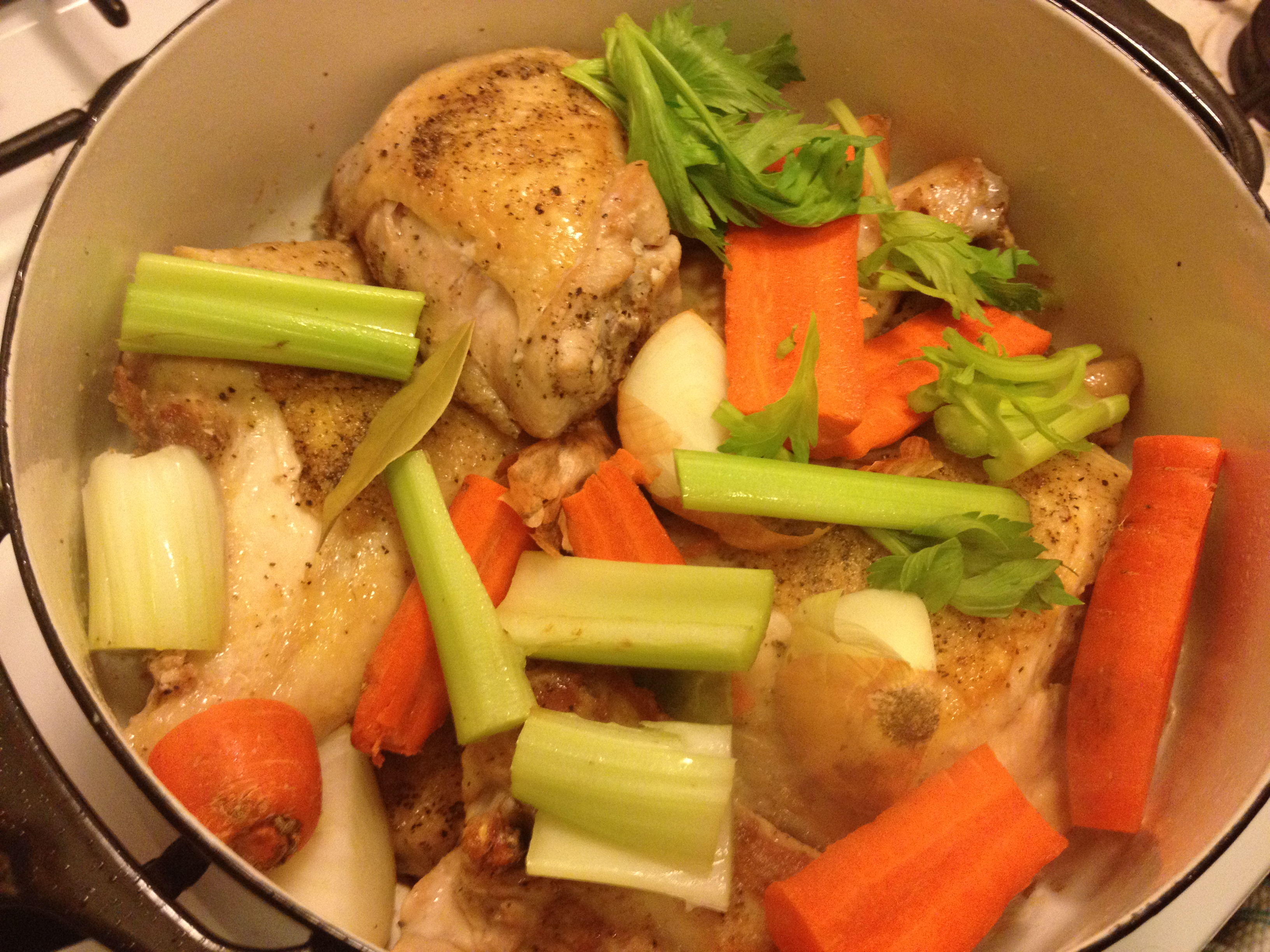
The recipe I’m sharing with you is very different from the one Grandma used to make, but the end result is just as homey and comforting. This is not a quick weeknight dinner, but more of an all-Sunday-in-your-PJs kind of meal. Making fresh chicken stock is probably the biggest change between Grandma’s recipe and mine. I like to start late in the morning, browning the chicken, adding some aromatics, and letting it simmer slow and low for a couple of hours while I go about my day.
For this recipe I used a whole chicken that came cut up and wrapped from my grocery store, but you can use whatever chicken you like. I think a whole chicken or a mix of breasts and thighs will give you the most flavorful end product, but if you or your family only like breast meat, use all breasts. If you’re like me and roast a lot of chickens at home, odds are that you might have some bones or gizzards lying around in the freezer. That’s not weird is it? Anyway, if you do, toss them in too.
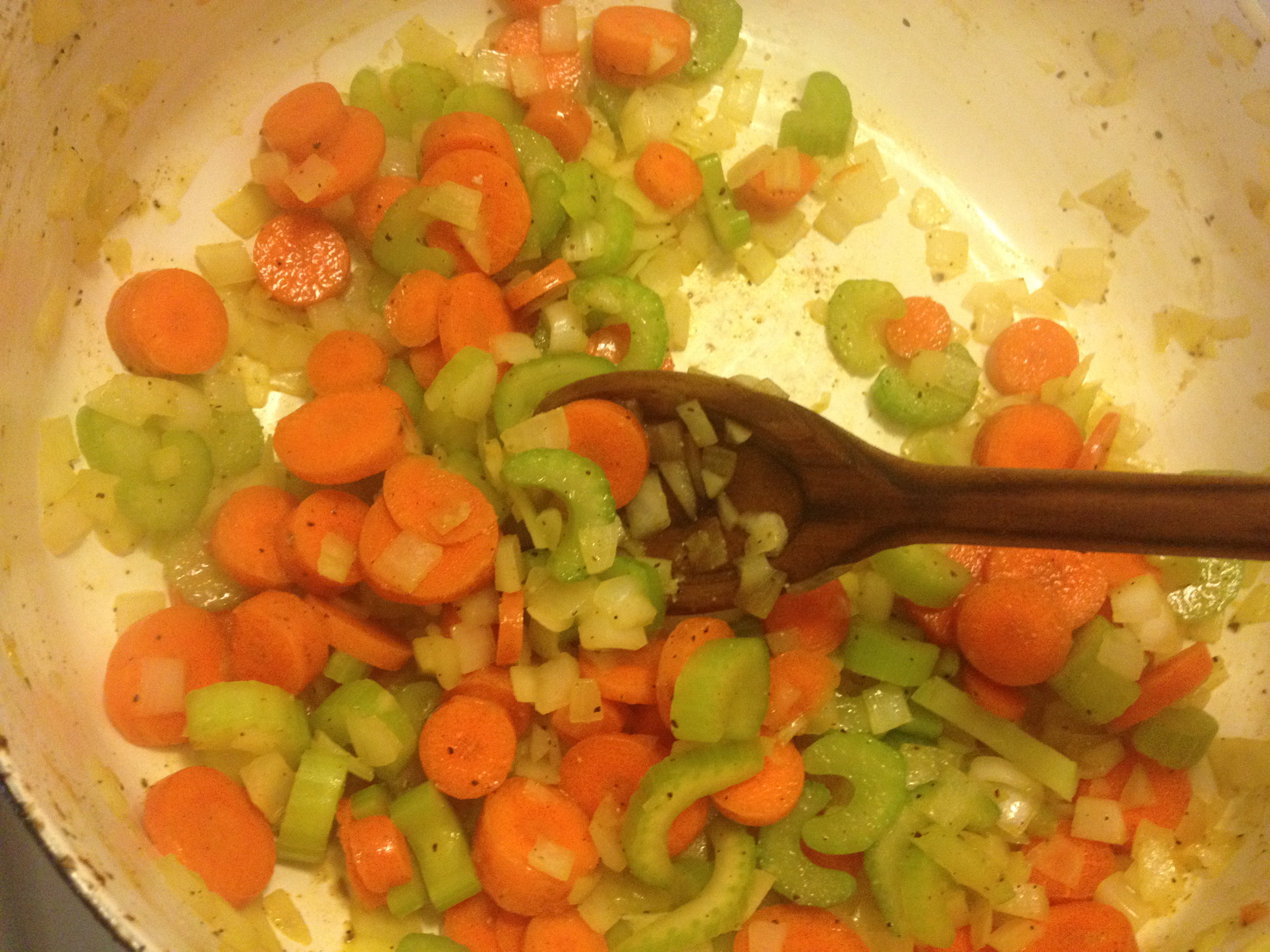
Next I go for fresh veggies, cut rough and rustic, and brown them in the same pan that was used for stock. This is by no means a one dish meal, but unless you want to transfer it to a pretty oven safe bowl for baking and serving, this whole meal from start to finish can be cooked in one pot. After the veggies are cooked I thicken the stock with a roux, add everything back to the pan along with some frozen peas, and top the whole thing with one giant buttermilk biscuit. I think that the gravy should be super thick to work well as a pot pie, so a roux is a perfect solution. With the amount of flour needed to thicken this recipe, you’d be able to taste the raw flour if you used the flour and water method.

Don’t be afraid to make your own biscuits from scratch. If you mess them up, they’re usually still pretty good; and once you master them, you’ll wonder what you were doing with your life before. If you don’t have a pastry blender you can use a food processor, or a fork, or even your hands. If you don’t have cream of tartar, don’t freak. It helps the biscuits rise and get super fluffy, but they’ll still be great without it. The buttermilk however is a must. Trust me.
By the way, this recipe is also PERFECT for leftover turkey. I have a hunch you might have some soon. Pull the meat off first and make your stock with the bones and any extra bits and pieces. Tada!

Chicken Pot Pie with Buttermilk Biscuit Crust
4-5 lbs of chicken pieces, skin-on, bone-in. *see note
salt & pepper
2 tablespoon olive oil, divided
1 bay leaf
2 onions, 1 large, 1 small
3 carrots
3 celery stalks
1 1/2 cups frozen peas
10 tablespoons butter
1 cup flour
biscuit crust:
3 cups flour
4 teaspoons baking powder
1 teaspoon salt
1 tablespoon sugar
3/4 teaspoon cream of tartar
12 tablespoons (1 1/2 sticks) butter
1 1/4 cups buttermilk
Make the filling:
Generously season your chicken with salt and pepper. In a large (at least 6 qt) heavy stockpot or dutch oven, heat 1 tablespoon olive oil over medium high heat. Add your chicken parts and brown them for about 5 minutes on each side. This doesn’t have to be perfect, it’s just to add flavor, but you can do this in stages if everything won’t fit. Roughly chop 1 small onion (skin on), 1 carrot, & 1 celery stalk (leaves on), and add to pot along with one bay leaf. Top with 8 cups of water, and cover the pot. Turn the heat down to medium and bring to a boil. Once the pot reaches a boil, turn the heat down again and let the pot simmer for at least an hour. If you have the time, another hour at a low simmer will only help build the flavor of your stock.
Remove pot from heat and let cool for 10 minutes or until you’re comfortable handling it. Using a large colander fitted inside a larger bowl, strain out the stock. You can use a strainer or sieve to skim the stock for anything that got through the colander. Measure out 6 cups of stock and keep any remaining for another use. Cover and set aside.
Let the chicken pieces cool for about 30 minutes or until you can handle them. You can use this time to chop the remaining vegetables for the next step. Remove the bones and skin from the chicken and discard along with boiled veggies & bay leaf. Pull the chicken into bite sized pieces and be careful to find and remove any small remaining bones. Place your cooked chicken in a bowl, cover and set aside.
Wipe your pot clean. You don’t have to wash it, just make sure there’s nothing in there you don’t want in the finished product. Dice the large onion, and cut your remaining carrots and celery into small pieces. Heat remaining tablespoon of oil over medium high heat and add your chopped vegetables. Season with salt & pepper and cook until onions and celery are translucent and carrots are completely tender. Transfer to the bowl with the pulled chicken.
Back in your pot, melt the butter (you could also use some chicken fat skimmed from your stock) and whisk in flour. Cook until the flour just barely starts to brown. Slowly whisk in about half a cup of your stock, making sure there are no lumps of roux. Repeat twice more and then add remaining stock. Whisk out any lumps and bring to a boil, whisking regularly. When the gravy is well thickened, remove from heat, taste and adjust your seasoning if necessary. Add the chicken, cooked vegetables & frozen peas. Set aside. If your pot is oven safe you can bake your pie in it, or you can transfer to an oven safe bowl for a nicer presentation.
Make the biscuit crust:
Preheat oven to 450 degrees.
In a large bowl sift together flour, baking powder, sugar, salt & cream of tartar. Using a pastry blender, cut the butter into the flour until it resembles coarse pea-sized crumbs. Form a well in the center of the bowl and in buttermilk. Use a fork to stir until just moistened. Do not over mix.
Turn the dough out onto a floured work surface and knead lightly 5 or 6 times, or until it just holds together. Pat or lightly roll dough out to 1/2 of an inch. Form a circle about the size of a your pot or bowl. If you have any remaining dough you can cut it into biscuits and bake separately. You can double the biscuit recipe if you definitely want more on the side. Carefully transfer your biscuit round to the top of your filling and score it with an X in the center using a sharp knife. Bake for 25-30 minutes or until the crust is golden and the filling is bubbling. Any extra biscuits should be rolled to 3/4 of an inch and baked on a sheet pan for 10 to 12 minutes or until golden.
Remove from oven and allow it to cool for 15 minutes before serving. Serve with a nice chunk of crust.
*You can use whatever parts you like best, but I think an entire chicken, cut up into pieces, is perfect. If you like all white meat, use all breasts. If you can’t find an entire chicken cut up and don’t want to get into butchering, I think a mix of breasts and thighs has the best flavor.




 Brooklyn Homemaker