Main Dishes

a healthier cream of mushroom soup

I’ve been craving some good old fashioned cream of mushroom soup for weeks.

 a healthier cream of mushroom soup | Brooklyn Homemaker

When I was growing up I had two working parents, so a lot of my afternoons were spent at my grandmother’s house out in the country in upstate New York. We always ate really well (too well, probably) at Grandma’s house, and lunch was always a big deal. Soup and sandwiches was a pretty popular lunch time menu, but I hated tomatoes when I was young so mushroom soup (from a can of course) was how I rolled.

I don’t know what kid likes mushrooms but not tomatoes, but what can I say. I was a weird kid I guess.

a healthier cream of mushroom soup | Brooklyn Homemaker

When I think of all the gorgeous tomatoes that I missed out on, grown in the bright sunshine of my grandfather’s garden, it makes my heart ache. What was wrong with me? What a sad boring life I led.

One of my great grandmother’s favorite lunches in the summer was a thick-sliced fresh tomato sandwich on white bread with a little mayonnaise and a generous sprinkle of salt. I, however, usually opted for velveeta grilled cheese (baked, not fried) with a bowl of cream of mushroom soup.

Mushroom soup has always felt like a perfect comfort food ever since.

a healthier cream of mushroom soup | Brooklyn Homemaker

I recently dug around for recipes to satisfy my mushroom soup cravings, but I was stopped dead in my tracks by how heavy most of them sounded. I’m sure you know by now that I’m not shy about using real butter and cream, but Jeez Louise! One recipe, from my best-friend-in-my-head Ina Garten, called for a whole stick of butter, a cup of half and half, and a cup of heavy cream!

I knew there had to be a way to make a silky, creamy, rich & hearty cream of mushroom soup without using that much dairy and fat, but was having a hard time figuring it out. Then a friend at work reminded me that I already know the perfect secret ingredient!

a healthier cream of mushroom soup | Brooklyn Homemaker

Aaaaaaaaawwwwwhhhhh! Look at how that beauty glows! Can you hear the angels singing?
a healthier cream of mushroom soup | Brooklyn Homemaker

I’ve already used this trick before, when making corn chowder this summer, and I guess I somehow just forgot about it. When I was whining about how heavy and fattening homemade cream of mushroom soup was, my friend was like, why don’t you just do that roasted cauliflower trick?

Duh!

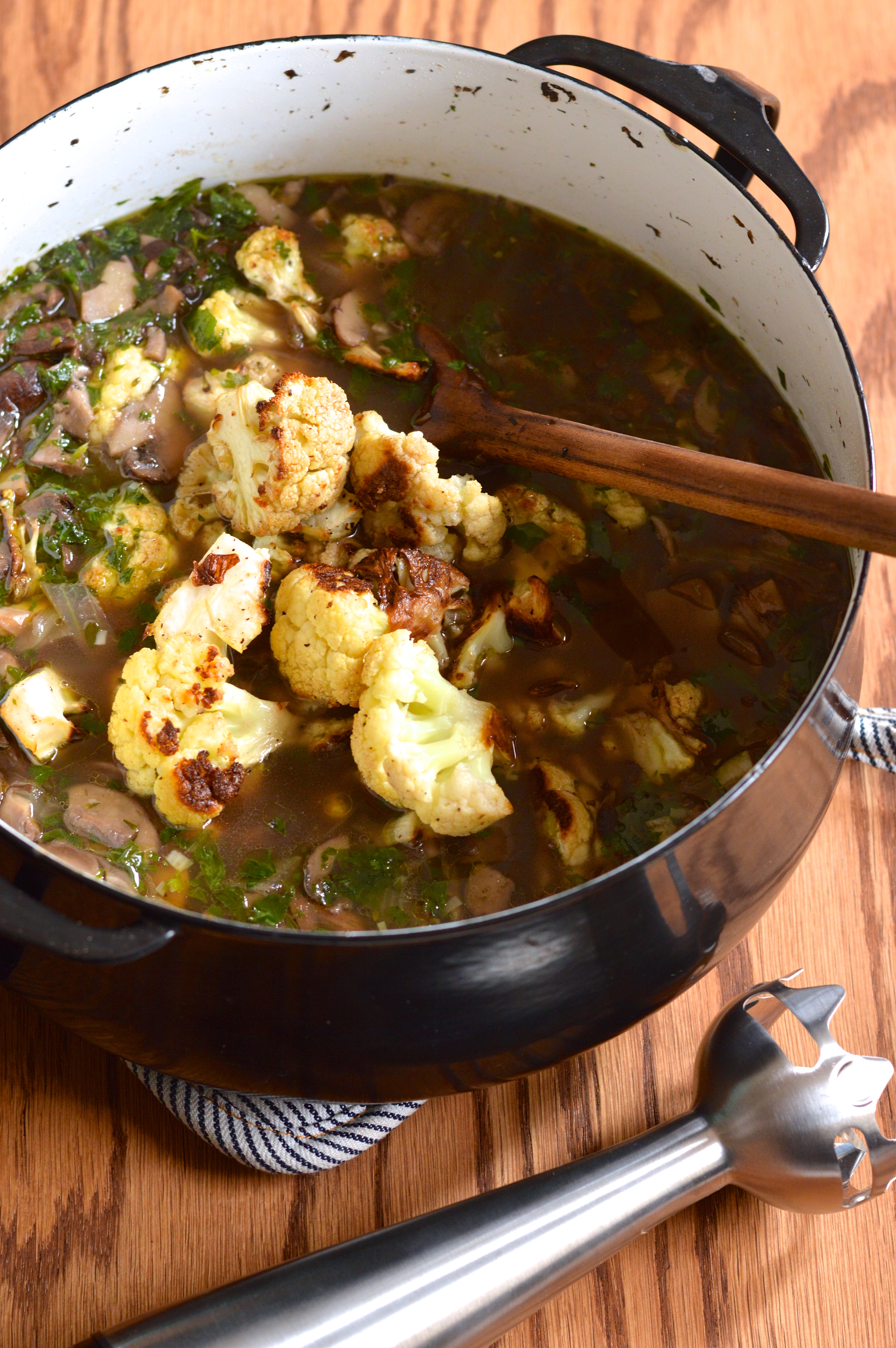
Roasting cauliflower in the oven, rather than boiling it with the rest of the soup, keeps it from tasting cabbage-y, and once pureed super smooth, it adds an unbelievably silky texture that you’d truly never guess didn’t come from cream thickened with a roux. I don’t even understand how or why this works so well, but it really does.

a healthier cream of mushroom soup | Brooklyn Homemaker

I wasn’t intending to make a vegetarian or vegan cream of mushroom soup, just a lighter version, so I went ahead and kept the chicken stock and (some of) the butter. I also intended to add in just a bit of milk or cream at the end, but once the roasted cauliflower was pureed in, I realized I didn’t even need to. With that in mind, I now realize that it would be really easy to make this soup vegan if you want to. Just substitute olive oil or coconut oil for the butter, and vegetable (preferably mushroom) stock for the chicken stock. Since cauliflower is the only thickening agent, this soup also happens to be totally gluten free!

a healthier cream of mushroom soup | Brooklyn Homemaker

This soup is just what the doctor ordered. It’s so earthy and rich and… mushroomy. Using three varieties of flavorful mushrooms makes sure that every bit packs a serious punch. White wine adds a luxe floral note, fresh thyme compliments the woodsy earthiness of the mushrooms, and fresh parsley finishes the soup with bright green herbal flavor. While this recipe is healthier than most, I would never call it a “diet” or “light” recipe because it tastes way too good to be “health food”, and because it does still call for a good bit of butter and olive oil.

Thanks to the pureed roasted cauliflower, this soup feels every bit as rich and satisfying as you could hope. Some of the mushrooms are pureed too, but I like to reserve a few so you get some meaty bites of them every so often. You can use an immersion blender or a standing blender to puree the soup, but I will say that a standing blender seems to get the soup just a bit more smooth and silky. I used an immersion blender though, because it works almost as well and just seems safer, easier, and less messy.

a healthier cream of mushroom soup | Brooklyn Homemaker

A Healthier Cream of Mushroom Soup

2 Tbsp olive oil (divided)
1 small head of cauliflower
salt and pepper to taste
3 Tbsp butter (or coconut or olive oil if desired)
2 1/2 pounds mixed mushrooms (I used cremini, portabello, & shiitake)
1 large onion, finely chopped
3 cloves garlic, minced
1 tablespoon fresh thyme leaves
1 cup dry white wine
4 cups chicken stock  (or vegetable or mushroom stock)
1/4 cup finely chopped fresh parsley

Preheat oven to 400 F. Roughly chop cauliflower into large florets. Toss in 1 tablespoon of olive oil, season with salt and pepper, and arrange in an even layer on a parchment lined baking sheet. Roast for 30 minutes and set aside to cool.

Meanwhile, roughly chop your mushrooms, removing and discarding any thick woody stems (especially the stems of portabello and shiitake). Heat butter and remaining 1 tablespoon olive oil over medium high heat in a large thick-bottomed pot. Once the butter is sizzling, add the mushrooms and thyme, lightly season with salt and pepper, and stir to coat. Cook the mushrooms until they have released most of their liquid. Remove two cups of the cooked mushrooms, letting liquid drain back into pot, and set aside.
Add the onions and the garlic, and cook for about a minute. Add the white wine, chicken stock, and half of the chopped parsley. Bring to a simmer and cook, uncovered, for 15 minutes. Remove from heat and add the roasted cauliflower.
Using an immersion blender or working in batches with a standing blender, purée the soup until completely smooth and silky. Return the pot to the stove, add the reserved cooked mushrooms and remaining chopped fresh parsley. If the soup is too thick, add a bit more stock to thin to the desired thickness. Taste and adjust seasoning if necessary and bring back up to a simmer before serving.
pickled beet and arugula salad with goat cheese and balsamic vinaigrette

I love beets. There’s just something about that sweet and earthy flavor, al dente firm yet tender bite, and intense color that I just can’t get enough of.

Growing up beets were never on the menu, and I’m not sure that I knew what a beet even was until I went off to college. My grandparents were always big gardeners, so you might think that beets would have been part of my childhood experience, but for whatever reason, they weren’t.

pickled beet and arugula salad with goat cheese and balsamic vinaigrette | Brooklyn Homemaker

I don’t really remember the first time I ever ate one, or whether or not I liked it at the time, but eventually I realized that they’re amazing. Oddly enough, part of that beet love may have had something to do with my favorite author. I was in college the first time I heard of Tom Robbins. I was sitting at the bar after a long night waiting tables, sipping on my shift drink and shooting the shit with one of my coworkers about whatever I was reading at the time. Someone a few seats down at the bar overheard us and chimed in, “Have you ever read any Tom Robbins?” I hadn’t, but at the time I wasn’t convinced and didn’t take any steps to change that.

pickled beet and arugula salad with goat cheese and balsamic vinaigrette | Brooklyn Homemaker

A month or so later I noticed a Tom Robbins book on a shelf in a friends apartment, and curiosity finally got the better of me. I asked if I could borrow it, and was instantly hooked. At this point I’ve read almost everything he’s ever written. A few titles I’ve read over and over to the point that my paperback copies are covered in masking tape and would probably disintegrate if I tried to give them another go. The first title I read still remains my favorite, and Jitterbug Perfume is definitely the one title I’ve read more than any other.

It’s also the title that I’ve recommended most, and every time anyone has actually taken my advice and read it, they’ve come back to tell me that they LOVED it with a capital LOVE!

pickled beet and arugula salad with goat cheese and balsamic vinaigrette | Brooklyn Homemaker

I won’t spoil it for you, because I urge you to give it a read yourself if you haven’t already, but I will say that the subject matter is a bit more “fantastic” than I usually go for. I’m not someone who normally enjoys reading fantasy, but Tom Robbins’ fantasy is somehow more about the fantastic and less about the unbelievable or childish. He writes so intelligently and poetically and passionately that I’m completely sucked into Jitterbug Perfume‘s tales of time travel and immortality and individuality and old pagan religions and magic and sex and… perfume.

pickled beet and arugula salad with goat cheese and balsamic vinaigrette | Brooklyn Homemaker

One craggy old root vegetable (the beet) plays an oddly important role in the story. After reading the book for the second (or may it was the third) time, I briefly contemplated getting a beetroot tattoo. I’m sure my mother will back my story up, as she was equally confused and horrified by the idea.

Robbins waxes so poetic about the humble beet that I was immediately, deeply, passionately in love with them. Even if I’d hated them (I didn’t) I’d still have been in love with the idea of the beet. It’s funny. He doesn’t really point out any profound detail about their history, or their nutritional value, it’s just that he uses beautifully vivid language to romanticize them and use them for a metaphor for something bigger. Nothing changed about the reality of beets, but the way I picture them was forever altered.

pickled beet and arugula salad with goat cheese and balsamic vinaigrette | Brooklyn Homemaker

“The beet is the most intense of vegetables. The radish, admittedly, is more feverish, but the fire of the radish is a cold fire, the fire of discontent not of passion. Tomatoes are lusty enough, yet there runs through tomatoes an undercurrent of frivolity. Beets are deadly serious.
Slavic peoples get their physical characteristics from potatoes, their smoldering inquietude from radishes, their seriousness from beets.
The beet is the melancholy vegetable, the one most willing to suffer. You can’t squeeze blood out of a turnip…
The beet is the murderer returned to the scene of the crime. The beet is what happens when the cherry finishes with the carrot. The beet is the ancient ancestor of the autumn moon, bearded, buried, all but fossilized; the dark green sails of the grounded moon-boat stitched with veins of primordial plasma; the kite string that once connected the moon to the Earth now a muddy whisker drilling desperately for rubies.
The beet was Rasputin’s favorite vegetable. You could see it in his eyes.” ― Tom Robbins, Jitterbug Perfume

pickled beet and arugula salad with goat cheese and balsamic vinaigrette | Brooklyn Homemaker

Perhaps one of my favorite ways to prepare (and preserve) beets, is to pickle them. There’s something about adding vinegary acidity to their earthy sweetness that just elevates them.
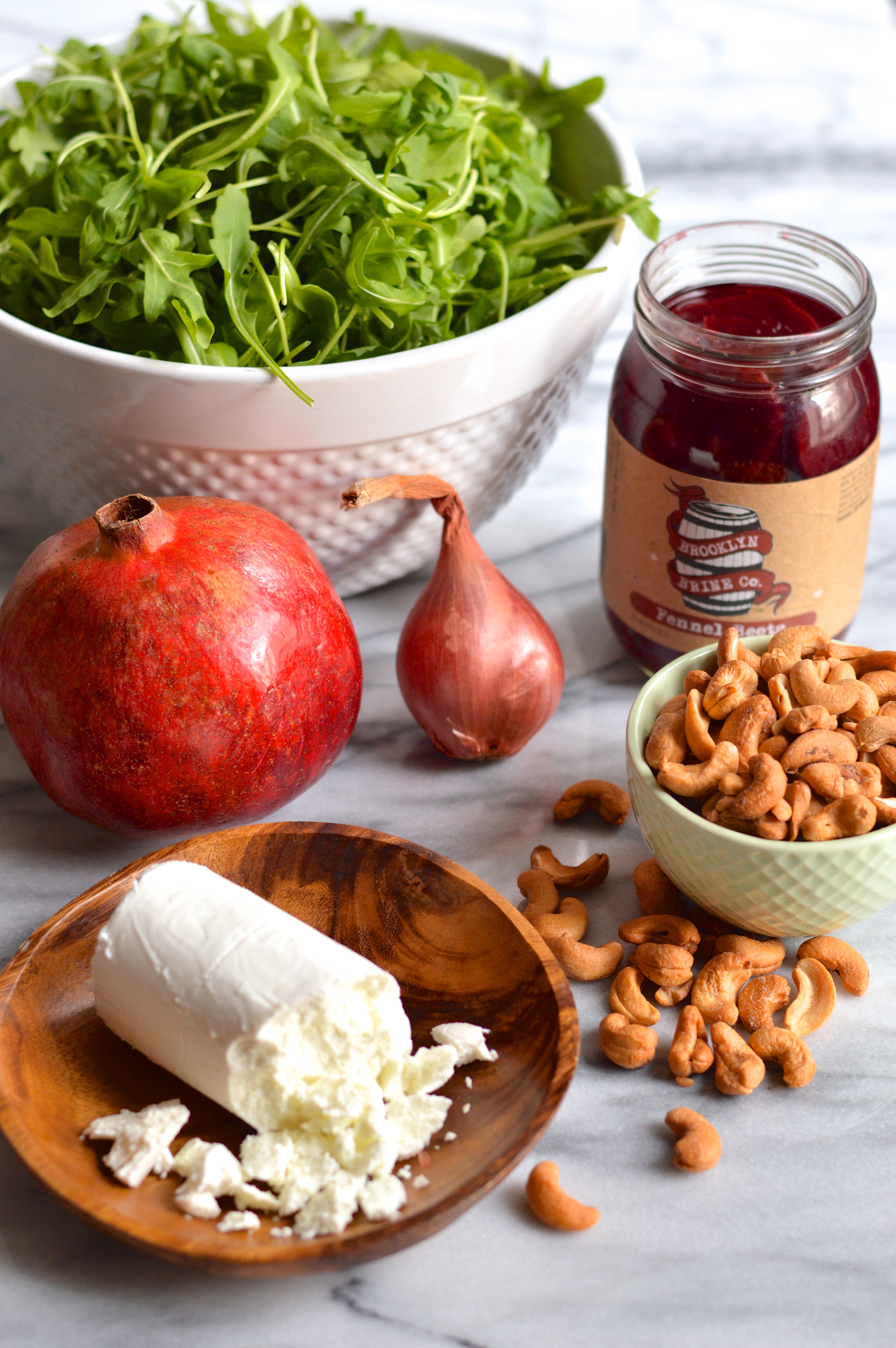
You can pickle your own easily enough, but pickled beets are increasingly easy to find at the grocery store these days too. My own stash from this summer has already run dry, so for this recipe I bought some locally produced beets pickled with fennel.

One of my favorite ways to enjoy pickled beets is to pair them with other sweet, earthy, robust flavors in a bright filling salad. If you want to make this salad feel even more substantial, just top it with some thinly sliced grilled steak or seared chicken breast.

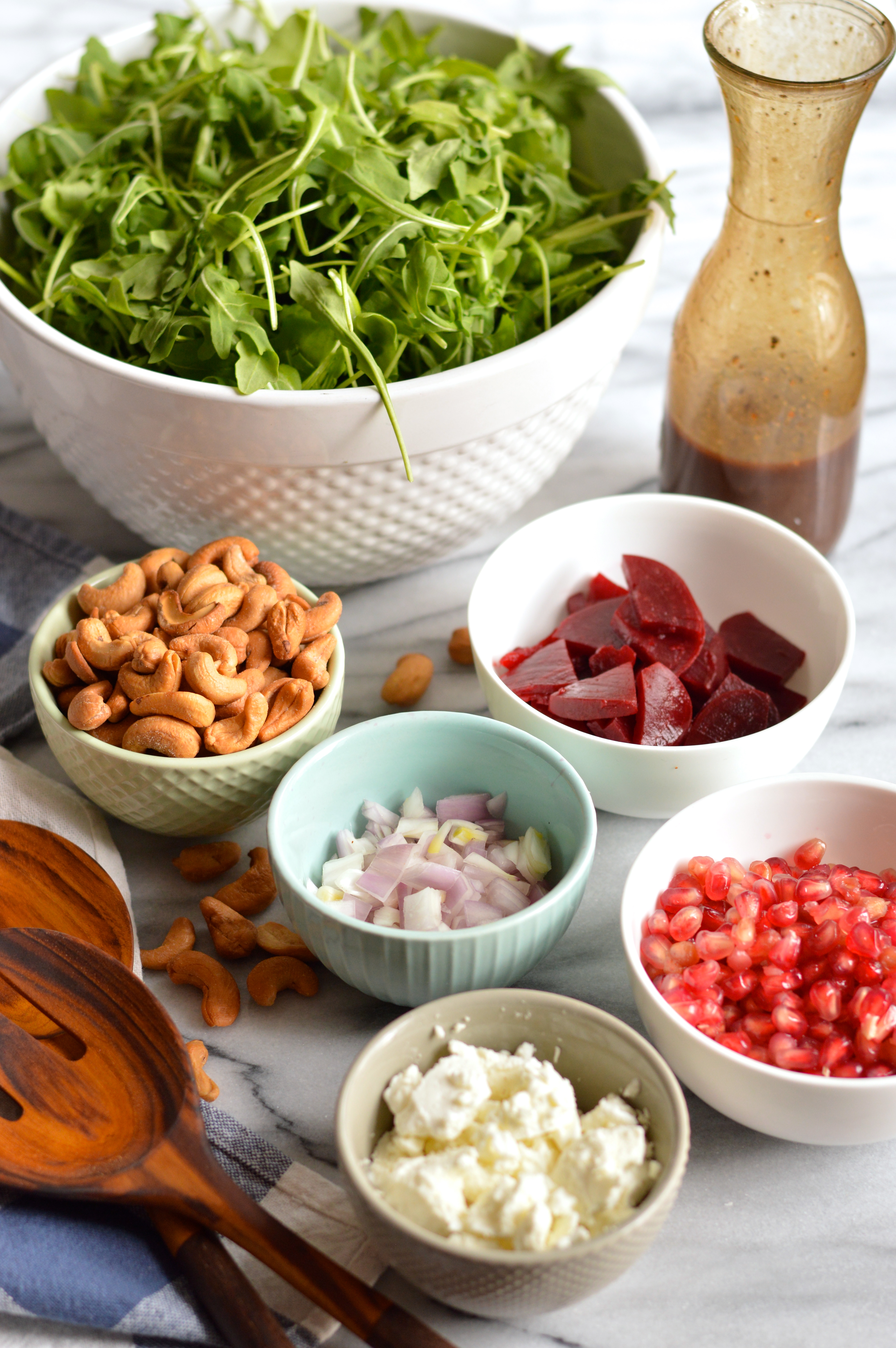
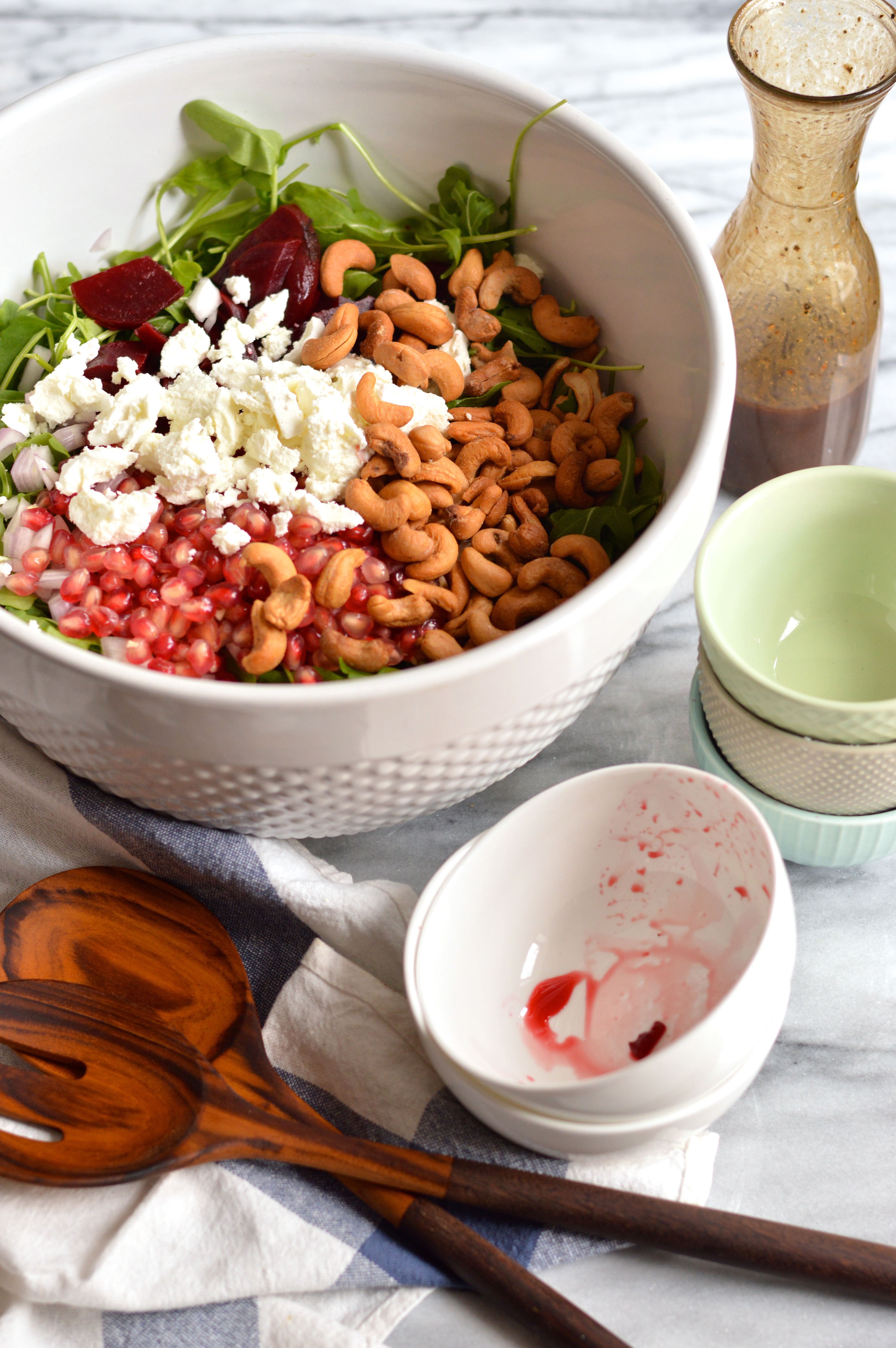
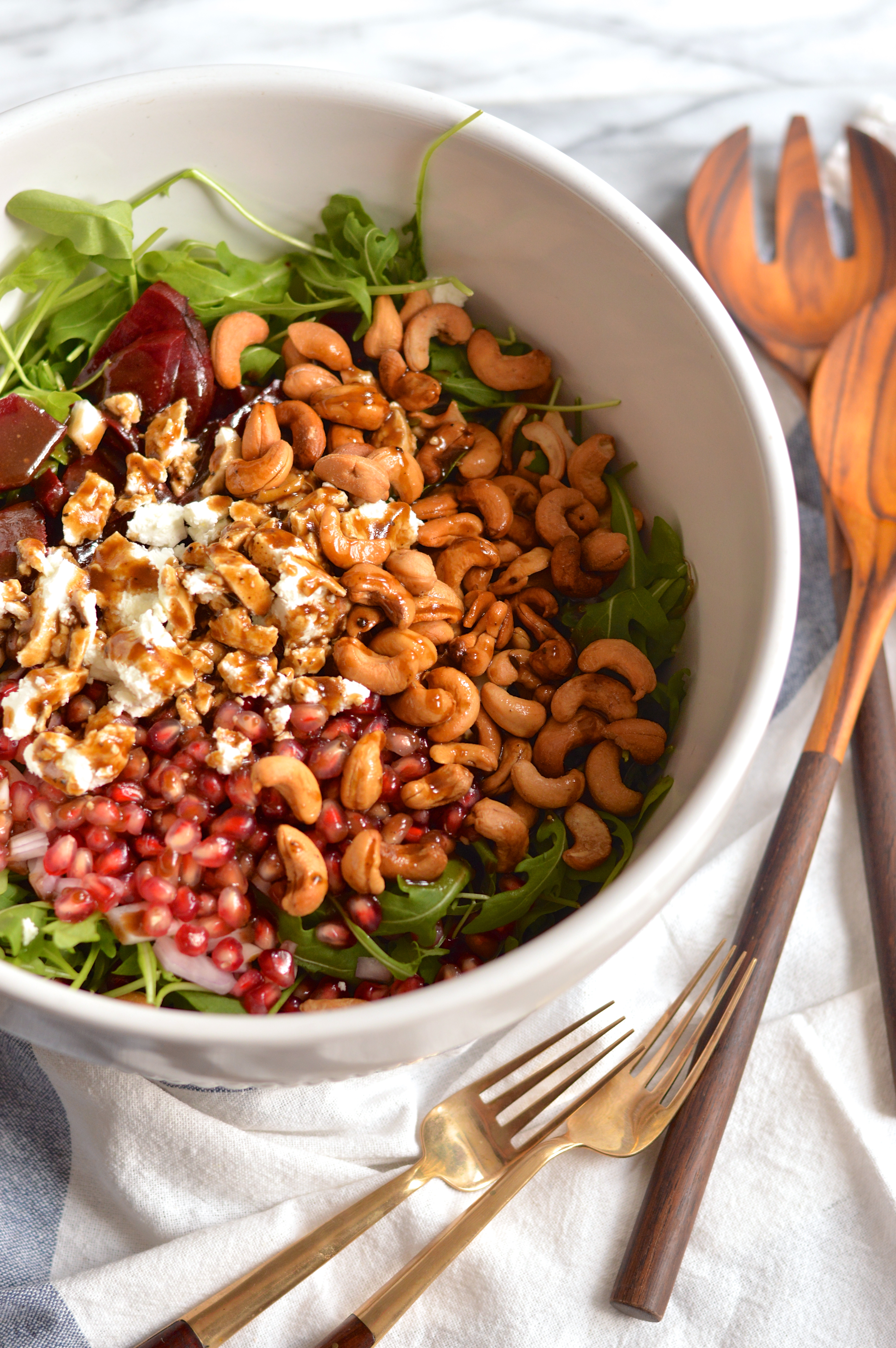
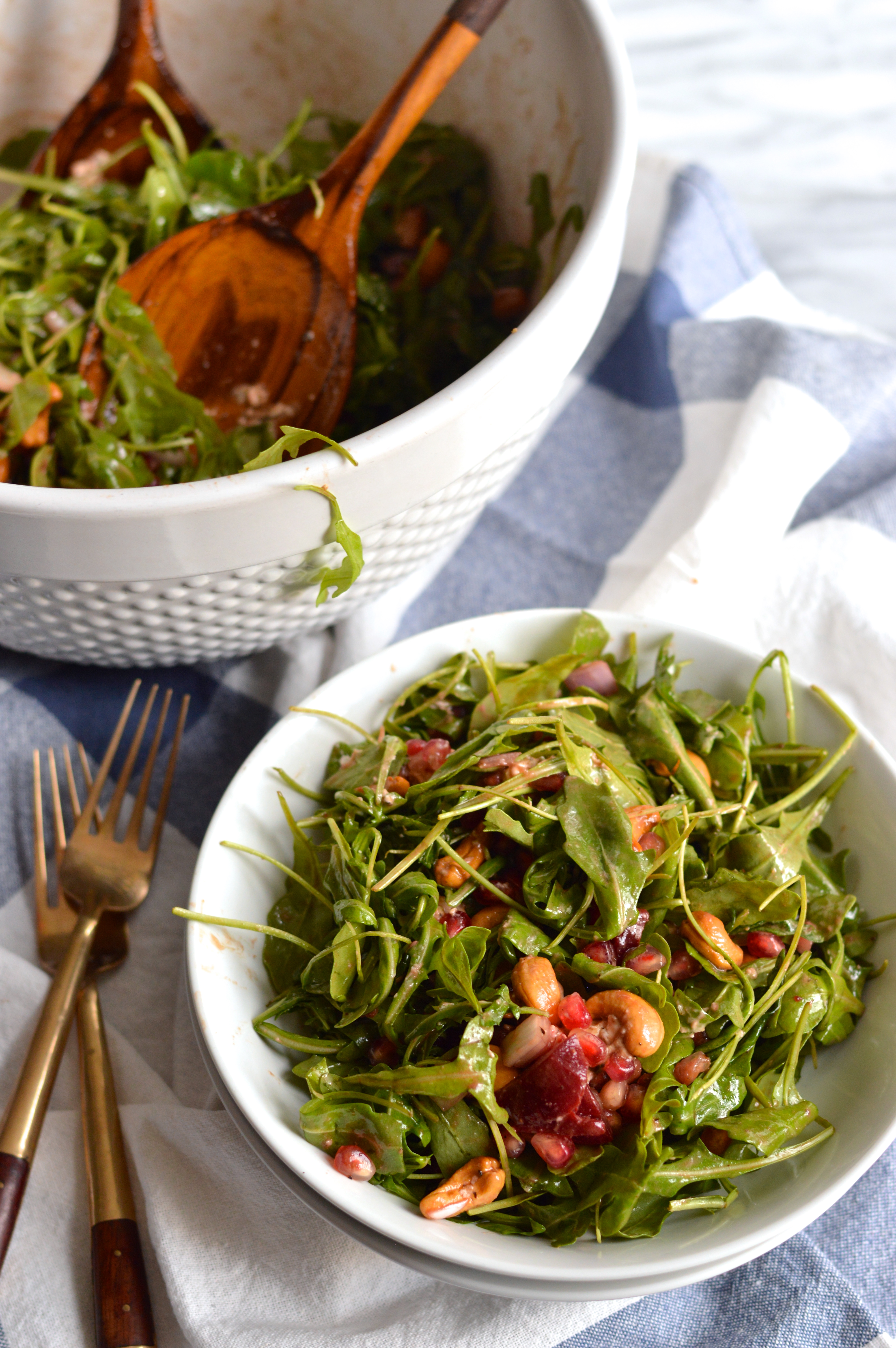
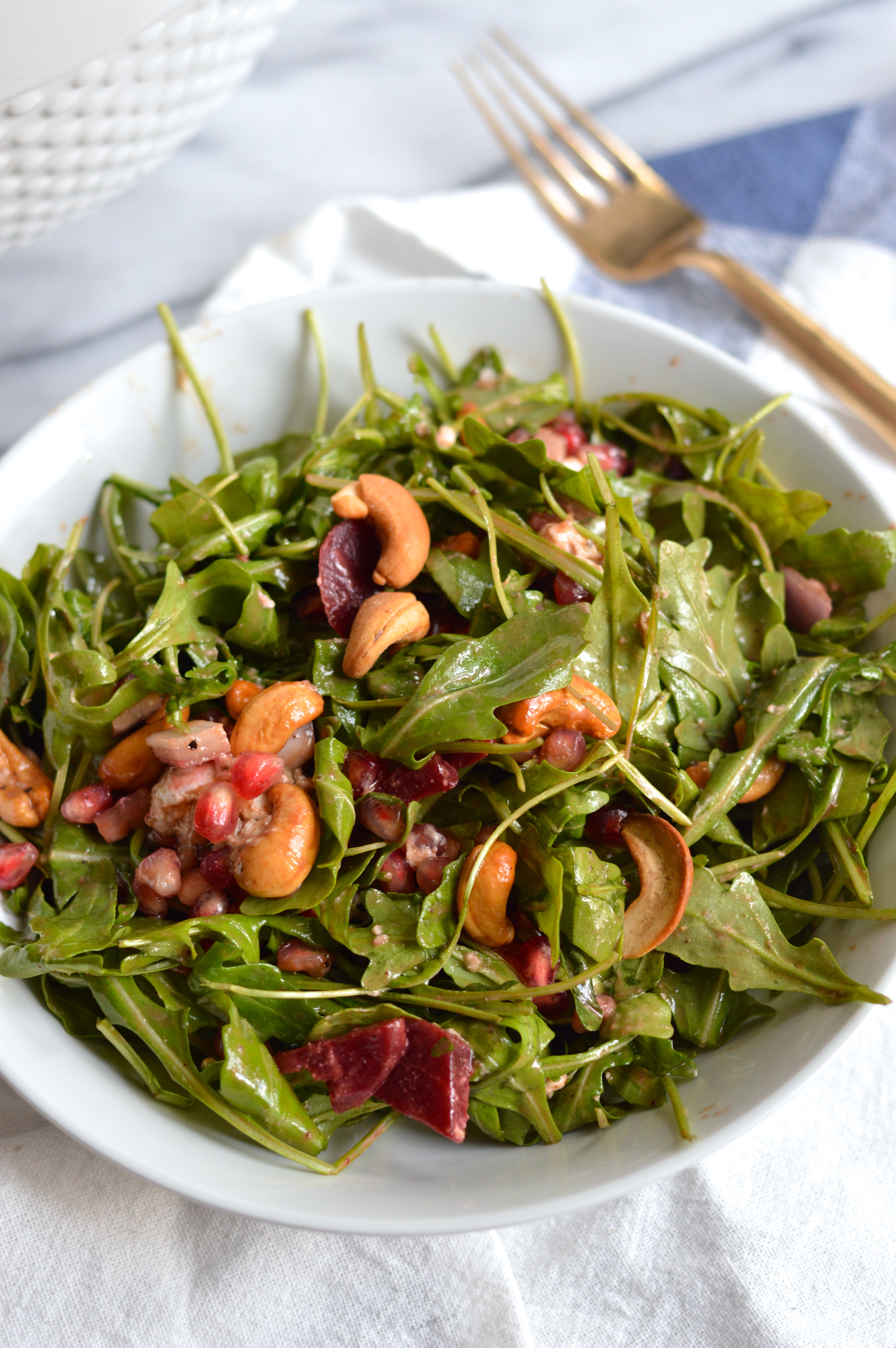
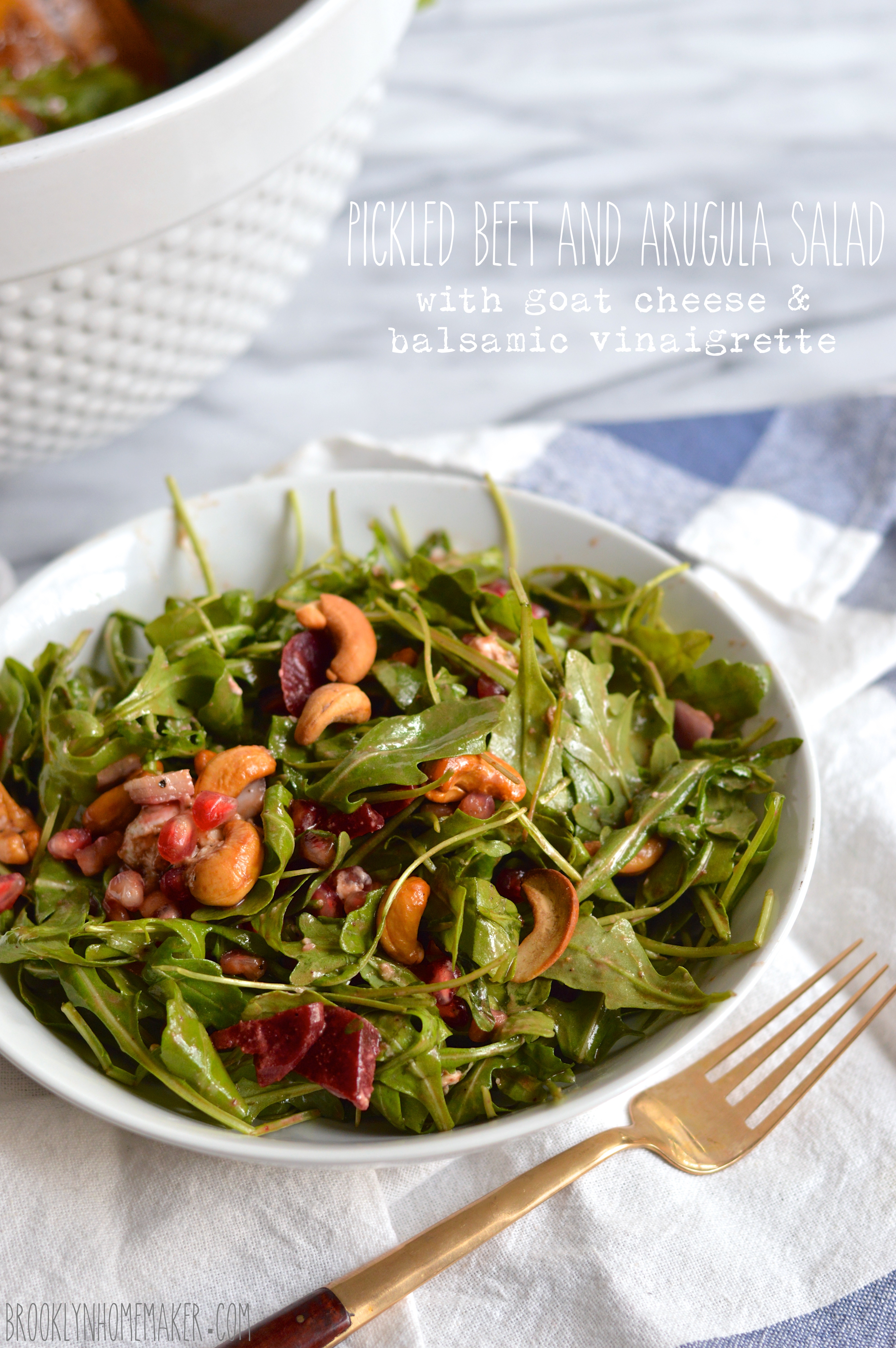
There’s nothing about this salad that isn’t amazing. Peppery fresh arugula, acidic sweet and earthy pickled beets, creamy earthy crumbled goat cheese, bright juicy pomegranate seeds, crunchy buttery cashews, and pungent yet delicate sliced shallot; all tied together with a quick and easy homemade balsamic vinaigrette. It doesn’t get any better than this y’all.

pickled beet and arugula salad with goat cheese and balsamic vinaigrette | Brooklyn Homemaker

Pickled Beet and Arugula Salad with Goat Cheese and Balsamic Vinaigrette

  • Servings: 2 dinner salads, or 4 side salads
  • Print
5 oz (about 4 or 5 cups) arugula
3/4 cup pickled beets (cut into bite-size pieces if not already packed that way)
Seeds of 1/2 a fresh pomegranate (about 1/2 cup) *see note
1 cup toasted cashews
1 small shallot, thinly sliced
2.5 oz crumbled goat cheese (about 1/3 cup)

Dressing:
1/4 cup olive oil
2 tablespoons balsamic vinegar
2 teaspoons Dijon mustard
1 teaspoon honey
salt and pepper to taste

To make the dressing, combine all ingredients in a dressing shaker or small bowl and shake or whisk vigorously until well combined. Set aside.

Combine all salad ingredients in a large bowl and gently toss with about half the dressing. Try not to completely mix in the goat cheese or it’ll kind of just disappear. If you’re happy with the amount of dressing, you’re done. Otherwise, add a bit more until you’re satisfied, and gently toss again. Divide between serving bowls or plates and enjoy.

Any extra salad dressing should last several weeks tightly covered in the refrigerator.

*cook’s note:
My favorite way to get the seeds out of a pomegranate is to cut one in half, firmly grasp one half cut side down over a large bowl in one hand, while firmly whacking the skin side of the pomegranate with a wooden spoon held in the other hand. It may take a few good whacks to loosen the seeds, but they’ll eventually start falling out with each coming whack. You’ll need to rotate the pomegranate as you go so all sides get their fair share of abuse, and once all the seeds are removed you’ll want to pick through them to remove any stray yellow membrane that fell out with the seeds.

steak topped carrot and mango salad with chili lime dressing

Okay so the holidays are fast approaching and we are all surrounded by sweets and cookies and cakes and rich hearty indulgences.

steak topped carrot and mango salad with chili lime dressing | Brooklyn Homemaker

With all the temptations at your fingertips this time of year, it’s easy to go overboard, and as much as I love to indulge, after a while your body just craves something fresh and bright and healthy. Of course, it’s also important to maintain a balance in your diet, to keep your ticker ticking and all. The thing about writing a food blog though, is that you tend to want to write about beautiful foods that make your mouth water just looking at them. While a lot of healthy foods certainly can taste great, “health food” ain’t sexy.

steak topped carrot and mango salad with chili lime dressing | Brooklyn Homemaker

We tend to eat a lot of salads at home, though from what I post here you might not know it. Most of our dinner salads are a kitchen sink of whatever produce we can find in the fridge, and while they’re usually delicious, they’re not all that photogenic or imaginative. For that reason, they don’t often make it to the pages of Brooklyn Homemaker.

steak topped carrot and mango salad with chili lime dressing | Brooklyn Homemaker

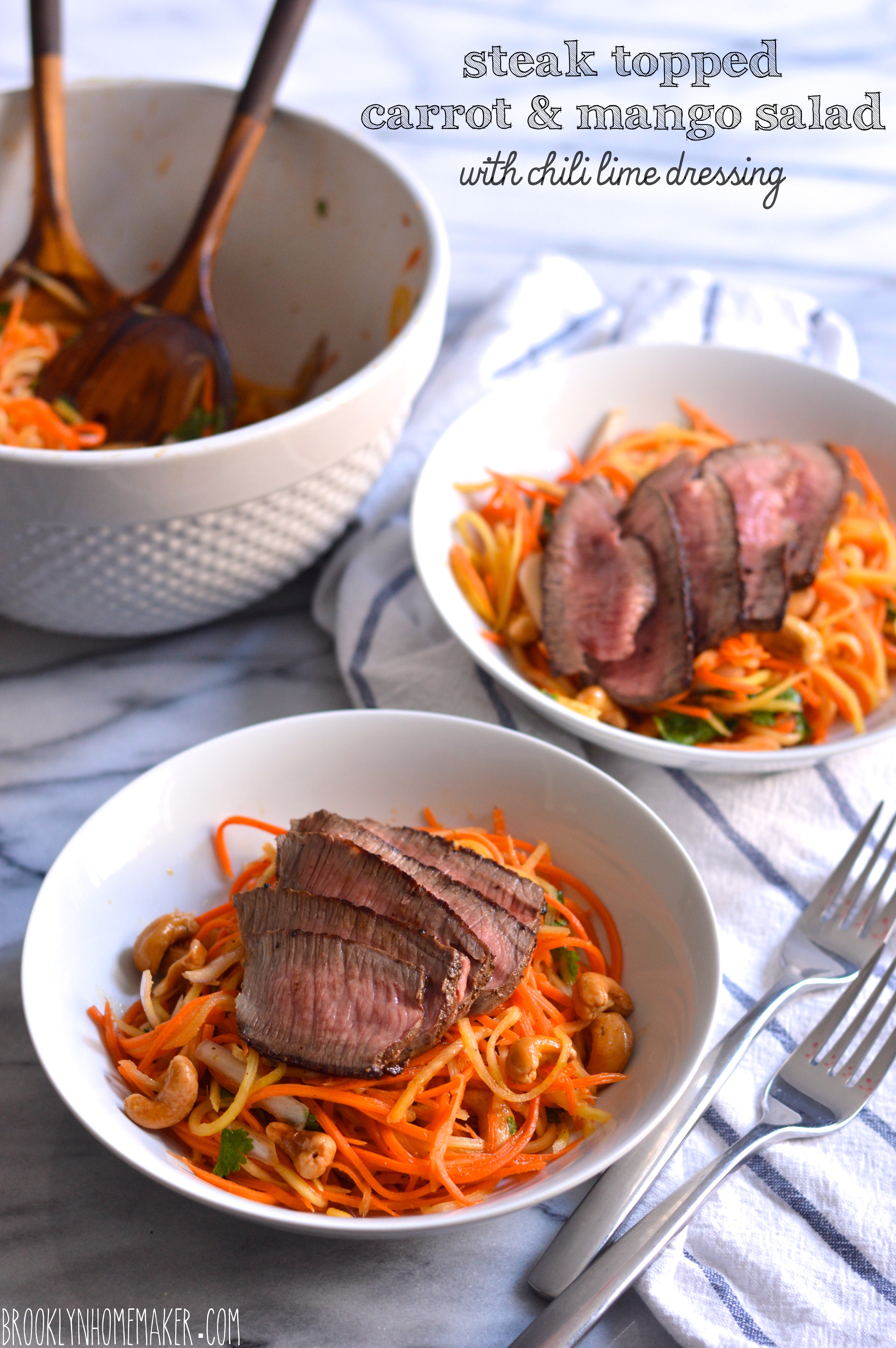
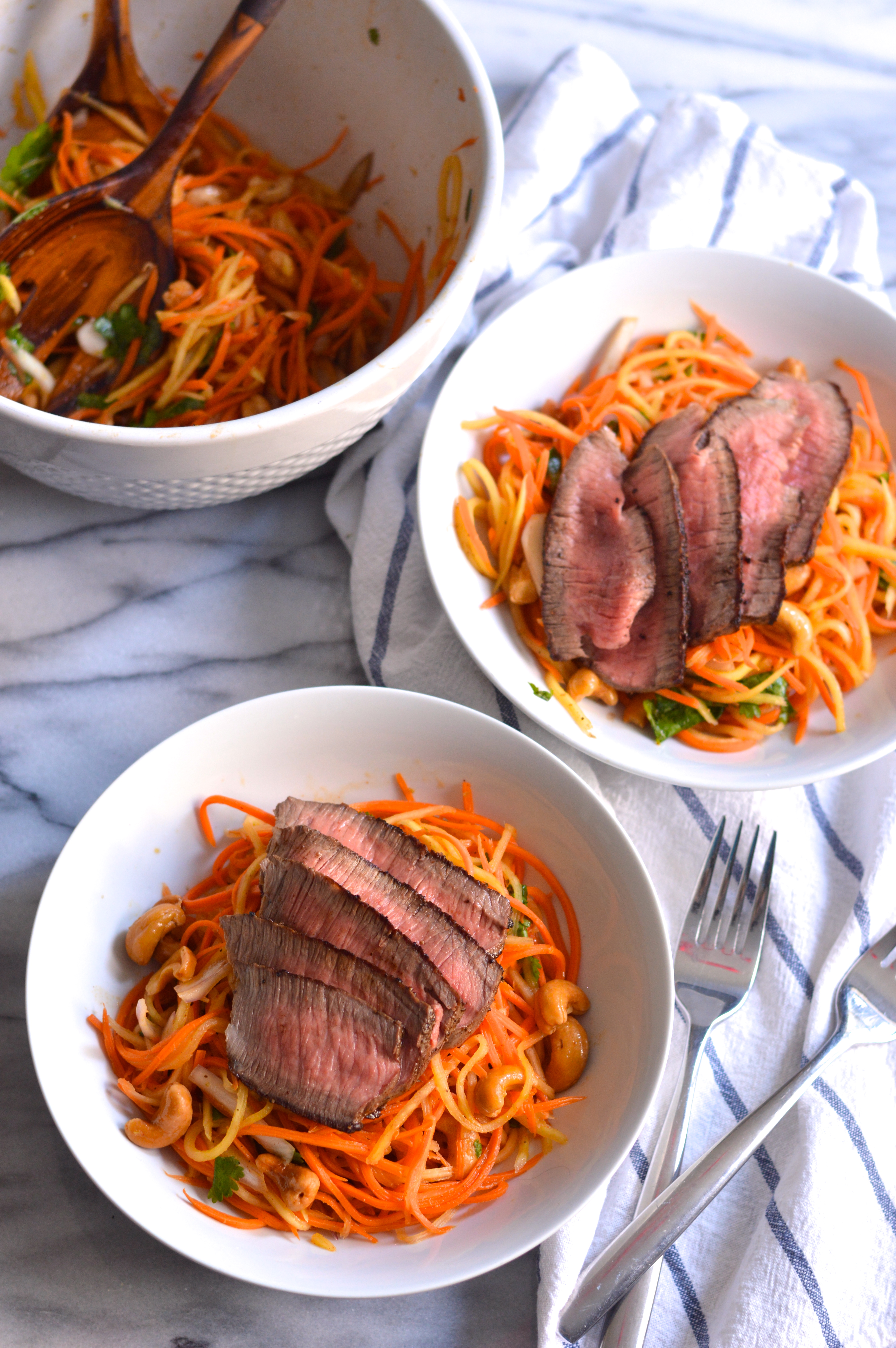
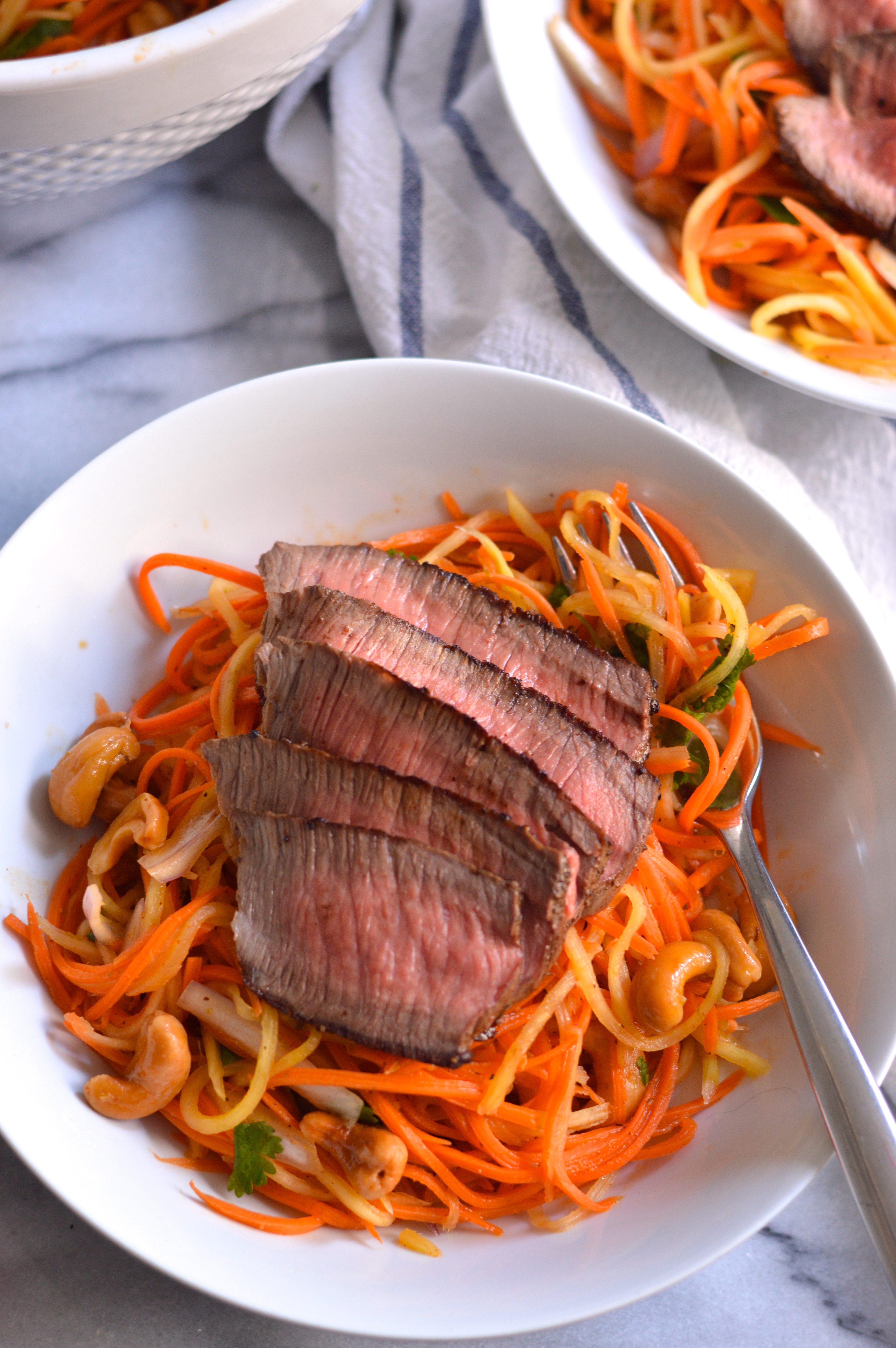
This salad though, is different. This salad isn’t just sexy, it’s seductive.

steak topped carrot and mango salad with chili lime dressing | Brooklyn Homemaker

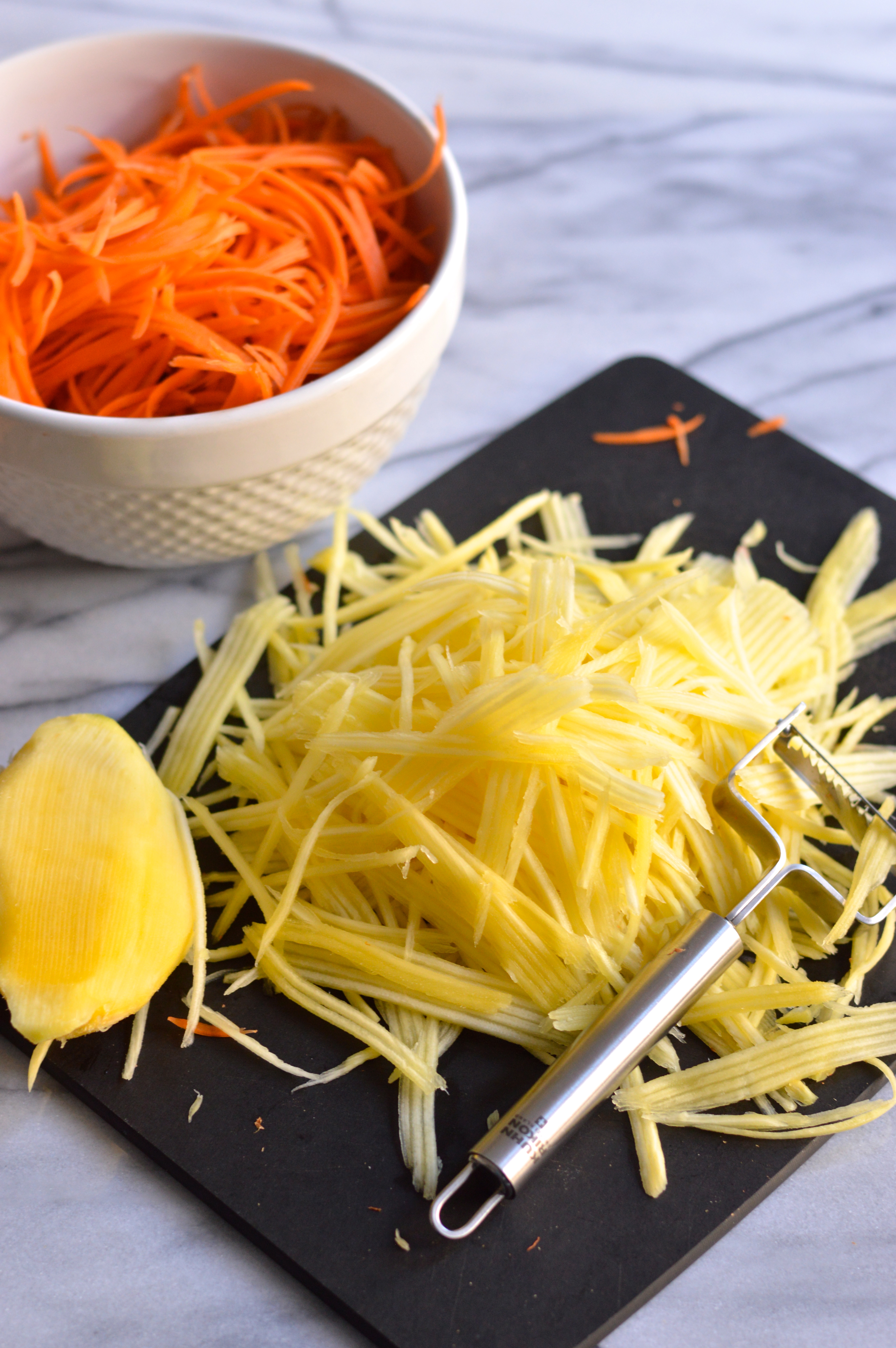
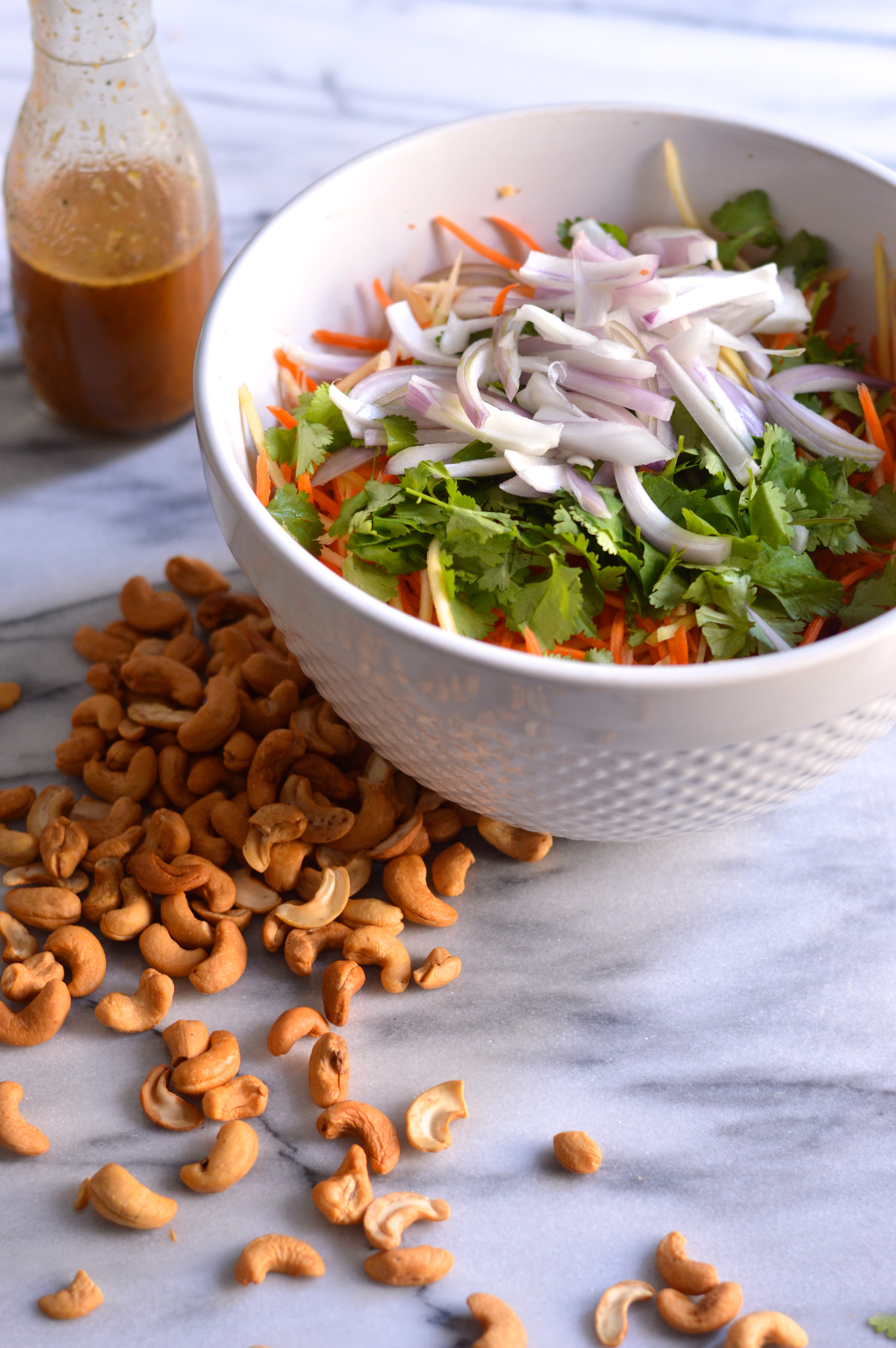
To get those super long, super thin, super sexy julienned strips of carrot and mango, I used a julienne peeler. In a pinch you could also use a standard box grater, but the results won’t be nearly as long or thin, and if your mango isn’t super firm I fear that it might just turn to mush. I think that getting those perfect thin strands of vegetables makes salads look so much more delicious and interesting and makes you want to just dive right in. These peelers are also really really easy to use, so if you’re looking for a fun and affordable new tool for your kitchen, or a great stocking stuffer for the cook in your life, I’d highly recommend picking one up!

steak topped carrot and mango salad with chili lime dressing | Brooklyn Homemaker

To finish the salad and make it feel even more substantial and filling, I added some seared London broil, sliced ultra thin. If you’re not a steak fan though you can use whatever protein you like. I think the steak works really well with the dressing, but sliced chicken breast would be great here too. You could even go for some fresh juicy shrimp, seared salmon fillets, or even some decadent confit duck leg. Or, for that matter, skip the protein altogether. There is such a wide variety of flavors and textures going on that this salad is pretty amazing all on it’s own.

steak topped carrot and mango salad with chili lime dressing | Brooklyn Homemaker

While it certainly is good for you, the last word that comes to mind when you eat this salad is healthy. It’s bursting with so much flavor and offers such a variety of textures that you won’t be thinking about anything else. The carrots and mango are crunchy and fresh, and every bite is permeated with the sweet, bright, and spicy dressing. The crunchy cashews taste almost buttery against the sweet acidity of the rest of the salad, the cilantro is fresh and green and summery, and the sliced steak stands in soft and tender contrast to all that crispness and crunch.

steak topped carrot and mango salad with chili lime dressing | Brooklyn Homemaker

Steak Topped Carrot and Mango Salad with Chili Lime Dressing

Dressing:
zest and juice of 2 limes
3 tablespoons olive oil
1 tablespoon honey
1/2 teaspoon coarse Kosher salt
1/4 teaspoon ground black pepper
1/4 teaspoon chili powder
1/8 teaspoon ground cayenne pepper

Combine all ingredients in a dressing bottle or measuring cup and whisk or shake vigorously.

Salad:
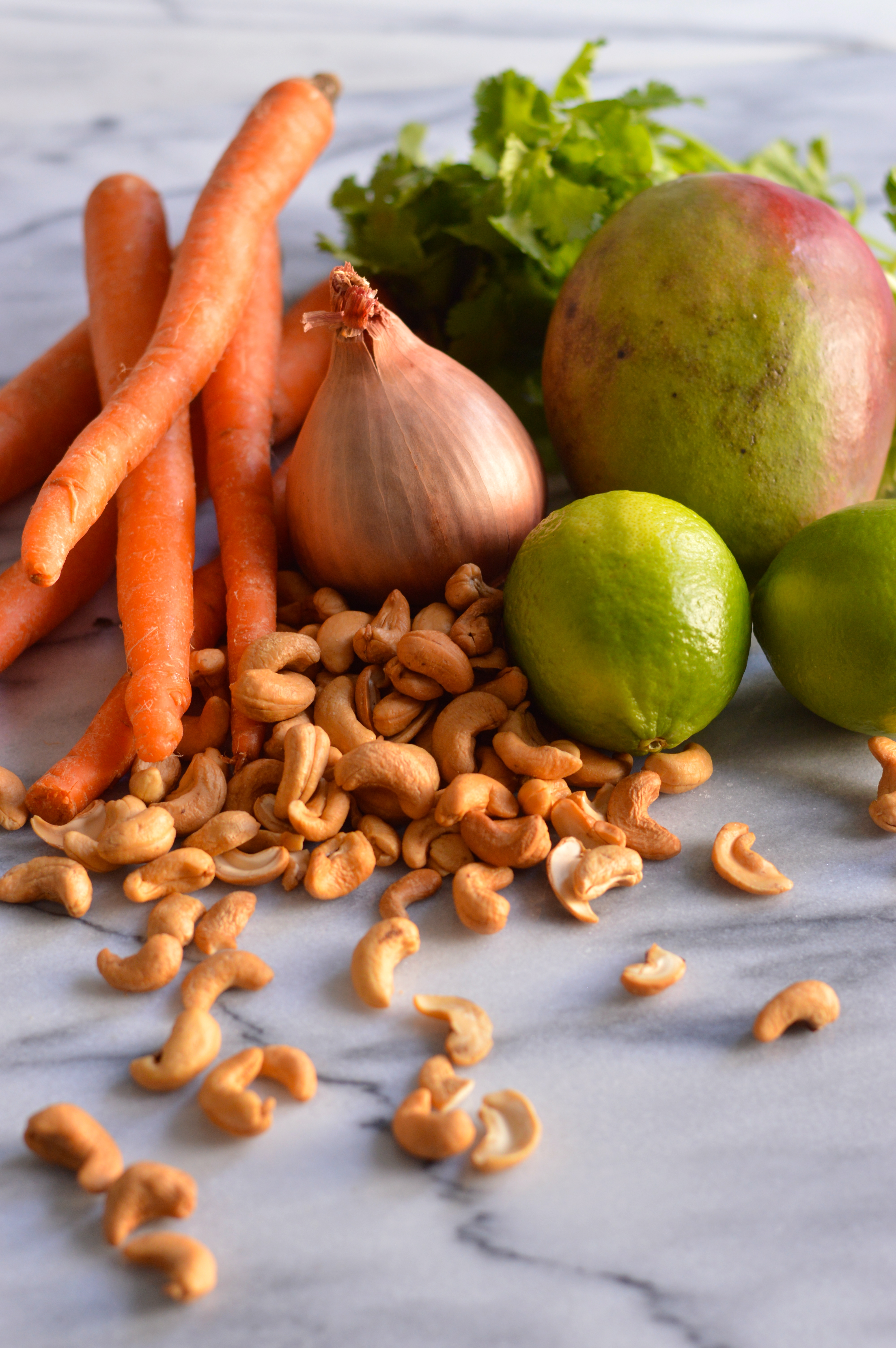
6 medium carrots, julienned or grated (about 4 cups)
1 firm (or slightly under-ripe) mango, peeled and julienned or grated (about 2 1/2 to 3 cups)
1 small shallot, thinly sliced
1/2 cup torn cilantro leaves
1 cup unsalted roasted cashews
12 to 16 oz London Broil (or other lean boneless steak), optional
salt and pepper
1 tablespoon olive oil or butter

Julienne carrots using a julienne peeler (I LOVE this one), or grate them with a box grater. Peel the mango and julienne it, stopping where you feel the pit beneath the flesh. You can also slice the mango off the pit and grate it with a box grater. Combine the carrots, mango, sliced shallot, and chili lime dressing in a large bowl and toss well to combine.

At this point you could finish the salad and eat it as is, but I think it really benefits from at least an hour’s rest covered in the refrigerator.
So, if you have time, cover and refrigerate from 1 to 24 hours to let the flavors mingle. Just before serving, add the cashews and cilantro and toss until well combined.

Generously season the steak on both sides with salt and pepper. Preheat a large heavy bottom skillet (not non-stick) over high heat. Once the pan is good and super hot, add butter or oil, and sear the steak for 3-6 minutes on either side, flipping only once. This will depend on the thickness of the steak, but 3 minutes per side should get you to about medium rare, and 6 should get you closer to medium well. Remove steak to a cutting board and let it rest for at least 5 minutes before slicing against the grain of the meat, into super thin slices with a very sharp knife.

While steak is resting, toss the salad again to redistribute the dressing. Plate the salad and top with slices of steak.

classic coq au vin

Since Christmas is coming soon, and I’ve been a very good boy, I decided to buy myself a little present.

classic coq au vin | Brooklyn Homemaker

I went ahead and bought myself a fancy pants French braising pan. I’ve had my eye on one for years so I decided that I deserved to treat myself this year. I justified the cost (to myself) with the knowledge that I love braising, especially in cooler months, and this pan is so sturdy and solid that it should last a life time if I take care of it.

And it’s pretty.

classic coq au vin | Brooklyn Homemaker

I knew before I even got it home that I wanted Coq au Vin to be the first meal I prepared in my new favorite toy. I’ve made countless variations on chicken braised in wine, but I’ve actually never made a classic coq au vin before and I knew that that had to change.

classic coq au vin | Brooklyn Homemaker

We had a lot of red wine left over from our Thanksgiving celebration, so the timing couldn’t have been better. I really don’t know how this happened, by the way. I’m more than a little disappointed in myself and my dinner guests for not sucking down every last drop of booze that night.

classic coq au vin | Brooklyn Homemaker

I don’t own a copy of Julia Child’s Mastering the Art of French Cooking (for shame, I know), so instead I looked to the modern queen of classic cooking, Ina Garten. As it turns out, her recipe is reaaaallly similar to Julia’s anyway. I made just a few tiny tweaks to make her recipe my own, and to thicken up the sauce just a wee bit.

classic coq au vin | Brooklyn Homemaker

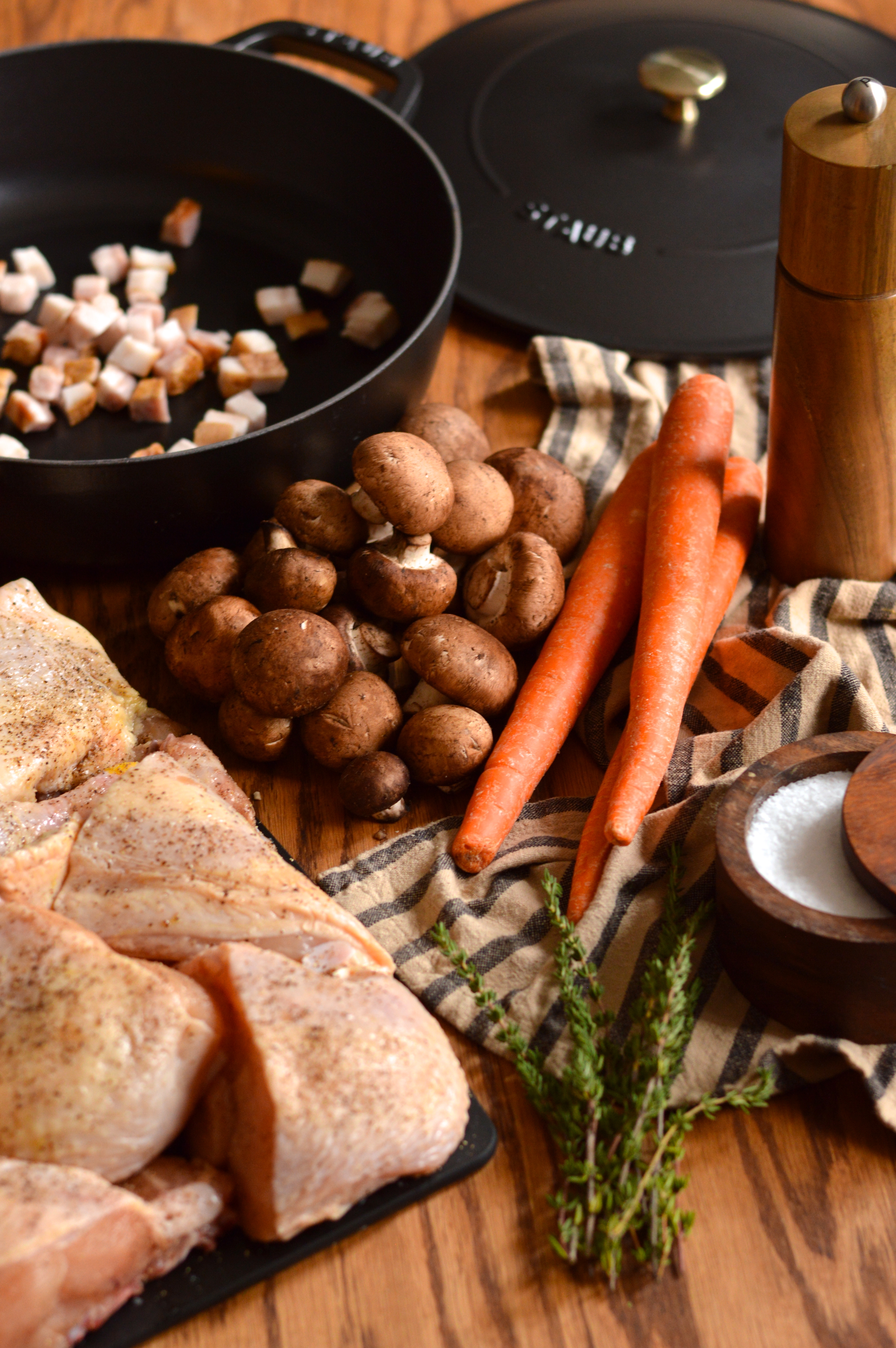
I’m going to channel my inner Ina and tell you that if you’re going to make this recipe, it pays to splurge on good ingredients. Use good wine, fresh thyme, and nice plump fresh mushrooms. If you can, get a nice thick whole chunk of bacon and dice it into thick lardons yourself. The size and texture just stands up better to low and slow cooking. If you can’t though, don’t let the bacon stop you. Seriously.

And, if you can, get a really really good chicken. If you can find an organic air-chilled chicken, go for it. They’re a little bit pricier but they have a much better flavor and the fat renders out of the skin better since the chicken hasn’t soaked in (and absorbed) water during processing. I won’t get into the specifics of chicken processing, but rest assured that (for many reasons) it’s worth your while to look for chicken that says “air chilled” on the package.

classic coq au vin | Brooklyn Homemaker

I was looking forward to butchering the chicken myself and showing you the process, but my market was out of whole air-chilled chickens but did have them pre-butchered for the same price. Sorry guys! Some other time.

If you don’t want to butcher your own chicken, your butcher will probably do it for you. Ask them to split the breasts. If you don’t want to use all the parts of the chicken, you can also do this with a mix of breast and thighs, or all thighs, or all breasts. It is important for flavor though, that everything is still on the bone with skin, and for even cooking you’ll need to have all the breasts cut in half.

classic coq au vin | Brooklyn Homemaker

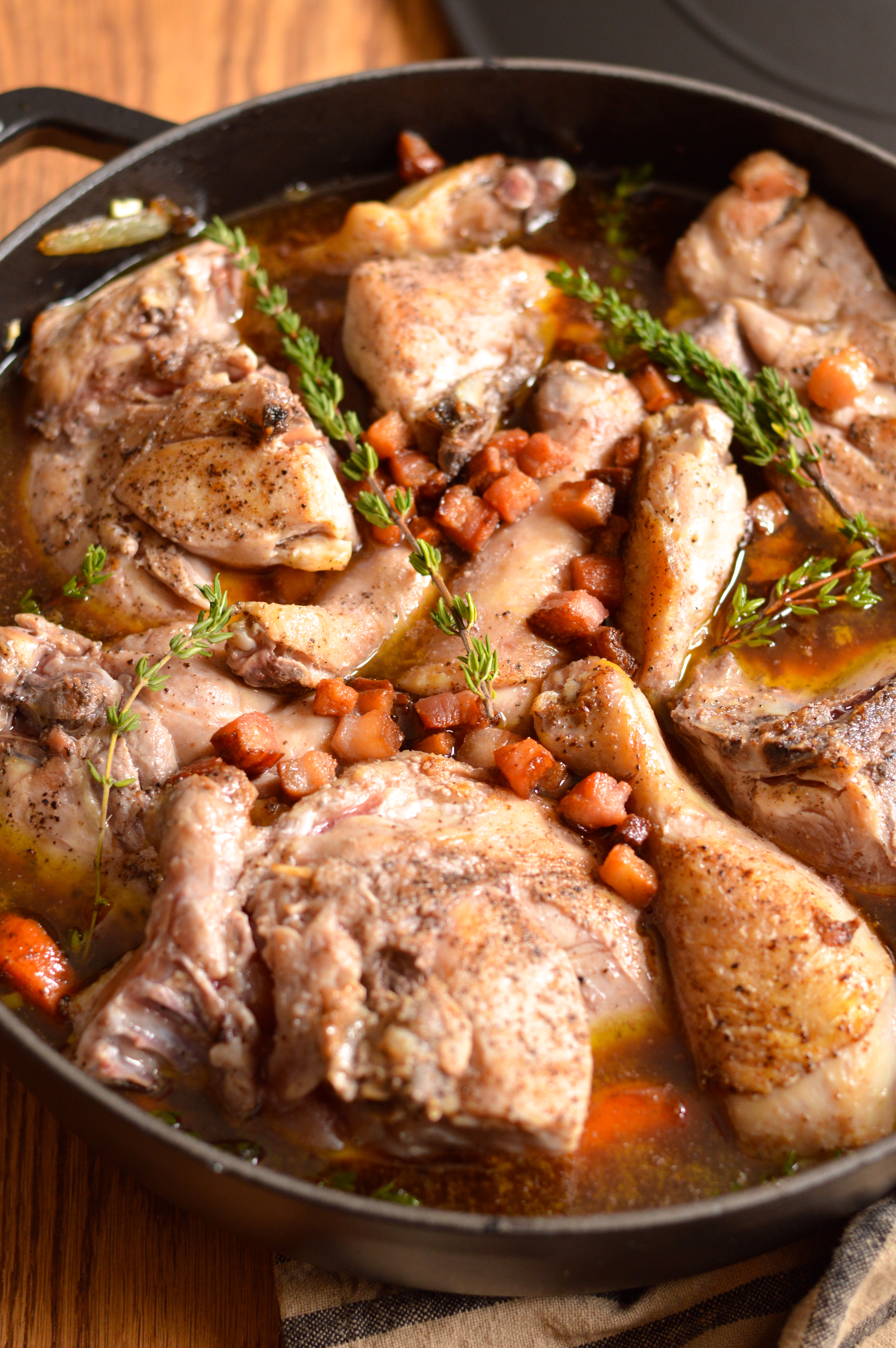
This recipe is definitely worth all the hype. It’s rustic and homey and rich and sublimely satisfying.

I know that people always assume that all French food is fussy and stuffy and unattainable, but it’s not (always) true! French country dishes like Coq au Vin or Boeuf Bourguignon are actually really simple, comforting and filling. If you’re completely unfamiliar, Coq au Vin is a country chicken stew made with carrots, bacon, red wine, and mushrooms. It’s incredibly hearty and earthy, like some of the best comfort food you could ever want; like a warm cozy blanket made of chicken braised in red wine. The chicken is falling-off-the-bone tender and bursting with the rich bold flavors of the wine and thyme and mushrooms, and the sweet tender carrots and pearl onions balance the richness perfectly.

Just make sure you have enough wine to last you while you’re cooking and still have some left for serving!

classic coq au vin | Brooklyn Homemaker

Classic Coq Au Vin

  • Servings: 4 to 6-ish
  • Print
adapted from Ina Garten for Food Network

4 ounces thick cut bacon or pancetta, diced
1 (3 to 4-pound) chicken, cut into 8 pieces (breasts sliced in halves)
Kosher salt and freshly ground black pepper
1/2 pound carrots, cut into thick rustic pieces
1 yellow onion, sliced
1 teaspoon chopped garlic
1/4 cup Cognac
2 cups good dry red wine (preferably Burgundy)
1 cup chicken stock (homemade if possible)
10 fresh thyme sprigs
5 tablespoons unsalted butter, divided
1/4 cup all-purpose flour
1/2 pound frozen pearl onions
1/2 pound cremini mushrooms, stems removed and thickly sliced

Preheat the oven to 250 degrees F.

Pat the chicken pieces dry with paper towels and season liberally on both sides with salt and pepper.

Heat a large heavy-bottom Dutch oven or braising pan over medium heat. Add the bacon and cook for 8 to 10 minutes, until fat is rendered and bacon is crisp. Remove the bacon to a plate with a slotted spoon. If you have more than a tablespoon or two of bacon fat in the pan, pour off and reserve to use later in place of the butter.

When the bacon is removed, brown the chicken pieces in batches in a single layer for about 5 minutes, turning to brown evenly. Don’t crowd the chicken, just do two batches. Remove the chicken to the plate with the bacon and continue to brown until all the chicken is done. Set aside.

Add the carrots and sliced onions to the pan with 2 teaspoons salt and 1 teaspoon pepper and cook over medium heat for 10 to 12 minutes, stirring occasionally. Add the garlic and cook for 1 more minute. Add the Cognac and put the bacon, chicken, and any juices that collected on the plate back into the pot along with the wine, chicken stock, and thyme. Bring to a simmer on the stovetop, cover the pot with a tight fitting lid, and place in the oven for about 40 minutes, or until the chicken is just done. Remove from the oven and move back to the stovetop.

Mash 4 tablespoons of butter (or reserved bacon fat) and the flour together and stir into the stew. Add the frozen onions and bring the stew back up to a very low simmer. Add the remaining 1 tablespoon of butter (or bacon fat) to a separate medium saute pan, and cook the mushrooms over medium-low heat for 5 to 10 minutes, until browned and liquid cooks off. Stir the mushrooms into the stew and simmer for another 10 minutes. Season to taste.

Serve over mashed potatoes, rice, pasta, or cous cous.