fruit

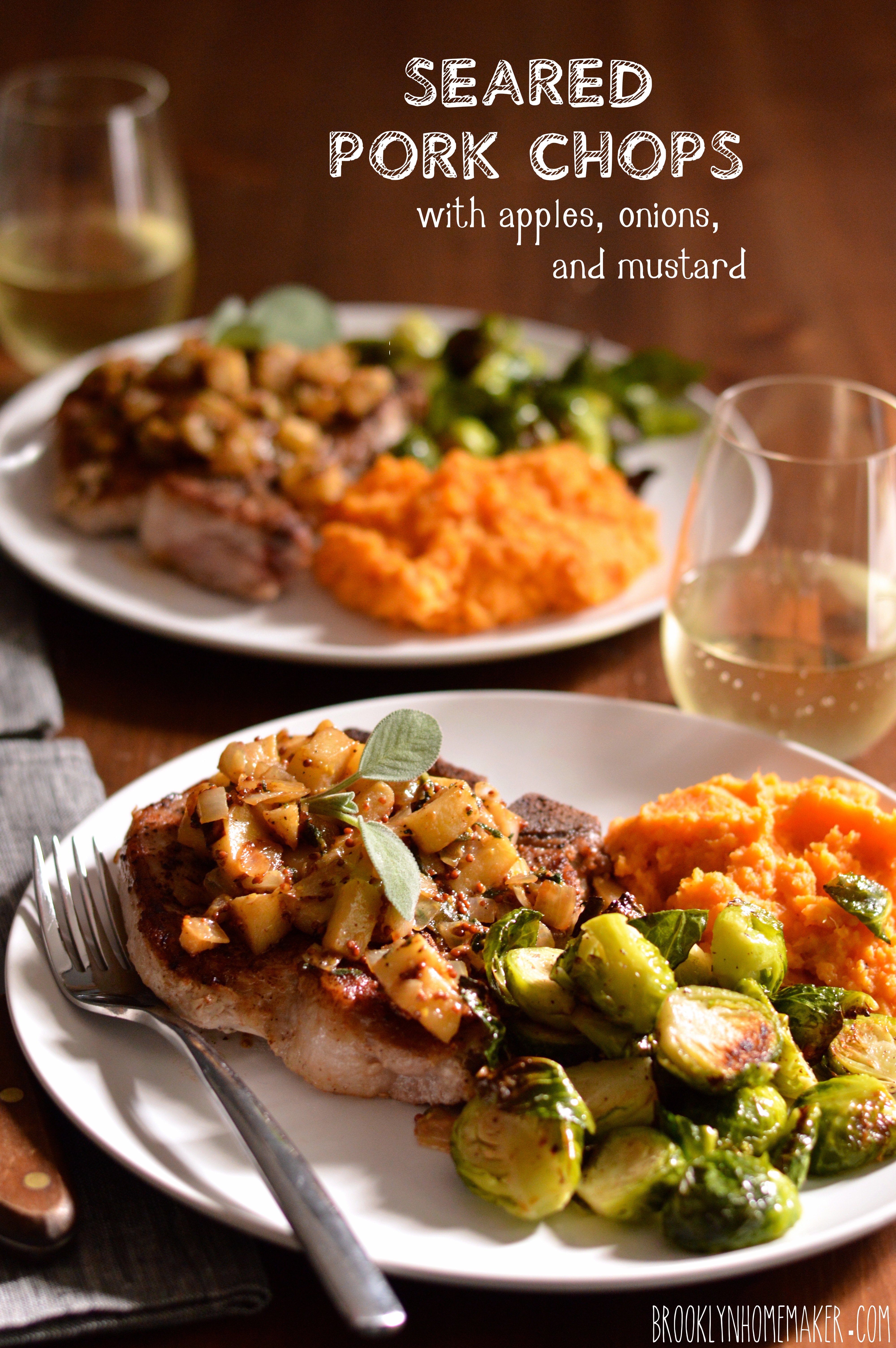
seared pork chops with apples, onions, & mustard

I love pork. Just so we’re all on the same page.
seared pork chops with apples, onions, & mustard | Brooklyn Homemaker

I’ve really always been a big fan of pork. Give me a big thick juicy pork chop over a steak any day of the week. In the words of Homer Simpson, “Porkchops and bacon, my two favorite animals.”

When I was growing up my grandmother used to make us porkchops a lot. Shake n bake, of course, and of course I helped. Grandma’s pork chops were usually cut thin and baked until well done. The common conventional wisdom in my grandmother’s day was that if you saw even a tiny twinkle of pink in your pork you’d probably keel over dead on the spot. You were supposed to cook ’em through and then keep on going, just for good measure. The only problem with that wisdom is that todays pork is bred to be so lean that cooking to well done produces a bone-dry chop that is, sorry grandma, pretty terrible. I know it’s not your fault grandma! Damned conventional wisdom! Maybe this is why a lot of people think they don’t like pork?

Well, I’m here to challenge that wisdom. It’s totally okay if you cook your pork to medium-well or even medium. You’re not going to die. You’re not even going to get sick. Unless you caught your pig in the wild, the only thing you’re at risk of is eating a seriously tasty pork chop. Thanks to modern farming, Trichinosis (the food borne illness commonly associated with pork), hasn’t been a concern for American eaters since the 1970s. In fact, the USDA even recently lowered their recommended internal cooking temperature for pork from 160 degrees to 145. Yay! We can finally eat tasty pork again!
seared pork chops with apples, onions, & mustard | Brooklyn Homemaker

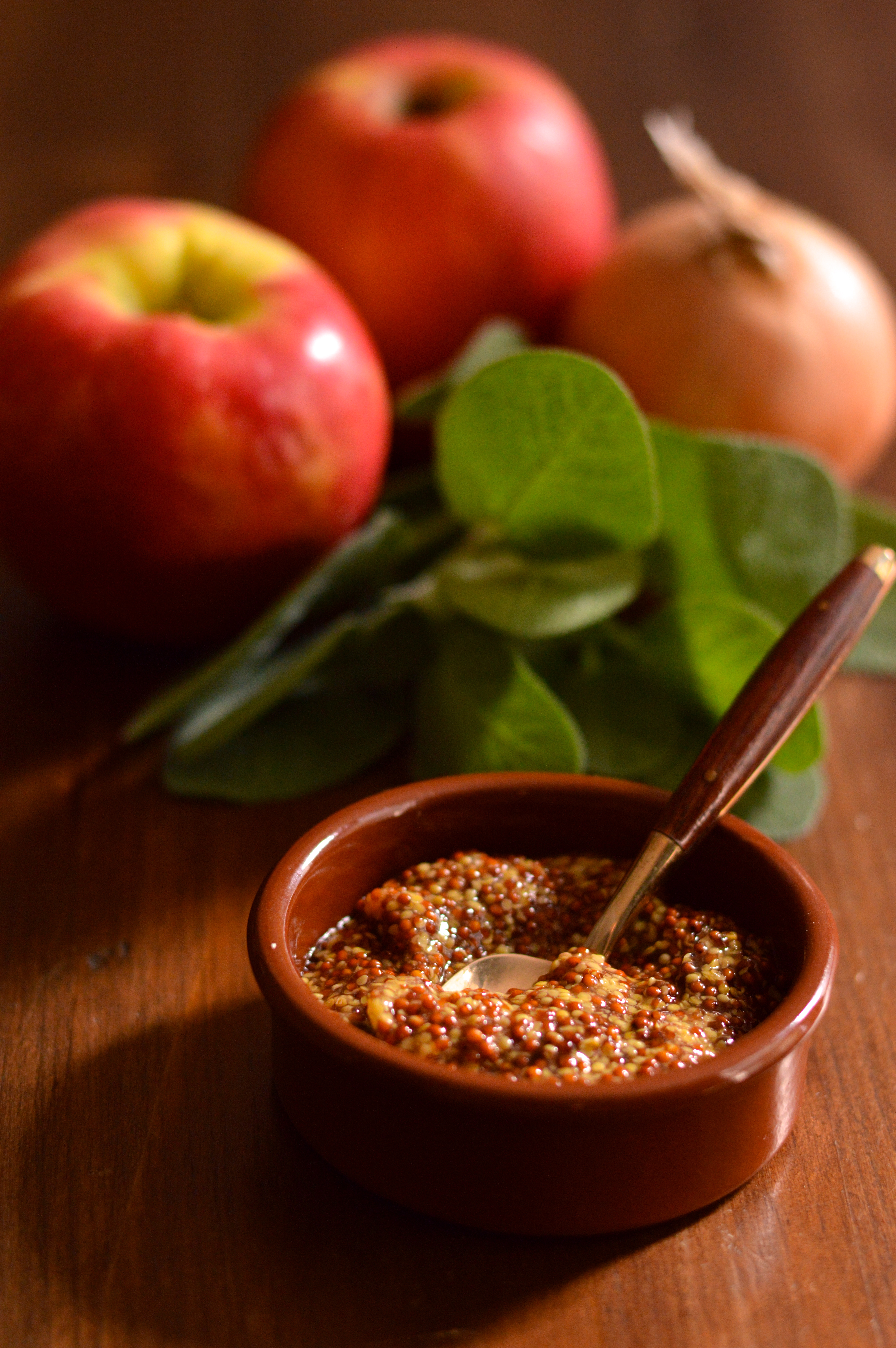
While we’re on the topic of tasty pork, lets talk about how I like to eat a pork chop. Call me uninspired, but my favorite flavor to pair with pork is apple. I know it’s super traditional and I’m not showing you anything you haven’t seen before, but hey, it’s friggin good! If it ain’t broke, I ain’t trying to fix it.

I’ve been eating apples with pork for as long as I can remember, which probably stemmed from grandma’s well done chops. I used to slather those suckers with mountains of applesauce, for the moisture as much as the flavor.

seared pork chops with apples, onions, & mustard | Brooklyn Homemaker

People have actually been pairing pork with apples for centuries. Before sugar was readily available to most people, fruit sweetened foods were usually served alongside or in combination with savory, and apples were a common way to add a touch of sweetness to pork dishes. This may have started because some farmers would feed old or rotten apples to their pigs, and some people say that a diet high in apples can actually flavor the meat.

On a side note, I might just need to plant some apple trees and buy a few pigs…
seared pork chops with apples, onions, & mustard | Brooklyn Homemaker

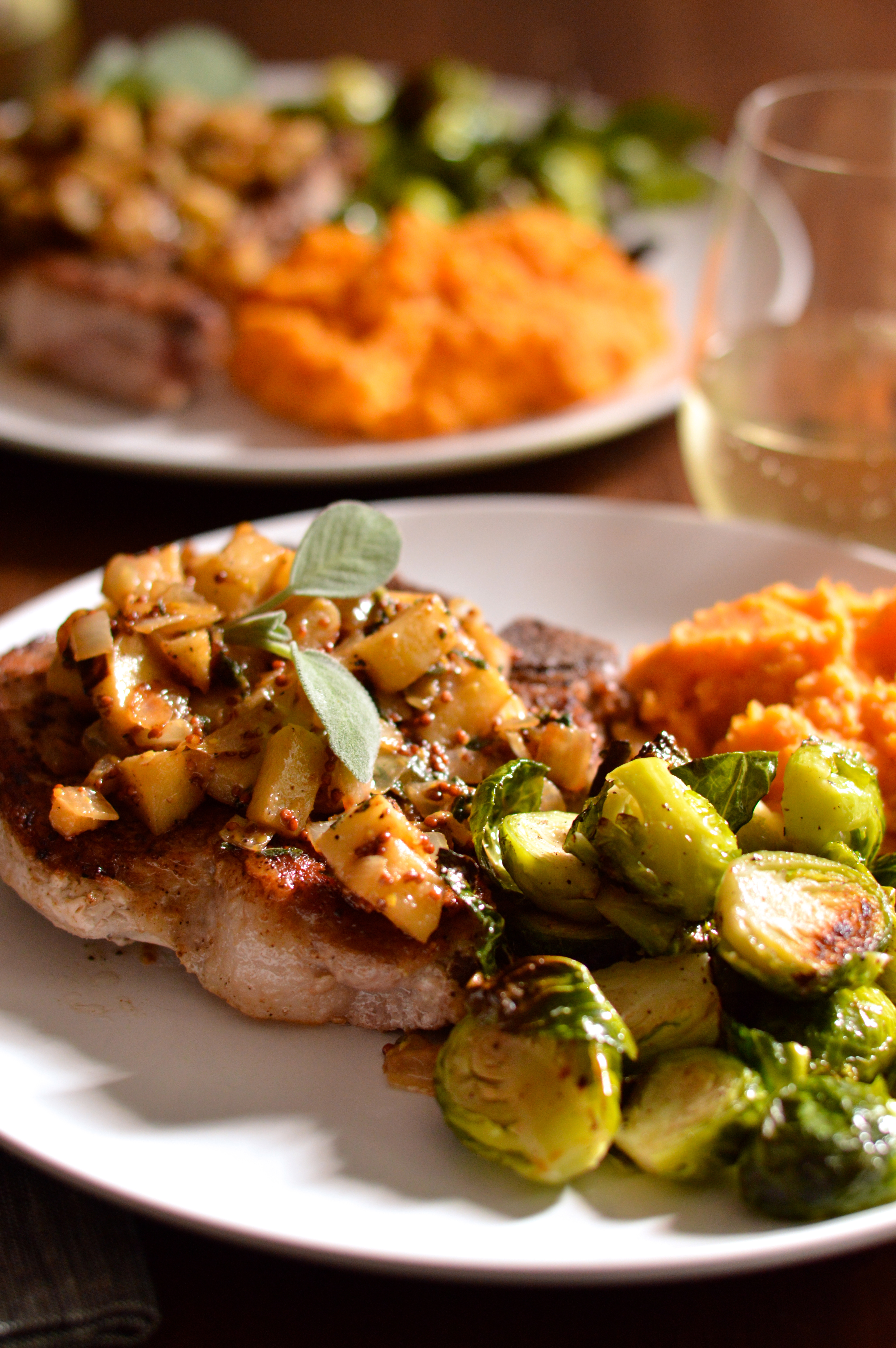
I think pork chops on the bone tend to have the best flavor, and the thicker they’re cut the juicier they’re going to be when they’re finished cooking. If you get your pan nice and screaming hot you only need to sear the chops for a few minutes on either side to get them perfectly cooked to medium well. If you’re still scared and want to cook them to well done, remove them from the pan the second the meat reaches an internal temperature of 145 degrees. Even thick cut chops will get dry and tough if overcooked.

To add a little depth to the pork and apple combination, I deglazed the pan with white wine after searing the pork, sautéed the apples with some onions and mustard, and finished the the whole thing with some cream and fresh sage from our back yarden. The onion helps keep things from going too sweet and fruity, and the mustard adds some interesting texture and a nice earthy vinegary bite. The sage reinforces that earthiness, and the cream gives the topping a really nice velvety finish. Despite feeling kind of “grown-up” and “fancy”, this meal is actually pretty simple to make and comes together in less than 30 minutes!

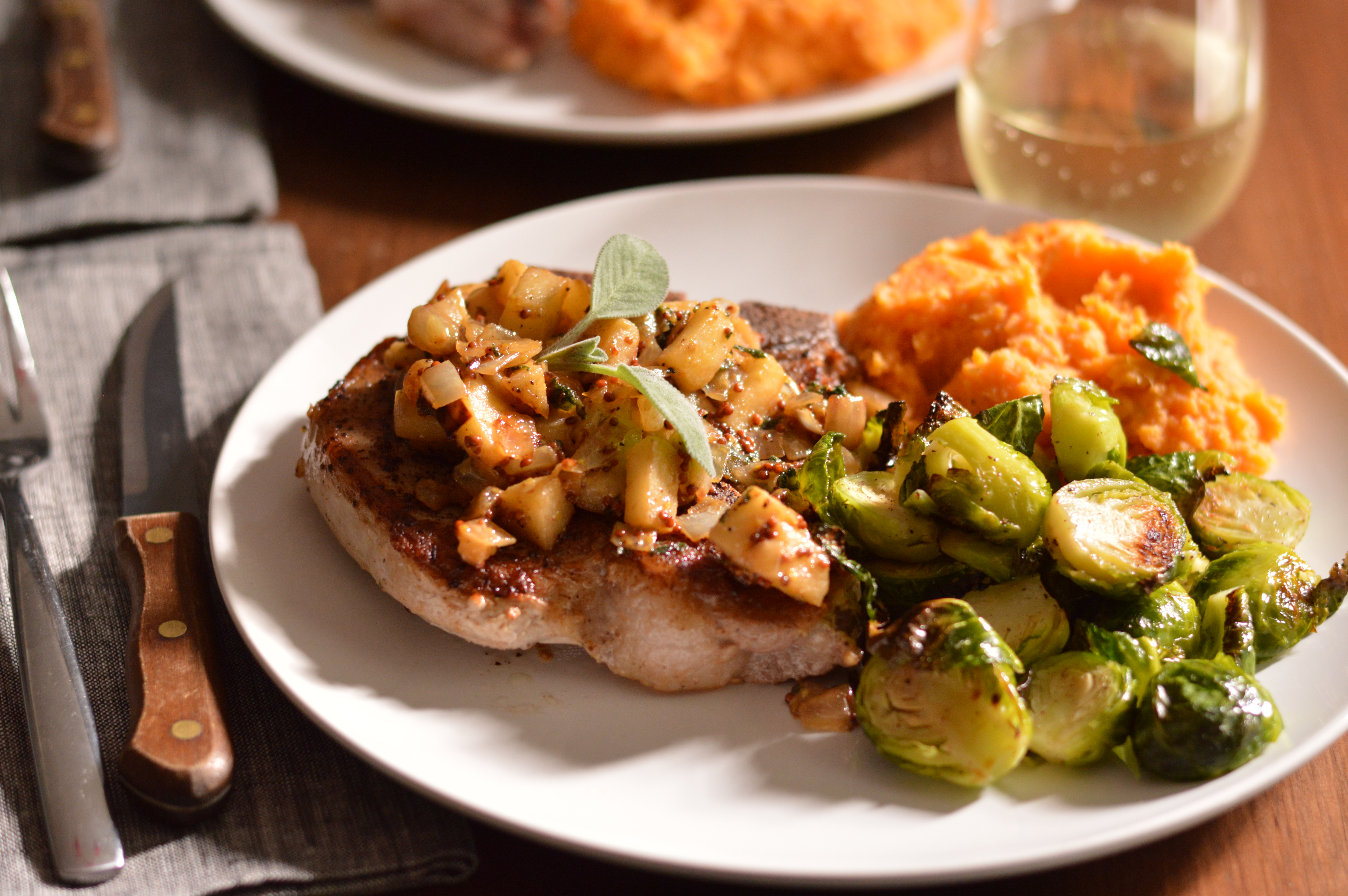
Since things are getting all nice and autumnal outside, I decided to pair my pork chop with some mashed sweet potatoes and roasted brussels sprouts. And, of course, there was also some white wine.
seared pork chops with apples, onions, & mustard | Brooklyn Homemaker

Seared Pork Chops with Apples, Onions, & Mustard

  • Servings: 2 generous portions
  • Print
2 center cut pork chops, bone in, at least 1 inch thick
salt and pepper to taste
2 tablespoons butter
1/4 cup white wine
1 firm sweet apple, such as pink lady
1 small onion
2 tablespoons whole grain mustard
2 tablespoons finely sliced fresh sage
1/4 cup cream

Generously season pork chops on both sides with salt and pepper. Preheat a heavy skillet over high heat until your butter sizzles and immediately browns when added. Add 1 tablespoon butter, swirl in pan, and immediately add pork chops. Reduce heat just slightly to medium high, and cook for about 3 to 4 minutes per side. You want them cooked to about medium-well. A little pink won’t hurt you but you want the meat to be mostly white. If you’re scared, use a meat thermometer to be sure the meat reaches an internal temperature of 145 degrees. Do not overcook or the chops will be tough and dry. Meanwhile; peel, core, and finely dice the apple, and finely dice the onion.

Remove pork chops to a plate and tent with foil (remember they’ll keep cooking a little while they rest). Deglaze pan with white wine, add remaining butter, apples, and onions and season with salt and pepper. Cook until onions are translucent, apples are tender, and everything is starting to get a healthy caramel brown, about 10 minutes. Add mustard, sage, and cream; and cook about 3 minutes more.

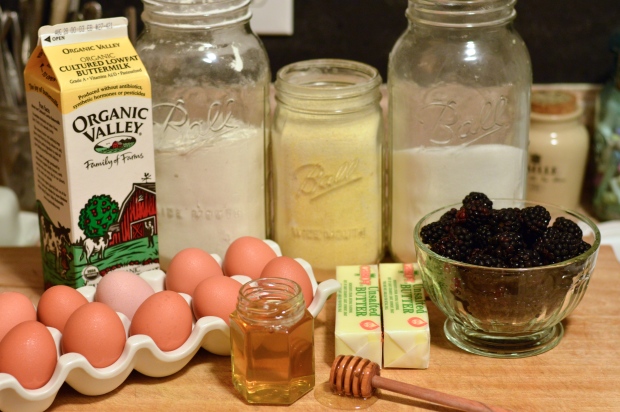
honey glazed blackberry cornmeal bundt cake #bundtbakers

Well guys, another month, another bundt cake!

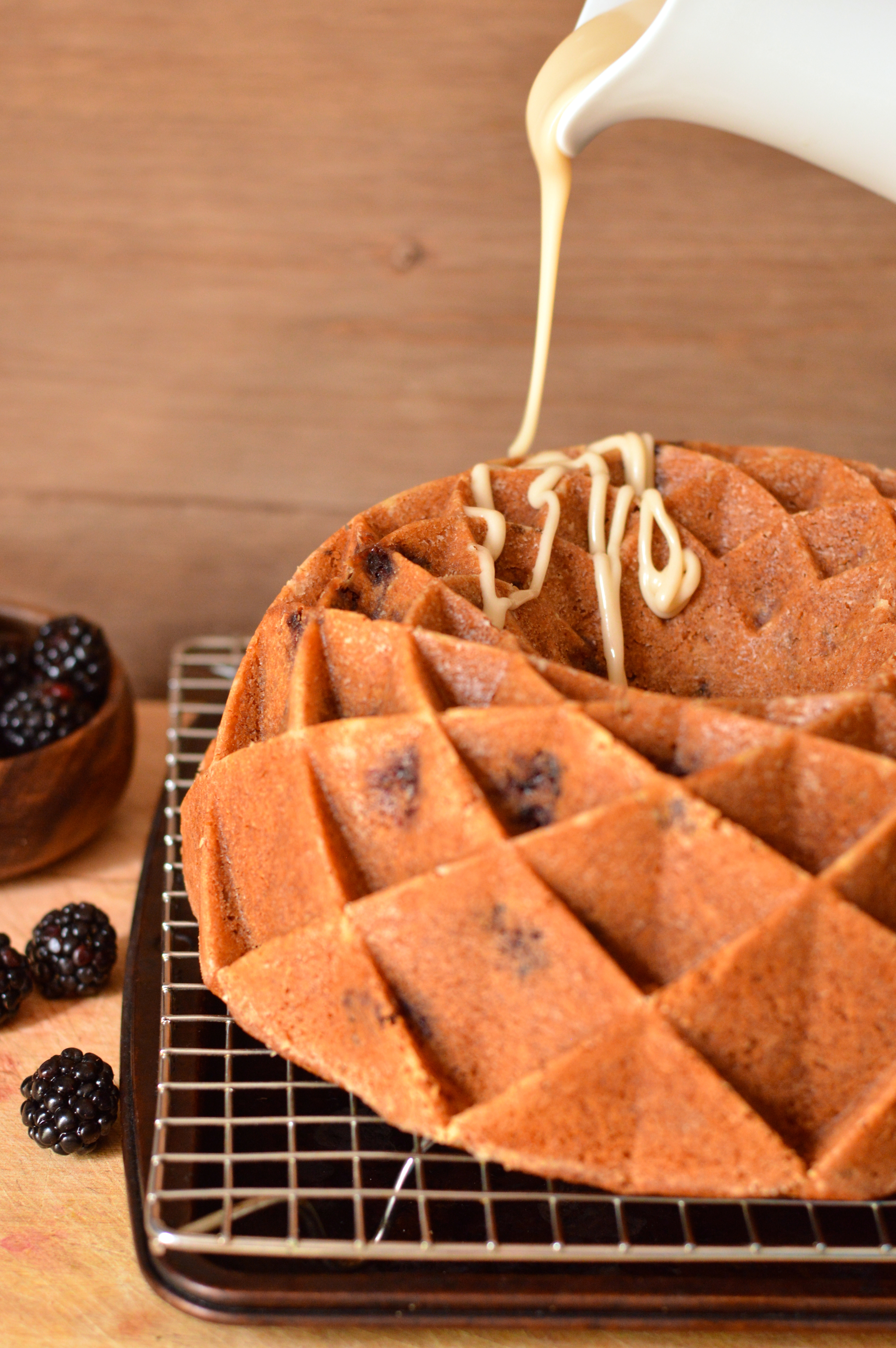
honey glazed blackberry cornmeal bundt cake | Brooklyn Homemaker

This month’s theme, chosen by our amazing host Laura of Baking in Pyjamas, is “Honey”! I could not have chosen a more perfect flavor to pair with the last bundt cake of the summer if I’d tried. Thanks Laura!

I’m really excited to see what everyone comes up with to pair with this amazing ingredient. Make sure you keep reading past the recipe for all the drool-inducing cakes the #bundtbakers are sharing this month.

honey glazed blackberry cornmeal bundt cake | Brooklyn Homemaker

I’m fortunate enough to have locally produced raw honey at my disposal, so I was thrilled to have a good way to put it to use. At Whisk We sell honey that comes from Brooklyn rooftop hives, and the flavor is amazingly fresh. Each batch of honey produced by the bees has a slightly different color and flavor because they collect nectar from different flowers in different areas depending on the time of year. An unexpected benefit of buying locally produced honey is that since it’s unpasteurized it can help fight against seasonal allergies. The nectar contains traces of seasonal pollens and ingesting them with the honey helps your body build up a sort of immunity to these airborne irritants.

honey glazed blackberry cornmeal bundt cake | Brooklyn Homemaker

Buying raw unpasteurized honey that comes from a single bee keeper means that you can also be confident that it’s 100% pure honey, with no fillers or added flavors or syrups. The absolute best part of local honey though, is the flavor! It’s bright, light, and summery with subtle hints of herbs and green plants, and smells super floral, clean and fresh.

honey glazed blackberry cornmeal bundt cake | Brooklyn Homemaker

I could go on and on about raw single hive honey and how it will ruin grocery store honey for you for the rest of your days, but I won’t. Today is about cake, lest we forget. Sweet glorious bundt cake.

honey glazed blackberry cornmeal bundt cake | Brooklyn Homemaker

I recently made a cornmeal skillet cake that was so simple and homey and unfussy that I couldn’t get it out of my head. When it came time to think of a recipe that would highlight and compliment honey in all of it’s glory, I knew I had to revisit and re-imagine a combination of cornmeal and cake. Since cornmeal has such an earthy rustic flavor I thought it would marry really well with honey, and I was sure that the addition of fresh summer blackberries wouldn’t be unwelcome.  Don’t fret if you cant find local honey though. While I’d highly recommend looking for some, I’m sure any honey you have will be completely delicious.

honey glazed blackberry cornmeal bundt cake | Brooklyn Homemaker

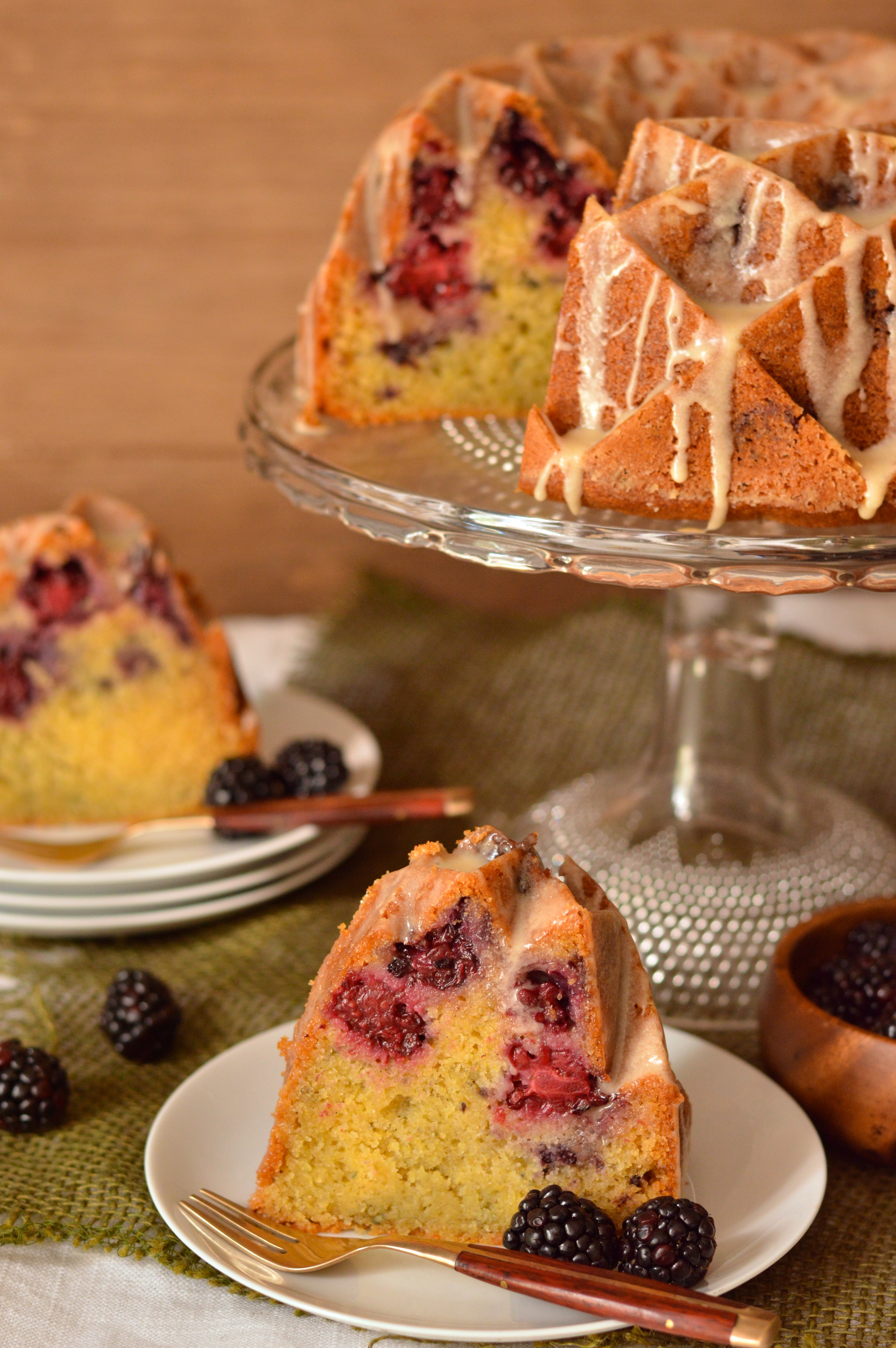
This cake has a double dose of honey, as it’s mixed into the batter and then used to make a glaze that’s poured over after baking. Blackberries and cornmeal are both assertive enough to stand up to the honey so that, while you can certainly taste it, it doesn’t overpower the cake or bring it into the realm of cloying or syrupy.

The cornmeal gives this cake an earthy, rustic flavor and a bite thats somehow both delicate and firm, with just a hint of folksy coarseness. A combination of unsalted butter and cultured buttermilk make sure that the cake is perfectly moist and tender, but I’d recommend serving this the day it’s baked or keeping it well covered for no more than two or three days. The blackberries pair really well with these homey rustic flavors and do their part to make this the perfect dessert for late summer. If you wanted to make this in the spring you could easily substitute tart wild strawberries or fresh blueberries, and in the fall I think diced pears or apples would be amazing.

honey glazed blackberry cornmeal bundt cake | Brooklyn Homemaker

Honey Glazed Blackberry Cornmeal Bundt Cake

  • Servings: 12 to 16-ish
  • Print
2  cups + 2 tablespoons all-purpose flour, divided (plus more for the pan)
1 cup fine cornmeal
2 tsp. baking powder
½ tsp. baking soda
1  tsp. salt
1 cup (2 sticks) unsalted butter, softened (plus more for the pan)
1  cup sugar
1/3 cup honey
1 Tbs. vanilla extract
3 large eggs
1 cup buttermilk
12 oz fresh blackberries

Preheat oven to 350. Generously flour and butter a 10 cup (+) non-stick bundt pan.
In a medium bowl, whisk together 2 cups flour, cornmeal, baking powder, baking soda, & salt. Set aside.

In the bowl of a standing mixer beat butter, sugar and honey together until light and fluffy, 3 to 5 minutes. Add vanilla, and then the eggs, one at a time, until well combined. Slowly stir in 1/3 flour mixture until just combined, followed by 1/2 of the buttermilk, scraping down sides of bowl after each addition. Continue until all flour and buttermilk is combined. Do not over mix.

In a small bowl toss blackberries in remaining 2 tablespoons of flour. Gently fold berries into batter by hand. Pour into prepared bundt pan and bake for 55 to 60 minutes or until a cake tester inserted into the center of the cake comes out clean. Cool for 20 minutes before inverting onto a wire rack to cool completely.

Glaze:

1/4 cup Honey
1 cup confectioners sugar
2 tablespoons unsalted butter, softened
1 to 2 tablespoons milk

Combine honey, confectioners sugar, and butter in a medium bowl. Whisk to combine and thin out to desired texture with milk, 1 tsp at a time. Drizzle evenly over cooled bundt.

honey glazed blackberry cornmeal bundt cake | Brooklyn Homemaker

Check out all of these delicious honey bundts! What a perfect theme to celebrate the final sunny days of summer.

BundtBakers


Interested in learning more about us??  #BundtBakers is a group of Bundt loving bakers who get together once a month to bake Bundts with a common ingredient or theme. We take turns hosting each month and choosing the theme/ingredient. You can see all our of lovely Bundts by following our Pinterest board right here. Links are also updated after each event on the BundtBaker home page here.

If you are a food blogger and would like to join us, just send an email with your blog URL to foodlustpeoplelove@gmail.com. If you are just a lover of Bundt baking, you can find all of our recipe links by clicking our badge above or on our group Pinterest board.

peach, tomato, & thyme galette with vanilla yogurt

So, suddenly it’s the middle of August. How did that happen?

peach, tomato, & thyme galette with vanilla yogurt | Brooklyn Homemaker

I feel like the last time I looked at a calendar it was early June and I had the whole summer in front of me, just waiting to unfold. But time marches on, days come and go, and suddenly we’re half way through the last full month of summer. I’m not ready to let go yet, so I’m going to do everything in my power to make the most of what’s left this sultry season.

peach, tomato, & thyme galette with vanilla yogurt | Brooklyn Homemaker

Next week I’m heading upstate for a much needed vacation. I’m going to stay with family, get some R&R, and help my mom work on her new house. I’m also going to steal away for a few days to go camping with my sister and niece and nephews. I cannot wait. Fresh air, fresh water, clear skies, starry nights, & bug bites. Waking up in a hot tent and hearing the sound of birds chirping. Food cooked over an open fire. It really doesn’t get any better. Can you tell that I’m excited?

peach, tomato, & thyme galette with vanilla yogurt | Brooklyn Homemaker

For now though, I’m content to eat the best of what summer has to offer. Camping trip or no camping trip, I need to make sure I get my fix of fresh produce before it’s too late. Some of the best, freshest, juiciest, most quintessentially summery things to eat are peaches and tomatoes. Especially in the late summer, these are the foods that I crave more than anything.

peach, tomato, & thyme galette with vanilla yogurt | Brooklyn Homemaker

While I’m sure that a lot of people also love peaches and tomatoes this time of year, I would venture to guess that they think those two things should be eaten separately. Peaches are to be eaten as a sweet snack or as dessert, and tomatoes are for salads and savory dishes. Well, guess what… Those people would be dead wrong. It is possible to put a peach in a salad. It is. Try it. I dare you.

peach, tomato, & thyme galette with vanilla yogurt | Brooklyn Homemaker

Similarly, tomatoes can be used in sweet dishes. Think about it. Tomatoes are, technically, a fruit. They’re sweet. While they are biting and acidic, and lend themselves perfectly to savory dishes and sauces, they can be so much more than marinara. At their peak in the late summer, tomatoes are sweet and bright and fruity, with a lemony acidity that works really well for desserts.

peach, tomato, & thyme galette with vanilla yogurt | Brooklyn Homemaker

So, guess what happened…

I got the sweetest brightest little yellow cherry tomatoes the farmers market had to offer, and picked up a couple pounds of juicy ripe peaches while I was there. Then I did something totally crazy. Totally off the wall. Totally unbelievable.

peach, tomato, & thyme galette with vanilla yogurt | Brooklyn Homemaker

I went ahead and tossed the tomatoes and the peaches together, added some sugar and lemon juice, and baked them into one big rustic galette.

I’m a madman. I know.

peach, tomato, & thyme galette with vanilla yogurt | Brooklyn Homemaker

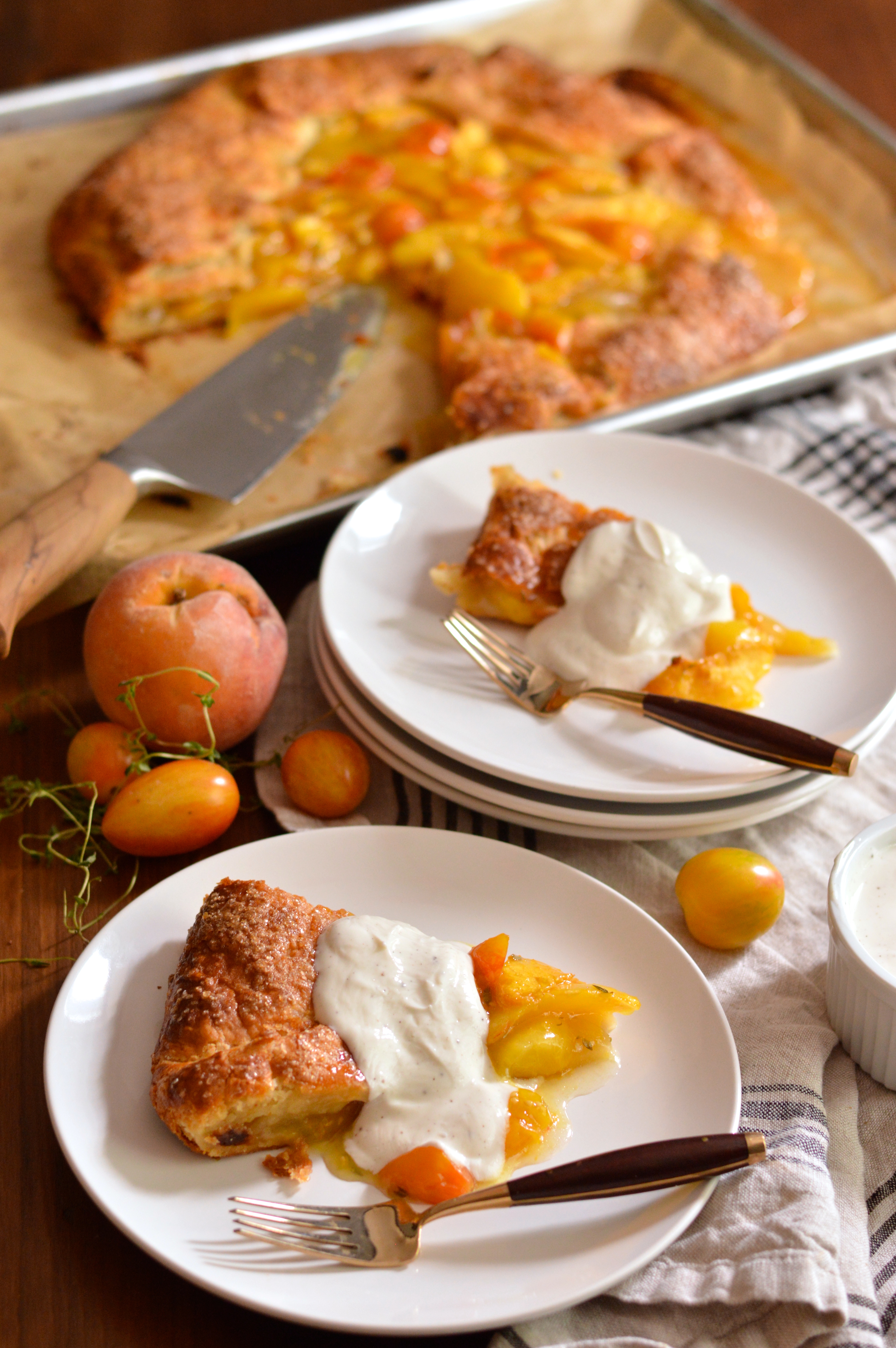
This dessert is crazy summery. The baked fruit is juicy and soft and thick, and the galette crust is tender and crisp, and super flaky. The filling is bursting with bright, sunny, crisp, sweet & acidic fruitiness. There’s enough sweetness to prevent the tomatoes from reading as savory, but it’s not overly sweet or cloying at all. While the tomatoes and thyme add a certain earthiness, the acidity from the lemon ties everything together and I can’t even begin to describe how well they marry with the peaches. I’m surprised that this isn’t something more people do already. Tomatoes and peaches just work so well together.  I’m sure I’m not the first person to pair these flavors together, so it seems strange that it hasn’t caught on.

I could go on, but there’s a plate of this in front of me and it’s rude to type with your mouth full. Unless you hate summer, you have to make this.

peach, tomato, & thyme galette with vanilla yogurt | Brooklyn Homemaker

Peach, Tomato, & Thyme Galette with Vanilla Yogurt

Crust:
2 1/2 cups AP flour, plus more for rolling
1/2 teaspoon salt
2 tablespoons sugar
16 tablespoons (2 sticks) unsalted butter, chilled and cut into 1/2-inch cubes
1 tablespoon lemon juice
1/2 cup greek yogurt
1/3 cup ice cold water

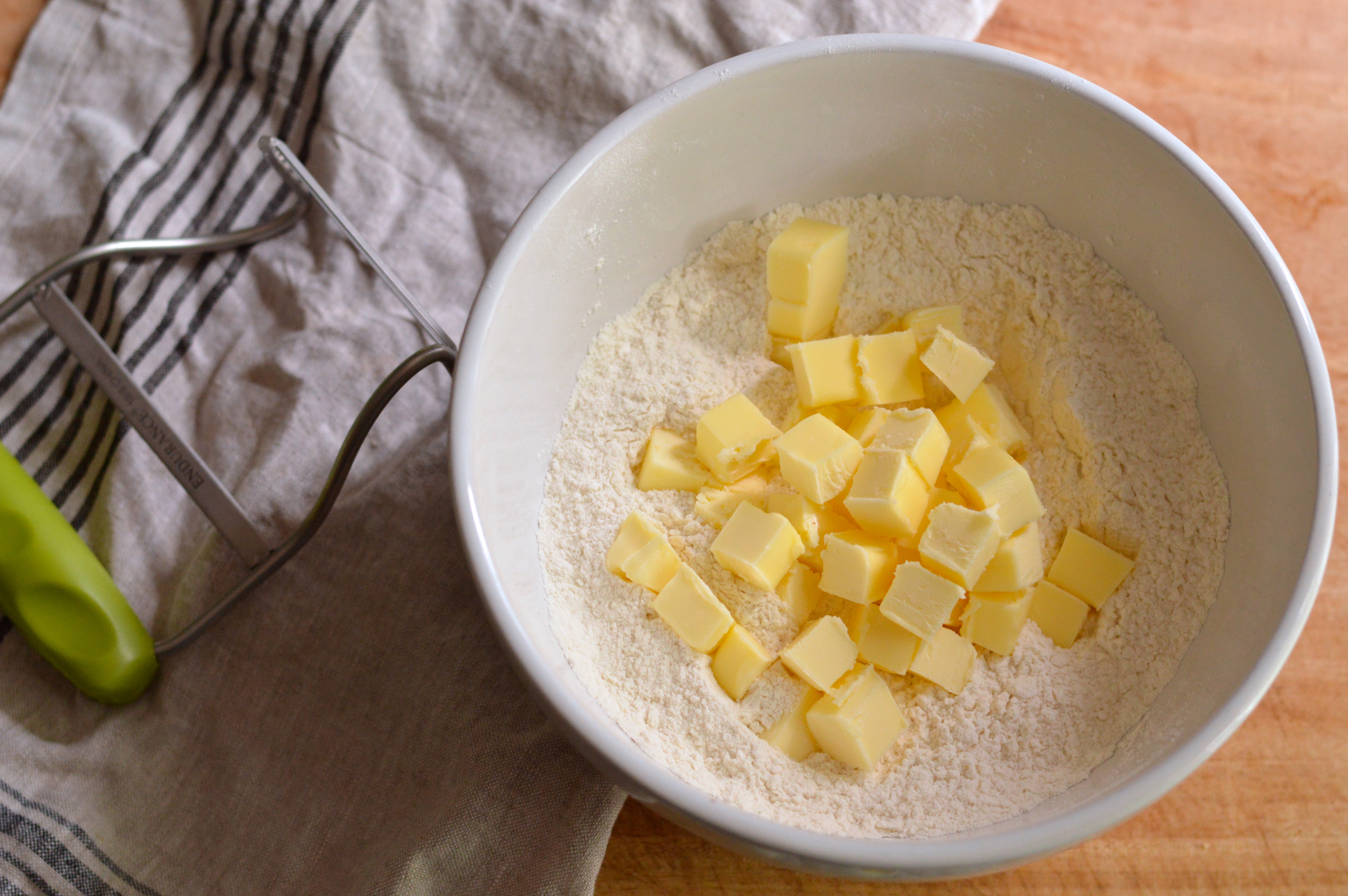
Whisk together flour and salt in a medium bowl, and add butter. Cut butter into flour with a pastry blender until the butter is in pea or pebble sized pieces. This can also be done by pulsing in a food processor.

In a small bowl, whisk together the yogurt, lemon juice, and water, and pour this over the butter-flour mixture. Stir with a spoon or a rubber spatula until a dough forms, kneading it once or twice on the counter if needed to bring it together. Pat the dough into a ball, wrap it in plastic, and chill it in the refrigerator for 1 hour or up to 2 days.

Filling:
2 lbs peaches, skinned and sliced about 1/2 inch thick
3/4 lb sweet cherry tomatoes, sliced in half lengthwise
2 teaspoons fresh thyme leaves, stripped from stems
3/4 cups sugar
1 1/2 tablespoons cornstarch
1 teaspoon lemon juice
1/4 teaspoon salt
1 egg, lightly beaten
3 tablespoons demerara (or any coarse raw) sugar

Preheat oven to 375. Combine peaches, tomatoes, thyme, sugar, cornstarch, lemon juice, & salt in a large bowl. Gently stir until well combined.

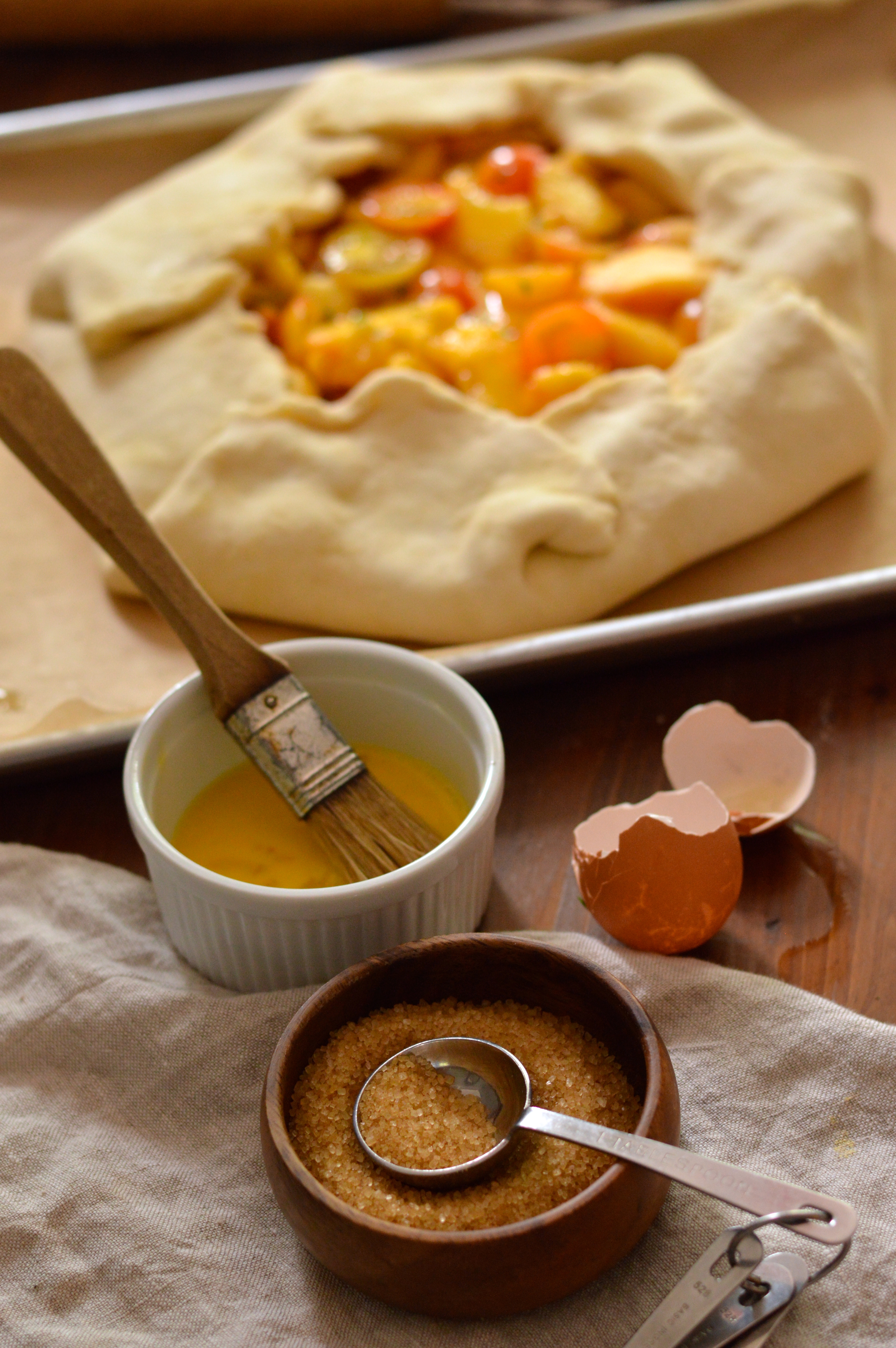
On a floured work surface, roll out the dough into a 16–inch round. Transfer to a parchment-lined baking sheet. Spread the filling over the dough, leaving a 2-inch border. Fold the border over the filling, pleating it as necessary, leaving the center open. Brush the outside of the crust with the egg wash, and sprinkle coarse sugar over the whole thing, crust and center.

Bake until golden brown and bubbling in center, about an hour and 10 minutes. Let cool on baking sheet 10 minutes, then slide galette on parchment onto a wire rack. Let cool completely (or almost completely) before serving. Top with vanilla yogurt.

Vanilla Yogurt:
1 cup greek yogurt
1 teaspoon vanilla
1 tablespoon honey

Whisk ingredients together in a small bowl until well combined. Spoon a hearty dollop over each slice of galette.

roasted peach and creamy vanilla pudding ice pops

I love homemade ice pops.

roasted peach and creamy vanilla pudding ice pops | Brooklyn Homemaker

I mean, let’s be honest here, I also love homemade ice cream and all things sweet and frozen, especially in the summer. Hot weather basically ushers in the season of icy frozen sweet treats for me. There’s something about a homemade ice pop though that just really hits the spot on a hot day. They also happen to hit the spot on a cool day, or a rough day, a stressful day, or a great day, a lonely day, or a day spent with friends.

roasted peach and creamy vanilla pudding ice pops | Brooklyn Homemaker

Making ice pops at home tends to be much easier than making ice cream and doesn’t require such an investment in special equipment. They’re also the perfect single-serving-size. Where eating ice cream requires a certain level of self control, you know you’re done with an ice pop when all that’s left is a clean wooden stick. Ice pops generally tend to be a little bit healthier too, featuring milk, yogurt, or fruit juice rather than heavy cream. So if you go back in for a second one, it’s okay, I won’t tell.

roasted peach and creamy vanilla pudding ice pops | Brooklyn Homemaker

Since milk, on it’s own, isn’t as creamy as the custardy base of ice cream, I think that transforming the milk into a pudding before freezing really improves the texture. I recently did this with chocolate ice pops with great results, so when I was trying to think of what to pair with peaches this time around I thought I’d give it a shot. Worked like a charm!

roasted peach and creamy vanilla pudding ice pops | Brooklyn Homemaker

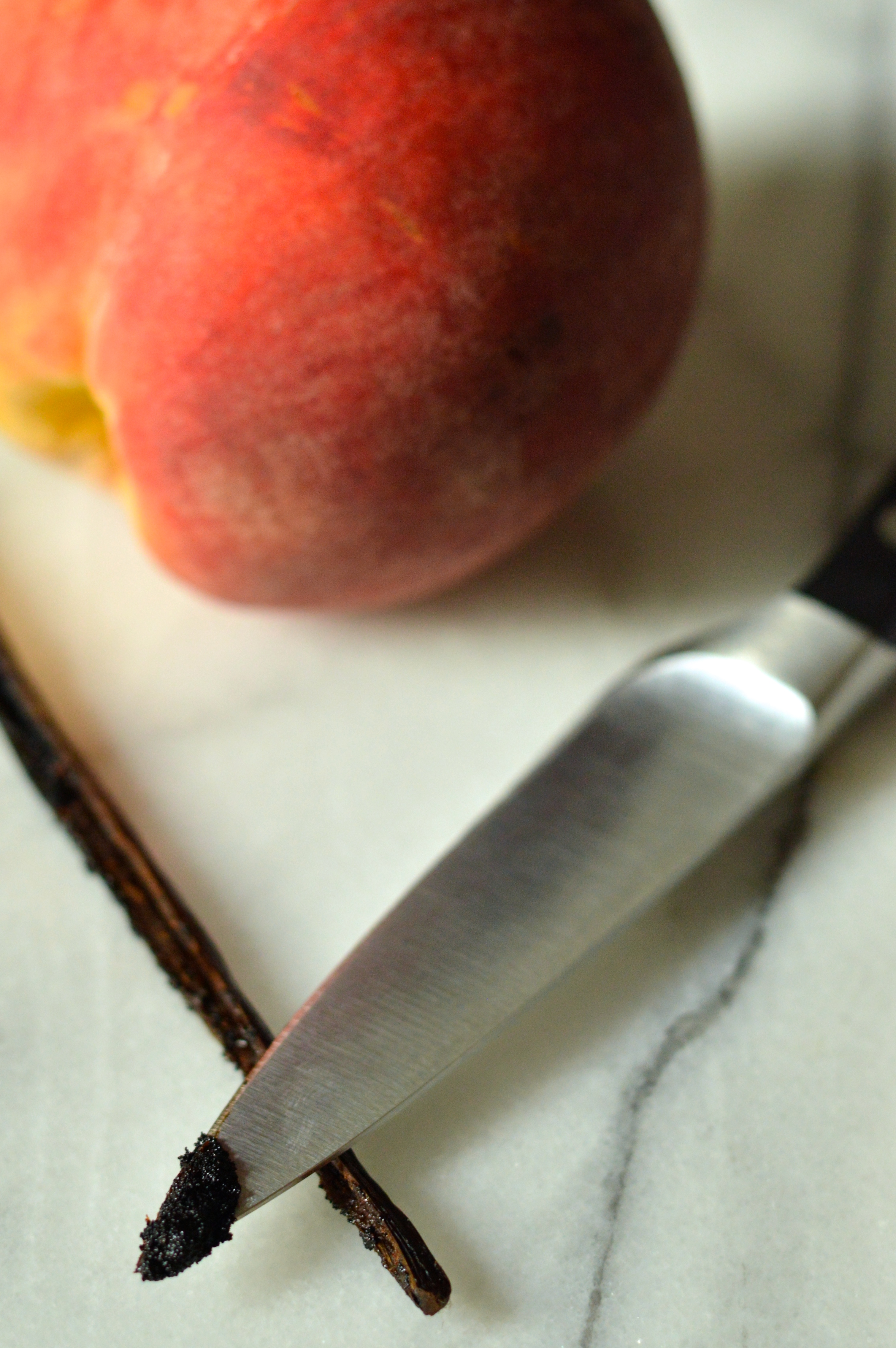
I infused the creamy pudding with a healthy dose of vanilla bean and thickened it slightly with egg yolk to give it a rich French vanilla custard flavor. It makes the whole thing taste just as rich and decadent as homemade ice cream, and it’s a perfect compliment to the deep summery roasted peaches.

roasted peach and creamy vanilla pudding ice pops | Brooklyn Homemaker

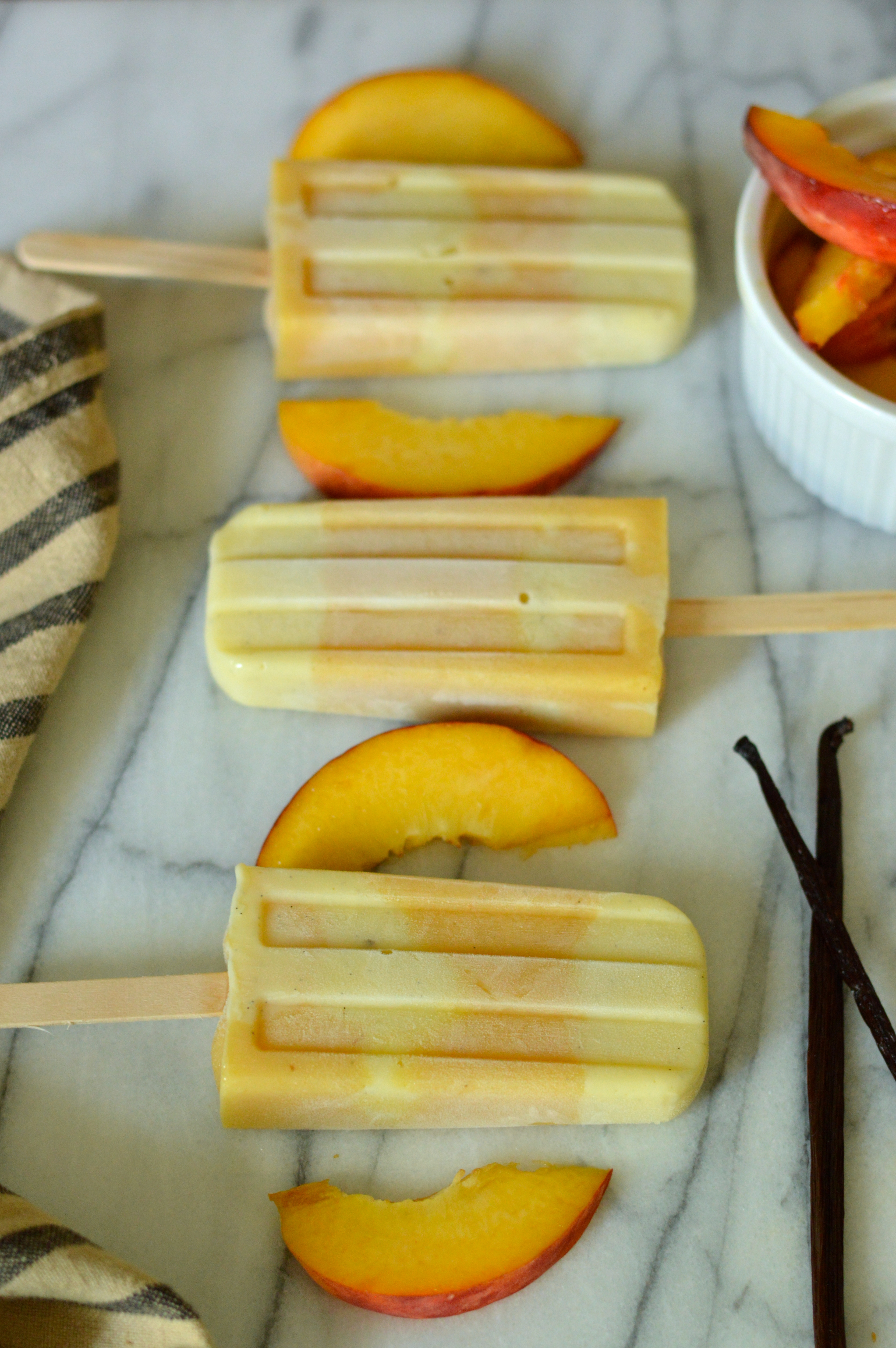
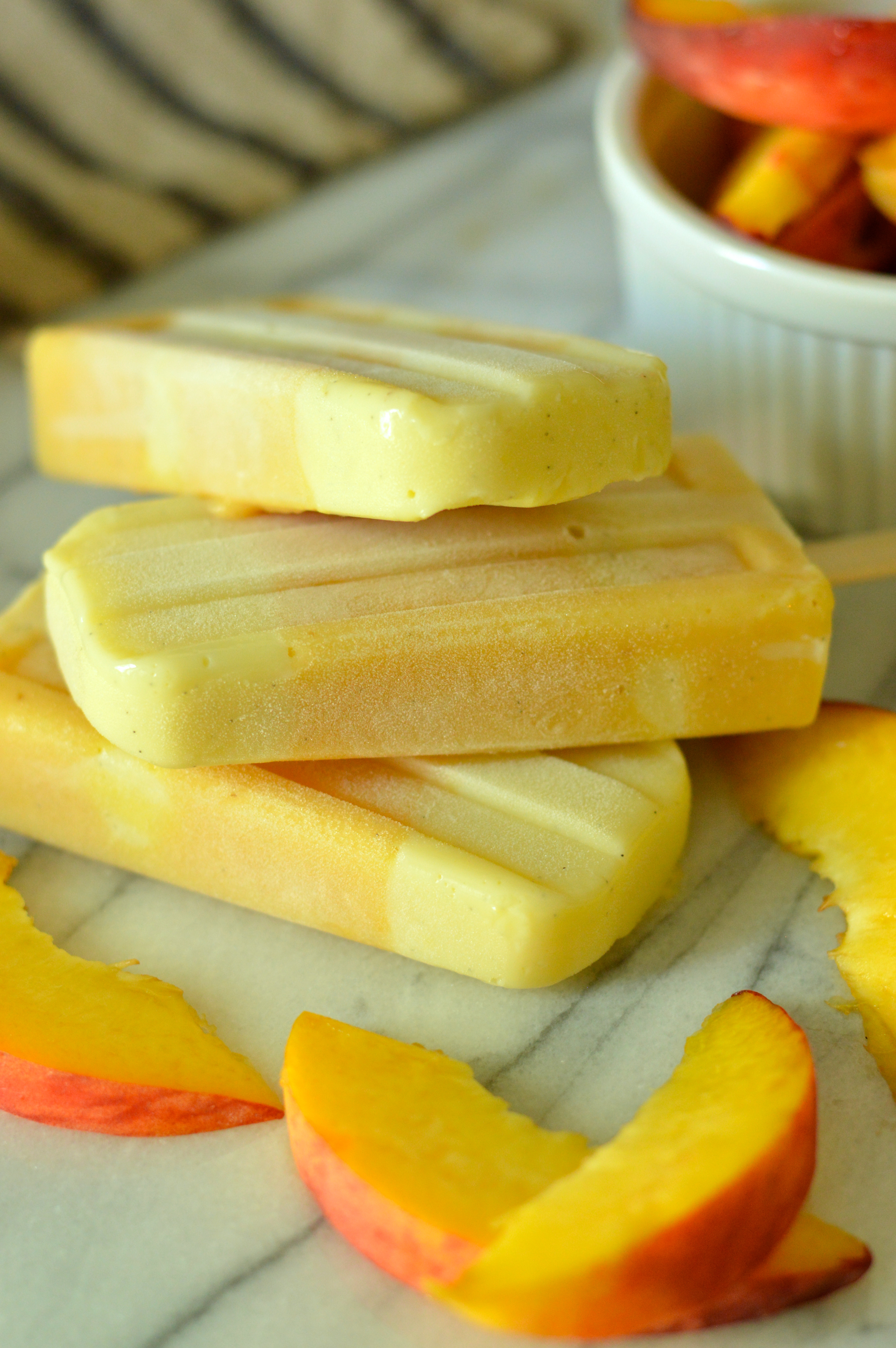
Roasting the peaches heightens and concentrates their flavor and gives them a toasty caramelized depth. It also helps to soften them and make them easier to peel and puree, which is especially great if your peaches aren’t exactly 100% ripe. Pouring the different flavors in alternating layers ensures that each slurp of these pops is a totally fun and refreshing experience.

roasted peach and creamy vanilla pudding ice pops | Brooklyn Homemaker

What more can I say about these? They’re creamy, rich, decadent, & custardy. Their amazing vanilla cream flavor is the star of the show, and it pairs perfectly with the sweet roasted peaches. Just right for summer!

DSC_0049

roasted peach and creamy vanilla pudding ice pops

  • Servings: ten 3oz ice pops
  • Print
1 lb fresh peaches (about 2 to 3 large or 3 to 4 small)
2 teaspoons lemon juice
1/2 cup plus 3 tablespoons of sugar, divided
2 tablespoons plus 1 teaspoon cornstarch, divided
pinch salt
2 cups milk
1/2 vanilla bean, cut lengthwise
2 egg yolks
2 teaspoons vanilla extract

Preheat oven to 450. Wash peaches and cut them into quarters, discarding the pit. Toss in a bowl with lemon juice and 3 tablespoons sugar. Arrange, cut side down, on a parchment lined baking sheet. Pour any leftover liquid over the peach pieces. Roast for about 20 minutes or until peaches release their syrupy juices and begin to brown. Remove from oven and allow to cool. Once cool, remove the skin from each slice, which should peel off easily. Set aside.

In a small saucepan, whisk remaining 1/2 cup sugar, 2 tablespoons cornstarch, and salt. Add milk and whisk smooth. Scrape seeds from vanilla bean and whisk into milk along with scraped bean. Heat slowly over a medium flame, whisking regularly. Once slightly thickened and bubbling, cook for one to two minutes more before removing from heat. Place egg yolks in a small bowl, and ladle in about 1/4 to 1/2 cup of pudding. Whisk together, and return to pan. Whisk smooth, return to heat, and bring back to a simmer. Simmer for one or two minutes more and whisk in vanilla extract.

Pour a little more than half of the mixture (probably about 1 1/2 cups) off into a measuring cup or heatproof bowl. Add peaches and remaining teaspoon of cornstarch to remaining pudding mixture. Puree in the pan with an immersion blender or in the pitcher of a blender. Return pan to heat, bring to a simmer, and cook for one or two minutes more. Cool slightly before proceeding.

Layer vanilla pudding and peach pudding mixtures in ice pop molds. I use a mold with ten 3 oz pops, and alternated two layers of each flavor. Try to be slightly more stingy with vanilla pudding, and more generous with peach as you’ll have just a bit more of that.

Cover molds, add sticks about half way into pops, and freeze for a minimum of 4 hours, or until completely frozen through. Remove pops by running each mold under warm water for about 10 or 15 seconds.