weeknight meal

seared pork chops with apples, onions, & mustard

I love pork. Just so we’re all on the same page.
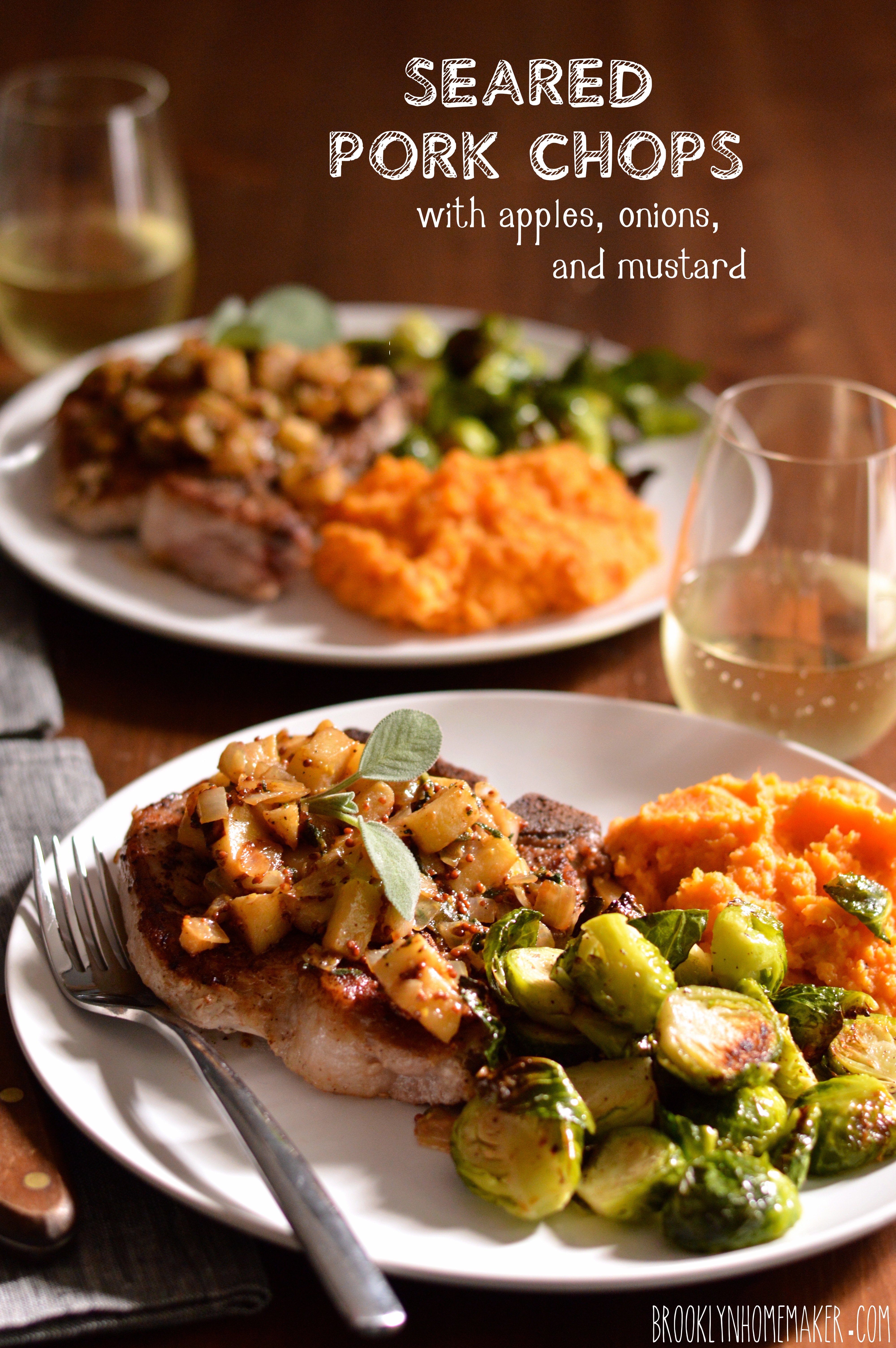
seared pork chops with apples, onions, & mustard | Brooklyn Homemaker

I’ve really always been a big fan of pork. Give me a big thick juicy pork chop over a steak any day of the week. In the words of Homer Simpson, “Porkchops and bacon, my two favorite animals.”

When I was growing up my grandmother used to make us porkchops a lot. Shake n bake, of course, and of course I helped. Grandma’s pork chops were usually cut thin and baked until well done. The common conventional wisdom in my grandmother’s day was that if you saw even a tiny twinkle of pink in your pork you’d probably keel over dead on the spot. You were supposed to cook ’em through and then keep on going, just for good measure. The only problem with that wisdom is that todays pork is bred to be so lean that cooking to well done produces a bone-dry chop that is, sorry grandma, pretty terrible. I know it’s not your fault grandma! Damned conventional wisdom! Maybe this is why a lot of people think they don’t like pork?

Well, I’m here to challenge that wisdom. It’s totally okay if you cook your pork to medium-well or even medium. You’re not going to die. You’re not even going to get sick. Unless you caught your pig in the wild, the only thing you’re at risk of is eating a seriously tasty pork chop. Thanks to modern farming, Trichinosis (the food borne illness commonly associated with pork), hasn’t been a concern for American eaters since the 1970s. In fact, the USDA even recently lowered their recommended internal cooking temperature for pork from 160 degrees to 145. Yay! We can finally eat tasty pork again!
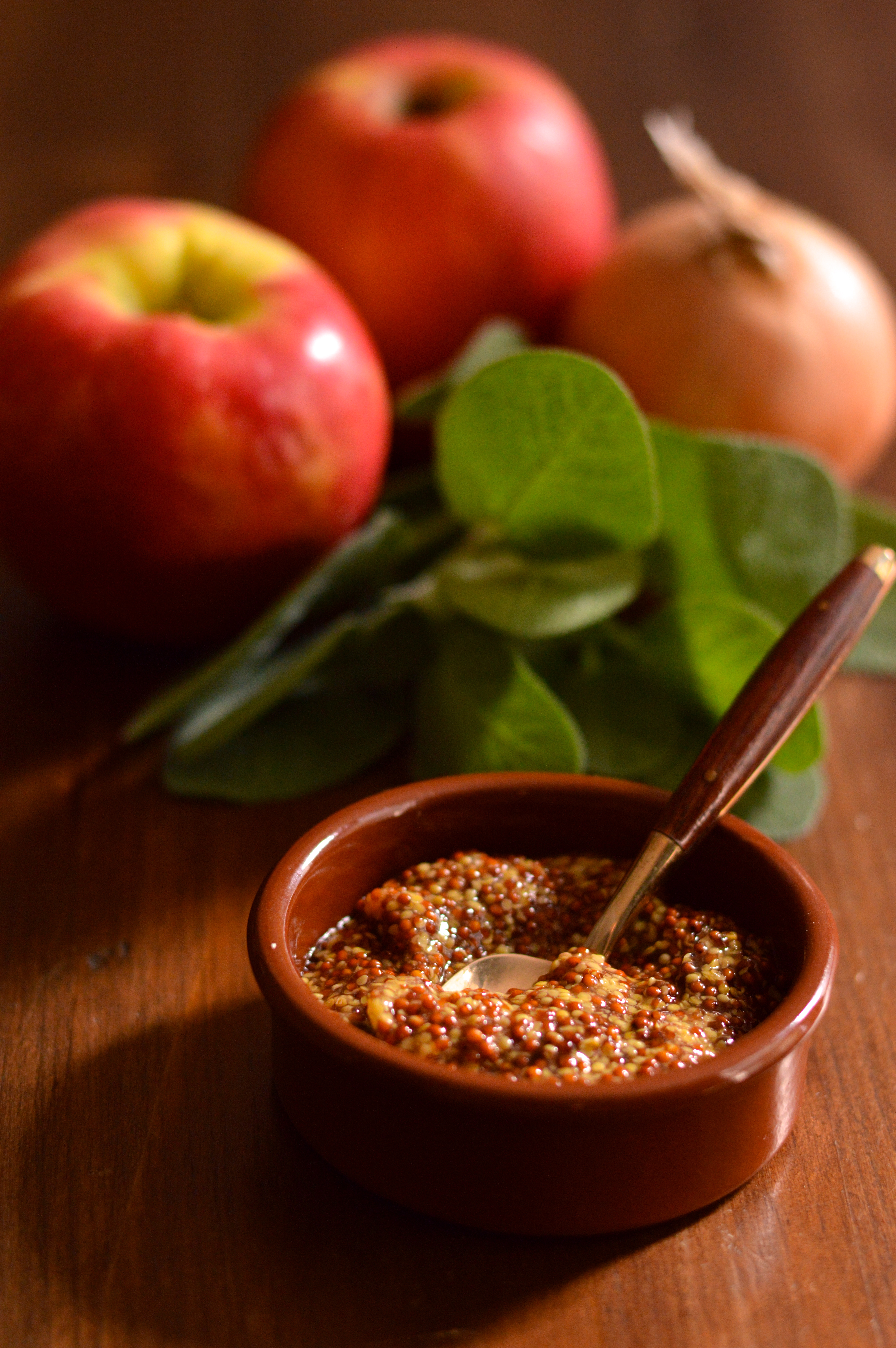
seared pork chops with apples, onions, & mustard | Brooklyn Homemaker

While we’re on the topic of tasty pork, lets talk about how I like to eat a pork chop. Call me uninspired, but my favorite flavor to pair with pork is apple. I know it’s super traditional and I’m not showing you anything you haven’t seen before, but hey, it’s friggin good! If it ain’t broke, I ain’t trying to fix it.

I’ve been eating apples with pork for as long as I can remember, which probably stemmed from grandma’s well done chops. I used to slather those suckers with mountains of applesauce, for the moisture as much as the flavor.

seared pork chops with apples, onions, & mustard | Brooklyn Homemaker

People have actually been pairing pork with apples for centuries. Before sugar was readily available to most people, fruit sweetened foods were usually served alongside or in combination with savory, and apples were a common way to add a touch of sweetness to pork dishes. This may have started because some farmers would feed old or rotten apples to their pigs, and some people say that a diet high in apples can actually flavor the meat.

On a side note, I might just need to plant some apple trees and buy a few pigs…
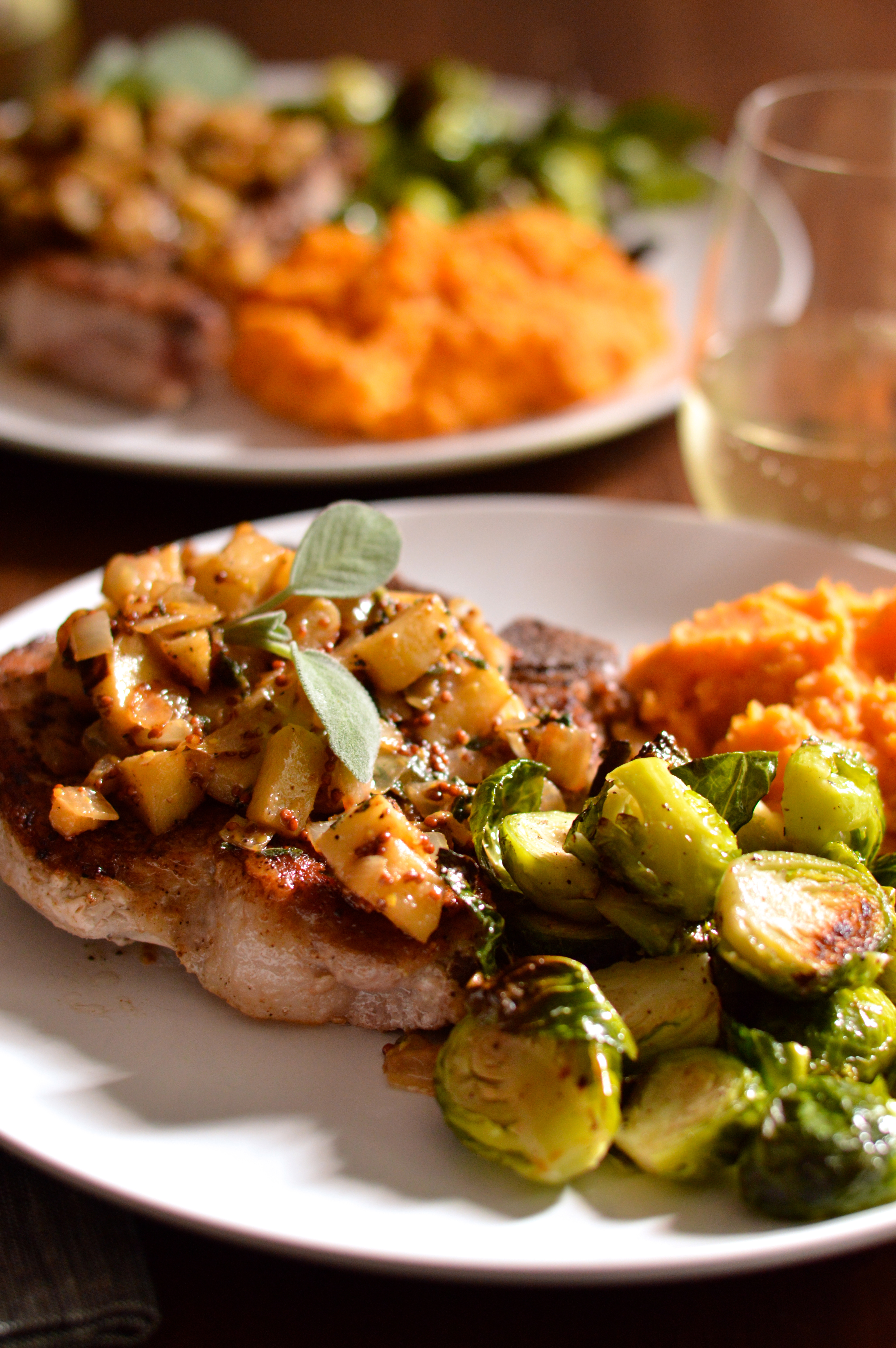
seared pork chops with apples, onions, & mustard | Brooklyn Homemaker

I think pork chops on the bone tend to have the best flavor, and the thicker they’re cut the juicier they’re going to be when they’re finished cooking. If you get your pan nice and screaming hot you only need to sear the chops for a few minutes on either side to get them perfectly cooked to medium well. If you’re still scared and want to cook them to well done, remove them from the pan the second the meat reaches an internal temperature of 145 degrees. Even thick cut chops will get dry and tough if overcooked.

To add a little depth to the pork and apple combination, I deglazed the pan with white wine after searing the pork, sautéed the apples with some onions and mustard, and finished the the whole thing with some cream and fresh sage from our back yarden. The onion helps keep things from going too sweet and fruity, and the mustard adds some interesting texture and a nice earthy vinegary bite. The sage reinforces that earthiness, and the cream gives the topping a really nice velvety finish. Despite feeling kind of “grown-up” and “fancy”, this meal is actually pretty simple to make and comes together in less than 30 minutes!

Since things are getting all nice and autumnal outside, I decided to pair my pork chop with some mashed sweet potatoes and roasted brussels sprouts. And, of course, there was also some white wine.
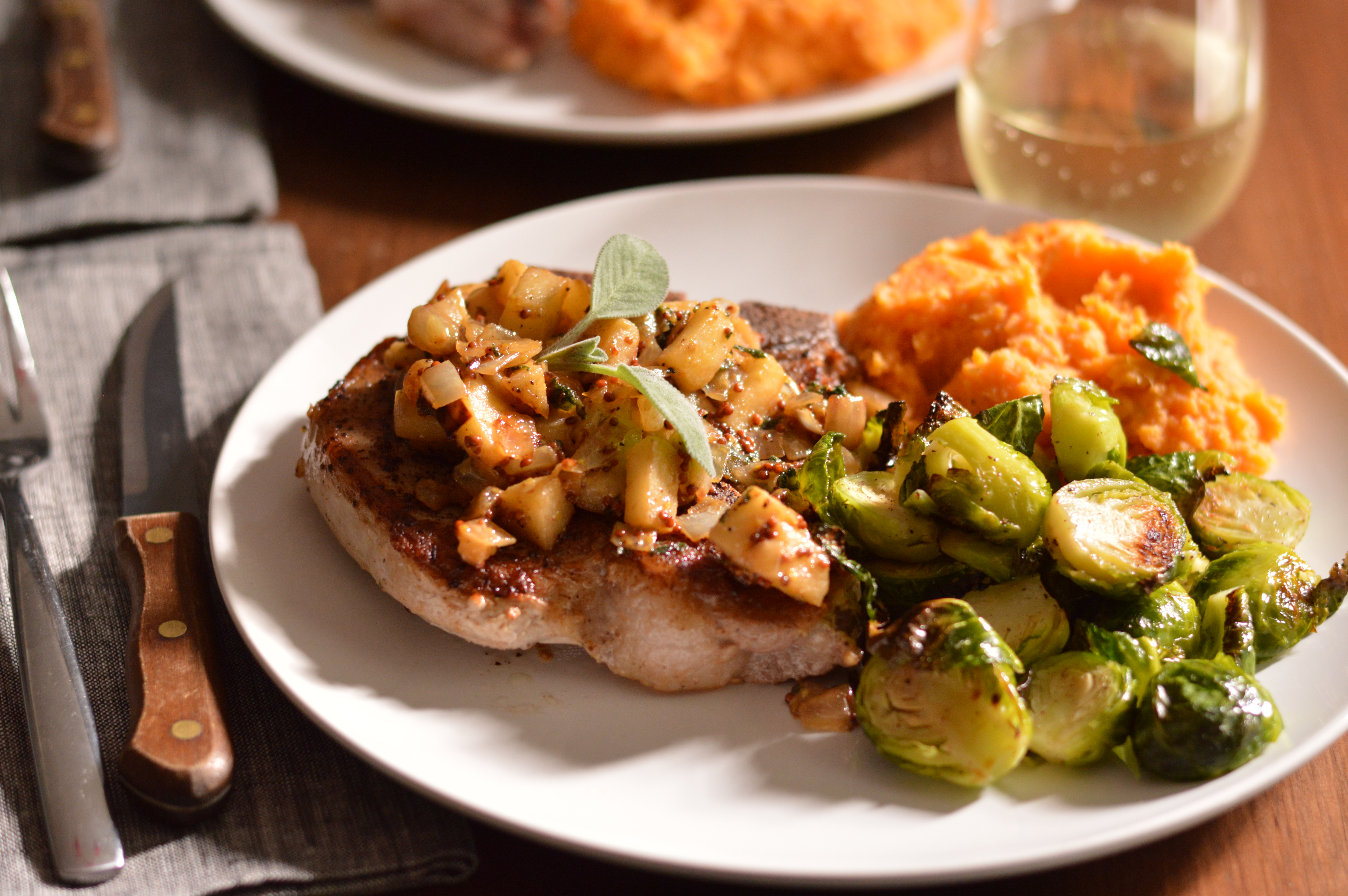
seared pork chops with apples, onions, & mustard | Brooklyn Homemaker

Seared Pork Chops with Apples, Onions, & Mustard

  • Servings: 2 generous portions
  • Print
2 center cut pork chops, bone in, at least 1 inch thick
salt and pepper to taste
2 tablespoons butter
1/4 cup white wine
1 firm sweet apple, such as pink lady
1 small onion
2 tablespoons whole grain mustard
2 tablespoons finely sliced fresh sage
1/4 cup cream

Generously season pork chops on both sides with salt and pepper. Preheat a heavy skillet over high heat until your butter sizzles and immediately browns when added. Add 1 tablespoon butter, swirl in pan, and immediately add pork chops. Reduce heat just slightly to medium high, and cook for about 3 to 4 minutes per side. You want them cooked to about medium-well. A little pink won’t hurt you but you want the meat to be mostly white. If you’re scared, use a meat thermometer to be sure the meat reaches an internal temperature of 145 degrees. Do not overcook or the chops will be tough and dry. Meanwhile; peel, core, and finely dice the apple, and finely dice the onion.

Remove pork chops to a plate and tent with foil (remember they’ll keep cooking a little while they rest). Deglaze pan with white wine, add remaining butter, apples, and onions and season with salt and pepper. Cook until onions are translucent, apples are tender, and everything is starting to get a healthy caramel brown, about 10 minutes. Add mustard, sage, and cream; and cook about 3 minutes more.

zucchini & mint soup

So we have some dirt, soil you might call it, in the back behind our apartment.

zucchini & mint soup | Brooklyn Homemaker

Many people who are lucky enough to have soil behind their homes like to grow things in said soil. Some people even try to grow edible things. I myself would love to grow edible things, but my soil has the unlucky fortune of residing beneath a big horrible mulberry tree that shades it and prevents much of anything green from ever seeing the bright rays of the sun. Hostas and Ivy do okay, but nothing edible wants to have anything to do with my crumby dirt. I have a few measly herbs in pots, but they do more in the way of surviving rather than thriving. A few years ago I put in some strawberry plants. I think that in the two summers that they were alive they produced exactly 3 berries between them. They’ve since given up and made way for weedy clumps of clover and moss.

zucchini & mint soup | Brooklyn Homemaker

It seems that the rest of you don’t have such problems. In the past few weeks I feel like everyone in the world (but me) has been whining about having too much zucchini. It would appear that your soil, and the edibles sustained within, are getting all the sunshine a patch of dirt could ask for.

“Oh look at all this zucchini!”, you say. “Whatever shall I do with all of it? Woe is me!” Oh you poor things! What a burden. I weep for you.

I should be so lucky. My soil wouldn’t spew forth a bounty of zucchini if its existence depended on it. If I want zucchini, I have to buy it at the market like a common chump. Can you even imagine?

zucchini & mint soup | Brooklyn Homemaker

My zucchini deficit doesn’t mean though, that I’m immune to the wiles of all the drool-inducing photos and recipes that have been popping up all over the internet lately. Even though I’m not actively trying to rid myself of any zucchini surplus, I’m still forced to watch as you struggle and strive to use up all of yours.  I don’t have the ill fortune of all this bounty, but thanks to all of your efforts, I now crave zucchini just the same. Thanks a lot guys.

zucchini & mint soup | Brooklyn Homemaker

I thought a nice light soup would be a great way to satiate my appetite for those big green beauties. When I started looking for inspiration though, most of the recipes I found paired the zucchini with basil. I do have a small basil plant in the back, but as if the paltry sunlight wasn’t enough, a little green caterpillar decided to add insult to injury and make swiss cheese of my poor little plant. I was a little worried that basil would be too strong a flavor to pair with mild zucchini anyway, so I tried to think of something else. It didn’t take me long to remember the mint I was given as a birthday gift, which somehow seems to be leading a happyish and healthyish existence.

zucchini & mint soup | Brooklyn Homemaker

So, zucchini and mint soup it was, and boy did it deliver. The mint and zucchini pair perfectly together, and the resulting soup is subtle, delicate, and delicious. It’s an ideal light supper for summer nights and hot weather. It’s just hearty enough to be filling, but isn’t at all heavy and definitely won’t weigh you down.

This soup is unbelievably simple and takes no time to make, but somehow manages to taste rich and complex. I’d definitely recommend using the highest quality chicken stock you can find, and if you have some homemade stock in the freezer, now would be the time to use it. Since the other ingredients are so delicate and mild, the stock really adds something. A good vegetable stock would be great here too if you want to make this vegetarian, and leaving out the yogurt would make it vegan.

zucchini & mint soup | Brooklyn Homemaker

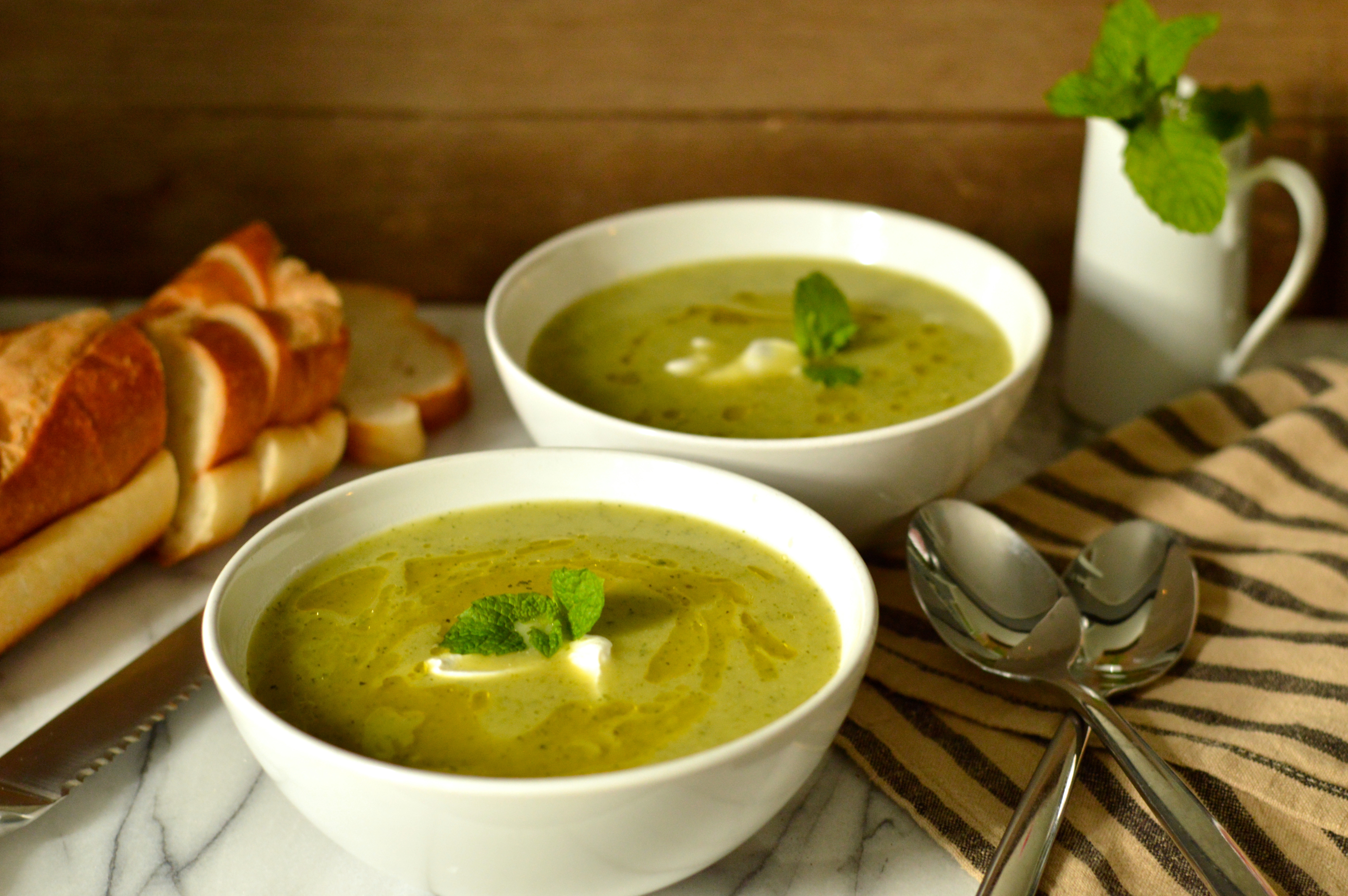
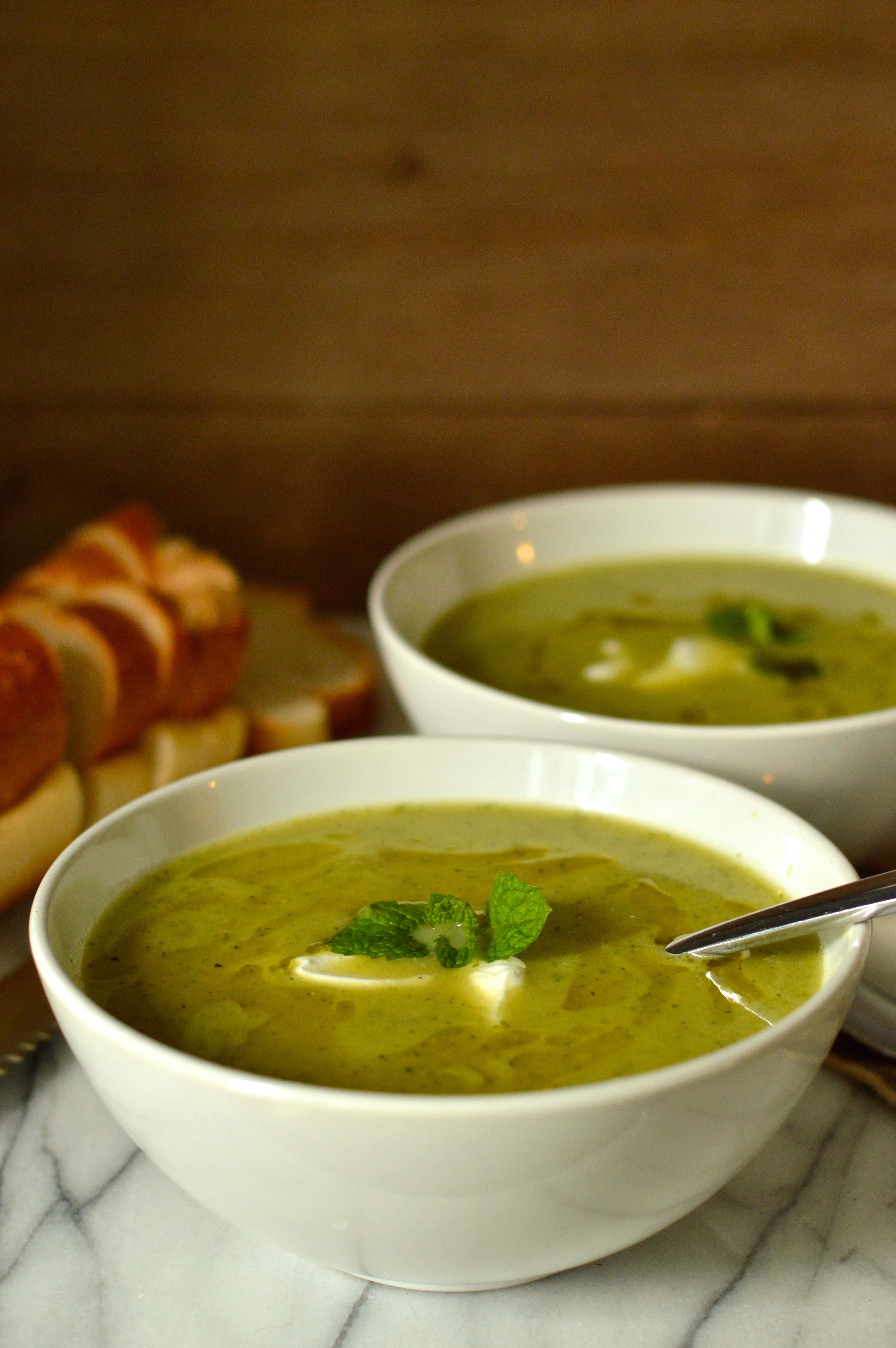
Whether you have a stockpile to use up, or you have to pay for it like me, this is the perfect way to satisfy your passion for zucchini. This soup is packed with bright, fresh, clean zucchini flavor that’s amplified and deepened with the addition of fresh mint. It literally could not be more summery. It’s smooth and creamy, and retains just a bit of texture when pureed with an immersion blender. Adding yogurt brings a nice hint of tanginess, but if you wanted to keep it dairy free you could substitute a squeeze of fresh lemon juice instead. Served with a nice crusty loaf of white bread, this soup is a summery little bowl of heaven.

zucchini & mint soup | Brooklyn Homemaker

Zucchini & Mint Soup

adapted from Gourmet Traveler

2 tbsp extra-virgin olive oil
1 onion, finely chopped
salt and pepper to taste
4 garlic cloves, minced or crushed
1 large zucchini (about 6 cups), diced
4 cups chicken stock
½ cup fresh mint leaves, loosely packed

To serve:
greek yogurt or fresh lemon, extra-virgin olive oil, and mint leaves

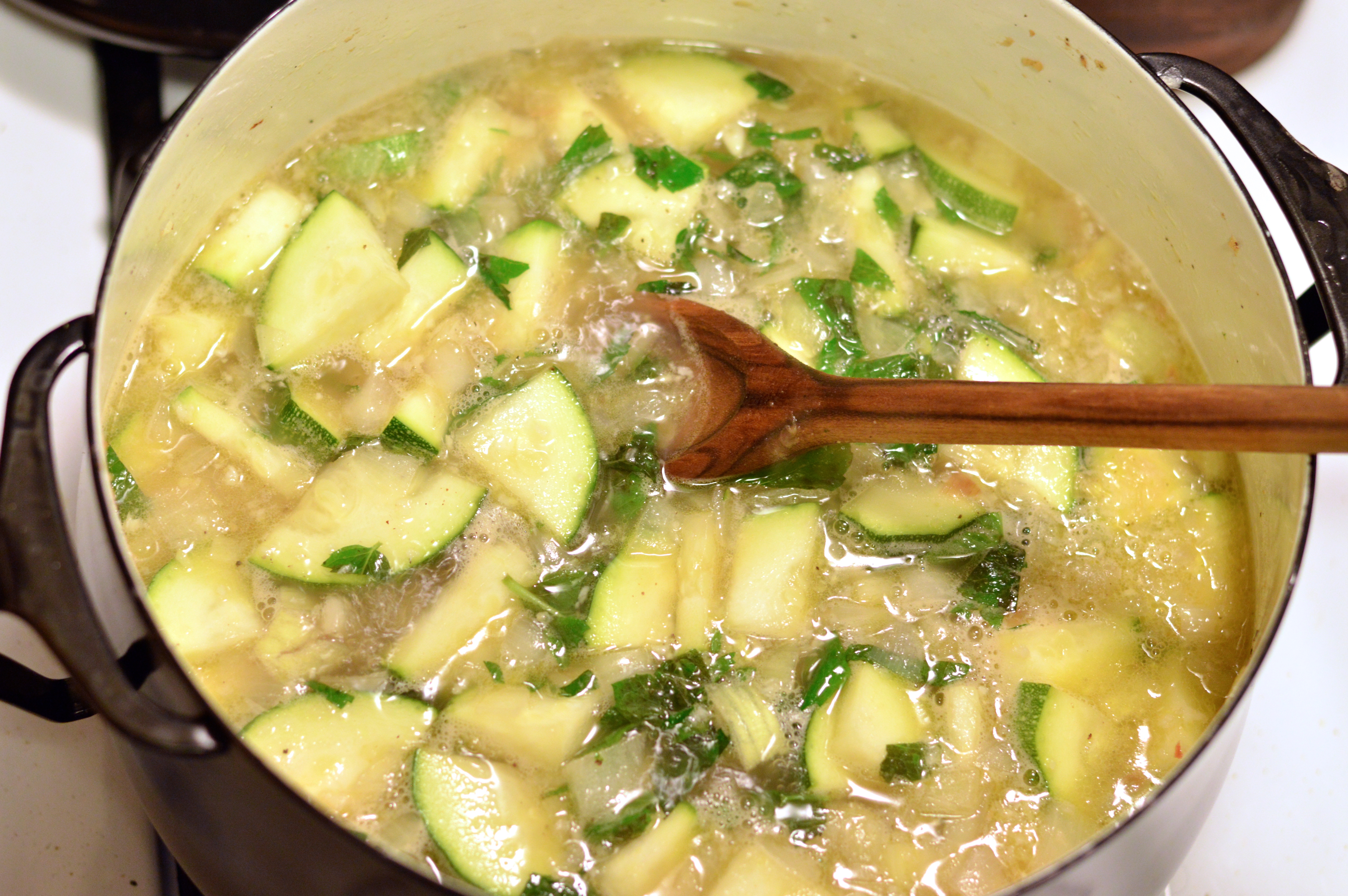
Heat olive oil in a large saucepan or stockpot over medium heat. Add onion, season with salt and pepper, and stir occasionally until tender, about 5 minutes. Add garlic and zucchini and stir occasionally for another 5 minutes. Add stock, increase heat to high and bring to a boil. Add mint, reduce heat to medium, and simmer until zucchini is just tender, about another 5 minutes. Process with a hand-held blender until smooth. Alternately, pulse in a blender until smooth with no large chunks, but not completely pureed. Check seasoning and adjust to taste if necessary.
To serve, top with a dollop of greek yogurt (or a squeeze of lemon juice), a drizzle of olive oil, and a few fresh mint leaves.

soba noodle and chicken salad with spicy peanut dressing

Okay Summer. I guess you’re here to stay.

soba noodle and chicken salad with spicy peanut dressing | Brooklyn Homemaker

I don’t know what it is about warm weather, but it makes me crave cold peanutty noodles. At least the fact that it’s hot out means that I have plenty of fresh summer veggies at my disposal. Filled with all that produce, this salad really is the perfect thing for a hot muggy day. Can you think of anything you’d rather eat in this weather than something that’s filling without being heavy, and cold and refreshing but also savory and flavorful at the same time?

No. You can’t.

soba noodle and chicken salad with spicy peanut dressing | Brooklyn Homemaker

I usually make this once or twice every summer and that’s all I need to pacify my craving. The recipe makes enough that Russell and I both get to bring the leftovers for lunch, and if we don’t go crazy on the portions, we might even have something left to snack on the day after that.

soba noodle and chicken salad with spicy peanut dressing | Brooklyn Homemaker

I’ve made this enough times now that I’ve been able to get the dressing and everything just the way I like it. I’ve tried a few different recipes and some of them were too sweet, others too salty, others waaaay too complicated. Each time I’ve fiddled and futzed and streamlined the recipe to make it as simple and delicious as can be.

soba noodle and chicken salad with spicy peanut dressing | Brooklyn Homemaker

The only slightly time consuming part of this is cooking, cooling, and pulling the chicken. If you wanted to speed things up, and avoid turning on the oven for a day, you could plan ahead to cook extra chicken the night before, or use leftover chicken from yesterday’s roast. You could even leave it out or substitute it for another vegetable. A rotisserie chicken could work too, but I worry that all that seasoning might be too strongly flavored and could compete and clash with the flavors in the dressing. Maybe not though?

soba noodle and chicken salad with spicy peanut dressing | Brooklyn Homemaker

If everything you put into the salad is relatively cool or cold, you can definitely eat it right away without needing to refrigerate it, and since the veggies go in raw and the peanuts and soba noodles are done in just a few minutes, this really is quick and easy to throw together if your chicken is cooked ahead.

soba noodle and chicken salad with spicy peanut dressing | Brooklyn Homemaker

To some, the ingredient list here might seem a bit daunting, but please don’t be scared. The dressing is so distinctive and flavorful that you’ll be glad you took the time to go out and find fish sauce and sesame oil. If you’re like me, you probably already have these things in your fridge anyway, but if you don’t, you can find them in most grocery stores pretty easily these days. Then you’ll have them and can start experimenting with all kinds of new recipes to add to your repertoire.

Once you get everything together, making the dressing is as easy as throwing everything in a bowl and whisking it. If you’re not a fan of heat and spice, you could reduce or even skip the sriracha, but I think it really adds something wonderful to this cold dish.

If you’re not familiar with Soba noodles, they’re a Japanese buckwheat noodle that’s usually cut so thin that it cooks in 5 minutes or less. They’re subtly nutty, and hold their texture in broth or dressing, so they lend themselves perfectly to both cold salads and hot soups. They’re often gluten free too, but some companies add wheat so be careful to read the label if that’s important to you. If you can’t find them you could also use regular thin spaghetti, or even spiral sliced zucchini noodles like the ones I made here.

soba noodle and chicken salad with spicy peanut dressing | Brooklyn Homemaker

This salad is totally perfect for summer weather, whether it’s sunny and mild, or too hot and sticky to leave the house. It’s especially great to take with you for lunch if sitting in front the A/C in your underpants all day isn’t an option.

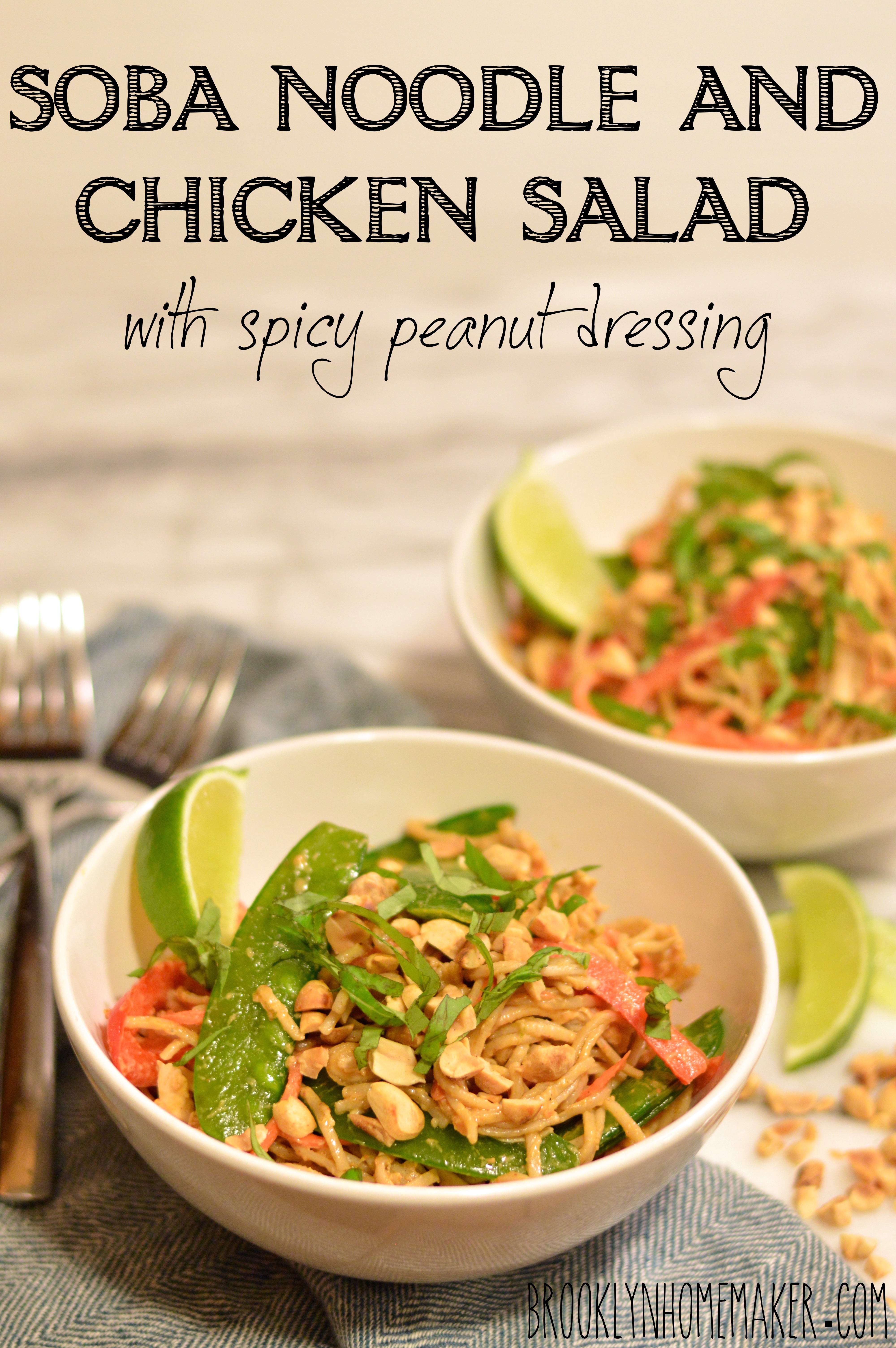
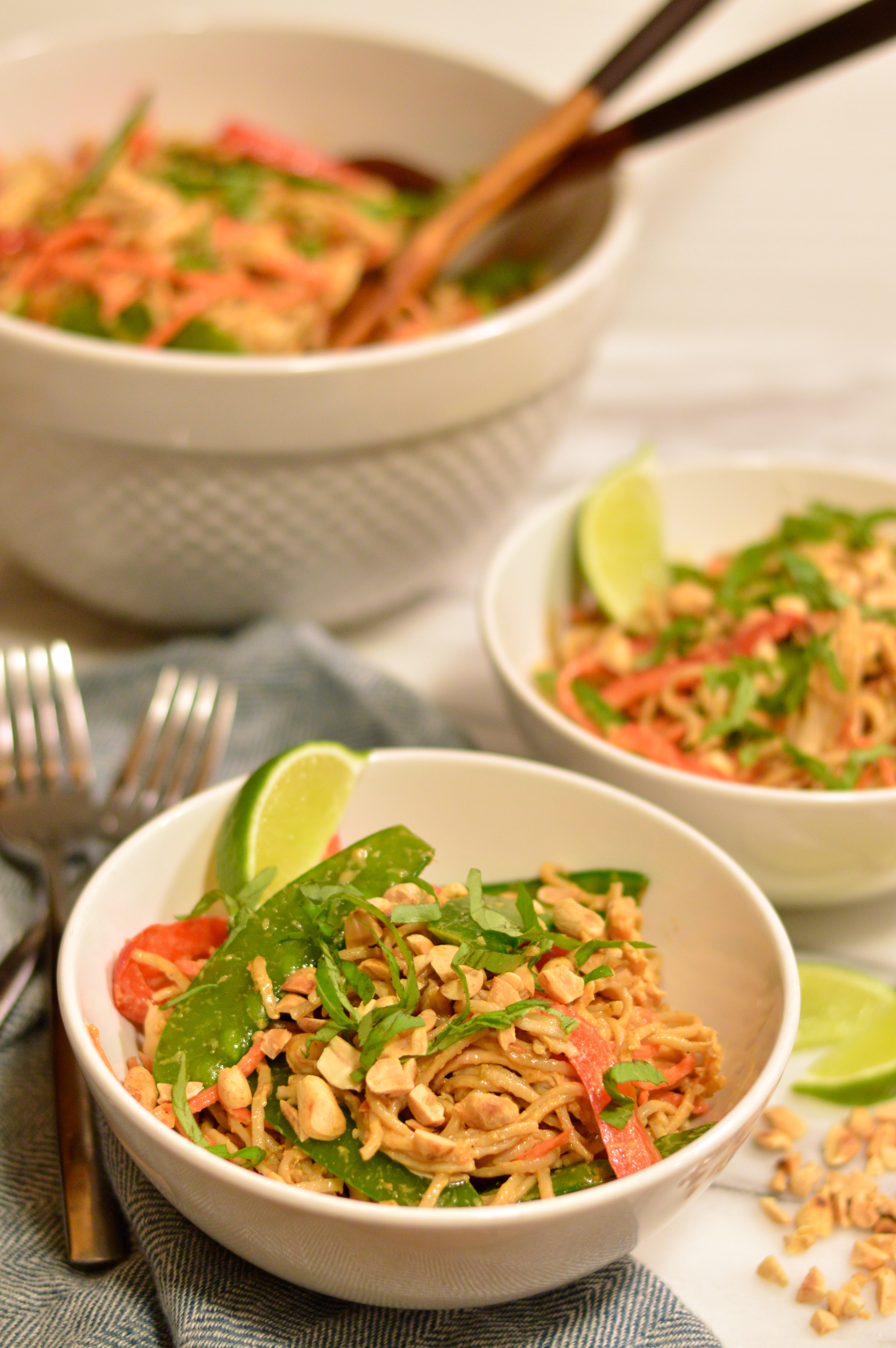
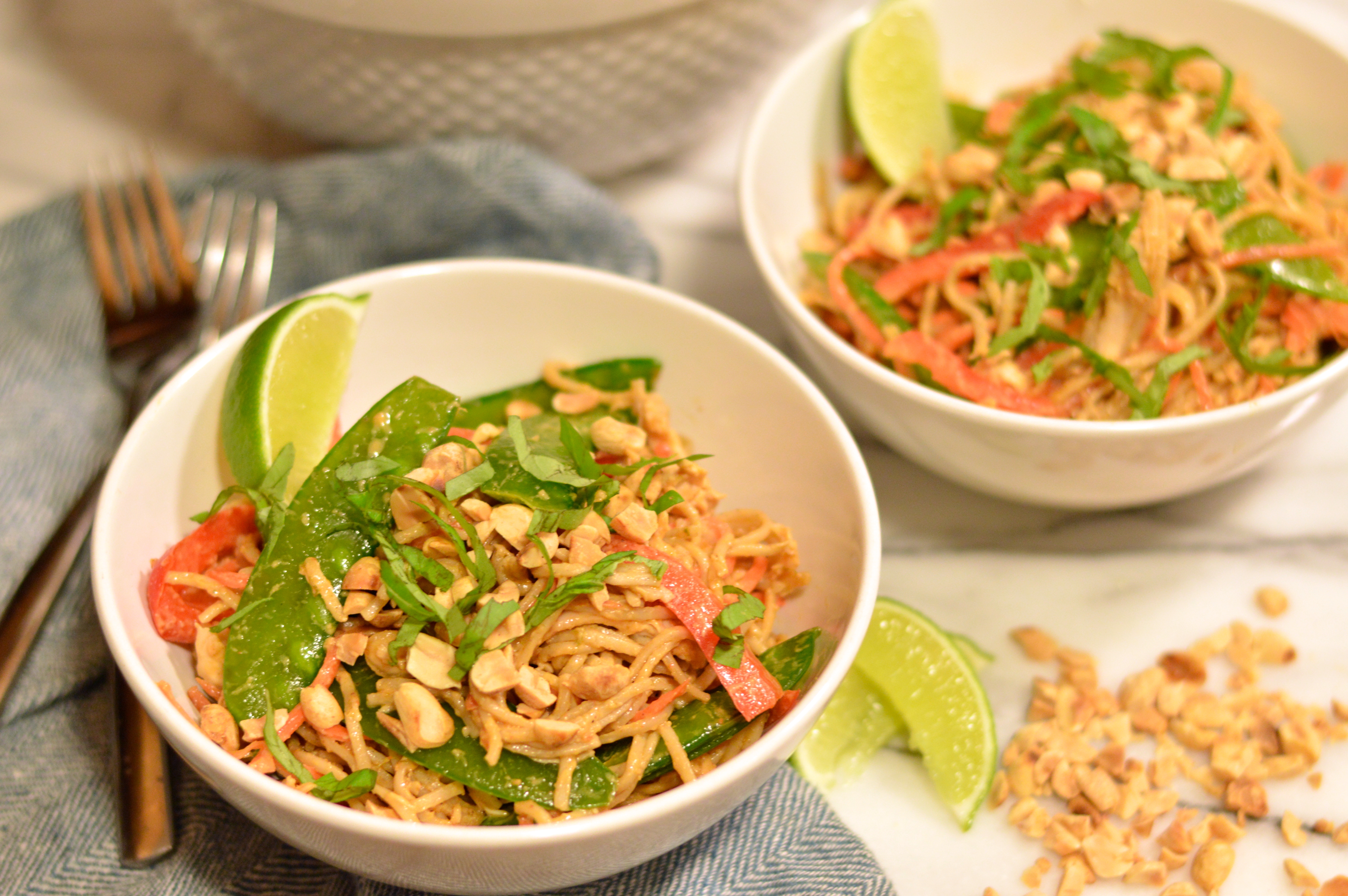
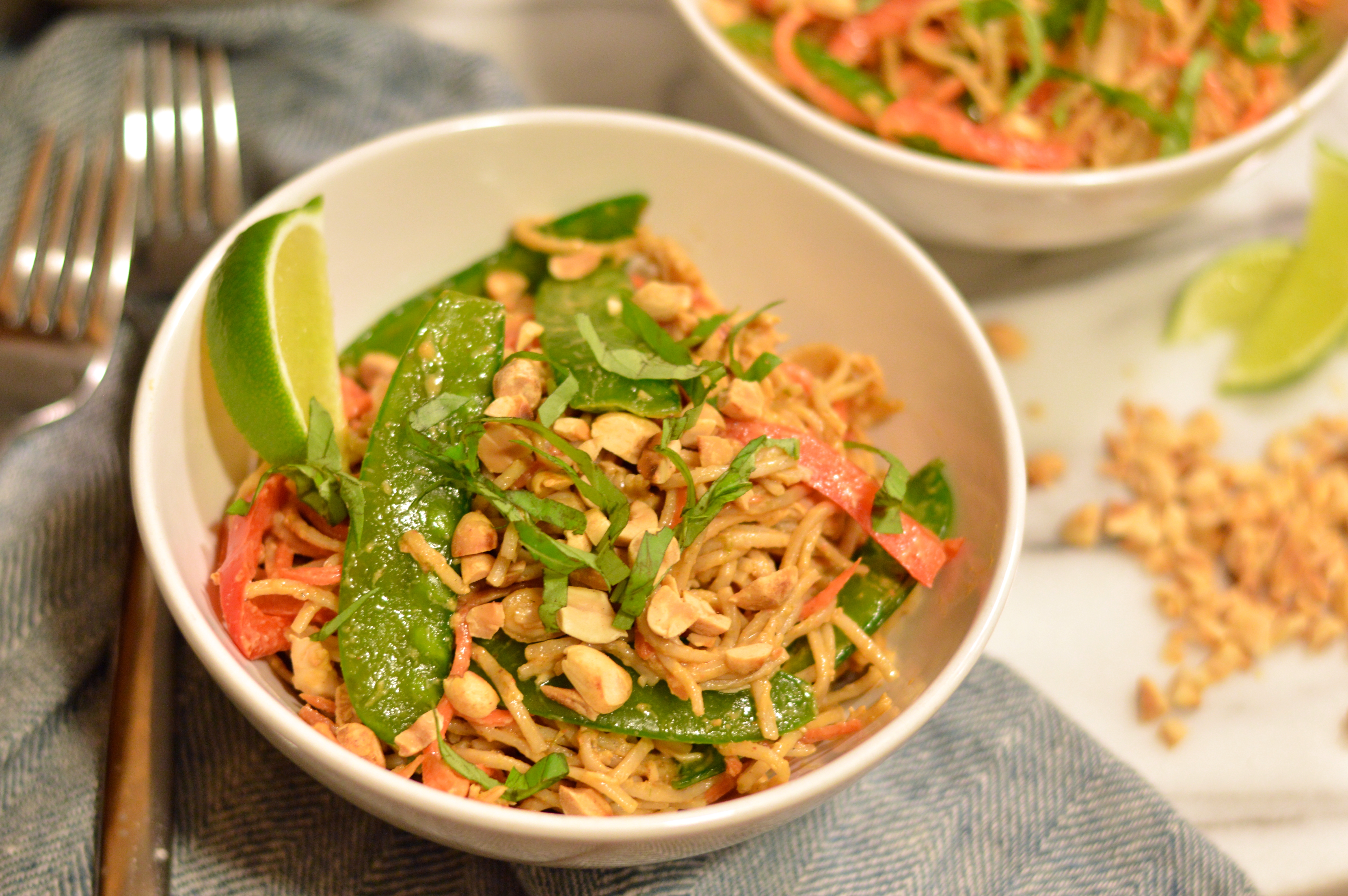
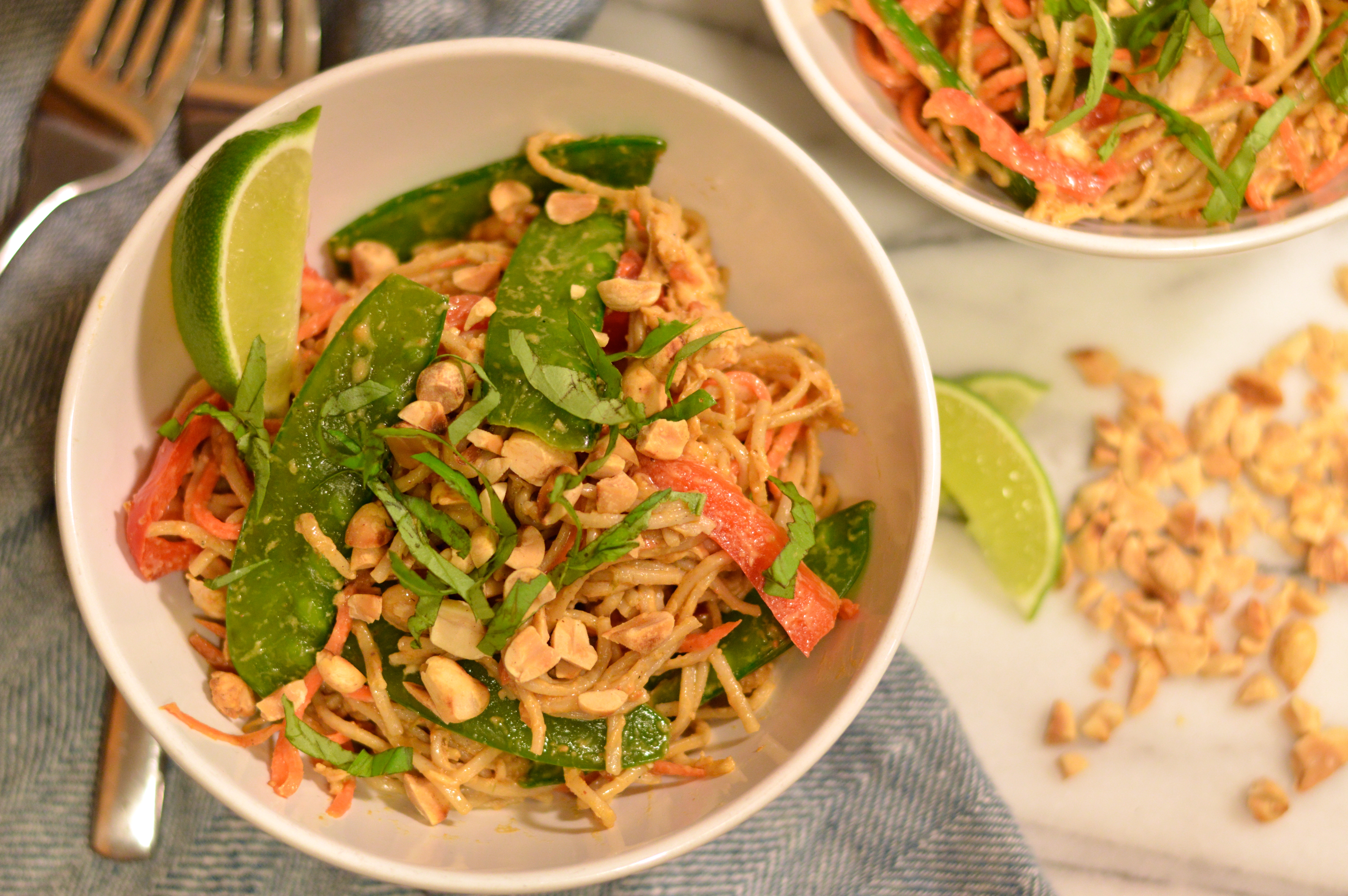
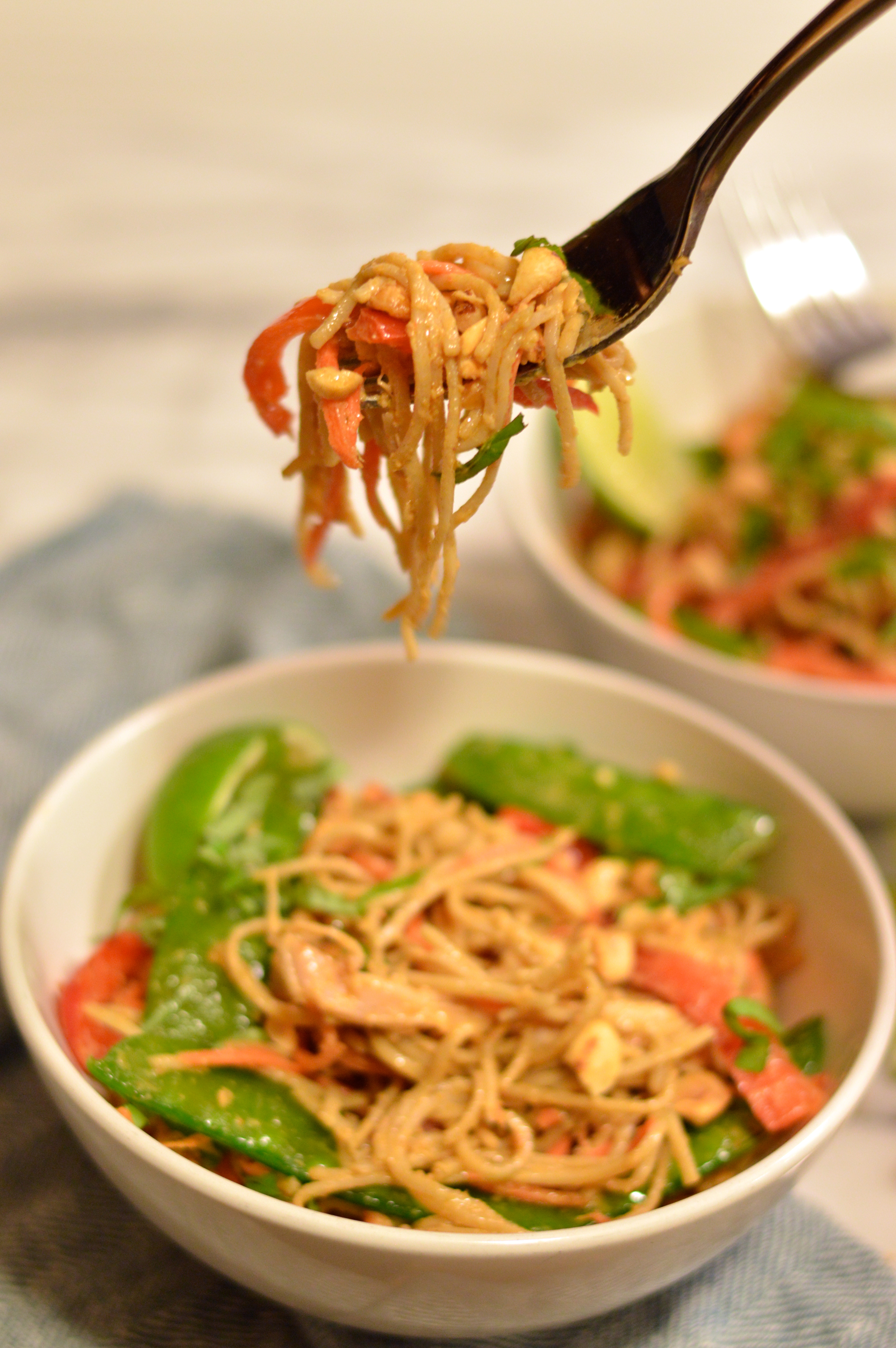
The dressing is thick, creamy, and perfectly peanutty with a nice sesame backbone, a little sweet acidity from the lime, a bit of saltiness from the soy and fish sauce, and just a touch of heat from the sriracha. Not only is this salad packed with flavor, it also has a great variety of textures to keep every bite fresh and interesting. There are crunchy toasted peanuts, crisp snow peas and peppers, tender noodles and chicken, and a dreamy creamy dressing to tie it all together.

soba noodle and chicken salad with spicy peanut dressing | Brooklyn Homemaker

Soba Noodle and Chicken Salad with Spicy Peanut Dressing

2 chicken breasts, skin-on & bone-in
1 tablespoon olive oil
salt and pepper
9.5 oz soba noodles
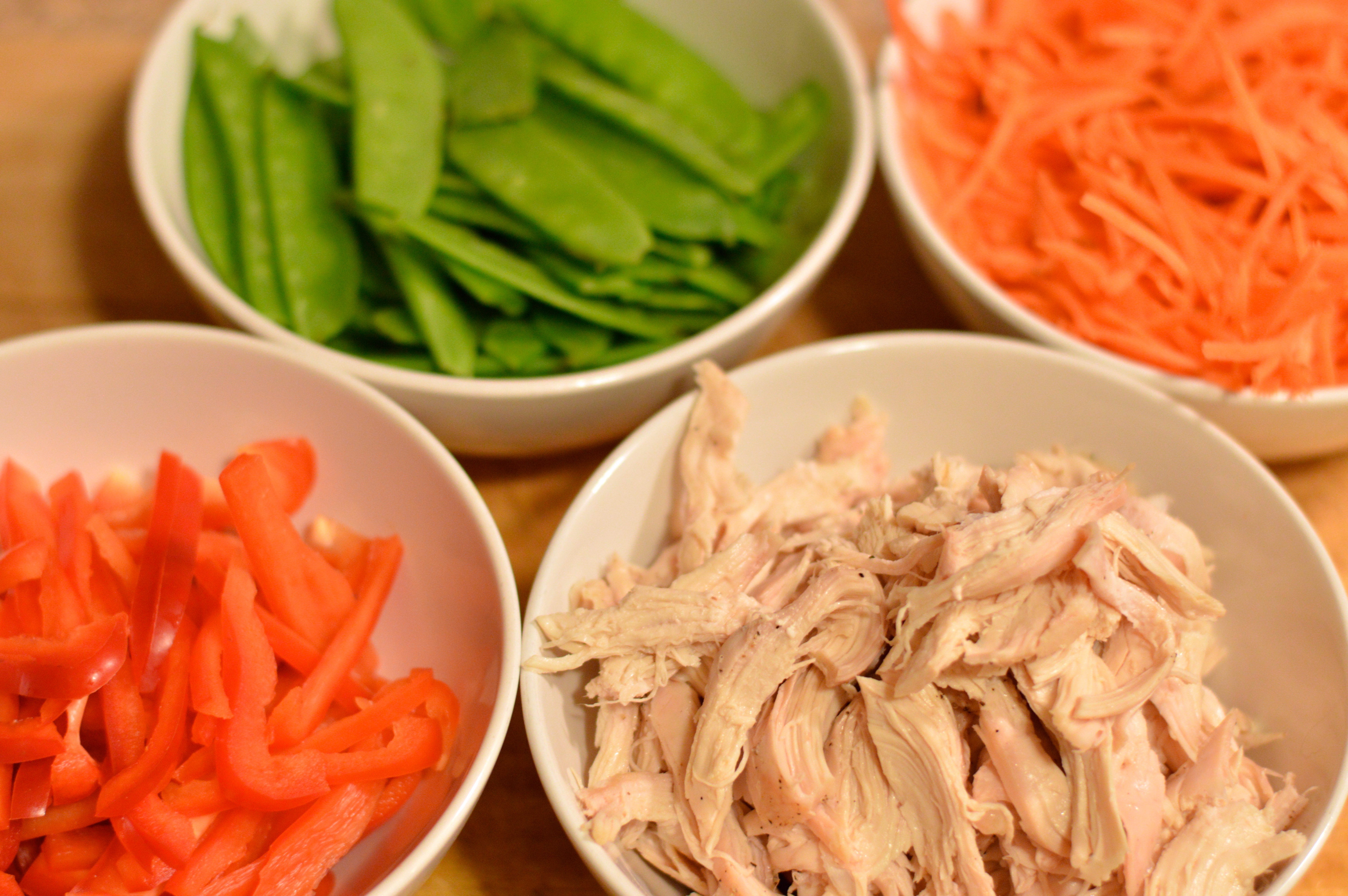
3 carrots, very finely julienned with a julienne peeler, mandolin, or spiral slicer
1 red bell pepper, cut into very thin strips
1/3 lb snow peas, hard stem-ends removed
1/2 cup unsalted peanuts (extra for plating if desired)
lime wedges and torn basil or cilantro for plating, if desired

Peanut dressing:
zest and juice of 1 lime
1 tablespoon finely grated fresh ginger
1/2 cup smooth natural (unsweetened) peanut butter
4 tablespoons soy sauce
3 tablespoons olive oil
2 tablespoon sriracha chili sauce
2 tablespoon sesame oil
1 tablespoon fish sauce
1 tablespoon honey (if using sweetened peanut butter, use 1 teaspoon honey instead)

Preheat oven to 375. Place chicken breasts on a parchment lined baking sheet, rub with olive oil, and season with salt and pepper to taste. Bake for 35-40 minutes or until cooked through. Remove from oven and cool. Once cooled, remove skin and pull meat from bone. Shred chicken into bite sized pieces. Set aside.
In a heavy skillet on high heat, toast peanuts for about 5 minutes. Cool, roughly chop and set aside.
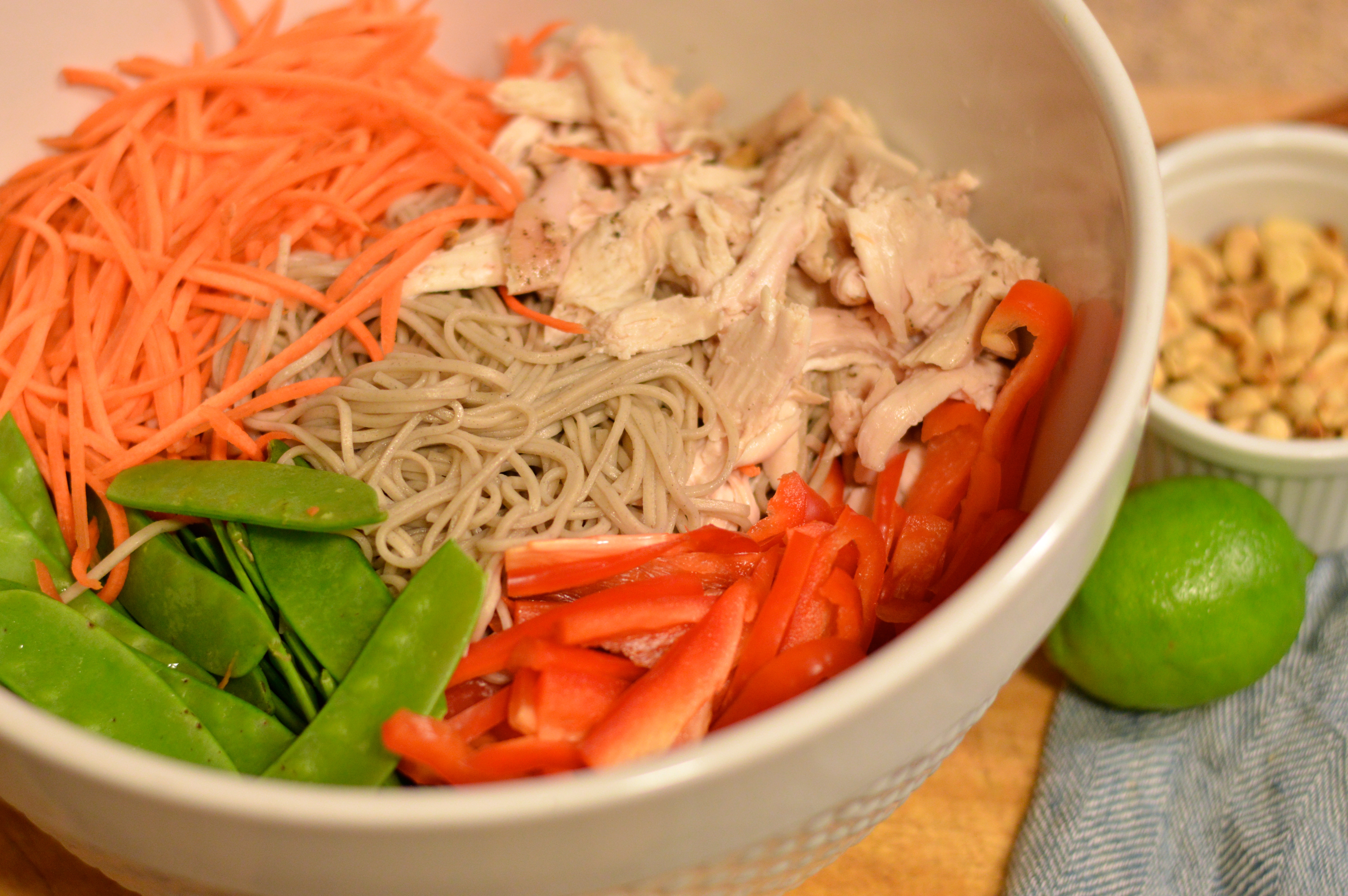
Cook soba noodles according to package directions. Rinse in cold water, drain, and place in a large bowl. Add prepared carrots, pepper, and snow peas, as well as cooled pulled chicken and peanuts. (If desired, reserve some peanuts for serving)
To prepare dressing, place all remaining ingredients in a bowl and whisk until well combined. Pour over salad and toss toss toss until everything is well dressed and evenly distributed through salad. If desired, top with a few reserved roasted peanuts, a lime wedge, and some torn basil or cilantro.