Main Dishes

homemade chicken pot pie with buttermilk biscuit crust, revisited

Sooooo… This recipe may look strangely familiar.
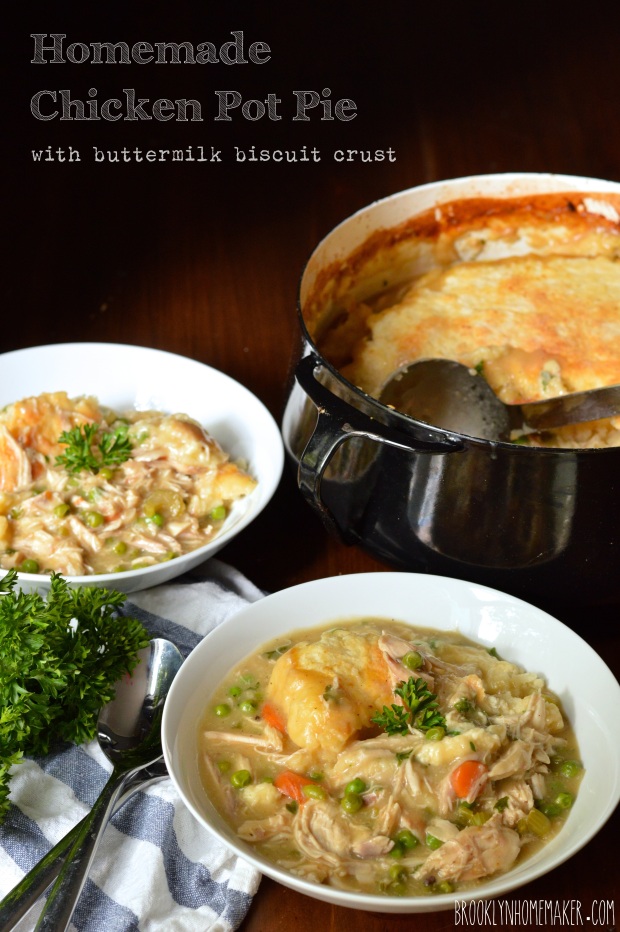
homemade chicken pot pie with buttermilk biscuit crust | Brooklyn Homemaker

Back when I first started blogging and didn’t yet have a camera, I was using my iPhone to capture images of the meals and treats I was creating. At the time, I was doing my best to take “artistic” and “attractive” photos, but truth be told I’d never used a real camera and didn’t have a freaking clue what I was doing.

Looking back, those photos were pretty terrible.

homemade chicken pot pie with buttermilk biscuit crust | Brooklyn Homemaker

I mean, everyone’s gotta start somewhere, and I think it’s actually really nice to have a reference to show how far I’ve come in such a short time. It wasn’t until late November that I got my Nikon DSLR, and even then I was completely clueless for the first few months. I know that I still have a lot to learn, but I can confidently say that in less than a year I’ve already taught myself a lot about lighting and white balance and shutter speeds and aperture and fixed lenses. I won’t even get into food styling skills and my growing hoard collection of props and surfaces and backdrops.

homemade chicken pot pie with buttermilk biscuit crust | Brooklyn Homemaker

Anyway, I’m glad that I started blogging before I got my camera, because it gave me a chance to find my voice when it comes to my writing, and to figure out what direction I wanted to take things. I have no plans to remove any of those first few posts, but there are a few recipes from the beginning that I’d like to revisit. Some of them are too important to me to leave them in the past, represented only by embarrassing photos and awkward writing.

homemade chicken pot pie with buttermilk biscuit crust | Brooklyn Homemaker

This is one of those recipes. If you’re interested, you can find the original post here.

homemade chicken pot pie with buttermilk biscuit crust | Brooklyn Homemaker

When I was growing up we ate dinner at my grandmother’s house a lot, and much of my taste in food and cooking comes from her. Of all the amazing meals she has in her repertoire, this has always been my favorite. Her biscuit-topped chicken pot pie was so frequently requested by myself and my sister in our youth that it had to be reserved for birthdays and special occasions.

When I was old enough to start cooking my own meals, this was one of the first recipes I was determined to master. Later in life I started experimenting and toying with Grandma’s recipe, and the way I make it today is actually quite different from the way she does. Chicken bouillon cubes have been replaced with homemade chicken stock, canned vegetables scrapped and swapped for fresh, and real buttermilk biscuits take the place of Grandma’s biscuick topping. I believe her recipe originally came from a woman’s magazine with a focus on convenience food, but times and tastes change, and I prefer this fresher, less processed, more modern interpretation.

homemade chicken pot pie with buttermilk biscuit crust | Brooklyn Homemaker

In any event, this pot pie is every bit as warm and homey as Grandma’s version. This is comfort food at its finest. Tender shredded chicken and fresh vegetables in a thick creamy gravy made from homemade stock with plenty of herbs, all topped with a pillowy island of tender buttermilk biscuit and baked until bubbly and golden. If it weren’t such an event to prepare, I would probably eat this several times a week. I guess it’ll still have to be reserved for special occasions, and that’s probably a good thing.
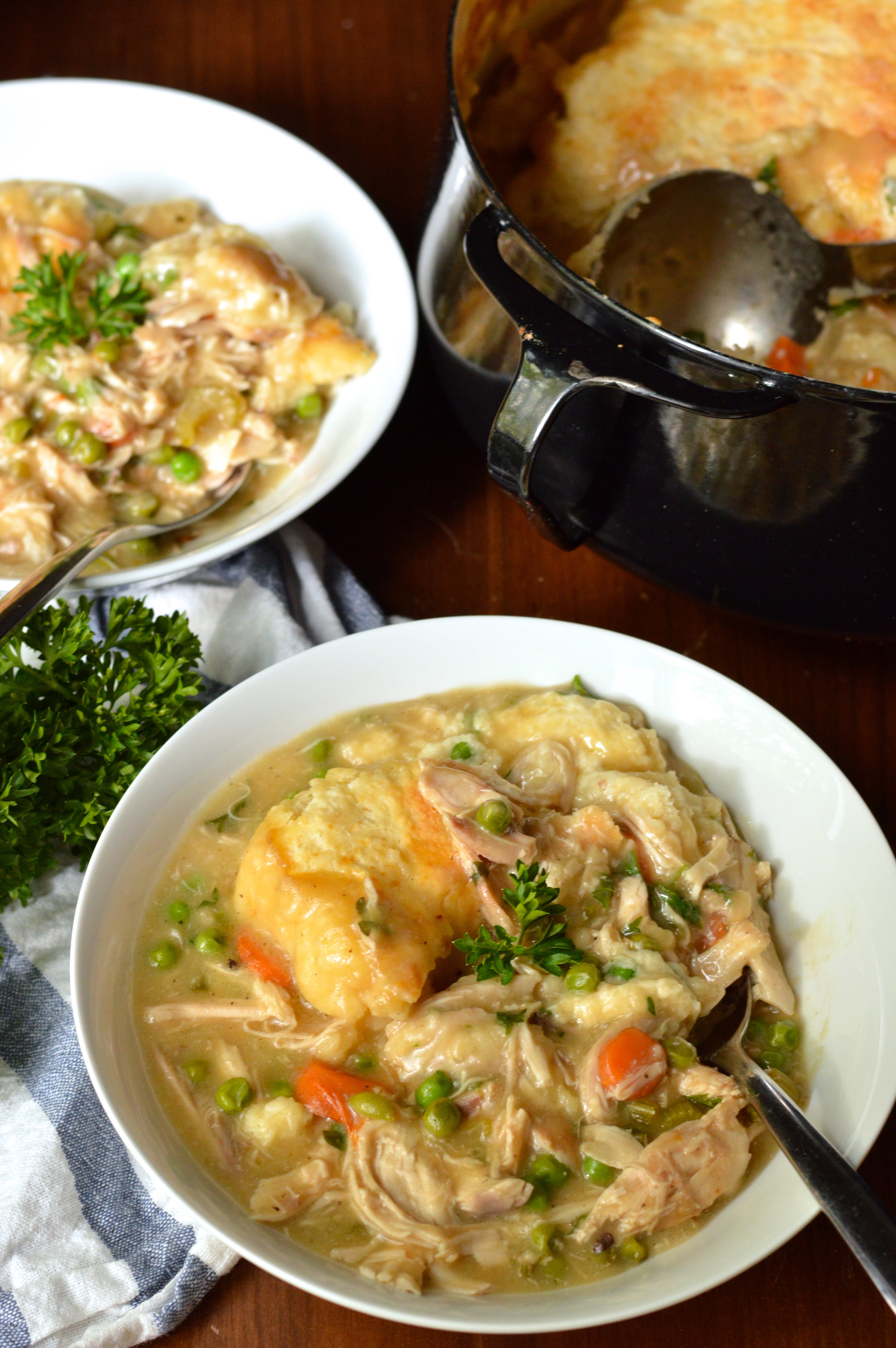
homemade chicken pot pie with buttermilk biscuit crust | Brooklyn Homemaker

Chicken Pot Pie with Buttermilk Biscuit Crust

filling:
4-5 lbs of chicken pieces, skin-on, bone-in. *see note
salt & pepper to taste
2 tablespoon olive oil, divided
2 bay leaves
Generous handful of poultry herbs like parsley, sage, & thyme (optional) **see note
2 onions, 1 small, 1 large
4 carrots
4 celery stalks
8 tablespoons butter (1 stick)
3/4 cup flour
1 1/2 cups frozen peas
1/4 cup finely chopped parsely

biscuit crust:
1 1/2 cups flour
2 teaspoons baking powder
1/2 teaspoon salt
2 teaspoons sugar
1/2 teaspoon cream of tartar
6 tablespoons butter, cubed
1/2 cup + 2 tablespoons buttermilk

Make the filling:
Generously season your chicken with salt and pepper. In a large (at least 6 qt) heavy stockpot or dutch oven, heat 1 tablespoon olive oil over medium high heat. Add your chicken pieces and brown for about 5 minutes on each side. This doesn’t have to be perfect, it’s just to add flavor, but you can do this in stages if everything won’t fit. Roughly chop 1 small onion (skin on), 2 carrots, & 2 celery stalks (leaves on). Add to pot along with bay leaves and poultry herbs, stems and all (if using). Top with 8 cups of water, and cover the pot. Turn the heat down to medium and bring to a boil. Once the pot reaches a boil, turn the heat down to a low simmer and let it bubble slow and low for an hour to an hour and a half.

Remove pot from heat and let cool for 20 minutes or until you’re comfortable handling it. Using a large colander fitted inside a larger bowl, strain out the stock. If necessary, you can use a strainer or sieve to skim the stock for anything that got through the colander. Measure out 6 cups of stock and keep any remaining for another use. Cover and set aside.

Let the chicken pieces cool for about 30 minutes or until you can handle them. Remove the bones and skin from the chicken and discard along with boiled veggies & herbs. Pull the chicken meat into bite sized shreds and be careful to find and remove any remaining small bones. Place the pulled chicken in a bowl, cover and set aside.

Wipe your pot clean. You don’t have to wash it, just make sure there’s nothing in there you don’t want in the finished meal. Dice the large onion, and cut your remaining carrots and celery into small pieces.  Heat the remaining tablespoon of oil over medium high heat and add your chopped vegetables. Season with salt & pepper and cook until onions and celery are translucent and carrots are completely tender. Transfer to the bowl with the pulled chicken.

Back in your pot, melt the butter (you could also use some chicken fat skimmed from your stock) and whisk in flour. Cook until the flour just barely starts to brown. Slowly whisk in about half a cup of stock, making sure there are no lumps of roux. Repeat two or three times more before adding remaining stock.  Whisk out any lumps and bring to a boil, whisking regularly. When the gravy is well thickened, remove from heat, taste and adjust your seasoning if necessary. Add the chicken, cooked vegetables, frozen peas, & chopped parsley. Set aside. If the pot you’re using is oven safe you can bake your pot pie in it, or you can transfer to an oven safe bowl for a nicer presentation.

Make the biscuit crust:
Preheat oven to 450 degrees.
If you want to serve extra biscuits on the side, double (or triple) this biscuit recipe.
In a large bowl sift together flour, baking powder, sugar, salt & cream of tartar. Using a pastry blender, cut the butter into the flour until it resembles coarse pea-sized crumbs. Form a well in the center of the bowl and in buttermilk. Use a fork to stir until just moistened. Do not over mix.

Turn the dough out onto a floured work surface and knead lightly 5 or 6 times, or until it just holds together. Pat or lightly roll dough out to 1/2 of an inch. Form a circle about the size of a your pot or bowl.  If you want to make extra dough, roll that out and cut biscuits using a water glass or biscuit cutter. Carefully transfer your biscuit round to the top of your filling and score it with an X in the center using a sharp knife. Bake for 25-30 minutes or until the crust is golden and the filling is bubbling. Extra biscuits should be rolled to 3/4 of an inch and baked on a parchment-lined sheet pan for 10 to 12 minutes or until golden.

Remove from oven and allow it to cool for 15 minutes before serving. Serve with a nice chunk of crust.

Notes:

*You can use whatever parts you like best, but I think an entire chicken, cut up into pieces, is perfect. If you like all white meat, use all breasts. If you can’t find an entire chicken cut up and don’t want to get into butchering, I think a mix of breasts and thighs has the best flavor.

**I used a variety of herbs because I had them in my garden, but you could just use one or two types or skip them altogether.
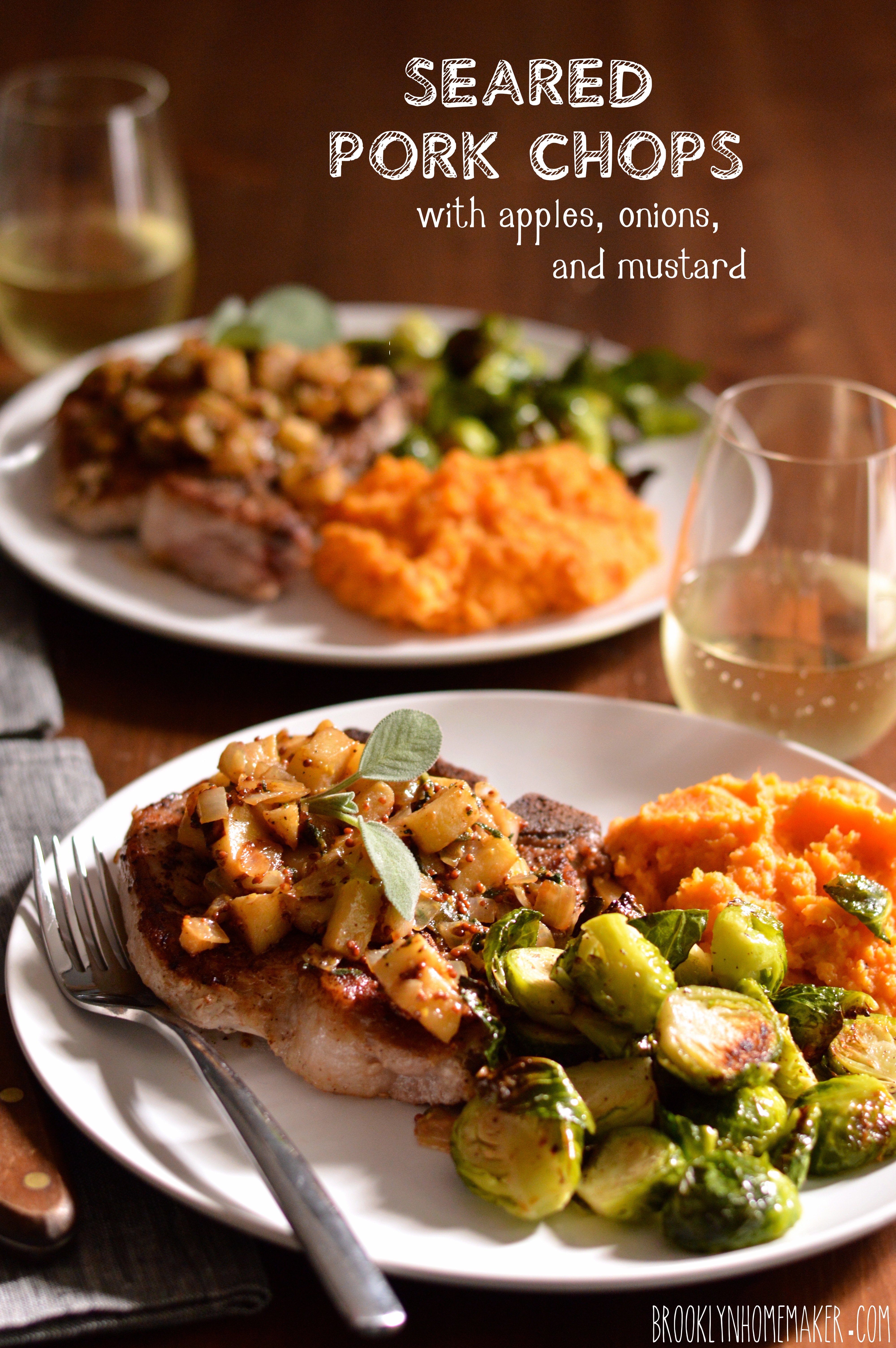
seared pork chops with apples, onions, & mustard

I love pork. Just so we’re all on the same page.

seared pork chops with apples, onions, & mustard | Brooklyn Homemaker

I’ve really always been a big fan of pork. Give me a big thick juicy pork chop over a steak any day of the week. In the words of Homer Simpson, “Porkchops and bacon, my two favorite animals.”

When I was growing up my grandmother used to make us porkchops a lot. Shake n bake, of course, and of course I helped. Grandma’s pork chops were usually cut thin and baked until well done. The common conventional wisdom in my grandmother’s day was that if you saw even a tiny twinkle of pink in your pork you’d probably keel over dead on the spot. You were supposed to cook ’em through and then keep on going, just for good measure. The only problem with that wisdom is that todays pork is bred to be so lean that cooking to well done produces a bone-dry chop that is, sorry grandma, pretty terrible. I know it’s not your fault grandma! Damned conventional wisdom! Maybe this is why a lot of people think they don’t like pork?

Well, I’m here to challenge that wisdom. It’s totally okay if you cook your pork to medium-well or even medium. You’re not going to die. You’re not even going to get sick. Unless you caught your pig in the wild, the only thing you’re at risk of is eating a seriously tasty pork chop. Thanks to modern farming, Trichinosis (the food borne illness commonly associated with pork), hasn’t been a concern for American eaters since the 1970s. In fact, the USDA even recently lowered their recommended internal cooking temperature for pork from 160 degrees to 145. Yay! We can finally eat tasty pork again!

seared pork chops with apples, onions, & mustard | Brooklyn Homemaker

While we’re on the topic of tasty pork, lets talk about how I like to eat a pork chop. Call me uninspired, but my favorite flavor to pair with pork is apple. I know it’s super traditional and I’m not showing you anything you haven’t seen before, but hey, it’s friggin good! If it ain’t broke, I ain’t trying to fix it.

I’ve been eating apples with pork for as long as I can remember, which probably stemmed from grandma’s well done chops. I used to slather those suckers with mountains of applesauce, for the moisture as much as the flavor.

seared pork chops with apples, onions, & mustard | Brooklyn Homemaker

People have actually been pairing pork with apples for centuries. Before sugar was readily available to most people, fruit sweetened foods were usually served alongside or in combination with savory, and apples were a common way to add a touch of sweetness to pork dishes. This may have started because some farmers would feed old or rotten apples to their pigs, and some people say that a diet high in apples can actually flavor the meat.

On a side note, I might just need to plant some apple trees and buy a few pigs…

seared pork chops with apples, onions, & mustard | Brooklyn Homemaker

I think pork chops on the bone tend to have the best flavor, and the thicker they’re cut the juicier they’re going to be when they’re finished cooking. If you get your pan nice and screaming hot you only need to sear the chops for a few minutes on either side to get them perfectly cooked to medium well. If you’re still scared and want to cook them to well done, remove them from the pan the second the meat reaches an internal temperature of 145 degrees. Even thick cut chops will get dry and tough if overcooked.

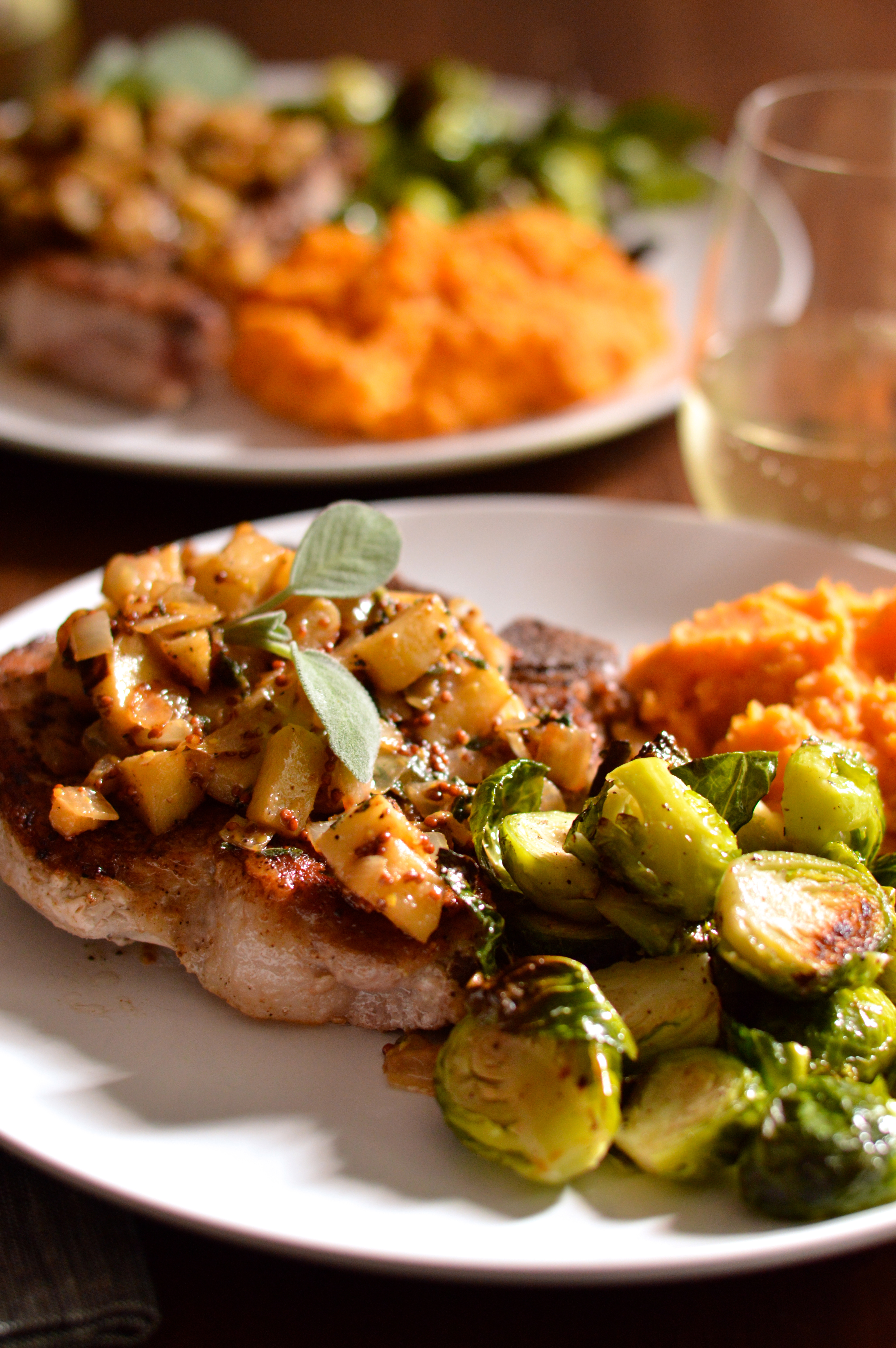
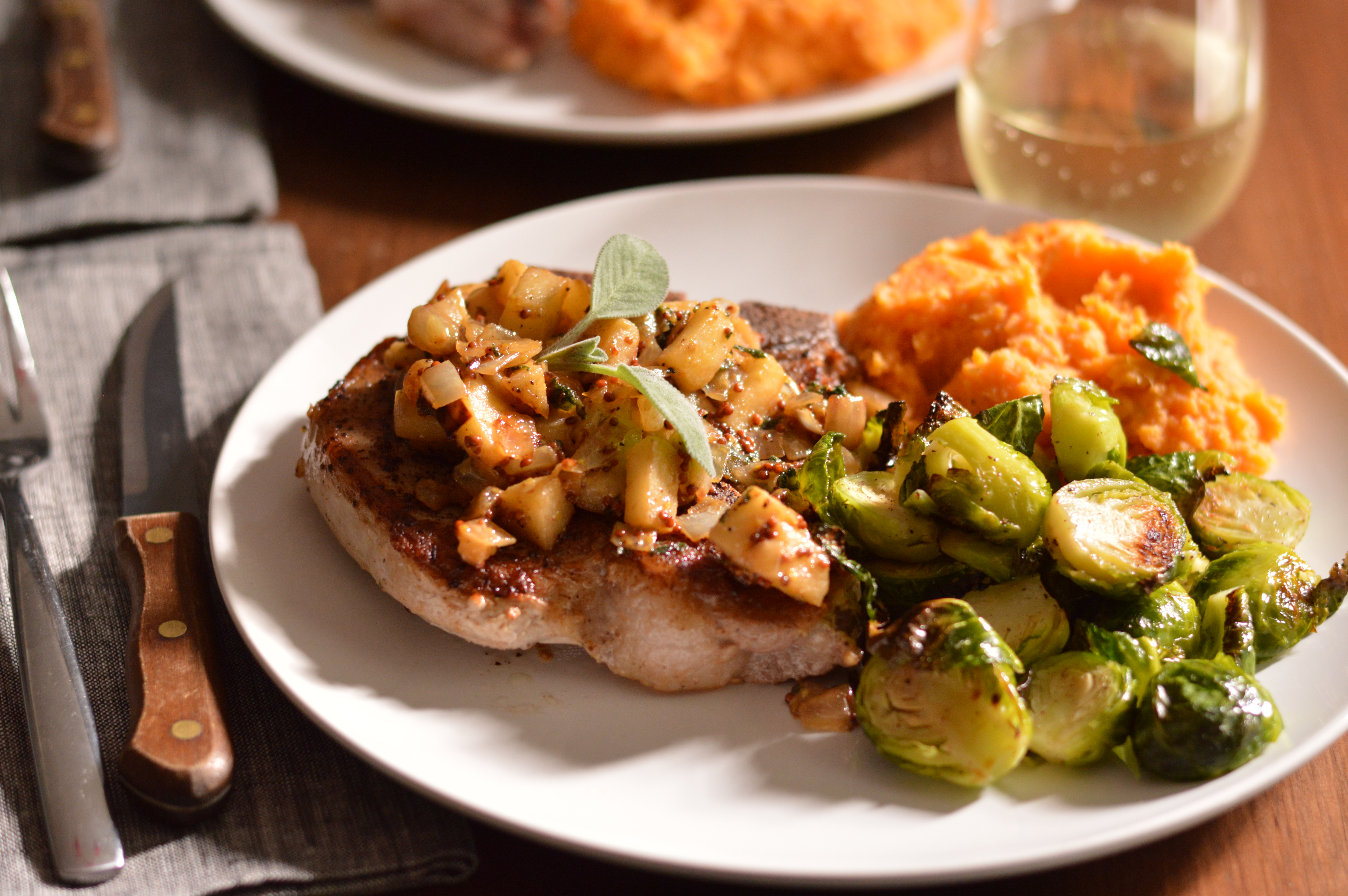
To add a little depth to the pork and apple combination, I deglazed the pan with white wine after searing the pork, sautéed the apples with some onions and mustard, and finished the the whole thing with some cream and fresh sage from our back yarden. The onion helps keep things from going too sweet and fruity, and the mustard adds some interesting texture and a nice earthy vinegary bite. The sage reinforces that earthiness, and the cream gives the topping a really nice velvety finish. Despite feeling kind of “grown-up” and “fancy”, this meal is actually pretty simple to make and comes together in less than 30 minutes!

Since things are getting all nice and autumnal outside, I decided to pair my pork chop with some mashed sweet potatoes and roasted brussels sprouts. And, of course, there was also some white wine.

seared pork chops with apples, onions, & mustard | Brooklyn Homemaker

Seared Pork Chops with Apples, Onions, & Mustard

  • Servings: 2 generous portions
  • Print
2 center cut pork chops, bone in, at least 1 inch thick
salt and pepper to taste
2 tablespoons butter
1/4 cup white wine
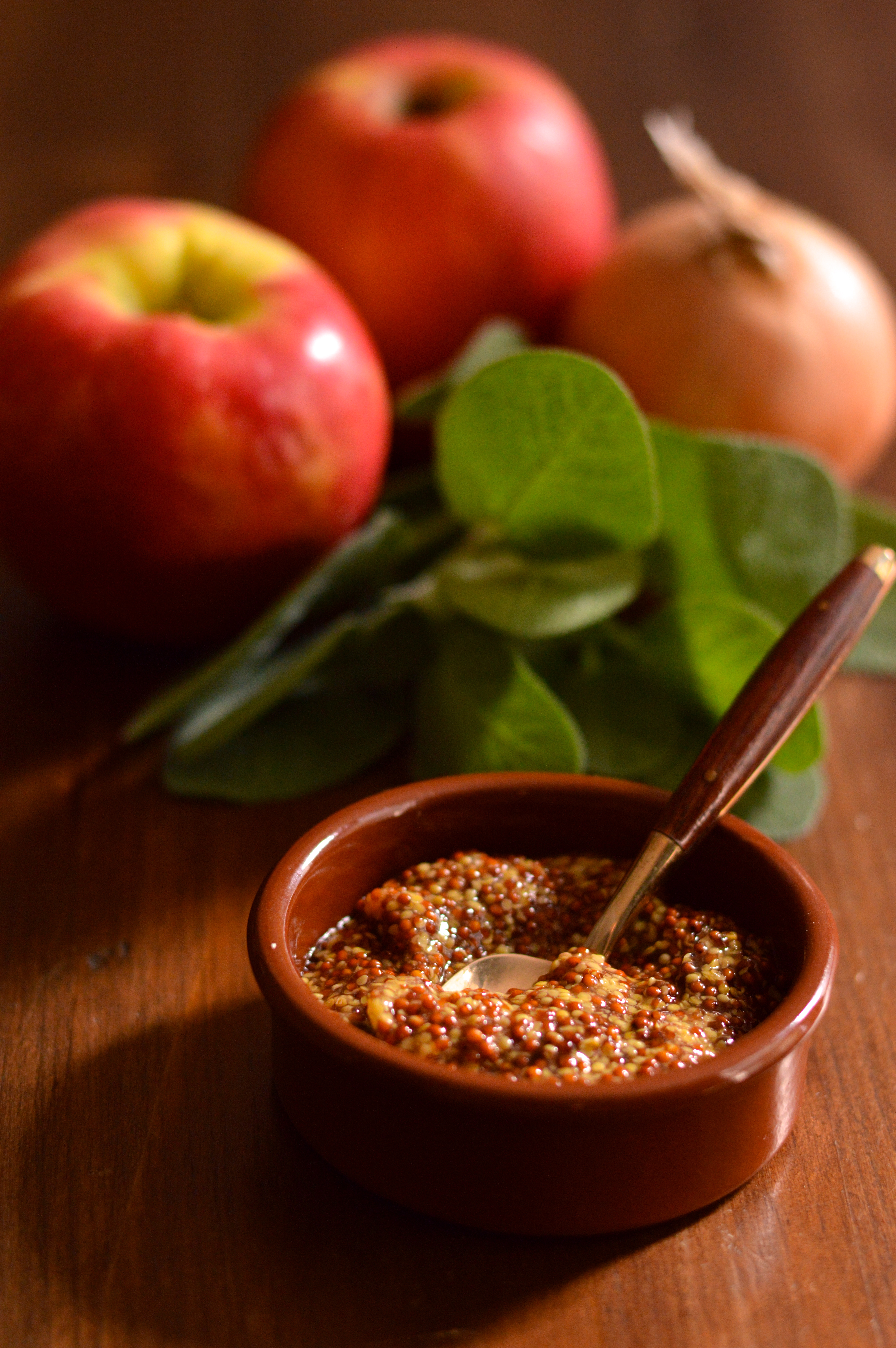
1 firm sweet apple, such as pink lady
1 small onion
2 tablespoons whole grain mustard
2 tablespoons finely sliced fresh sage
1/4 cup cream

Generously season pork chops on both sides with salt and pepper. Preheat a heavy skillet over high heat until your butter sizzles and immediately browns when added. Add 1 tablespoon butter, swirl in pan, and immediately add pork chops. Reduce heat just slightly to medium high, and cook for about 3 to 4 minutes per side. You want them cooked to about medium-well. A little pink won’t hurt you but you want the meat to be mostly white. If you’re scared, use a meat thermometer to be sure the meat reaches an internal temperature of 145 degrees. Do not overcook or the chops will be tough and dry. Meanwhile; peel, core, and finely dice the apple, and finely dice the onion.

Remove pork chops to a plate and tent with foil (remember they’ll keep cooking a little while they rest). Deglaze pan with white wine, add remaining butter, apples, and onions and season with salt and pepper. Cook until onions are translucent, apples are tender, and everything is starting to get a healthy caramel brown, about 10 minutes. Add mustard, sage, and cream; and cook about 3 minutes more.

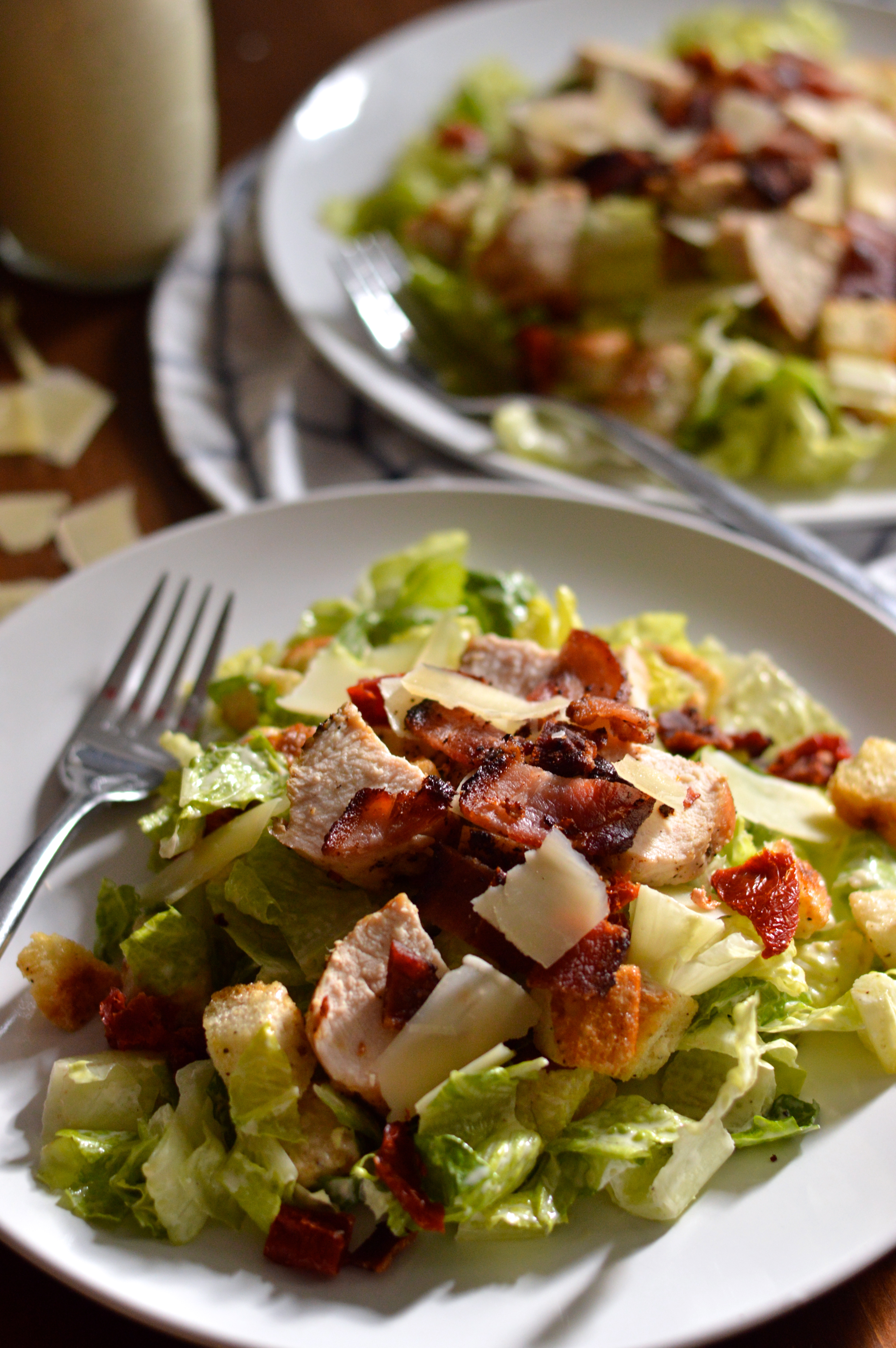
chicken BLT caesar salad

There’s just something about a Caesar salad.

chicken BLT Caesar salad | Brooklyn Homemaker

I don’t know what is, but every once in a while, I just need one. At this point, Caesars are so ubiquitous as to be kind of boring and cliche, but every so often you just have to have one. I can’t even really explain their appeal. They’re not the most interesting salad in the world, containing little more than lettuce, croutons, and dressing; and if they’re bad they’re usually baaaaadddd. It’s not hard to get them right though. When you get the dressing right, and the lettuce is super crisp and fresh, and the croutons are homemade, a Caesar salad is just so damned satisfying

chicken BLT Caesar salad | Brooklyn Homemaker

I think their simplicity might be what makes them so enticing, but it can also be their downfall. A salad made with sad flabby wilted lettuce, with sweet gloppy bottled dressing, and oily mouth-slicing craggy croutons has nothing to redeem it, and can put someone off Caesar salads for life. When they’re done well though, with crisp fresh lettuce, good croutons, creamy cheesy garlicy dressing. Yes. Just yes.

chicken BLT Caesar salad | Brooklyn Homemaker

Anyway, most people, when they’re trying to take this salad from light meal or side to filling and satisfying sustenance, tend to add sliced chicken breast. I am one of those people. Whether I’m out to lunch or trying to come up with a quick dinner, a good Caesar with chicken is always a welcome option.

chicken BLT Caesar salad | Brooklyn Homemaker

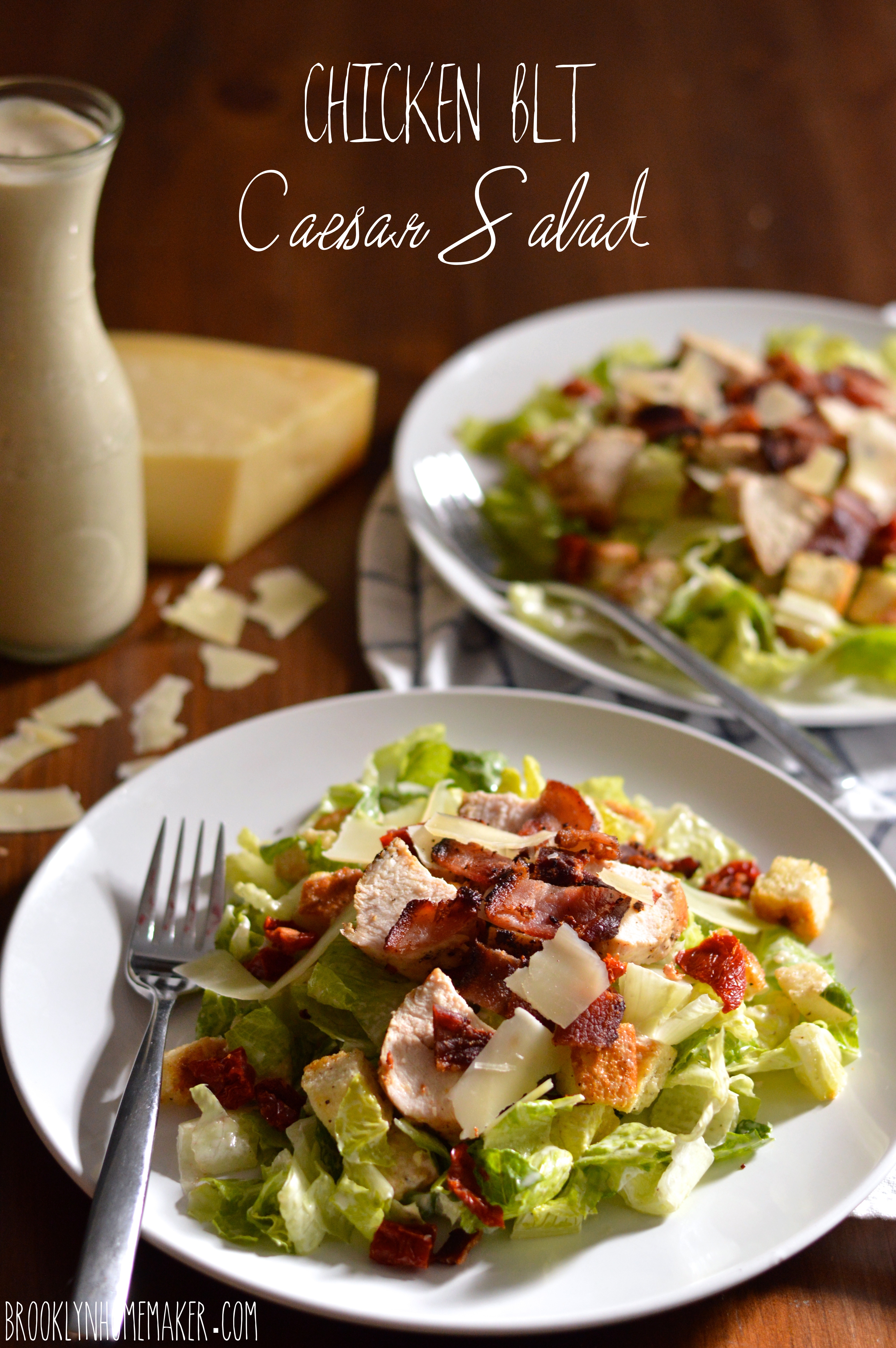
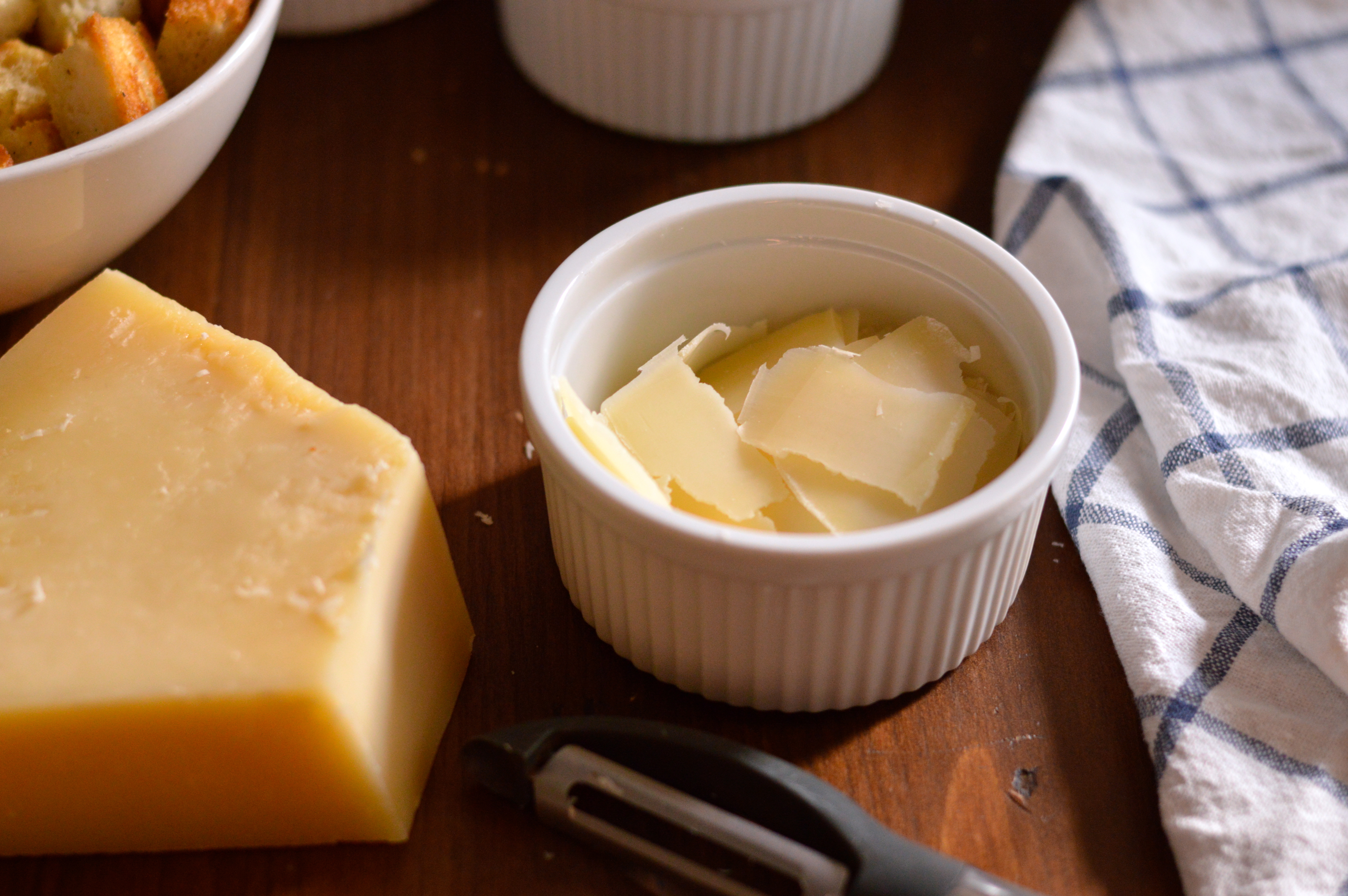
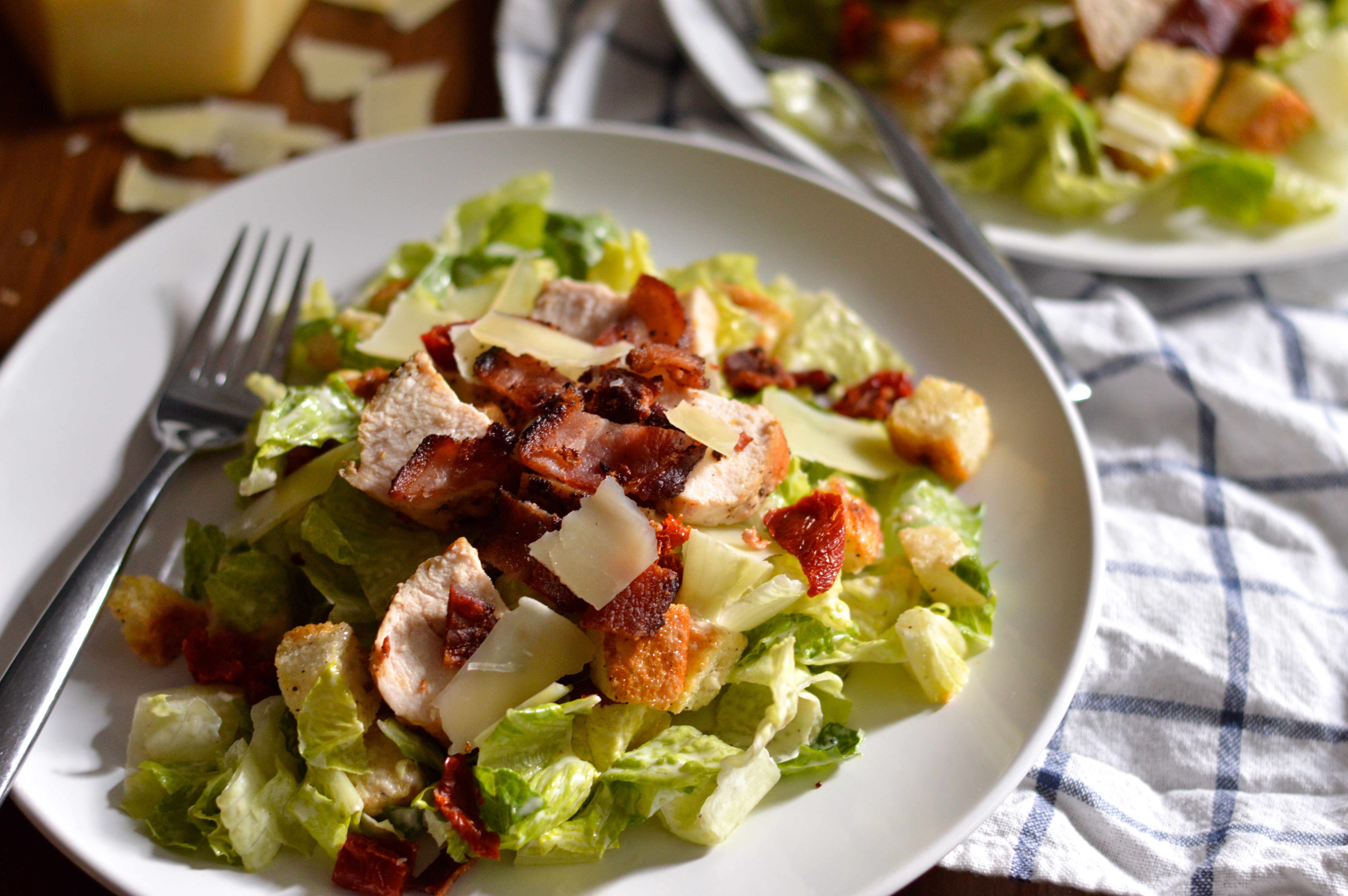
This time around though, I thought it might be fun to jazz things up a little. Russell and I tend to eat this salad once a month or more, so I was looking for a quick addition or change that would have a big impact. It’s easy to get tired of eating the same old thing, so it’s great to find simple and easy ways to add a little interest to something you make well and often. In this “BLT” interpretation, the addition of crispy bacon adds a nice saltiness and richness to make it feel like a truly substantial meal, and the sun-dried tomatoes add a nice concentrated sweet summery-ness that you wouldn’t necessarily expect to find in a Caesar. To dress my Caesars up a little, I also like to use a vegetable peeler to add some shaved parmesan.

chicken BLT Caesar salad | Brooklyn Homemaker

You can definitely use bottled dressing at home to make things a little easier on yourself, but to be honest, I have yet to find a bottled dressing out there that I like. I’ve tried though. Lord how I’ve tried. It definitely is nice to just reach for the bottle (of dressing, not booze, though that’s nice too) when you get home from a long day and you just want to throw something together. My problem with the bulk of bottled Caesar dressings though, is that they’re usually way too sweet. I think that lemon juice adds plenty of sweetness to Caesar dressing, and even think that too much lemon can go too sweet, so the fact that most bottled dressings have added sugar or corn syrup is bewildering to me. The nice thing about this dressing recipe is that it doesn’t take too long to pull together, and that it makes more than you need and keeps well in the refrigerator.

I totally acknowledge that this is definitely not a traditional, old school homemade caesar with raw eggs and whole anchovies, and I’m sure some people out there in the world will be furious with me for trying to “pass off” this recipe as a Caesar. Thing is, using mayonnaise and anchovy paste instead makes things waaaaay quicker and easier, and gives the dressing staying power, without compromising on flavor.

chicken BLT Caesar salad | Brooklyn Homemaker

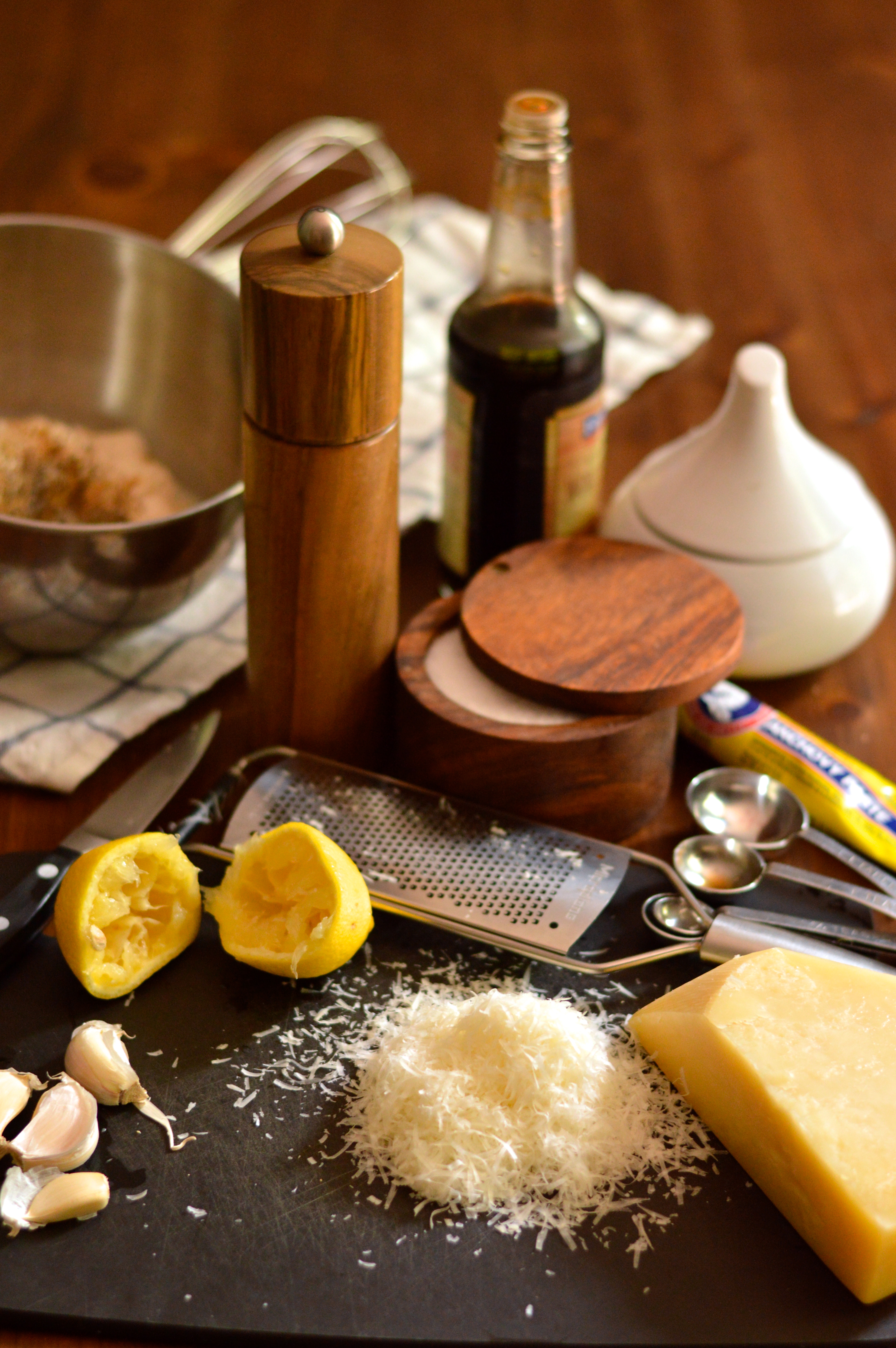
This dressing has a nice creamy texture, but the addition of olive oil thins it out so that it’s not too gloppy or heavy. The cheese is nice and salty and forward, and the garlic gives a nice fresh bite. The amount of lemon juice here adds a nice fresh bright sweetness and acidity without going too sweet or blatantly citrusy. The anchovy paste adds a great depth and brininess without having to bust out the food processor to puree whole anchovies yourself. Anchovy paste, by the way, can usually be found in the same aisle in the grocery store as canned tuna fish. All in all, it’s pretty damned good, and if you have some in the fridge you can throw together a caesar salad in a snap, and dress it up however you like.

chicken BLT Caesar salad | Brooklyn Homemaker

Chicken BLT Caesar Salad

dressing adapted from Once Upon a Chef

Caesar Dressing:
3 or 4 garlic cloves, minced or crushed
1 teaspoon anchovy paste
2 tablespoons freshly squeezed lemon juice, from one lemon
1 teaspoon Dijon mustard
1 teaspoon Worcestershire sauce
1/4 cup extra virgin olive oil
1 cup mayonnaise
1/2 cup freshly grated Parmigiano-Reggiano
1/4 teaspoon salt
1/4 teaspoon freshly ground black pepper

Salad:
2 small (1 large) head crisp romaine lettuce
1 small to medium loaf of italian bread
2 tablespoons of olive oil
salt and pepper to taste
3 to 4 strips of thick cut bacon
2 skinless boneless chicken breasts
1/4 cup sun-dried tomatoes, roughly chopped and loosely packed
1/4 cup parmesan shavings (or grated parmesan)

Dressing: In a medium bowl, whisk together the garlic, anchovy paste, lemon juice, olive oil, Dijon mustard and Worcestershire sauce. Add the mayonnaise, Parmigiano-Reggiano, salt and pepper and whisk until well combined. Taste and adjust to your liking. Refrigerate until ready for use.
This will make more dressing than you’ll need for one night of salads, but it stores well, refrigerated, for a few weeks.

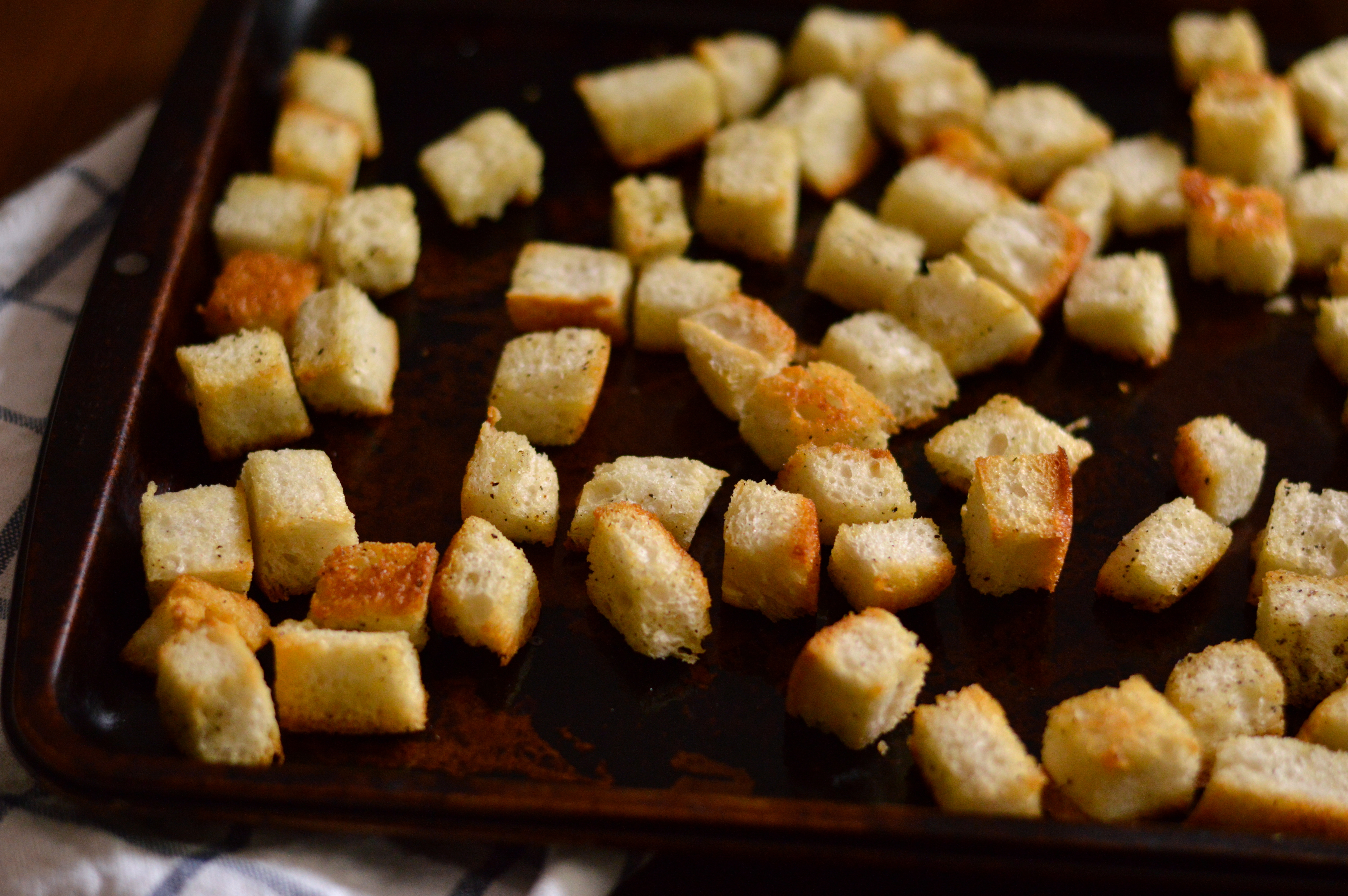
Croutons: Preheat oven to 350. Cut the crust off the loaf of bread using a sharp bread knife. It’s okay if some is still on, but you want to get a good bit of it off. Then cut the bread into 1-inch cubes, trying not to smoosh the bread too much. You want about 3 or 4 cups of loosely packed bread cubes. Toss in olive oil, salt and pepper, and arrange in a single layer on a baking sheet. Bake until crispy and just beginning to brown, about 10 or 15 minutes, checking them often. Set aside.

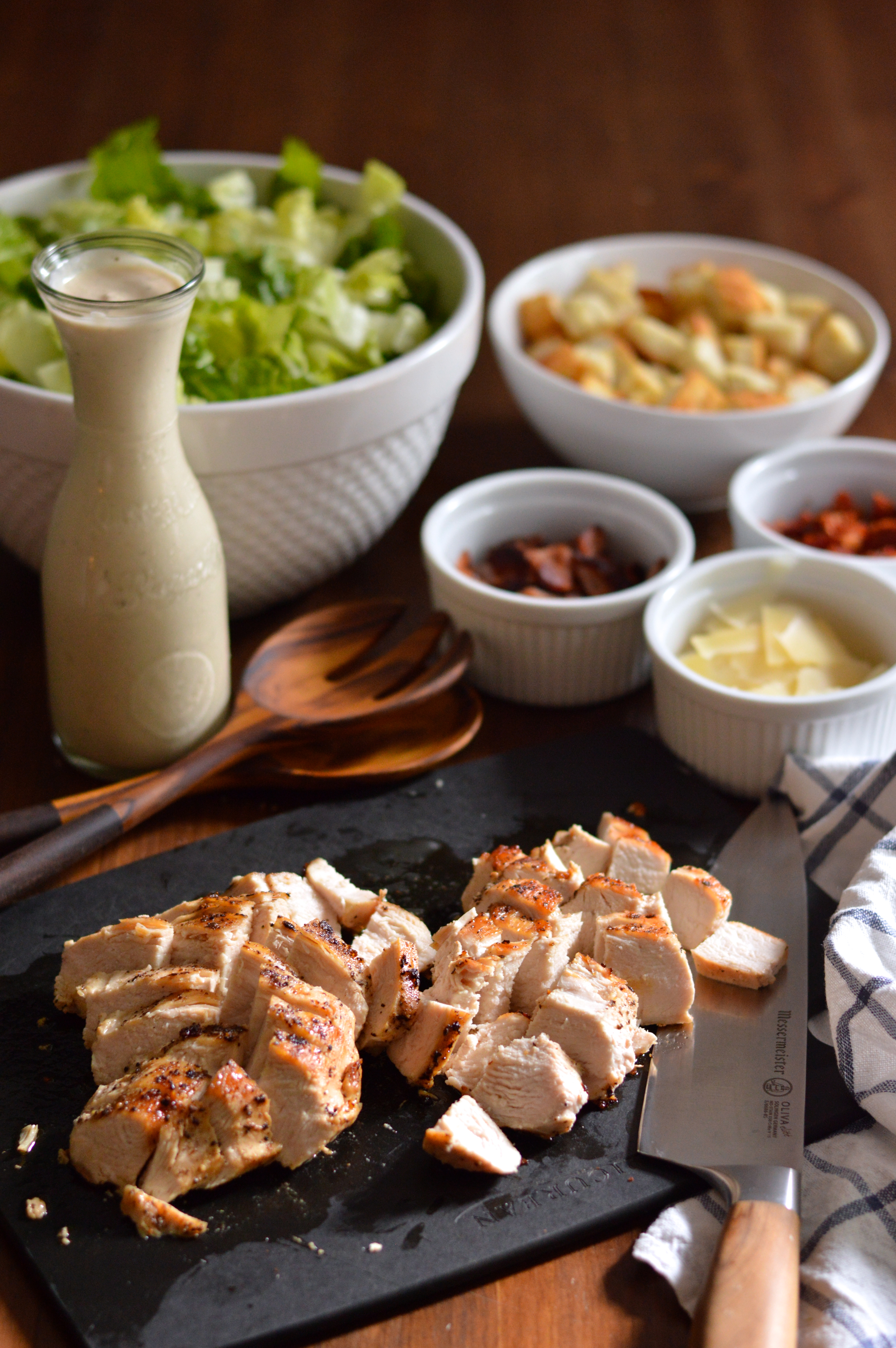
Salad: Slice your head of romaine into bite-sized stirps, and wash and dry using a salad spinner or kitchen towels. Set aside. In a heavy skillet over medium-high heat, brown and crisp bacon to your liking, and drain on paper towels. Crumble once cool. Sear chicken breasts in same skillet over high heat. Sear on both sides for about 5 or 6 minutes per side, or until cooked through. You can use bacon grease to cook the chicken, or you can drain it off, wipe out the pan, and add an additional tablespoon of olive oil.
Let chicken breasts rest for 5 minutes before slicing into thin strips with a sharp knife.

Assemble the salad; you can either toss the lettuce, croutons, bacon, chicken, and tomatoes all together in a big bowl, OR you can just combine the lettuce and croutons together and arrange the other ingredients on top of the plated salad after dressing. Either way, toss the salad with about 1/3 cup of dressing with salad tongs or two large spoons. If you like a creamier, more dressed salad, you can add more dressing, 2 tablespoons to 1/4 cup at a time, but this dressing is very flavorful so I’d suggest tasting the dressed salad before deciding.

I went camping!

A couple weeks ago I pulled a Snake Plissken and escaped from New York.

Brooklyn Homemaker goes camping!

I’ve mentioned this before, but my mom is in the process of renovating an old house upstate. I am a weirdo masochist so rather than using my vacation time this year to go to Europe of the Caribbean, I opted to go upstate and spend my vacation time sanding ceilings on a ladder, getting drywall dust in my eyes and lungs, breathing paint fumes, and working 10 hour days in an empty 100+ year old home with no air conditioning or functioning plumbing.

Brooklyn Homemaker goes camping!Brooklyn Homemaker goes camping!

When my mom said her contractor was almost finished putting up her new drywall and that she could use help sanding and painting, it didn’t take much arm twisting to get me on board. I totally love those kinds of projects and not-so-secretly wish that I had the opportunity to do them in a home I owned myself. She also needed some help choosing fixtures and finishes for her bathroom and kitchen, which is something I already spend countless hours doing on Pinterest, planning for my non-existent future home. The opportunity to actually do this for real, even if I wouldn’t get to live with the finished product, was a total dream.

My only stipulation for doing all that sweaty manual labor was that I would get to take off for two days with my older sister and her kids to go camping. Sorry house! I needed those two days to at least pretend this was an actual vacation! My mom needed the break just as much as I did, so she even joined in the fun and drove up to relax (and drink) with us on our second day.

Brooklyn Homemaker goes camping!Brooklyn Homemaker goes camping!Brooklyn Homemaker goes camping!

Before I moved to Brooklyn I used to camp, like, a lot. For most of my life I’ve lived either in the Fingerlakes region or in the Adirondacks, so spending time outdoors has always been a major part of my life. Since moving here though, opportunities to get out into the wild have been fewer and farther between. Having grown up in southern California, Russell doesn’t really share my love of staring into a camp fire for hours on end, or my love of sleeping with nothing but a thin sheet of polyester protecting me from the nocturnal creatures outside, making camping trips even less likely.  What, to me, is the height of rest and relaxation, to him is a painfully boring way to feed mosquitos.

Since Russell was going to sit this trip out and stay home with the pups, it took me all of a quarter of a second to decide I wanted to go camping. I called my sister and begged her to come with me (she needed zero convincing), and we started making plans. Since we only had a couple days, and my niece and nephews would be with us, we decided pretty quickly on Fair Haven Beach State Park. It’s less than an hour from my home town, and since it’s an established camping park we could just roll up, set up the tent, and get down to the business of relaxing. It also has a number of amenities like playgrounds and fishing spots to keep the kids entertained while we were doing our thing. Not only that, but it’s absolutely gorgeous there, with scenic ponds, untouched wooded areas, zillions of deer running around, and a gorgeous sandy beach on the shore of Lake Ontario, all just a short walk from the camp.

Brooklyn Homemaker goes camping!Brooklyn Homemaker goes camping!Brooklyn Homemaker goes camping!

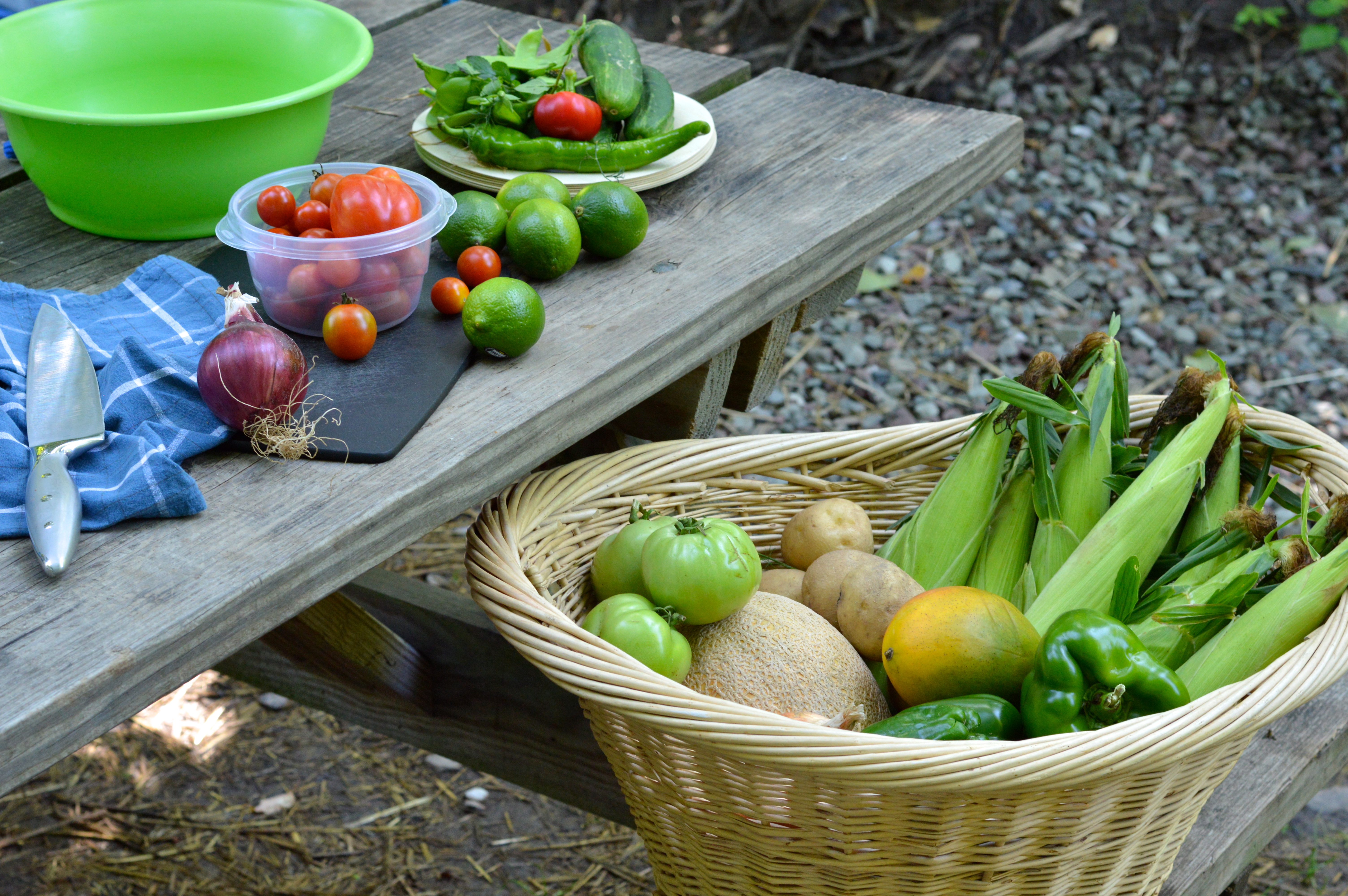
Once we set up camp, and opened some wine, we set to building a fire and setting up our temporary kitchen. With three kids to feed, my sister takes food just as seriously as I do. We brought a ton of fresh produce with us, some from her garden and some from the farmer’s market in my home town; along with plenty of supplies from the grocery store. We ate like kings (and queens) over the course of our stay, and I while I was there I was bound and determined to try to take some blog worthy camping food photos. Always thinking ahead, just before leaving Brooklyn I rolled a couple of my knives into some kitchen towels and stuffed them into my suitcase along with my camera equipment and a cutting board.

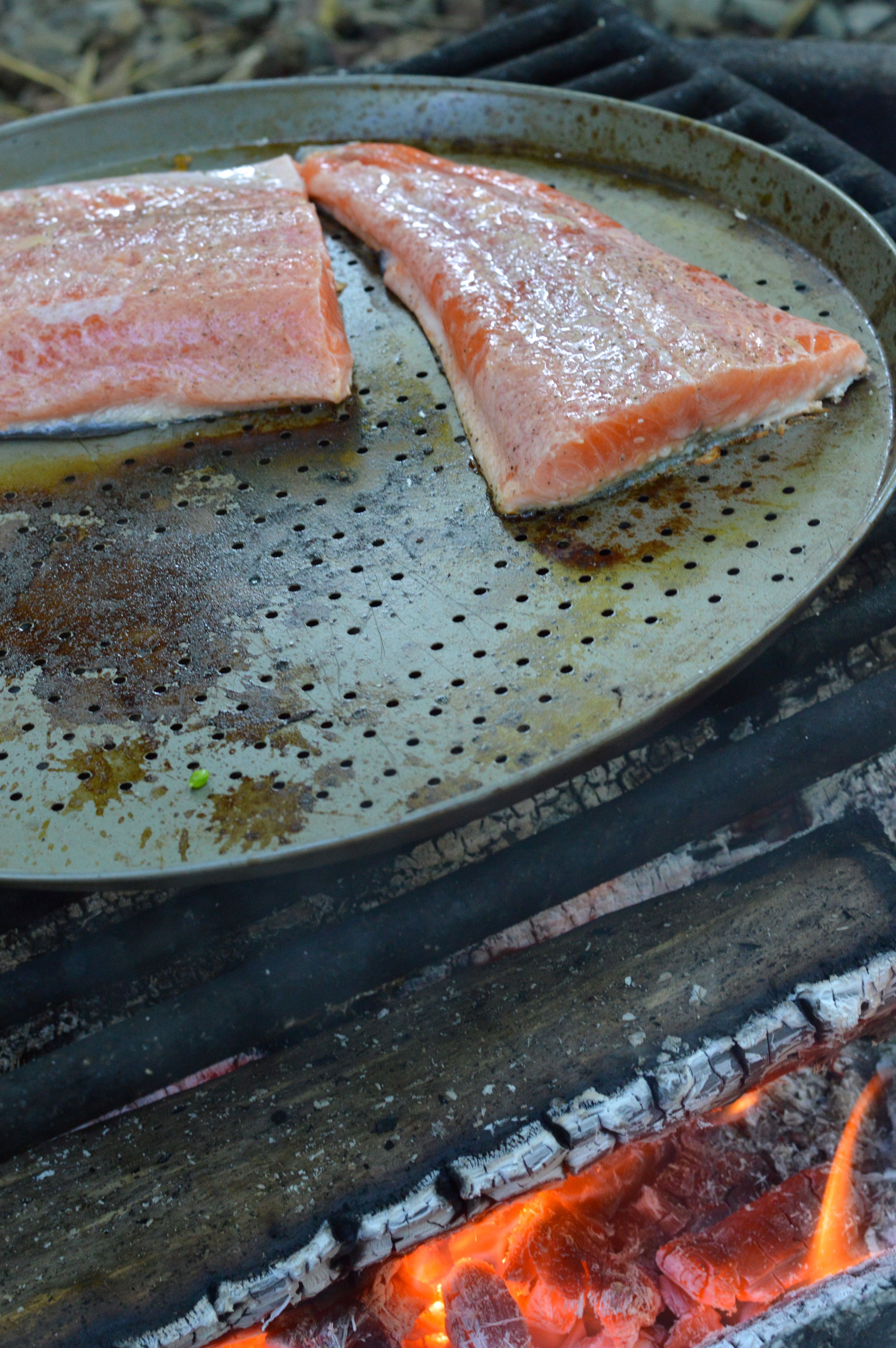
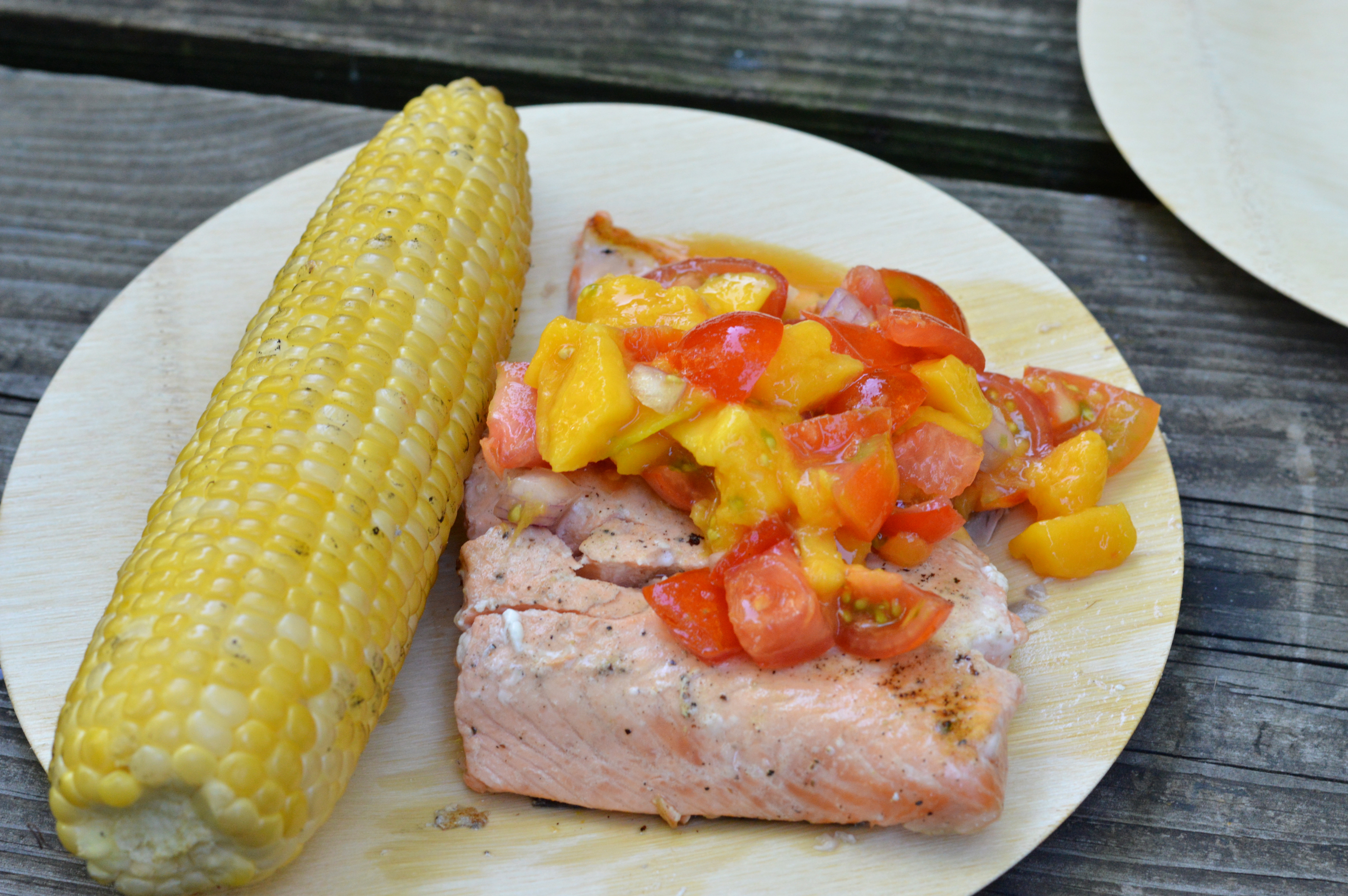
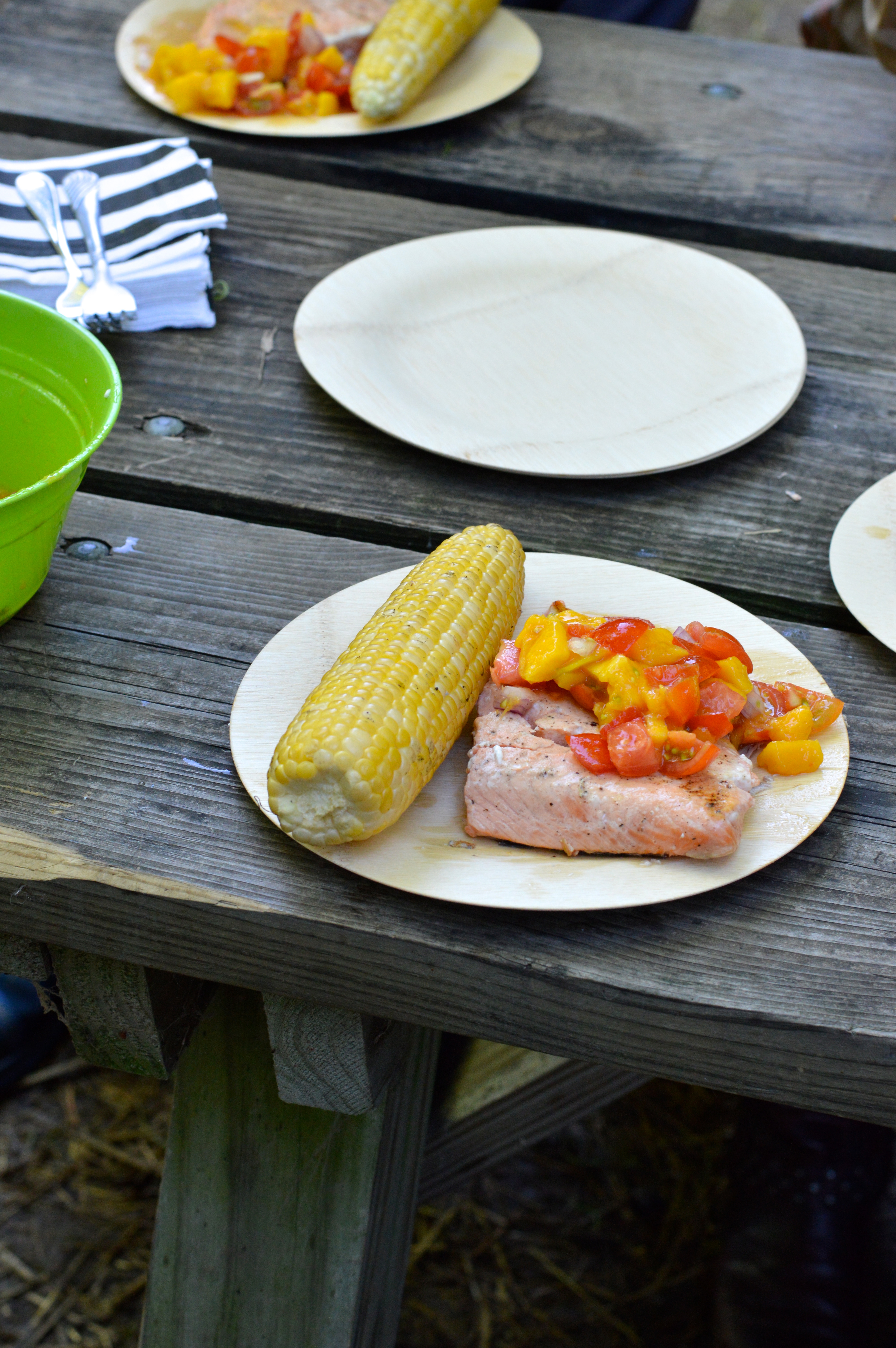
campfire grilled salmon with tomato mango salad | Brooklyn Homemakercampfire grilled salmon with tomato mango salad | Brooklyn Homemaker campfire grilled salmon with tomato mango salad | Brooklyn Homemaker

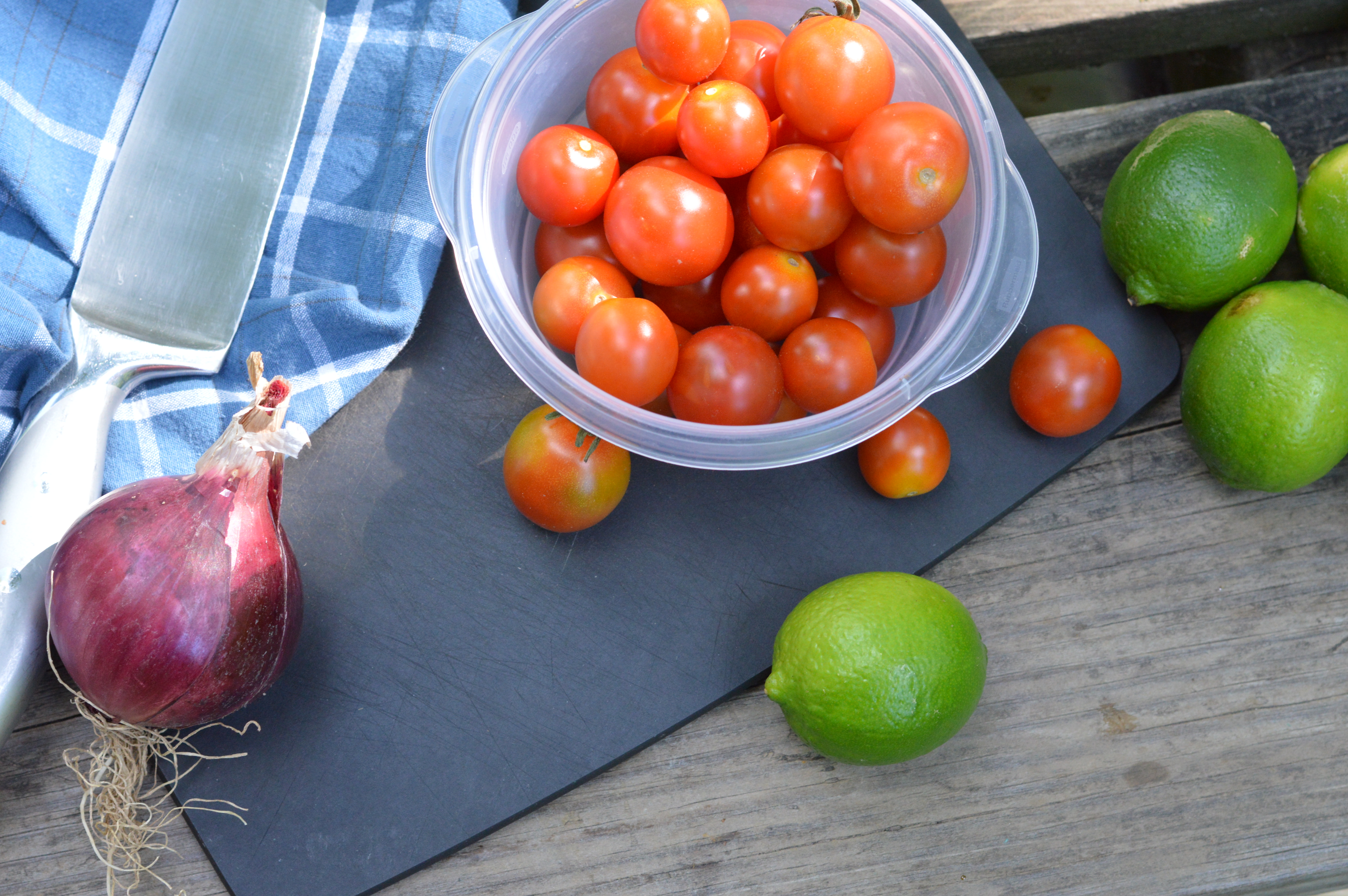
We had a ton of juicy ripe tomatoes, and she’s picked up a couple of mangoes, so just before we got on the road I decided we should pick up a nice piece of fish and some limes to pull everything together. The salmon at my hometown Wegmans looked beautiful so that was that.

campfire grilled salmon with tomato mango salad | Brooklyn Homemakercampfire grilled salmon with tomato mango salad | Brooklyn Homemaker

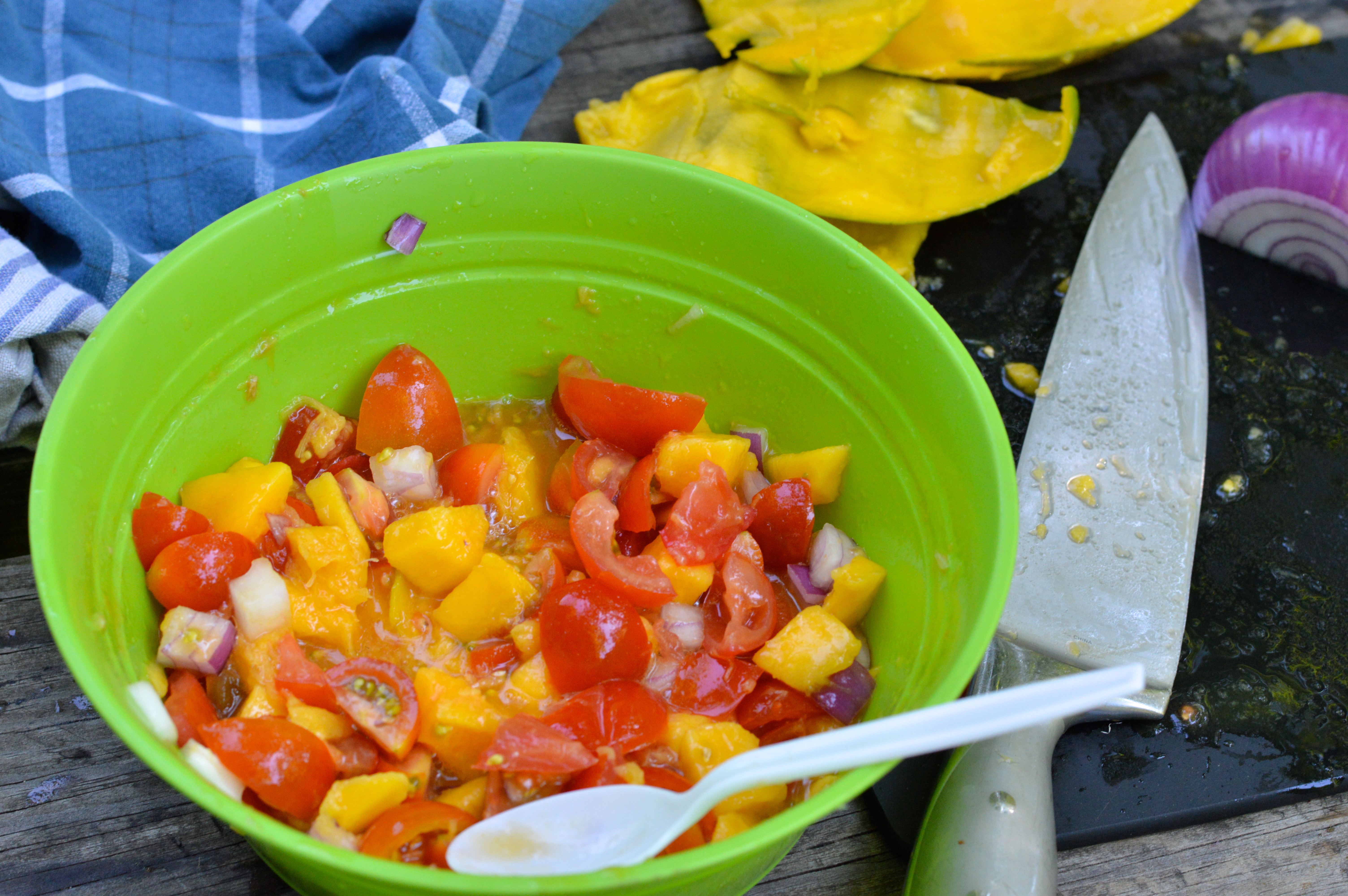
Truth be told, if I were making this at home I would have done things a little differently. We didn’t bring any oil with us and the pan I used to cook the salmon wasn’t really ideal, but that’s half the fun of cooking in the great outdoors. The recipe below should be used only as a guideline, as cooking times and your camping supplies will vary a lot. It was a bit hard to gauge when the fish was cooked because the coals weren’t as hot as I would have liked them, but in the end everything was absolutely delicious. The salad was bright and acidic and complemented the smoky fatty salmon perfectly. Sometimes kids can be picky eaters but all three of them loved it just as much as we did.

Then, afterward, we had smores. Duh.

The whole trip was absolute heaven and I’m so glad I made the time to go. Spending time with family, sunny days, starry nights, the smell of wood smoke, plenty of wine, and chipmunks making off with the marshmallows. The perfect trip for the end of the summer. What better farewell to the season than to fully immerse yourself in it?

campfire grilled salmon with tomato mango salad | Brooklyn Homemaker campfire grilled salmon with tomato mango salad | Brooklyn Homemaker

Campfire Grilled Salmon with Tomato Mango Salad

4 servings of salmon (at least 4oz each- I used one big fillet that I portioned myself)
salt & pepper to taste
juice of 3 limes, divided
1 pint cherry tomatoes
2 mangos
1 small red onion, finely chopped

Season the salmon with salt and pepper, and squeeze with the juice of 1. Brush the grill or the pan with some olive oil, if you have it. Place the salmon skin side down on the grill or pan. Grill or sear until the flesh on the cooked side is visibly turning pale and firm. You want it to be cooked about 1/2 way up the side. Depending on the heat of your fire, grill, or pan, the time this will take can vary quite a bit. Over a camp fire it took a long time, but in a hot cast iron on the stove top it would only take 3 minutes or so.

Flip the salmon over and cook until sides have visibly turned completely pale and firm.

Meanwhile, make the salad. Slice the cherry tomatoes in half and place in a large bowl with finely chopped onion. Remove skin and pit from mango and slice into bite-sized chunks, add to the bowl and squeeze the remaining two limes over everything. Toss it all together with a spoon and season with salt and pepper.

If not already portioned, slice your cooked salmon into individual fillets with a sharp knife. Spoon salad over salmon just before serving.

Serve with grilled corn, if desired.