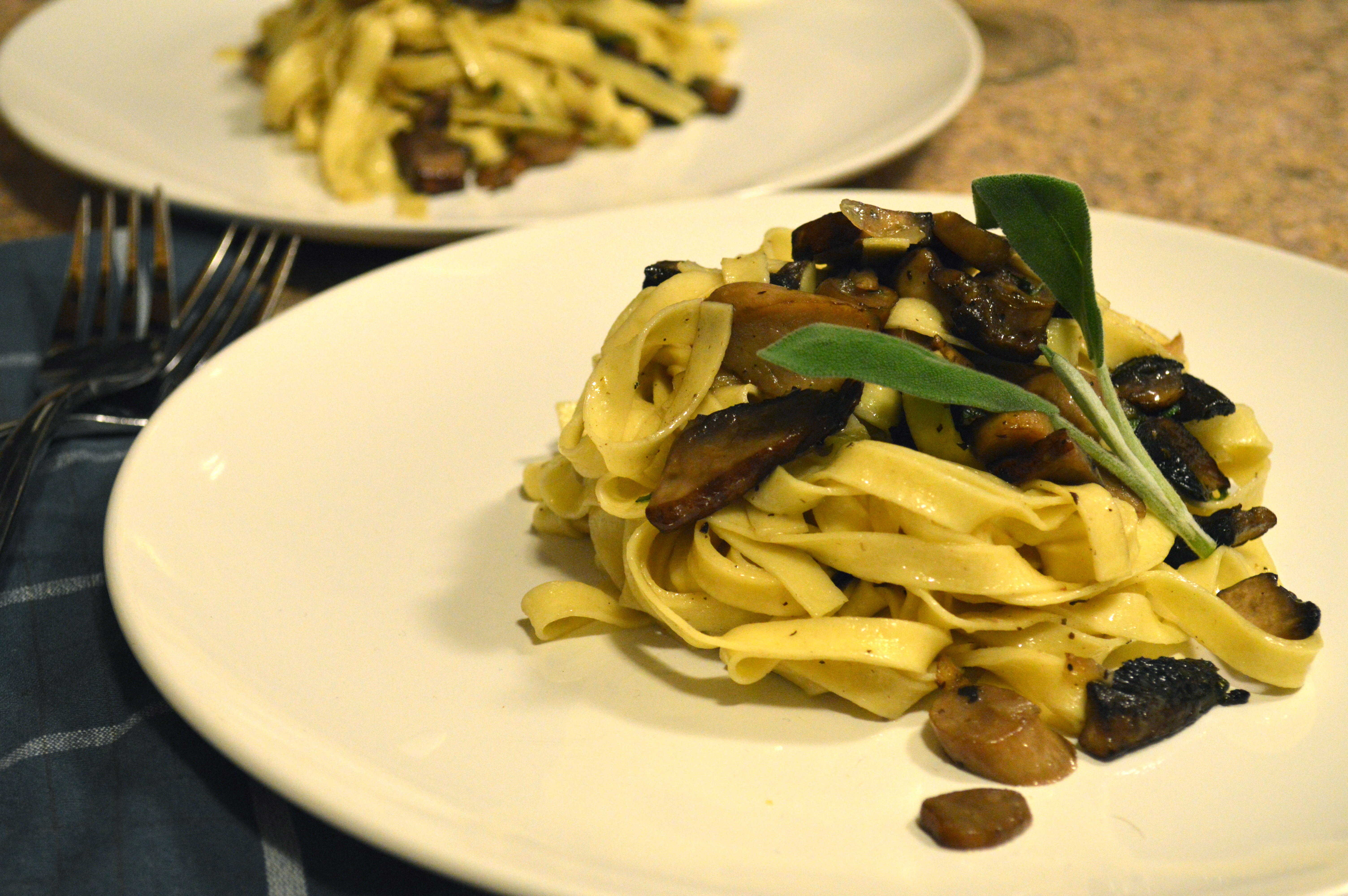
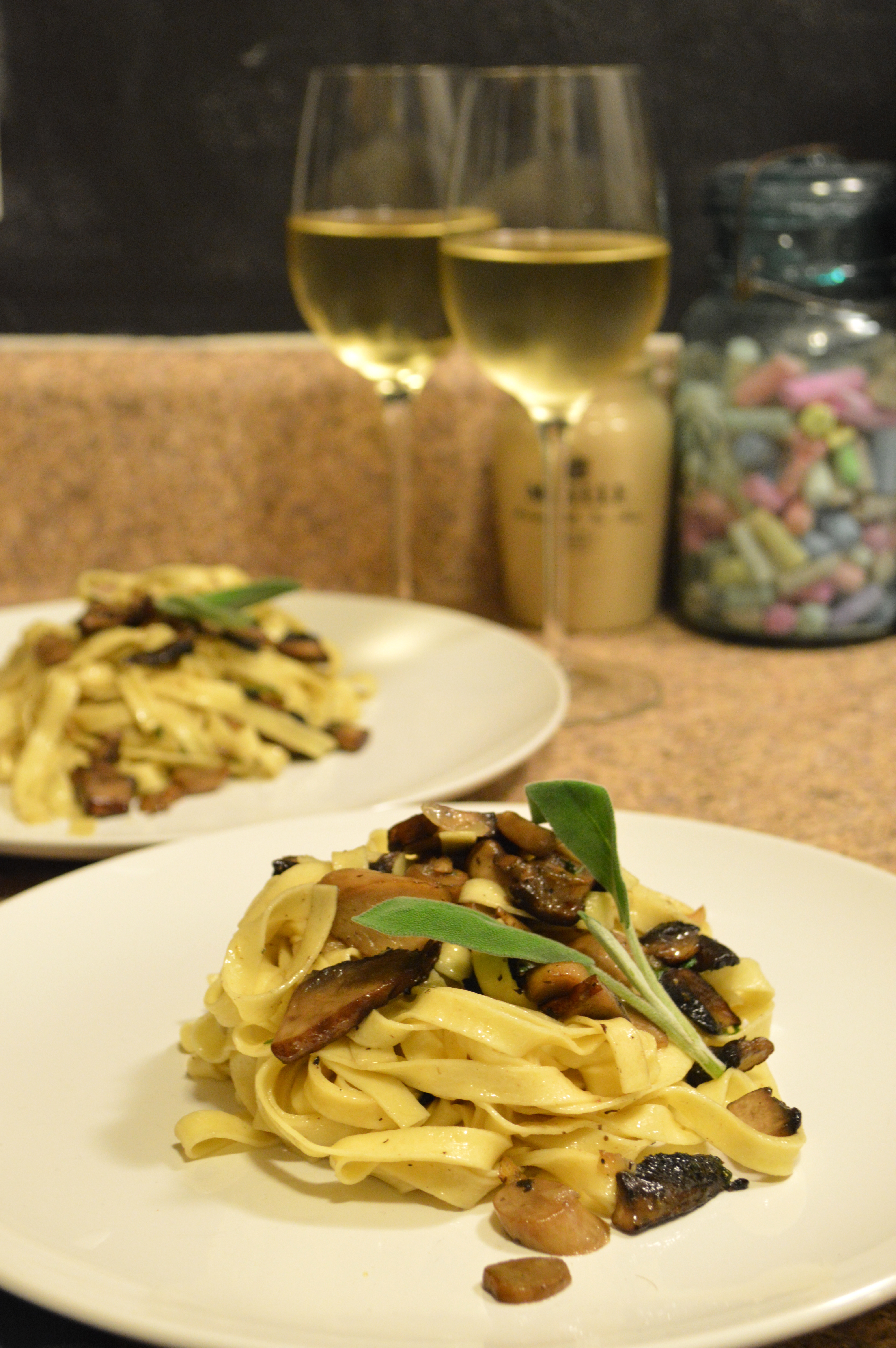
Fettuccine with Roasted Mushrooms, Brown Butter & Sage

When I first met my husband he was a really picky eater. This was very difficult for me to deal with, being a relatively adventurous eater and lover of variety, but I tried to handle it as best I could. He even used to insist that he was “allergic” to a few certain foods, but over time I began to suspect that it was all in his head. He claimed to be allergic to eggs, but had no reaction if they were mixed into a cake or custard. For some reason his “allergy” was only an issue if the eggs were on their own, and when I pressed him on his symptoms he couldn’t really come up with any. Finally I was able convince him that he just didn’t like these foods, and didn’t actually have any real food allergies. He still won’t eat eggs, but at least now he admits that he just doesn’t like them.
fettuccine with roasted mushrooms, brown butter & sage | Brooklyn Homemaker

One of the foods I was most upset about his being “allergic” to was mushrooms. I love mushrooms so much that when I considered a long term relationship with Russell, I mourned losing them. Once I was able to convince him he wasn’t allergic to them, and I got him to try them, surprise! He loved them! We eat mushrooms all the time, and as weird as this may sound, I couldn’t be more thrilled about it.

The other night we went out with friends for dinner to celebrate Russell’s birthday. After a few minutes looking at the menu, Russell ordered a dish that wasn’t much more than sautéed mushrooms with fresh pappardelle pasta and butter. Of course, I had to try a bite, and I thought the sauce was perfectly simple and light, but was just a bit one-note to me. I decided, after my third Manhattan, that I could improve on this dish. I loved that it wasn’t overdone with cream and wine and cheese and stock, but thought it could just use a little boost. I started thinking that the best way to bring out the fresh lightness of the sauce would be just a bit of fresh herbs and maybe a hint of lemon to brighten it up.
fettuccine with roasted mushrooms, brown butter & sage | Brooklyn Homemaker

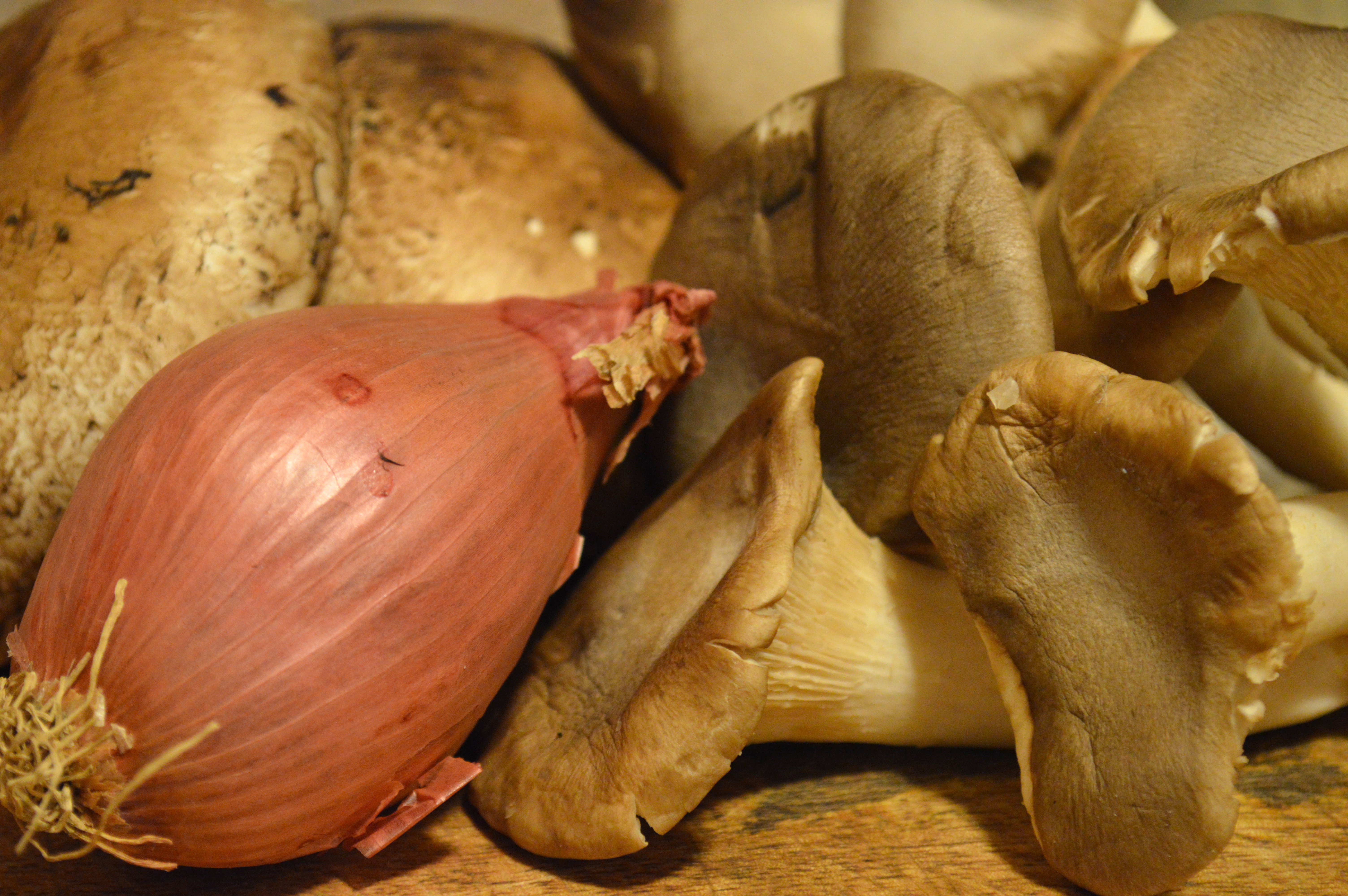
A few days later I decided to go for it and see what I could do. I started with store-bought fresh pasta, going for fettuccine instead of pappardelle. If you have a pasta maker and want to go crazy, by all means. Homemade pasta would elevate this dish even more, but part of what I like about this recipe is how quick and easy it is to prepare. I think store-bought fresh pasta is a great way to get that homemade taste without the work, but I’m sure dried pasta would be fine too. For the sauce I used about a pound of mushrooms, opting for a mix of trumpet and Portobello for a nice varied earthy flavor. If all you can find is Portobellos they’ll work great on their own, but I wouldn’t use white button mushrooms because they’d probably be a bit bland.

The restaurant used butter for the base of their sauce, and I decided a nice way to make the flavor richer would be to brown the butter. When you brown butter, you’re essentially cooking the milk solids that are present in your butter, giving it a wonderful nuttiness and complexity. Brown butter is also great for baking.  Try it with cookies sometime, you’ll thank me. After the butter browned I added some finely chopped shallots and let them saute a bit to add some caramelized sweetness. Right before finishing the dish I added some fresh sage and lemon zest and tossed everything together.

fettuccine with roasted mushrooms, brown butter & sage | Brooklyn Homemaker

I have a tendency to overdo meals a lot. I can take a meal that should take 45 minutes to prepare and spend the better part of an evening making it. This meal however, is anything but overdone. I am so proud of myself for letting this meal remain simple and easy. Hopefully this will be the beginning of a new era for me. An era where I can start dinner after work and have it on the table before bed time! If you work efficiently, from start to finish this meal can be ready to go in 30 minutes. Brown the butter while the mushrooms roast, saute the shallots while the pasta water comes to a boil, chiffonade the sage while the pasta is cooking. Use your time wisely. If you aren’t familiar with the term chiffonade, you basically take your sage leaves, roll them all up like a cigar, and slice them into super thin strips. This technique works really well for basil too.

fettuccine with roasted mushrooms, brown butter & sage | Brooklyn Homemaker

There are not a million different things going on in this pasta dish, but every ingredient gets special treatment to make sure it imparts as much flavor as possible. Roasting the mushrooms concentrates their earthy flavor and makes them taste almost meaty. Browning the butter adds a nutty richness, and sauteing the shallots in the brown butter gives the sauce a caramelized sweetness. Fresh sage and lemon zest brighten the dish without overpowering it, adding a summery freshness that’s much-needed in this cold weather. Overall the simplicity of this dish is what makes it so tasty. So simple, so elegant, SOO delicious.
fettuccine with roasted mushrooms, brown butter & sage | Brooklyn Homemaker

Fettuccine with Roasted Mushrooms, Brown Butter & Sage

1 lb fresh mushrooms (I used a mix of Portobello and trumpet)
salt and pepper
1 tablespoon olive oil
1 medium shallot, diced
8 tablespoons butter (1 stick)
5-6 sage leaves
zest of one lemon
16 oz fresh or 12 oz dry fettuccine

Preheat your oven to 400 degrees. Fill a large stockpot with water and a tablespoon of salt, cover and bring to a boil over high heat. While oven is preheating and water is coming to a boil, roughly chop your mushrooms. Toss in olive oil, season with salt and pepper, spread in an even layer on a parchment lined sheet pan and roast for 10-15 minutes or until most moisture has cooked off. While mushrooms are roasting, heat butter in a large skillet until it begins to brown and smell slightly nutty, this should take about 5 minutes. Add shallots, season with salt and pepper, and saute until they begin to caramelize. While pasta is cooking, add roasted mushrooms to sauce and saute for 5 minutes or until pasta is cooked. While pasta cooks, chiffonade your sage and stir it into the sauce with the lemon zest. Add cooked pasta to sauce and toss with tongs until well coated with an even distribution of mushrooms.
Harvest Cake with Cream Cheese Icing

This year, instead of starting a diet on New Year’s Day, we had friends over for brunch. The only thing I resolved to do in the new year is the learn to be a better photographer, and to continue cooking and baking tasty and interesting things to share with you.

harvest cake with cream cheese icing | Brooklyn Homemaker

When it comes to New Year’s Day menu planning, Southern food is king. Most people know that collard greens and black eyed peas are a traditional staple for getting your year started out on the right foot. When it comes to planning a brunch for New Year’s day, most people might stop with the collards and peas, but not me. If I’m going to the trouble of hosting a brunch for 15 or 20 people, you better believe I’m going to make a big fancy dessert to go along with the meal. I’m a sucker for a show stopper, and love the ooohs and aaahs when a multi-layer cake comes out after a big meal.


harvest cake with cream cheese icing | Brooklyn Homemaker

When I was trying to think of a cake to fit with my southern themed menu, carrot cake immediately came to mind. I’ve always thought of carrot cake as one of those desserts that Southern homemakers would make to bring to a ladies garden party, church picnic, or social club. What better way to round out a big Southern brunch at the beginning of a brand new year? As it turns out though, carrot cake, or at least carrot based desserts, have been around much longer than the American south. People have been using carrots in desserts to help sweeten them since medieval times, and carrot cake as we know it today was likely adapted from earlier recipes brought by immigrants from Eastern Europe. Whatever the real origins, the wide popularity and availability of carrot cake in the American South still makes it feel “Southern” to me.

harvest cake with cream cheese icing | Brooklyn Homemaker

The thing is, when it came time to start baking, I decided not to do a standard carrot cake.  I wanted to make a carrot cake with a little something extra. Something that still kept that traditional and comfortable feel, but with a new and modern twist. I once saw a recipe on Pinterest for a cake with grated zucchini & apples along with the carrots. I thought the concept for this cake was amazing, and could be really delicious, but that particular recipe didn’t really appeal to me. I think they were trying to make something super healthy, subbing dates for sugar, ground nuts for flour, and goat cheese for cream cheese. I suppose it could be tasty, but I worried that it could come out gummy and bland. I love the idea of adding fresh, good-for-you elements into a dessert, but I would be really upset if “healthy” was the first word that came to mind while eating a cake I’d made.

harvest cake with cream cheese icing | Brooklyn Homemaker

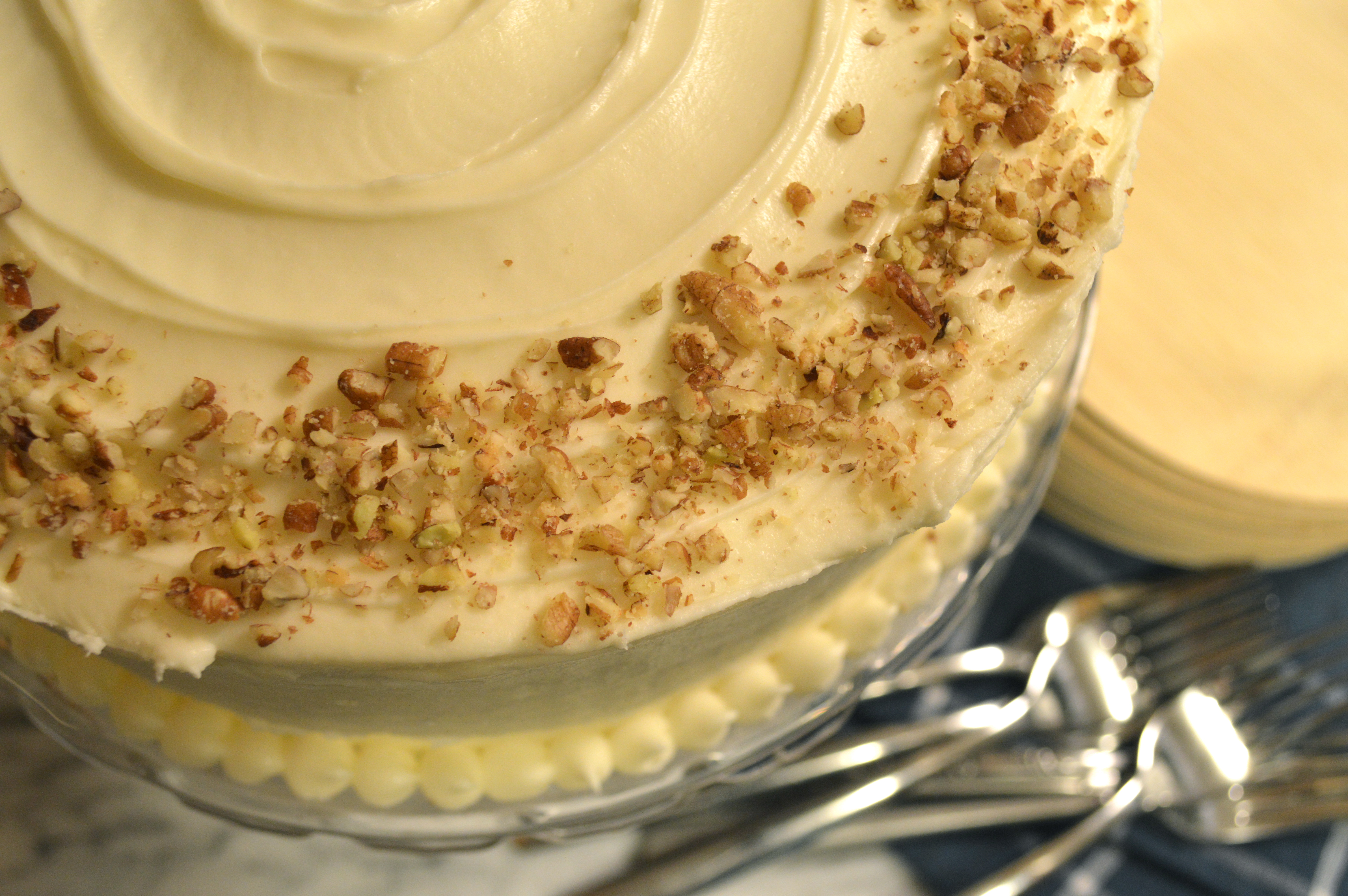
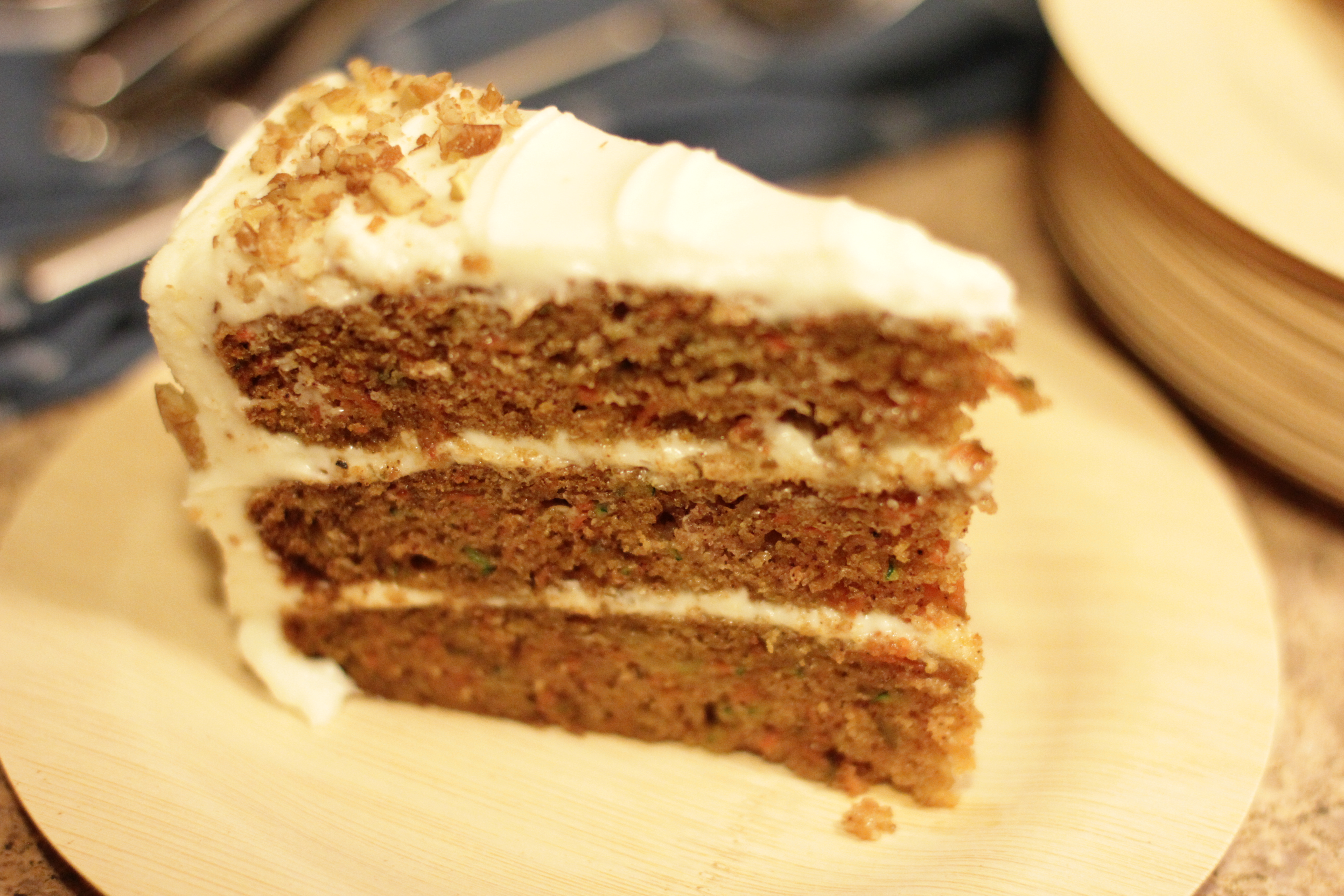
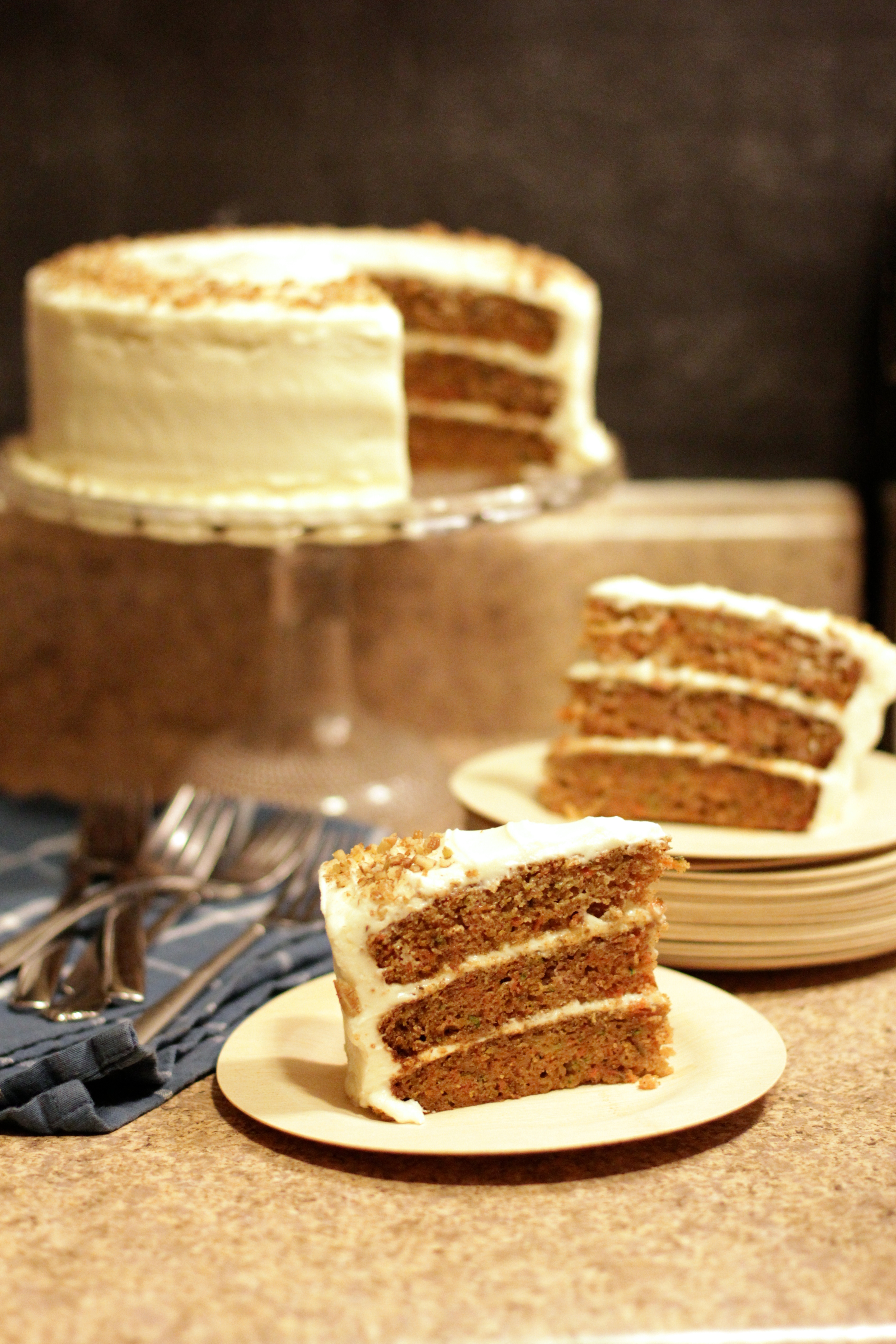
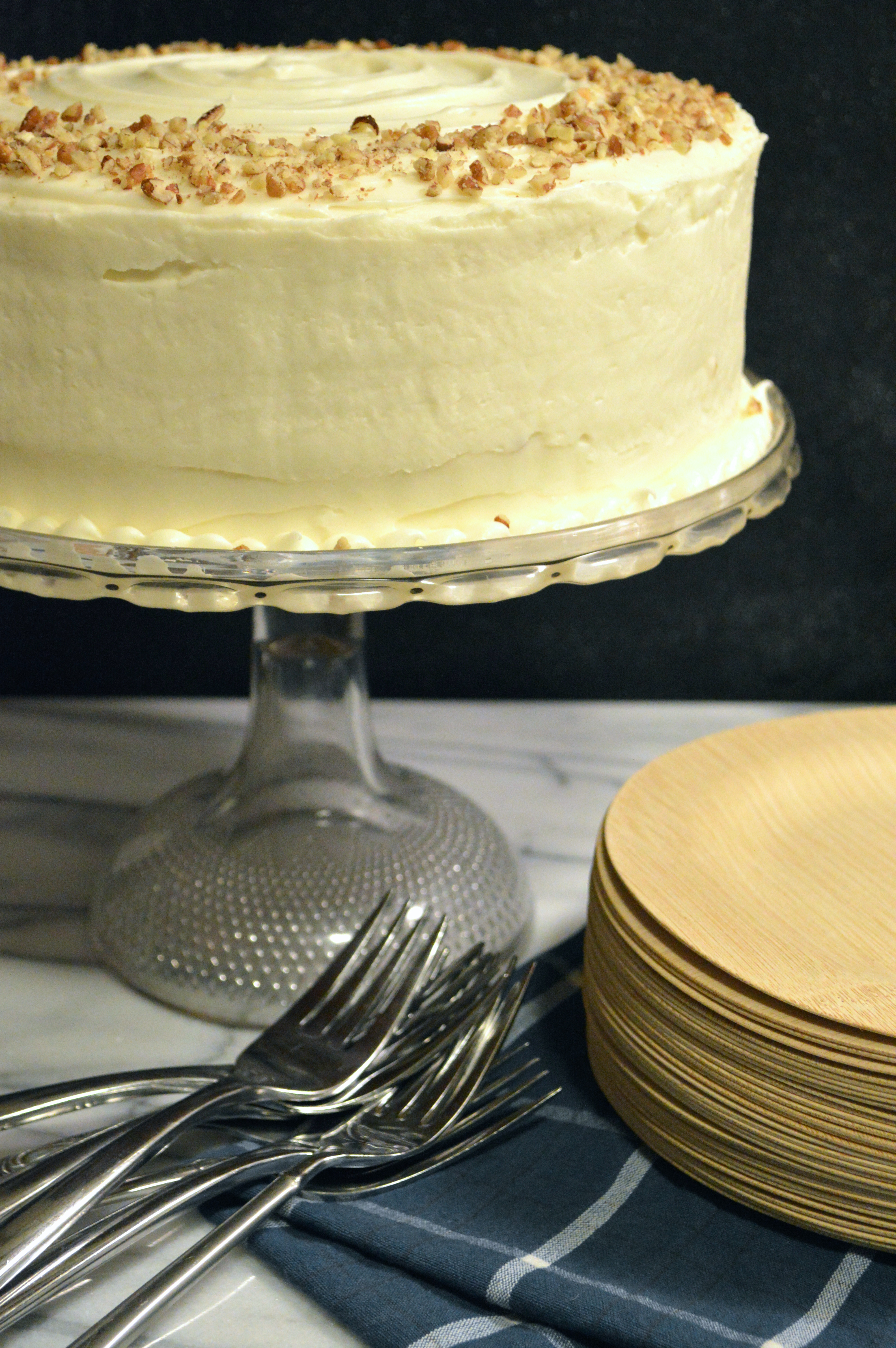
To make this cake I took a standard carrot cake recipe and tweaked it a bit. I added more spice, and subbed in fresh grated granny smith apples and zucchini in for some the carrots. I ended up with a ratio of about 1 part zucchini and 1 part apple to 2 parts carrots. I didn’t want to mess with perfection though, so I stuck with the traditional cream cheese icing. Since I wanted this cake to be as picture perfect as possible, I decided to make it with 3 layers, with the cream cheese icing as the filling and the icing.

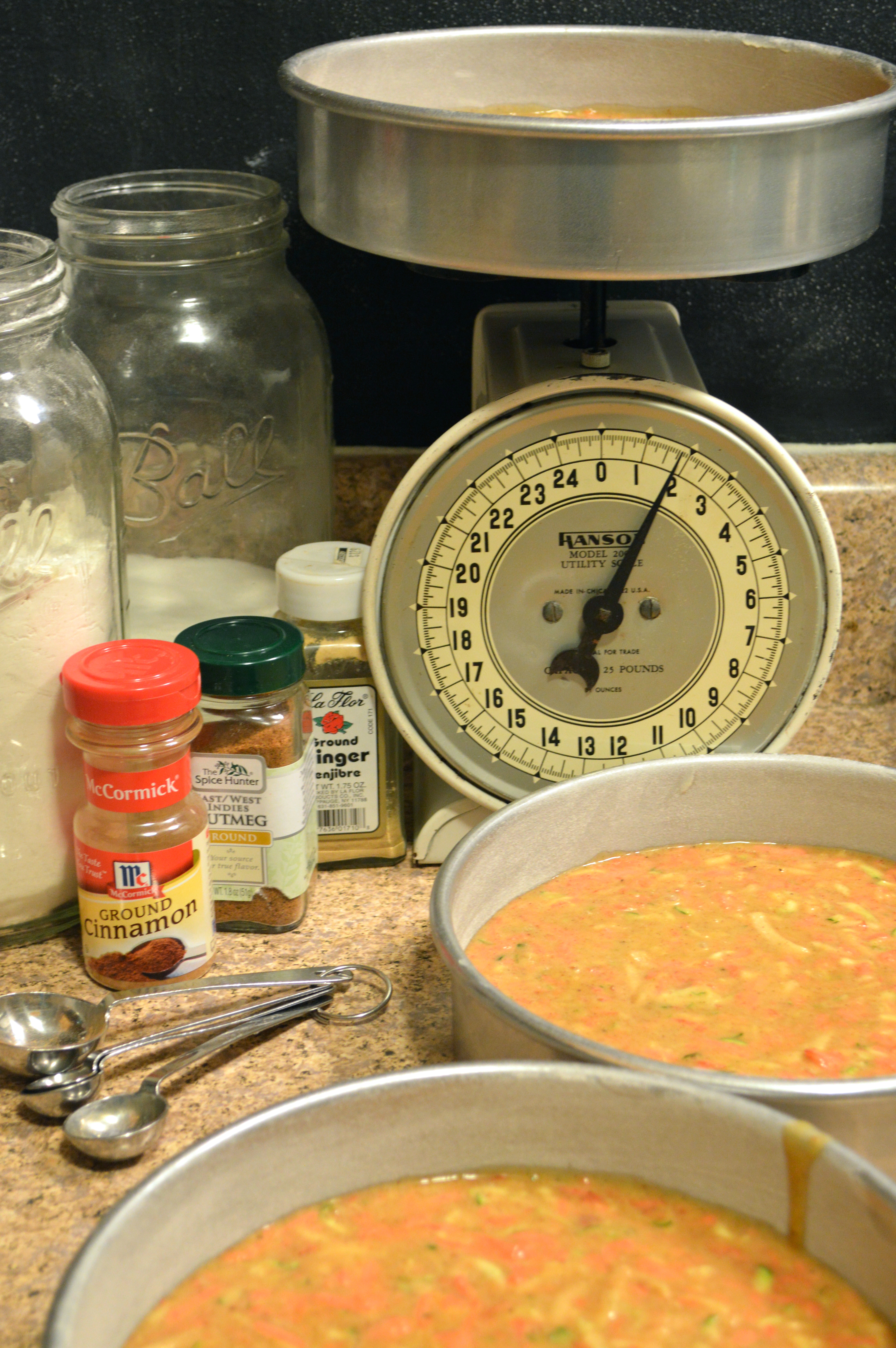
When you’re making a multi-layered cake I think it’s important that all three layers are the same size. Not only will this make for a more professional presentation, but it will also help make sure your layers all bake at the same time instead of one drying out while the other is still underdone. To ensure even layers, I like to use a kitchen scale to make sure the batter is evenly distributed between the pans.

When I first announced my plans for this cake, Russell was skeptical, thinking that carrot cake was just something that shouldn’t be messed with, but I’ve converted him. In the end, this cake was divine and everyone loved it. Although it has a few different fruits and vegetables in it, healthy is the last word that comes to mind when you take a bite. The cream cheese icing is wonderfully creamy, and perfectly sweet & tangy. The cake itself is super moist and delicious, with a hearty hint of spice and a traditional carrot cake flavor. There’s just a hint of tanginess from the tart apples and a nice summery freshness from the green zucchini and fresh carrot. If you love carrot cake, you will surely love this cake too. Go preheat the oven. It’s cold outside, it’ll help you warm up.

harvest cake with cream cheese icing | Brooklyn Homemaker


Harvest Cake with Cream Cheese Icing

makes one 8 inch 3 layer cake

Cake:
2 1/4 cups all purpose flour
1 3/4 cups granulated sugar
2 teaspoons baking soda
1 teaspoon salt
2 teaspoons ground cinnamon
1 teaspoon ground nutmeg
1 teaspoon ground ginger
1 1/4 cups peanut oil (or any neutral vegetable oil)
4 large eggs
2 cups grated carrots (approximately 3-4 carrots)
1 cup grated zucchini (approximately 1 small zucchini)
1 cup peeled, cored & grated granny smith apple (approximately 1 large apple)
4 ounces finely chopped walnuts (optional)

Icing:
1 1/2 pounds powdered sugar
16 ounces room temperature cream cheese
1 tablespoon vanilla extract
1 stick (8 tablespoons) room temperature unsalted butter

Preheat oven to 350 degrees F. With cheesecloth or paper towels, squeeze excess moisture out of grated zucchini and set aside. Butter 3 (8-inch) round pans and line bottoms with parchment. Butter and lightly coat with flour.

In a large bowl, sift together flour, sugar, baking soda, spices, and salt and make a well in the center.  In a small bowl beat together eggs and vegetable oil until combined, and pour into flour mixture. Using a mixer or wooden spoon, blend until combined. Stir in grated carrots, zucchini & apple.

Divide batter evenly between pans. Bake for 35 to 40 minutes, or until a cake tester inserted in the center of the cake comes out clean. Remove from oven and cool for 15 minutes. Remove from pans, turn over onto parchment paper and allow to cool completely before assembling.

In the bowl of an electric mixer, beat cream cheese and butter until completely smooth, about 5 minutes. Add sugar and vanilla and stir in very slowly until incorporated. Once the sugar is mixed in, turn mixer up to high and beat until smooth, about 5 minutes more.

To assemble your cake, level your layers with a sharp serrated knife or cake leveler. Spread about 3/4 cup of icing between each layer of cake, and cover the top and sides of the cake with a thin layer of icing to seal in the crumbs. Refrigerate the cake for about 30 minutes before finishing with another layer of icing. Decorate with swirls, piped details, chopped pecans, or however desired.

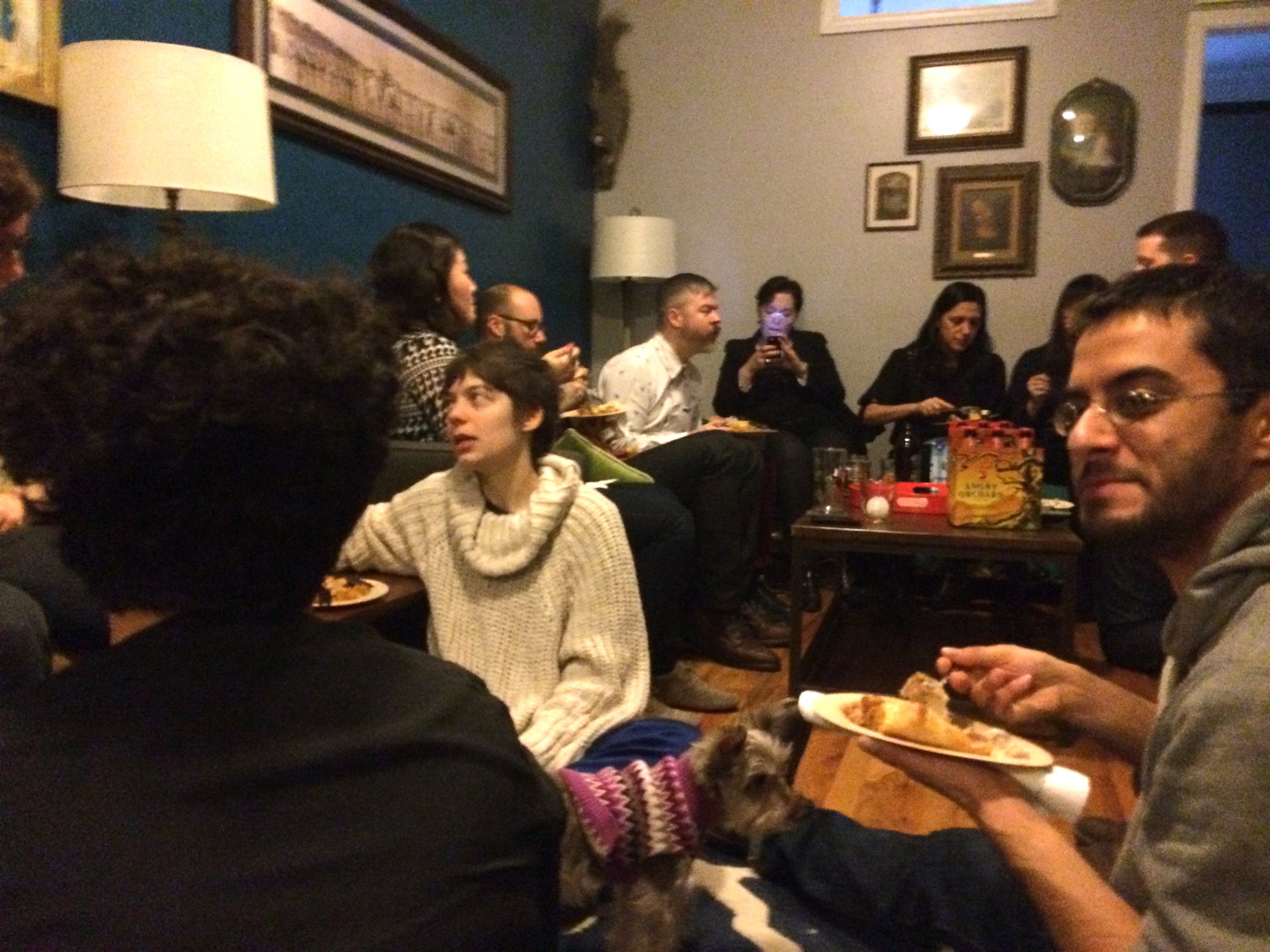
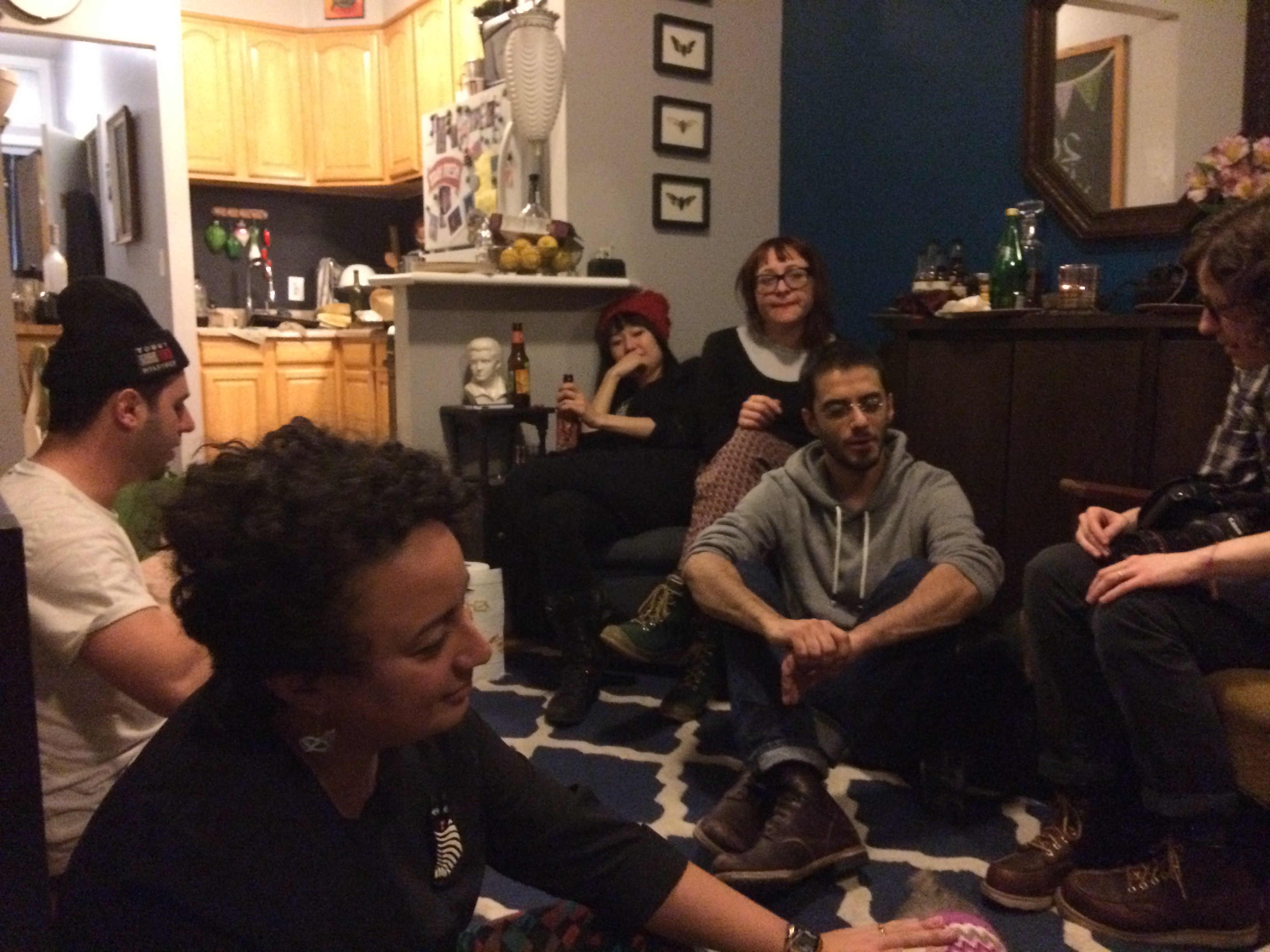
New Years Day Brunch

Happy 2014! I hope everyone had an amazing New Year’s!

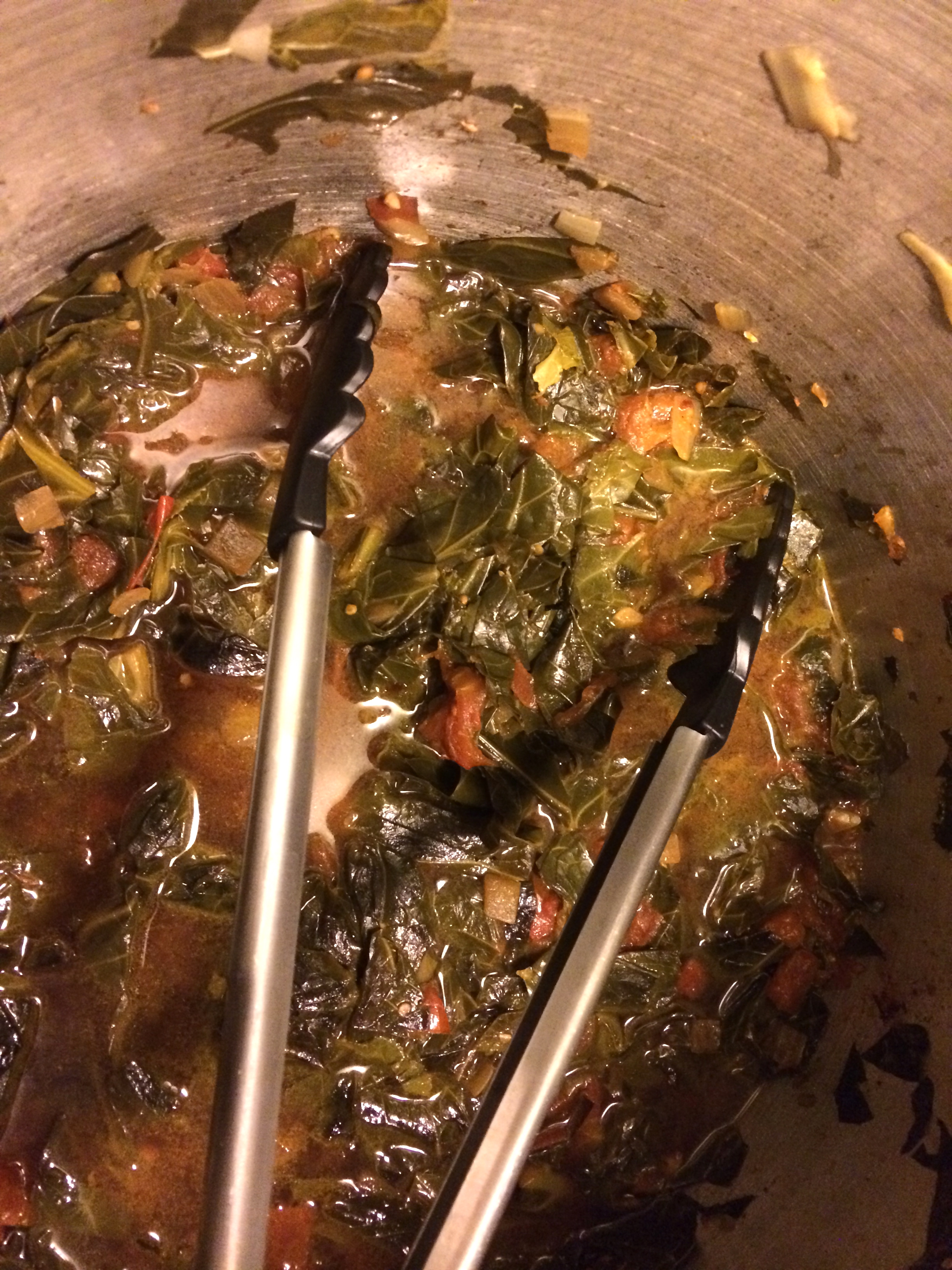
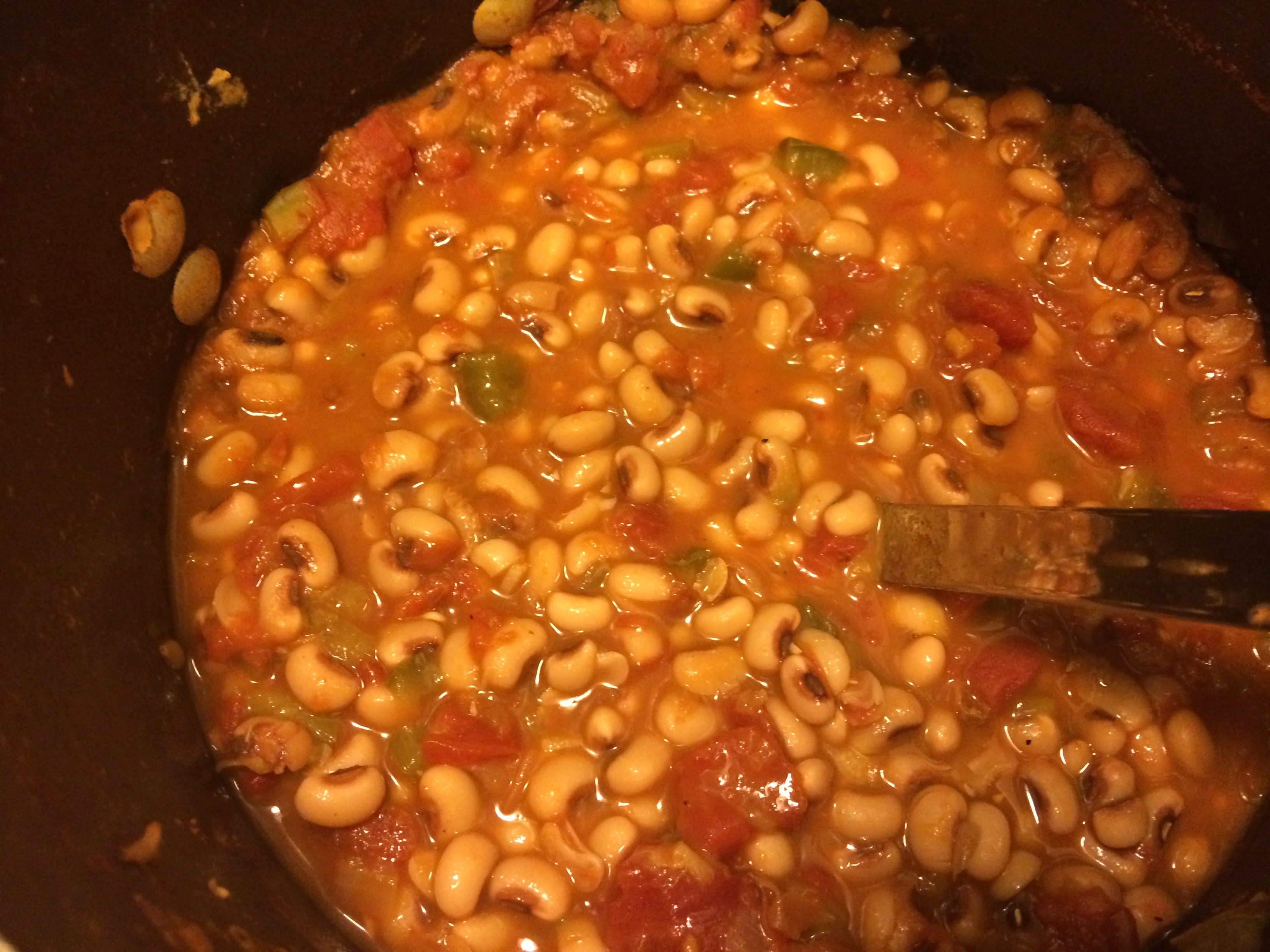
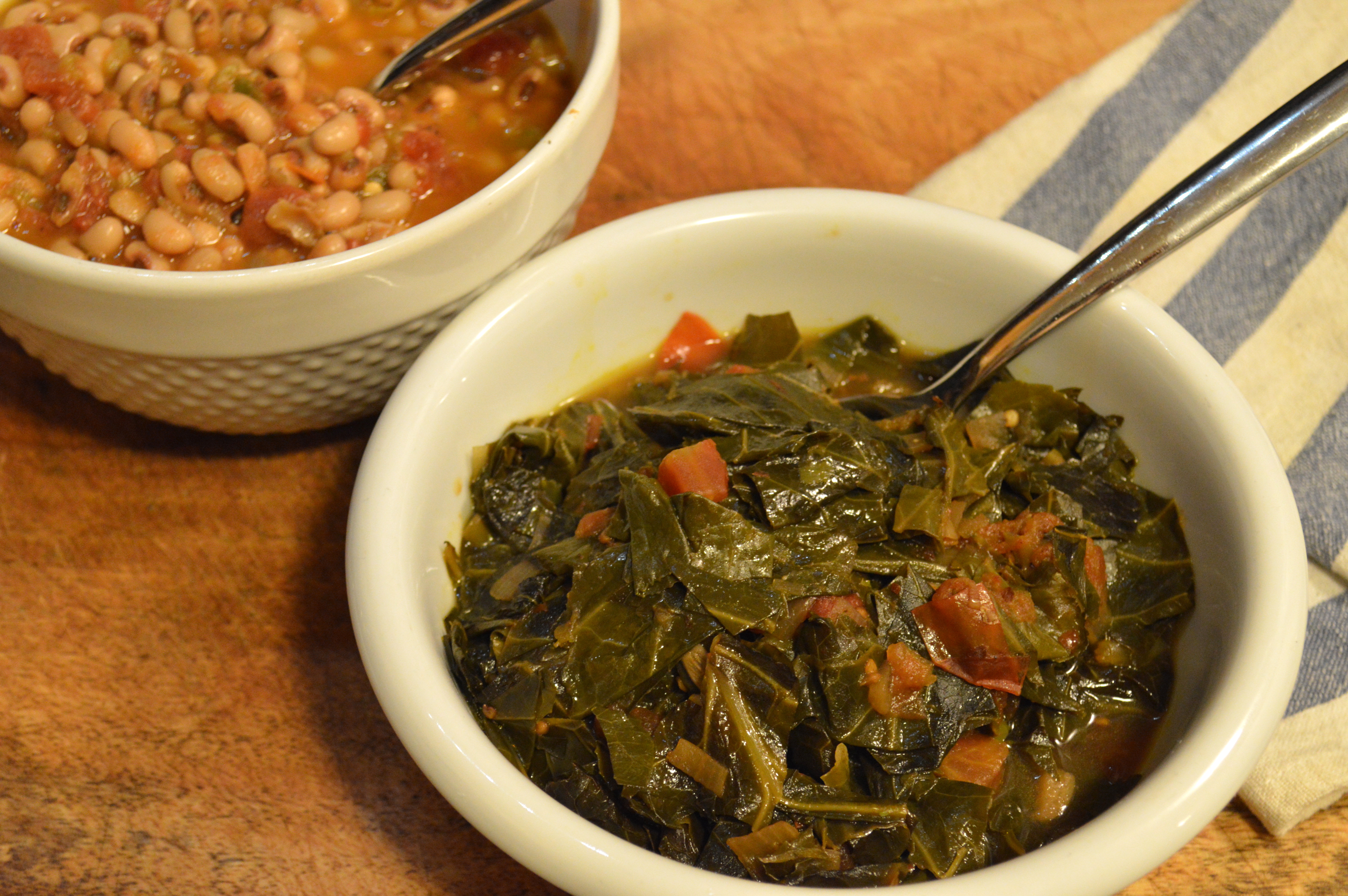
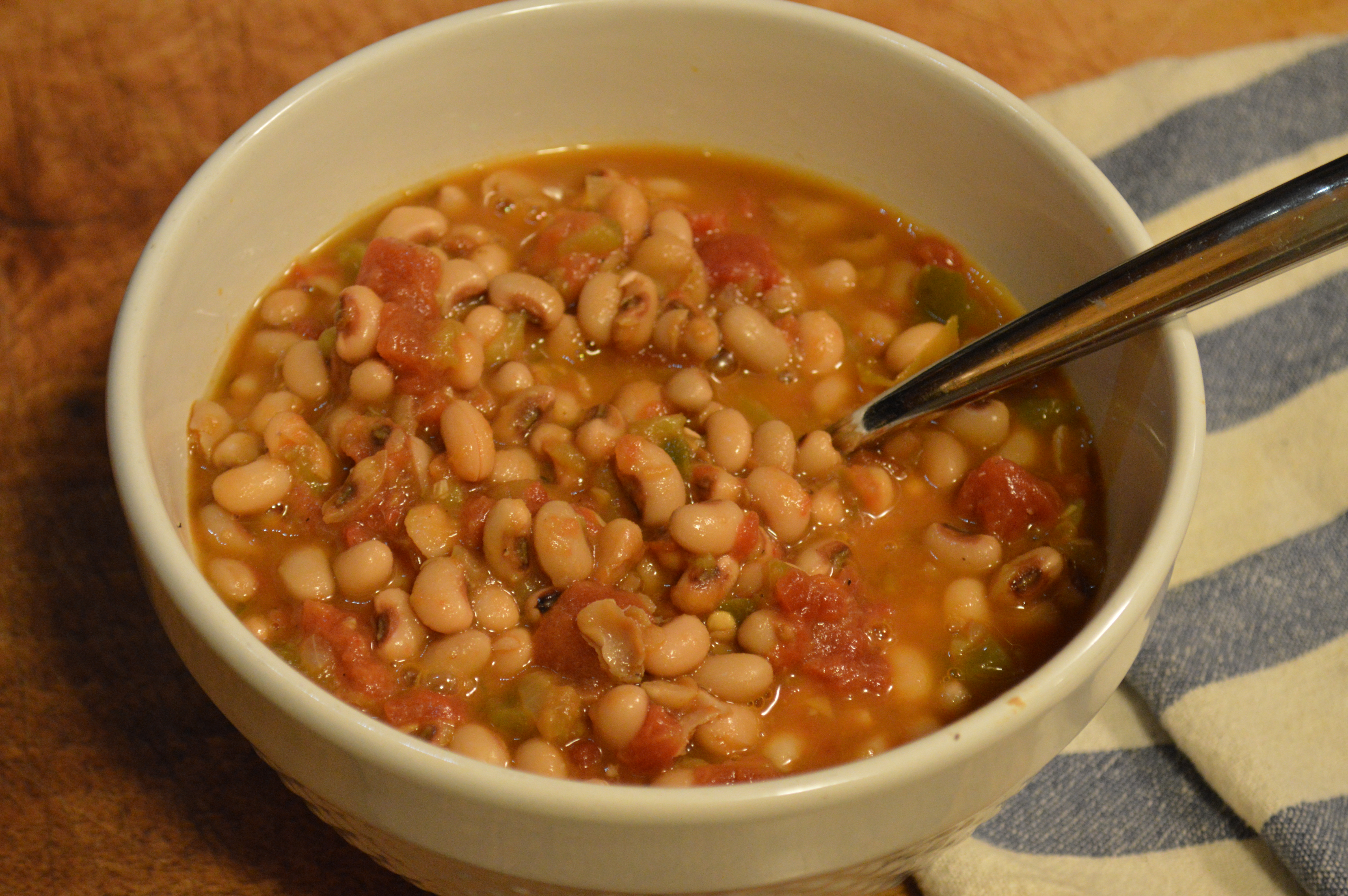
new year's day brunch | vegetarian collard greens and black eyed peas | Brooklyn Homemaker

In New York City people tend to make a BIG deal of New Year’s Eve. Since the town we call home sets the precedent for what a New Year’s celebration is supposed to be, New Yorkers tend to go big. Usually a little too big.

Russell and I however usually stay home, cook a big meal, and watch Dick Clark’s New Year’s Rockin’ Eve. I proposed on New Year’s Eve a few years ago, so we tend to think of that night as a night for each other. A night to be alone together. Rather than go out and party like lunatics, we prefer to stay at home with each other and our pups. Our little family is a motley crew but we’re happy being with each other.

This year however a good friend invited us to a party directly across the street from our apartment, so we decided we should probably put some pants on and go be social. Of course, like the rest of New York, we let the mood of the evening get the best of us and we got carried away. We had an amazing evening having a blast with our friends and we’re so glad we went, but considering out plans for the next morning, maybe we should have stuck with tradition and stayed home. We had a little bit of a hard time getting moving the next morning, but in the end we pulled it together and had a pretty wonderful New Year’s day too.

new year's day brunch | vegetarian collard greens and black eyed peas | Brooklyn Homemaker new year's day brunch | vegetarian collard greens and black eyed peas | Brooklyn Homemakernew year's day brunch | Brooklyn Homemaker new year's day brunch | vegetarian collard greens and black eyed peas | Brooklyn Homemaker

This year we decided to host a brunch for New Year’s Day and bring together the people we love in New York and get the new year started right. 2013 was an amazing year for us and we thought a brunch with our favorite people would be a great way to make sure 2014 would be just as great.  In 2013 we were married, we got our second schnauzer Betty, I celebrated my 30th birthday, we visited Europe, and I started Brooklyn Homemaker. It’s going to be a tough year to beat, but we’re sure going to try!

Planning a menu for New Year’s day is pretty much a no brainer. Southern food is super traditional for New Year’s day so I didn’t really have to put any thought into other options. There is a lot of symbolism behind the foods we eat on New Year’s day, and everything on the plate is supposed to help bring something great into your life in the coming year.

new year's day brunch | vegetarian collard greens and black eyed peas | Brooklyn Homemaker

Black eyed peas are one of the most important foods on the New Year’s plate, and for good reason. Black eyed peas have been a symbol of good luck in Jewish culture for centuries, but in Southern cooking, the tradition dates back to the Civil War. The story goes that when Union troops rolled through the southern countryside they stripped large areas of all stored food and livestock and destroyed many crops and farms. At the time, black eyed peas weren’t really eaten in the north and usually went overlooked or ignored, leaving that crop to be what helped feed Southerners while they rebuilt. Since black eyed peas swell when you cook them, they’re also supposed to symbolize prosperity and growth in the new year.

Other Southern traditional foods include braised greens, usually collard, turnip, or mustard greens; along with pork or ham of some kind. Greens are meant to symbolize money since they’re, well, green; and since pigs can’t look backward without turning around, they’re meant to symbolize forward motion and moving on from the past.

new year's day brunch | vegetarian collard greens and black eyed peas | Brooklyn Homemaker

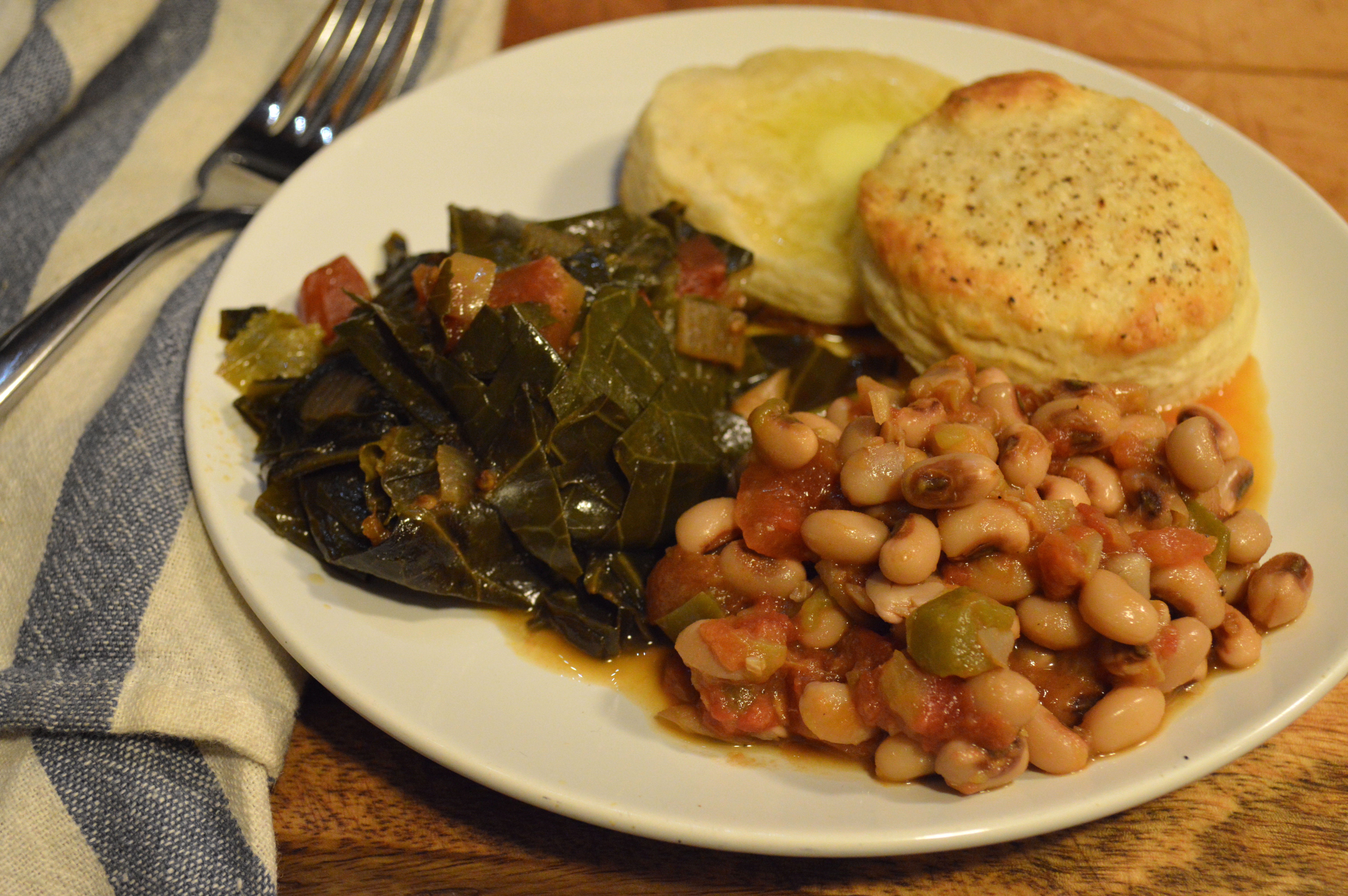
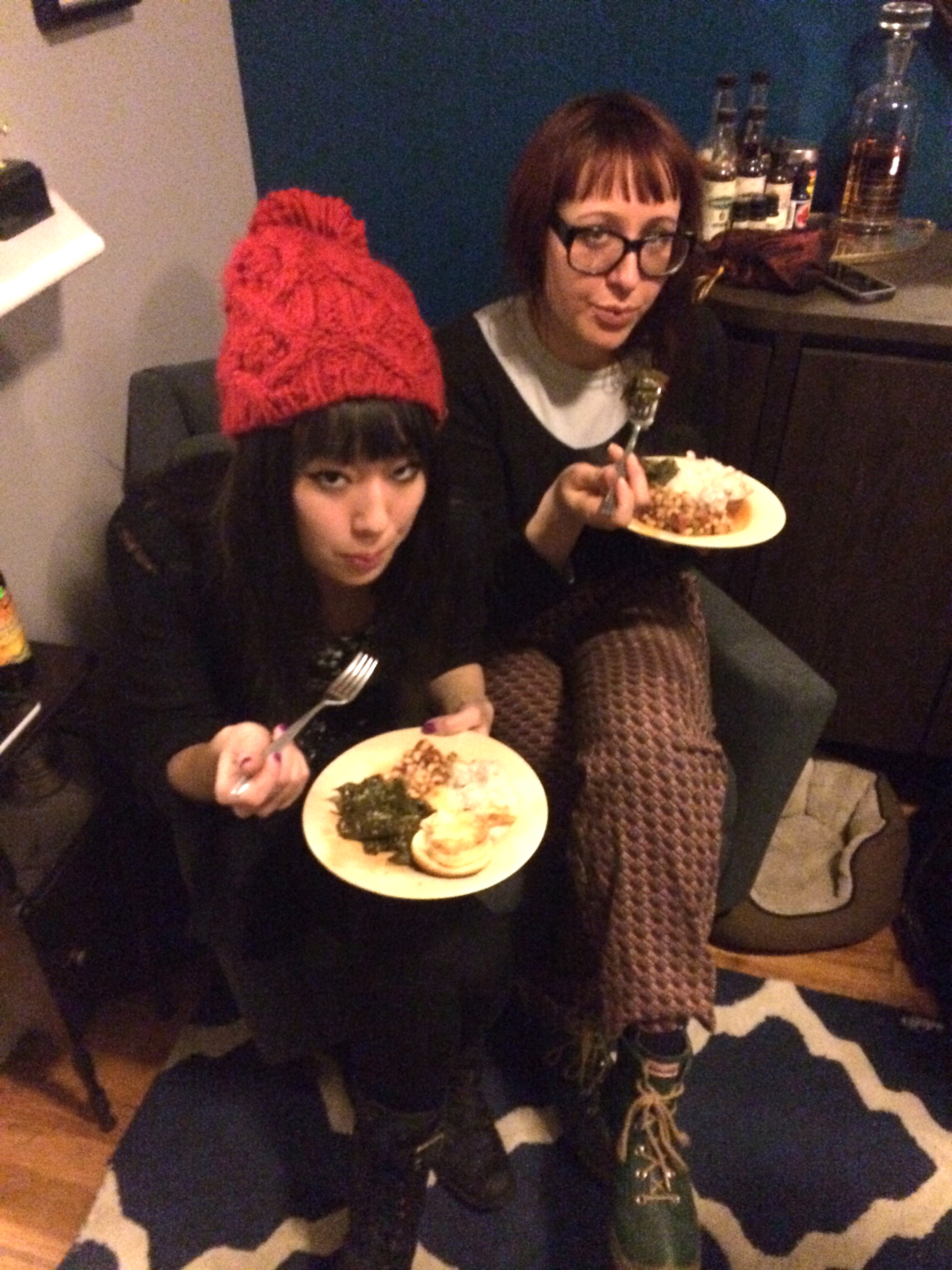
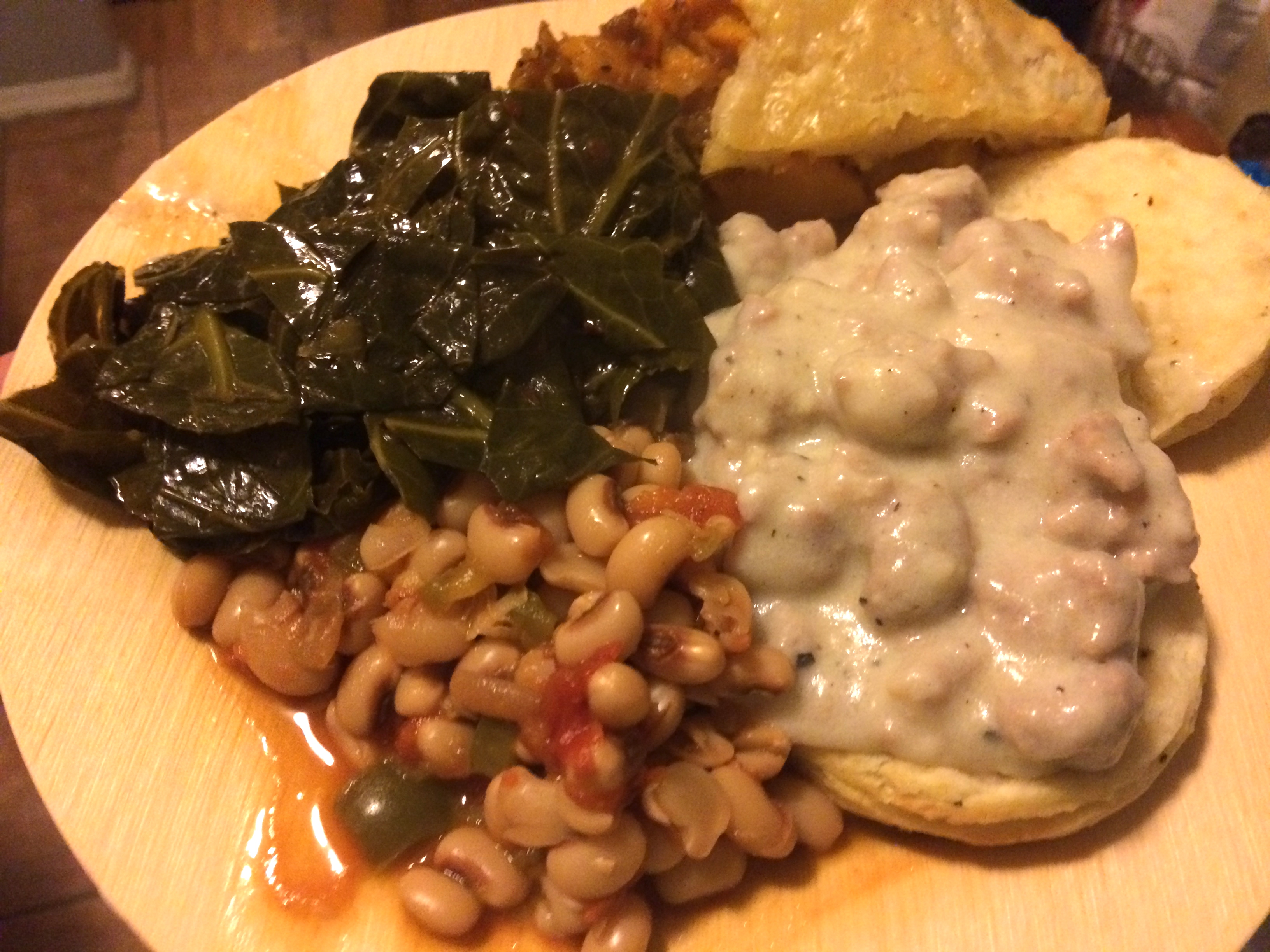
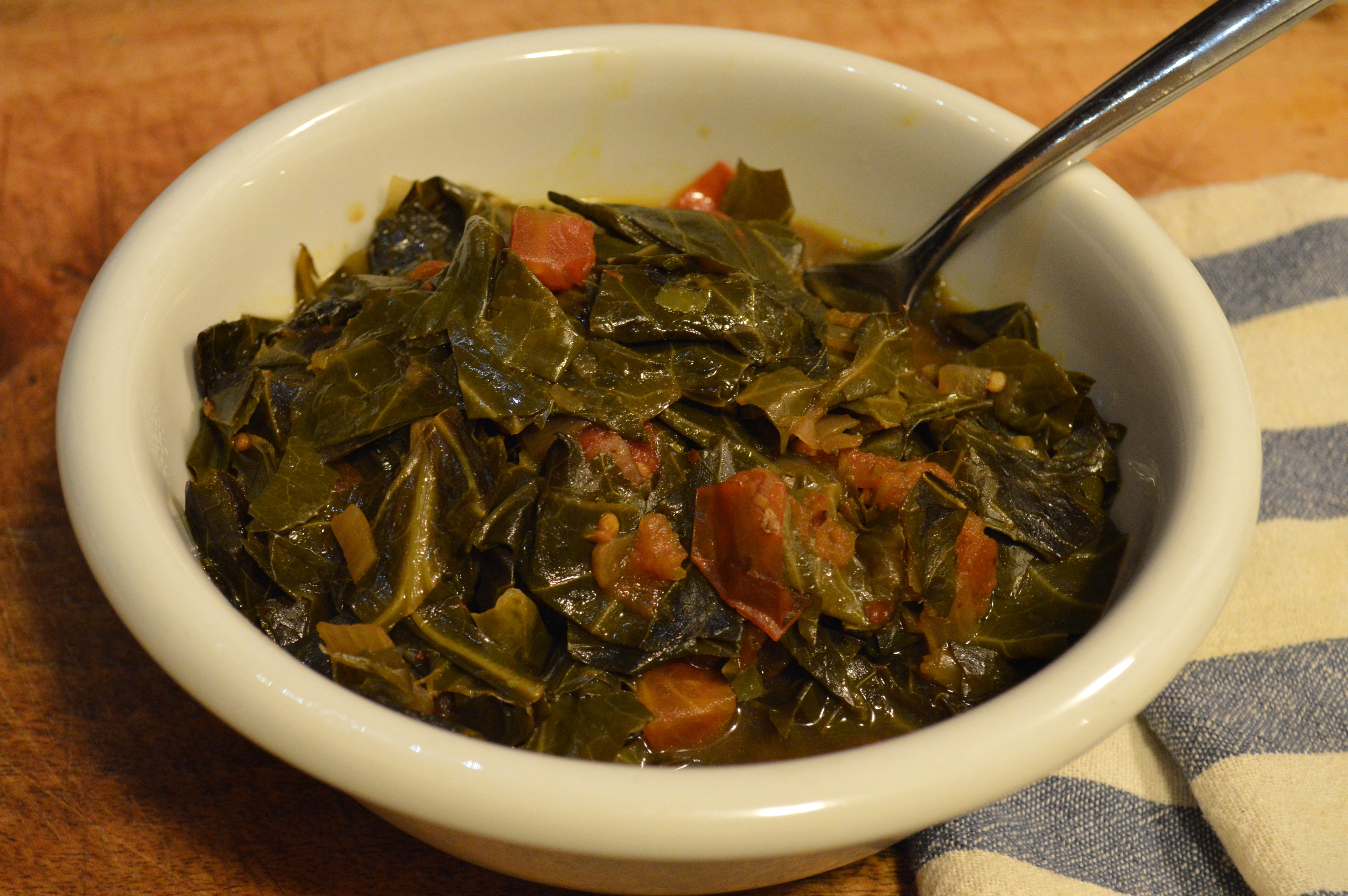
I decided to go all out traditional Southern with black eyed peas, braised collard greens, buttermilk biscuits, and pork sausage gravy. When making these foods, ham is usually used to help flavor your peas and greens, but of course, I don’t live in the south. I live in Brooklyn, so I had dietary restrictions to keep in mind and had to find vegetarian alternatives to add flavor to my peas and greens, and had to thicken my sausage gravy with rice flour for my friends who simply will not tolerate gluten. In the end though, our plates were packed with flavor and I wouldn’t have changed a thing! To accompany our meal I served up a big pitcher of Southern sweet tea, and those of us that wanted some hair of the dog spiked it with lemon vodka. Afterward we dug into a harvest cake, similar to carrot cake, complete with cream cheese icing and pecans.

new year's day brunch | vegetarian collard greens and black eyed peas | Brooklyn Homemaker

Below I’ve shared my recipes for vegetarian black eyed peas and collards. There’s a bit of spice to both recipes to help build flavor, but of course you could skip that if you’re not up for it. Come back soon for a special post on making biscuits and my recipe for gluten free (or not) sausage gravy. I suspect that you’ll probably want to know more about my harvest cake too, so keep checking in and you won’t be disappointed!

new year's day brunch | vegetarian collard greens and black eyed peas | Brooklyn Homemaker

Vegetarian Black Eye Peas

1 lb dried black eyed peas
2 tablespoons butter
1 green bell pepper, diced
1 medium onion, diced
2 cloves garlic, minced
1 teaspoon sugar
1 teaspoon ground black pepper
1 26 oz can diced tomatoes
1 4 oz can diced green chilies
1/4 cup cider vinegar
water
1 teaspoon salt

Rinse your dried black eyed peas with water, and then soak them in water overnight. You want the water to be a few inches above the dried beans because they’ll expand.

In the bottom of a heavy bottomed stockpot or dutch oven, combine the onions and peppers and cook over medium high heat until tender and beginning to brown. Add garlic and cook 2 minutes more, stirring frequently. Drain and rinse the soaked beans, and add to pot. Add canned tomatoes and chilies, including liquid, along with sugar, pepper, and vinegar. Top off with enough water to come to the top of the beans.

Bring pot to a boil and reduce heat to a simmer. Simmer, covered, for 1 1/2 to 2 hours or until beans are tender. Add salt, taste and adjust seasoning if necessary.

new year's day brunch | vegetarian collard greens and black eyed peas | Brooklyn Homemaker

Vegetarian Collard Greens

2 tablespoons butter
1 small onion
1 teaspoon red pepper flakes, optional
2 cloves garlic, minced
1 lb (or large bunch) collard greens, stems removed and leaves roughly chopped or torn
2 cups vegetable stock
2 tomatoes, diced
1/4 cup cider vinegar
salt & pepper to taste

In a heavy bottomed stockpot or dutch oven over medium high heat, melt butter and cook onions until tender and translucent. Add red pepper flakes and garlic and cook 2 minutes more, stirring frequently. Add collard greens, stir well and cook another minute or two. Add vegetable stock, tomatoes, and vinegar, and season with salt and pepper.

Bring to a simmer, cover, & cook for about 45 minutes. Taste and adjust seasoning if needed.

Julia Child’s Boeuf Bourguignon

Hi guys! I hope you had an amazing holiday! I sure did.

boeuf bourguignon | Brooklyn Homemaker

Russell and I spent the day at home with our pups opening presents and eating and drinking and eating. and drinking.

In the morning we exchanged gifts, called family, ate bagels and pfeffernusse, and snuggled with the dogs. I gave Russell a fancy pants super-powered blender that he’s had his eye on, so of course we had to see what it could do. When the clock struck noon we ran around the corner to see if the liquor store was open, and came home with some tequila & triple sec, along with some lime juice and frozen strawberries. Within minutes we had some delicious and perfectly blended frozen strawberry margaritas! I think they’ll have to be a new Christmas tradition!

christmas at Brooklyn Homemaker

After lunch, with a good buzz going, I got started on dinner.

I decided it was high time I tried my hand at Julia Child’s Boeuf Bourguinon. This recipe is kind of an all day event so I thought it would be the perfect thing for Christmas. We had the whole day to hang out at home and do nothing, and at the end we’d have a phenomenal meal to top it all off.

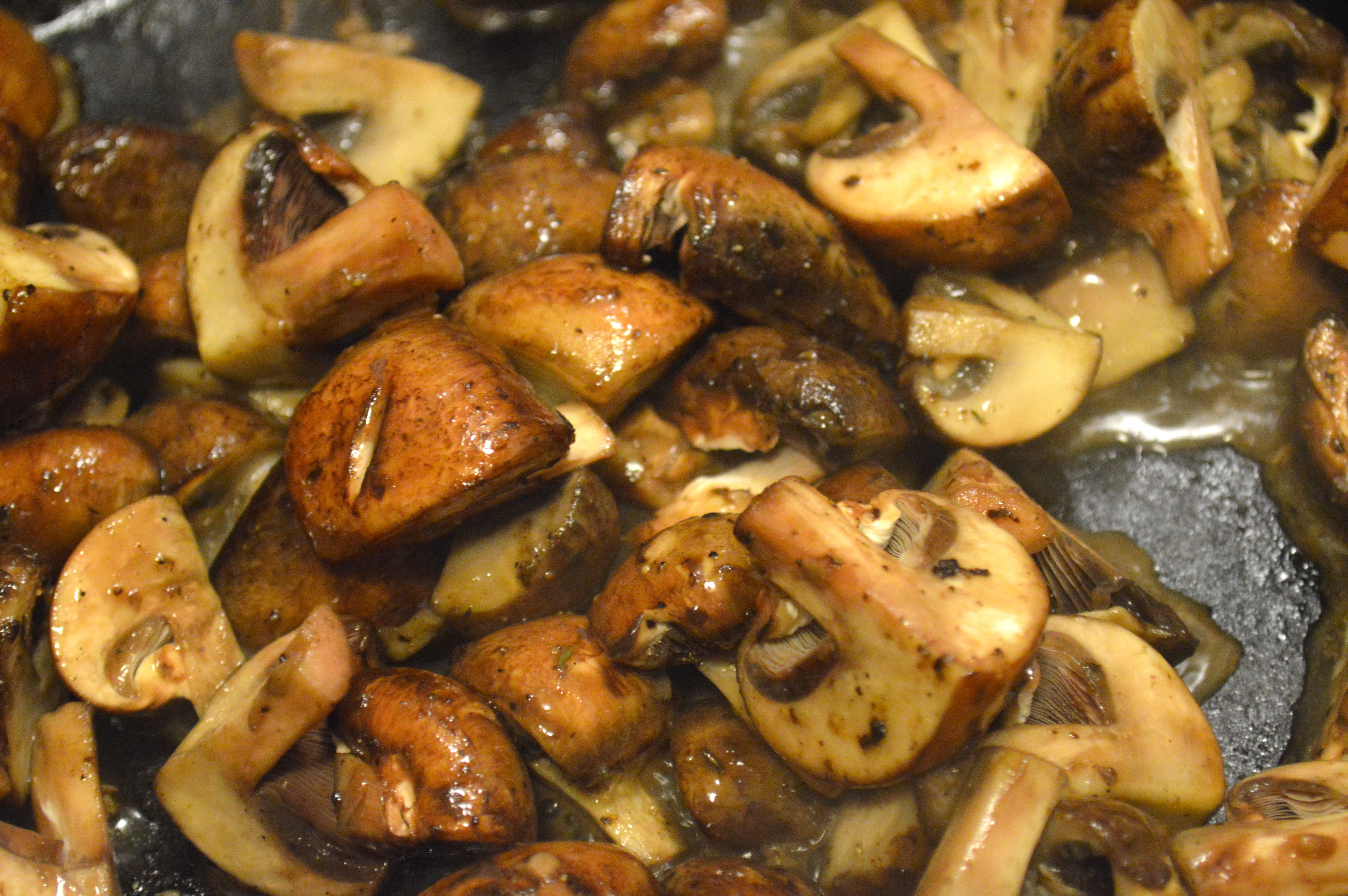
You basically start by browning some bacon, then some beef, then some veggies. Then you throw it all in the pot with some herbs, tomato stock, beef stock, and red wine. Almost a whole bottle of wine. Julia’s my kind of woman. Then it goes into the oven for a good long time and gets all happy, while you cook some tiny white onions in beef broth and then brown some mushrooms on the stove top. When the stew comes out of the oven the broth gets strained out and reduced in a saucepan, and everything goes into the pot together.

I used a California Merlot, but you can really use any full-bodied red wine. The originally recipe recommended Chianti because that was so readily available to American home cooks in the 1960s. I went for the Merlot because I figured it would be closer to the flavor of a true Burgundy, but you can use whatever you want. It cooks for so long that the flavor changes completely anyway.

boeuf bourguignon | Brooklyn Homemaker

I know that Julia is untouchable and that it’s, like, against the law to make any changes, but if I were to make this again I think I’d either just toss the small white onions in at the same time as the carrots, or skip them all together. They’re kind of fussy, took a while, required my attention when I could have been playing with the dogs, and I didn’t really think they added anything special. I know I’m not allowed to say that, but there it is. The stew was absolutely phenomenal and I think they got kind of lost with everything else and didn’t seem to be worth all the extra effort. But that’s just me.

I’m glad that I followed the recipe exactly the first time, and you totally should too, but if I make this again (I will) I’ll make this one tiny tweak.

boeuf bourguignon | Brooklyn Homemaker

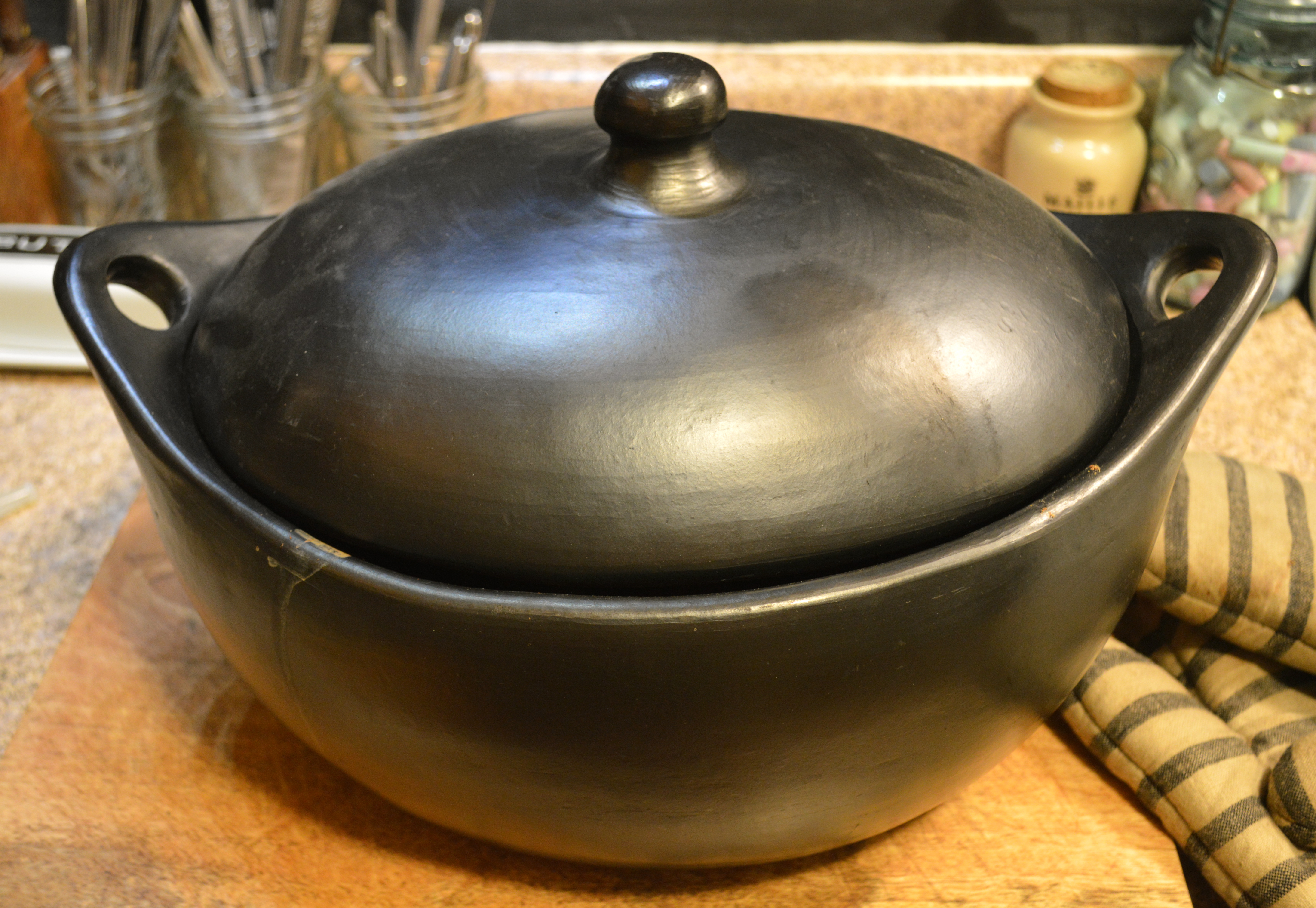
I made this using my La Chamba oval roaster. This is not a proper enameled cast iron dutch oven like Julia would have used, but it worked really well for me. If you’re not familiar, La Chamba pots are oven and stove top safe cookware handmade in Columbia from volcanic black clay. It’s made of magic.

When I first got this roaster I was a bit afraid of using it over a flame. I tried my best to use caution and keep the flames low and safe, but it’s hard to brown anything over a low flame. Most braising recipes call for the meats and vegetables to be browned in the pot to build flavor before the liquids added, and my initial fear made for some, well, subtle braises. Anyway, after using this pot a few times I’ve learned that it can handle pretty much anything I can throw at it. High heat, high flame, hours in the oven, you name it. The only cautions I’d offer up are that it won’t take temperature shocks well, so don’t take it from the refrigerator to the stove top, and that you do need to use some kind of cooking oil or liquid when cooking in it.

boeuf bourguignon in la chamba roaster | Brooklyn Homemaker

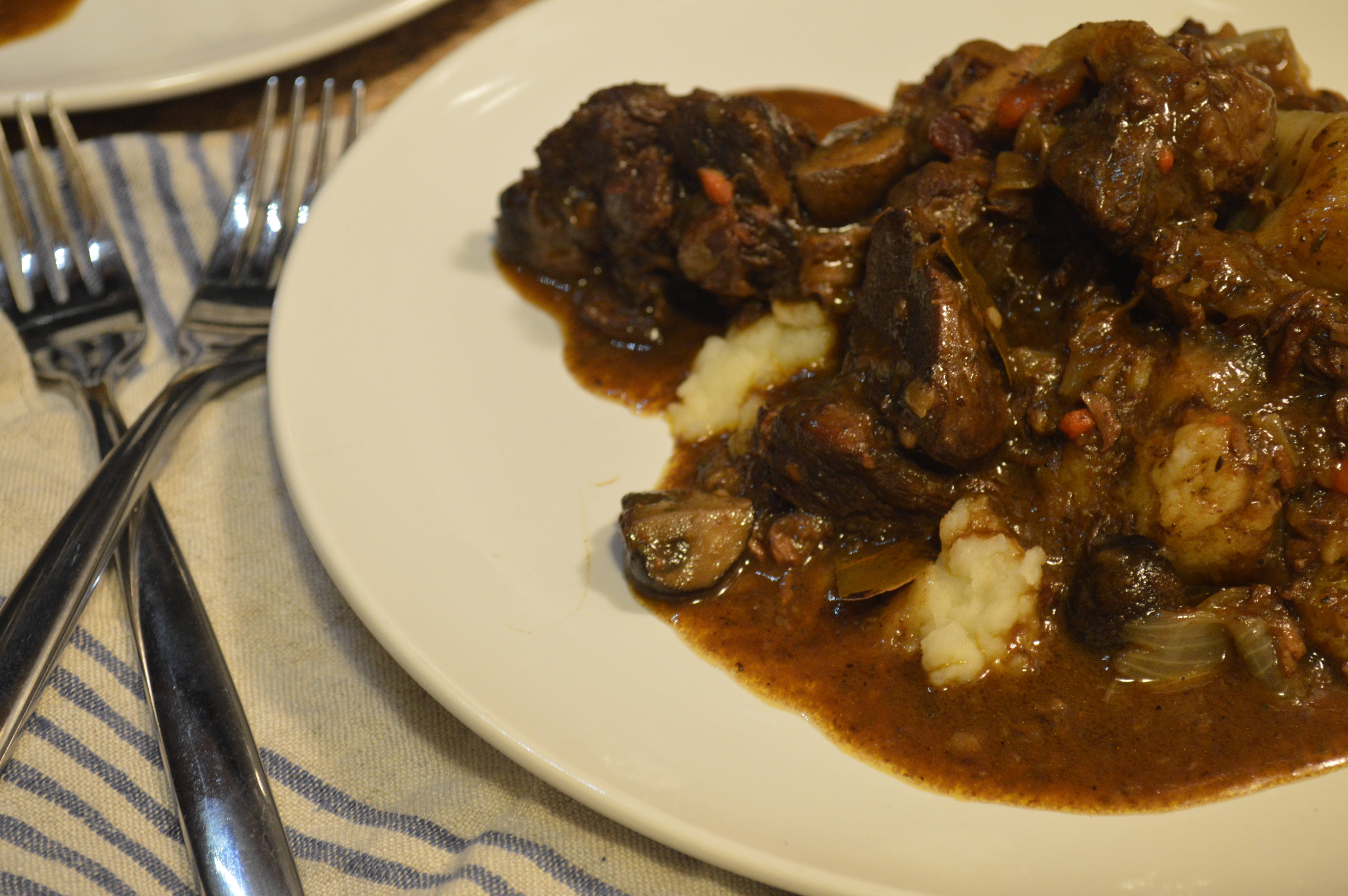
So, fussy onions or not, this recipe is seriously unbelievable. It took every ounce of strength in us not to eat the whole pot of stew in one sitting. It was a lot of work with all the browning and cooking and straining and reducing and all, but it was well worth it. Seriously amazing. The time in the oven mellows the flavor of the wine and it just comes out tasting super rich and hearty, and not at all like what you started with. I served it over mashed potatoes with a couple big glasses of, you guessed it, red wine.

I’m not really someone who cooks much beef at home, and have never been a huge fan of beef stew. I’ve tried a few different recipes and have never really loved the results. This recipe has changed everything. The meat is crazy tender, turning to mush when it sees the fork coming at it. It’s hearty and rich and wonderful. It’s so amazing that I don’t have words. I can’t even begin to describe how good this is. You’ll just have to find out for yourself.

This will have to be another new Christmas tradition for us.

boeuf bourguignon | Brooklyn Homemaker

Boeuf Bourguignon

adapted from Mastering the Art of French Cooking

One 6-ounce piece of chunk bacon
3 1/2 tablespoons olive oil
3 pounds lean stewing beef, cut into 2-inch cubes
1 carrot, sliced
1 onion, sliced
Salt and pepper
2 tablespoons flour
3 cups red wine, young and full-bodied
2 1/2 to 3 1/2 cups brown beef stock
1 tablespoon tomato paste
2 cloves mashed garlic
1/2 teaspoon thyme
A crumbled bay leaf
18 to 24 small white onions
3 1/2 tablespoons butter
Herb bouquet (4 parsley sprigs, one-half bay leaf, one-quarter teaspoon thyme, tied in cheesecloth)
1 pound mushrooms, fresh and quartered

Remove bacon rind and cut into lardons (sticks 1/4-inch thick and 1 1/2 inches long). Simmer rind and lardons for 10 minutes in 1 1/2 quarts water. Drain and dry.
Preheat oven to 450 degrees.
Sauté lardons in 1 tablespoon of the olive oil in a flameproof casserole over moderate heat for 2 to 3 minutes to brown lightly. Remove to a side dish with a slotted spoon.

Dry beef in paper towels; it will not brown if it is damp. Heat fat in casserole until almost smoking. Add beef, a few pieces at a time, and sauté until nicely browned on all sides. Add it to the lardons.
In the same fat, brown the sliced vegetables. Pour out the excess fat.
Return the beef and bacon to the casserole and toss with 1/2 teaspoon salt and 1/4 teaspoon pepper. Sprinkle on the flour and toss again to coat the beef lightly. Set casserole uncovered in middle position of preheated oven for 4 minutes. Toss the meat again and return to oven for 4 minutes (this browns the flour and coves the meat with a light crust).

Remove casserole and turn oven down to 325 degrees. Stir in wine and 2 to 3 cups stock, just enough so that the meat is barely covered. Add the tomato paste, garlic, herbs and bacon rind. Bring to a simmer on top of the stove. Cover casserole and set in lower third of oven. Regulate heat so that liquid simmers very slowly for 3 to 4 hours. The meat is done when a fork pierces it easily.

While the beef is cooking, prepare the onions and mushrooms.

Heat 1 1/2 tablespoons butter with one and one-half tablespoons of the oil until bubbling in a skillet. Add onions and sauté over moderate heat for about 10 minutes, rolling them so they will brown as evenly as possible. Be careful not to break their skins. You cannot expect them to brown uniformly. Add 1/2 cup of the stock, salt and pepper to taste and the herb bouquet. Cover and simmer slowly for 40 to 50 minutes until the onions are perfectly tender but hold their shape, and the liquid has evaporated. Remove herb bouquet and set onions aside.

Wipe out skillet and heat remaining oil and butter over high heat. As soon as you see butter has begun to subside, indicating it is hot enough, add mushrooms. Toss and shake pan for 4 to 5 minutes. As soon as they have begun to brown lightly, remove from heat.

When the meat is tender, pour the contents of the casserole into a sieve set over a saucepan. Wash out the casserole and return the beef and lardons to it. Distribute the cooked onions and mushrooms on top. Skim fat off sauce in saucepan. Simmer sauce for a minute or 2, skimming off additional fat as it rises. You should have about 2 1/2 cups of sauce thick enough to coat a spoon lightly. If too thin, boil it down rapidly. If too thick, mix in a few tablespoons stock. Taste carefully for seasoning. Pour sauce over meat and vegetables. Cover and simmer 2 to 3 minutes, basting the meat and vegetables with the sauce several times.

Serve in casserole, or arrange stew on a platter surrounded with potatoes, noodles or rice, and decorated with parsley.