cakes

walnut schnecken bundt cake #bundtbakers

Another day, another bundt. That’s what I always say.
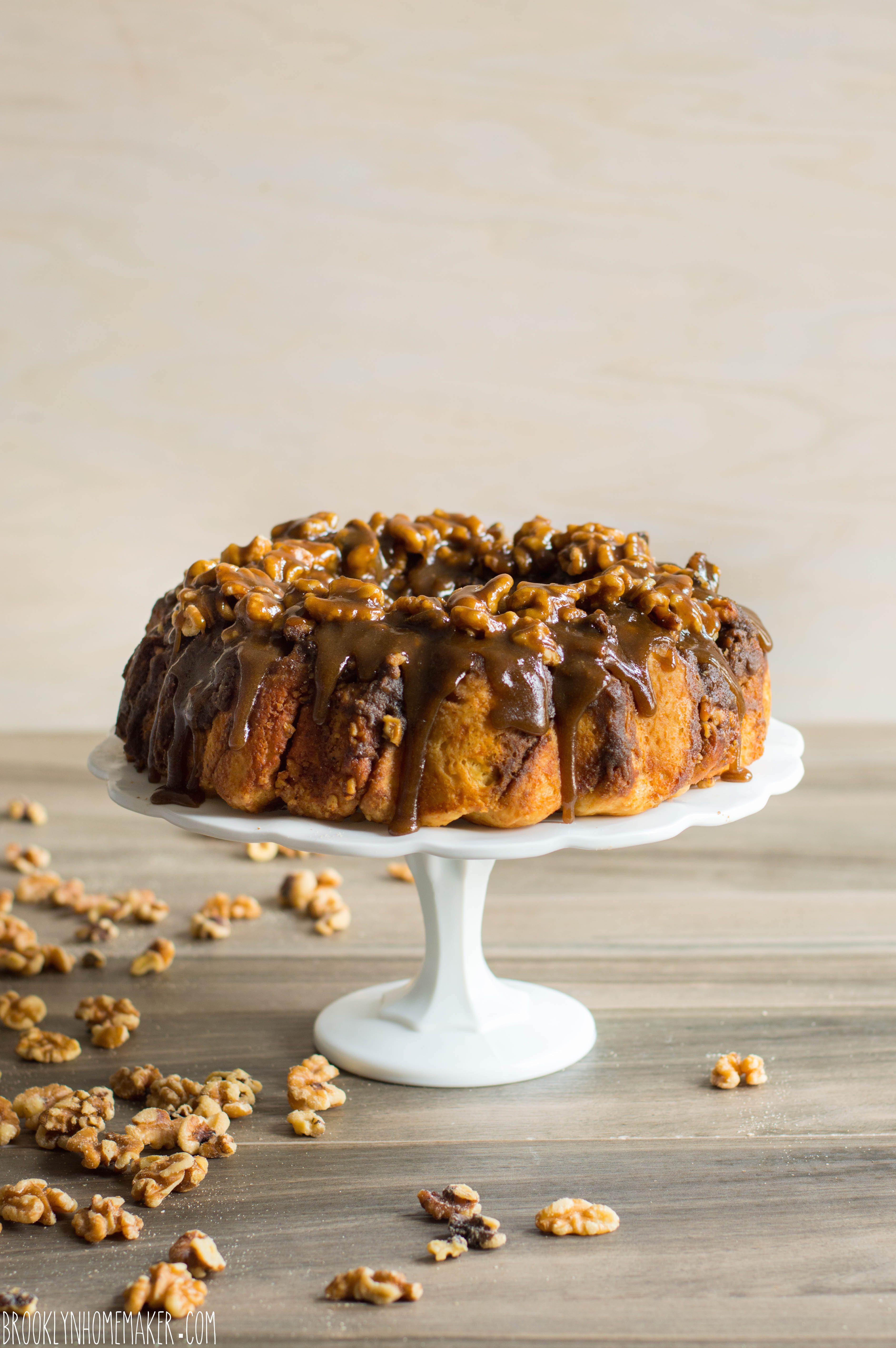
walnut schnecken bundt cake | German cinnamon roll cake | Brooklyn Homemaker

Who am I kidding? I’ve never actually said that.

It does sometimes feel that way though, and this will be the 20th bundt cake I’ve baked and photographed and eaten since I started Brooklyn Homemaker.
Having joined a bundt baking blogging group has certainly kept my oven warm and my belly full!
walnut schnecken bundt cake | German cinnamon roll cake | Brooklyn Homemaker

Over the months (or is it years already?), I’ve done my best to keep things interesting and avoid bundt monotony. The creative themes the bundt bakers come up with have always provided me with fun and interesting challenges month after month.

Every once in a while though, you really need to do something you’ve never done before, something totally different and unique, to give yourself an inspirational kick in the pants.
walnut schnecken bundt cake | German cinnamon roll cake | Brooklyn Homemaker

This month’s theme, chosen by Lauren of Sew you Think you Can Cook, is cinnamon. Warm, sweet, homey cinnamon! Who doesn’t love cinnamon, especially during the dark and dreary days of winter? Thanks Lauren!

I’ve been looking forward to baking this month’s bundt for a while now, but when it came to decide what to actually put in the oven, I was stumped! The problem was that every idea I came up with just didn’t feel very exciting to me. I was certain that they’d all be totally delicious, but I couldn’t think of anything I haven’t seen before. There’s something to be said for simplicity and tradition, and there’s nothing better than a buttermilk spice cake in my book, but I really wanted to do something original this month.
walnut schnecken bundt cake | German cinnamon roll cake | Brooklyn Homemaker

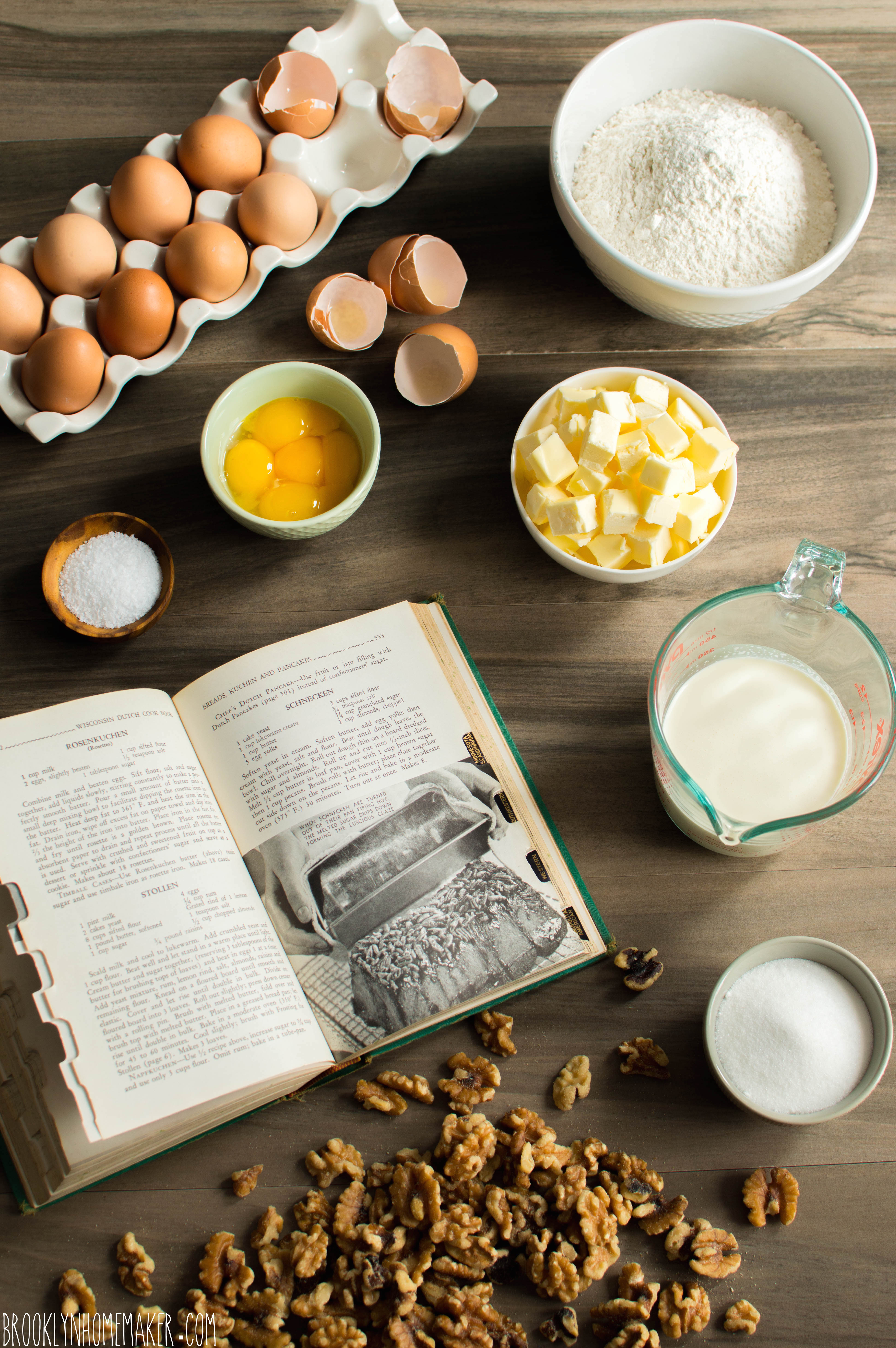
After much hemming and hawing I decided to consult one of the new (old) cookbooks Russell gave me for Christmas. With my fingers crossed I reached for the United Sates Regional Cook Book by Edith Berolzheimer and hoped a recipe from 1939 would catch my eye. The contents are broken up into 11 culinary regions of the US, ranging from New England to Creole cooking, and there’s even a special chapter on “Cosmopolitan American” cooking.
walnut schnecken bundt cake | German cinnamon roll cake | Brooklyn Homemaker

One thing that really struck me was that there are three separate chapters on culinary regions labeled “Dutch”. I’d heard of the Pennsylvania Dutch before, but the other two groups were unfamiliar to me. Another odd thing was that one of the regions, the Michigan Dutch, featured recipes from Holland, while the other two chapters featured German recipes.

Did you know that the name “Pennsylvania Dutch” actually has nothing to do with Holland or the Netherlands? In the U.S., these groups are called “Dutch” because their American neighbors misunderstood “Deutschland”, the German name for Germany, and mistakenly thought the people settling these regions were Dutch rather than German. The name stuck and they’ve been called the Pennsylvania Dutch ever since. I was aware that there was a large German population in Wisconsin too, but I had no idea that they were also called the “Wisconsin Dutch” in the same way as the group in Pennsylvania.
walnut schnecken bundt cake | German cinnamon roll cake | Brooklyn Homemaker

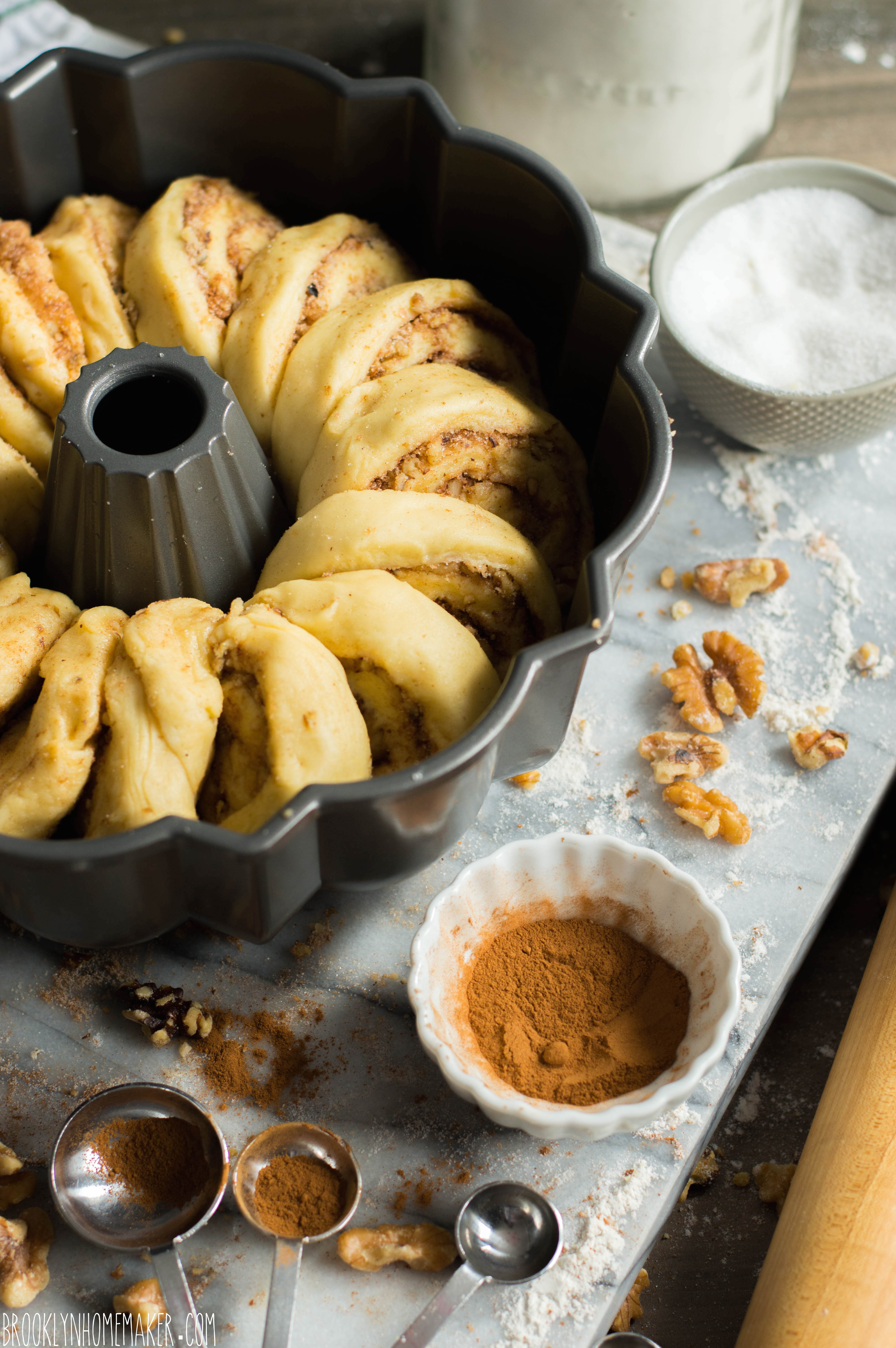
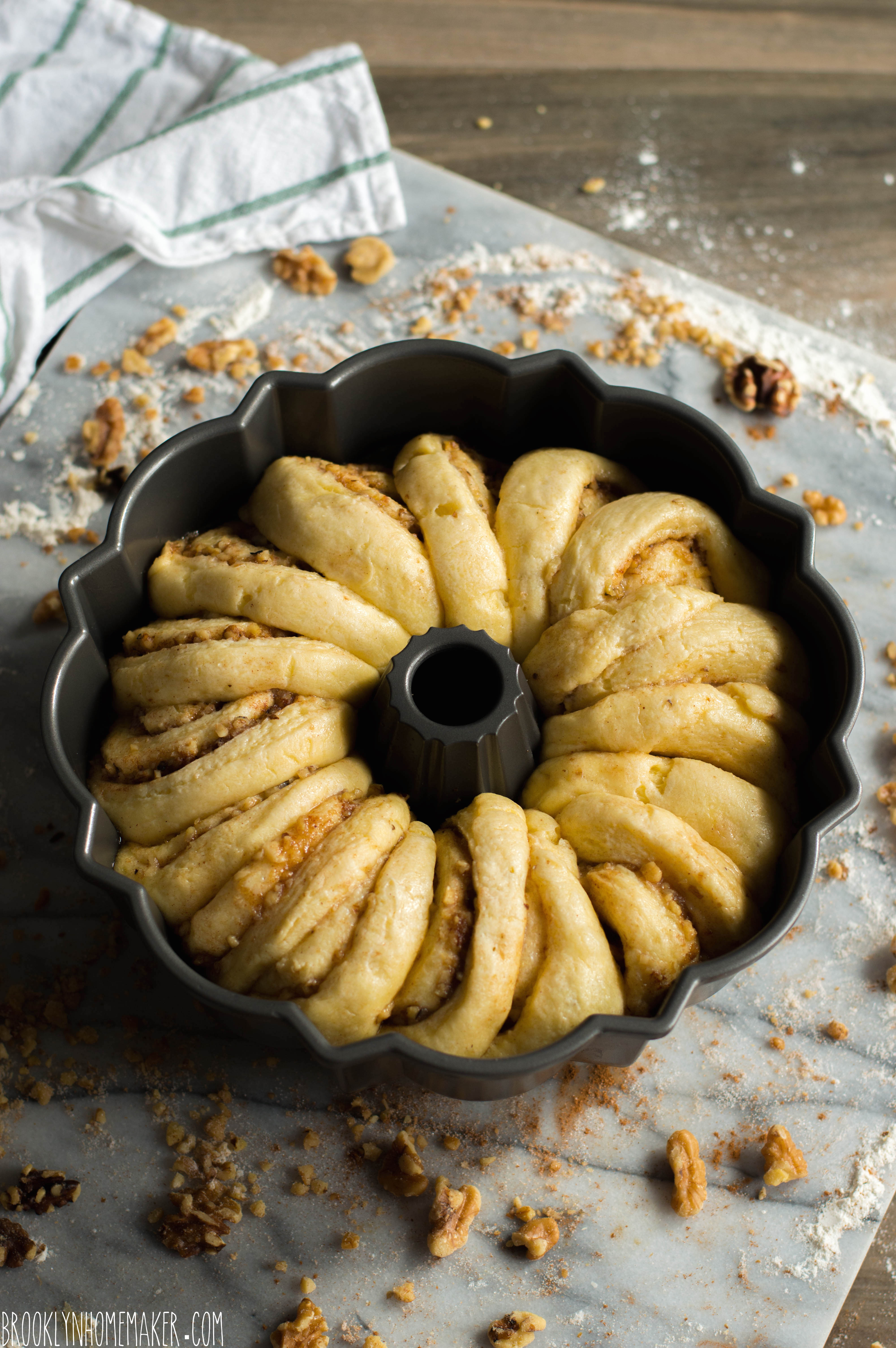
After flipping through the book I also noticed that each of the German “Dutch” section had their own separate recipes for “Schnecken”. If you’re not familiar, schnecken is basically a German version of a sticky bun or cinnamon roll. The word schnecken means “snail” in German, and the pastry’s name is inspired by the swirled pattern of a snail’s shell.
walnut schnecken bundt cake | German cinnamon roll cake | Brooklyn Homemaker

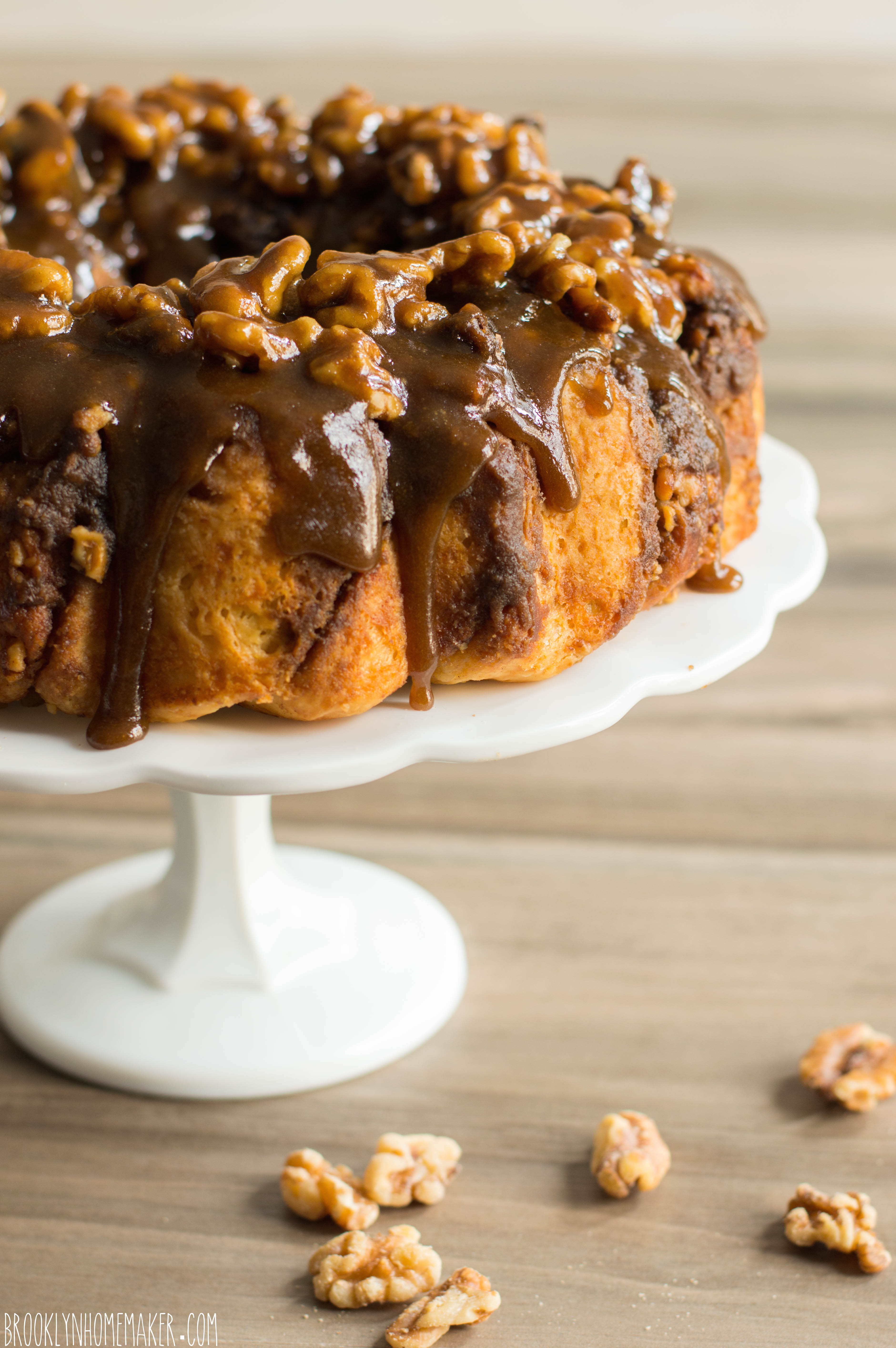
The strange thing to me was how different each recipe was from one another. The Pennsylvania Dutch version seemed pretty straight forward and similar to other cinnamon roll recipes, but the Wisconsin Dutch version was made with a much richer dough and was baked in a loaf pan rather than a traditional round or rectangular cake pan. The Wisconsin recipe also had nuts, brown sugar, and butter added to the bottom of the pan, so that when the schnecken is turned out you’d have a pull-apart loaf topped with it’s own drippy buttery sauce.
walnut schnecken bundt cake | German cinnamon roll cake | Brooklyn Homemaker

I’ve never seen cinnamon rolls baked this way but it seems rather similar to monkey bread in my mind. I figured that if this recipe could be baked in a loaf, why couldn’t it be baked in a bundt pan? A round loaf of pull-apart cinnamon rolls, dripping with their own buttery brown sugar sauce. What could be better than that?
The Wisconsin version didn’t actually call for cinnamon, but the Pennsylvania recipe did so I just went for it. I also swapped walnuts for the pecans and almonds called for in the original recipe. I’ve been on a bit of a walnut kick lately and I absolutely love their bitter earthiness when paired with rich sweet recipes like this one.
walnut schnecken bundt cake | German cinnamon roll cake | Brooklyn Homemaker

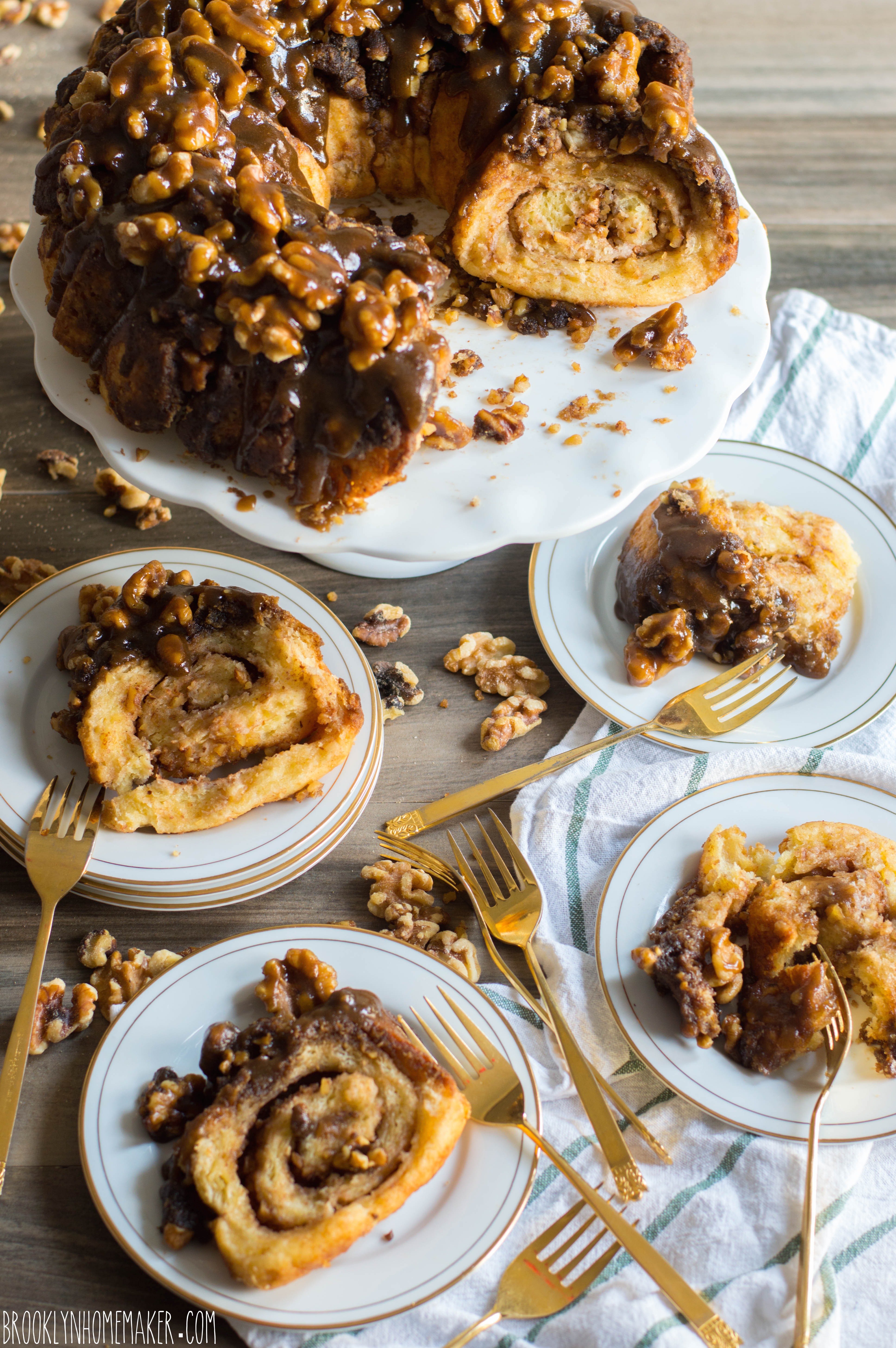
The resulting cake is super fun to eat as you just pull each roll off as you go, no knife required. It’s rich and buttery and dripping with with butter and brown sugar. The cinnamon adds a lovely homey warmth and the walnuts provide an earthy bitterness that compliments perfectly with the sweetness of the sauce and richness of the pastry. I brought the cake to work with me for a staff meeting and it was absolutely devoured! This cake should probably keep for a few days, but to be honest I wouldn’t know! It’s definitely best eaten warm.

In the name of full disclosure, this recipe is over 75 years old and there are a few things I would do a little differently if I had it to do over again. Other than the addition of cinnamon and substitution of walnuts, I wanted to follow the original recipe to a T. While it was absolutely delicious, I actually found it to be too rich and heavy. (Who knew that was even possible?)
This is a yeast raised recipe, but to my surprise it didn’t call for any water or even milk, only heavy cream, egg yolks, and lots of butter. Lots and lots of butter. The resulting dough is extremely rich, and when eaten cold it had a slight greasiness. I also think that it’d be better baked at a slightly lower temperature as it seemed slightly overcooked, with an almost fried feeling, on the outermost edges.

In the recipe below I’ve changed it from cream to milk and lowered the temperature from 375 to 350. This still will make an undoubtably rich and decadent cake and I’m fully confident that you won’t miss all that heavy cream. I did make notes if you want to make this in it’s original 1939 form, but I’m completely rewriting the recipe instructions to make them easier to understand.
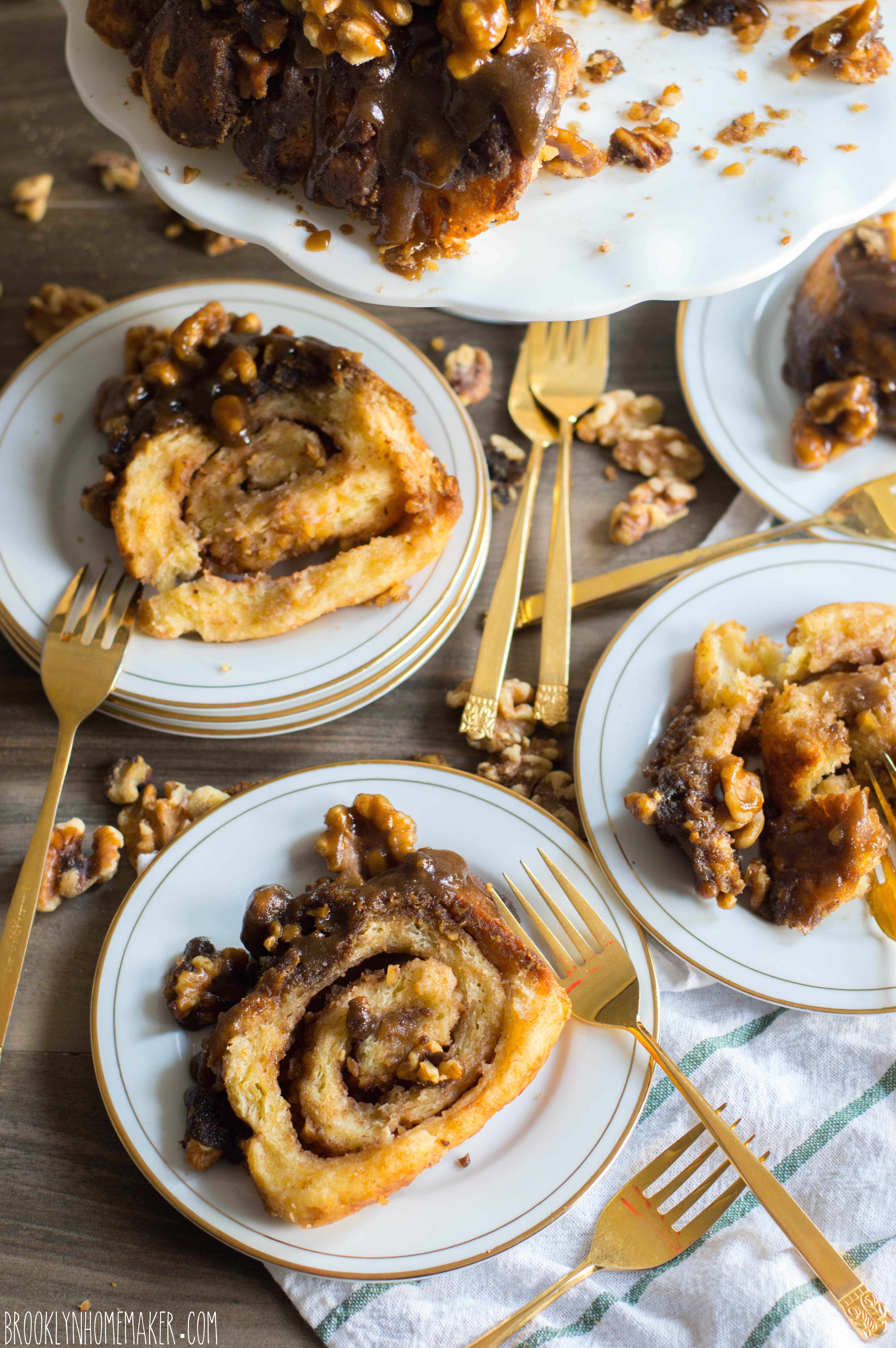
walnut schnecken bundt cake | German cinnamon roll cake | Brooklyn Homemaker

Walnut Schnecken Bundt Cake

  • Servings: about 12 to 16
  • Print
adapted from The United States Regional Cook Book, 1939

Pastry:
1 packet of active dry yeast *see note
1 cup lukewarm milk **see note
1 cup butter, softened
5 egg yolks
3 cups all purpose flour
3/4 teaspoon salt

Filling:
1/4 cup granulated sugar
1 tablespoon cinnamon (optional, not called for originally)
1 cup walnuts, chopped (original recipe called for almonds)

Topping:
1/2 cup butter, melted
1 cup walnuts (original recipe called for pecans)
1 cup packed brown sugar

Whisk yeast into lukewarm (not hot) milk. In the bowl of an electric mixer with a paddle attachment, mix the softened butter and egg yolks until well combined. Mix in milk, salt, and flour. Switch to a dough hook and mix until the dough comes together and leaves the sides of the bowl. Cover with a damp towel and let rise for an hour to an hour and a half, or until doubled in size. You can also cover with plastic wrap and refrigerate overnight.

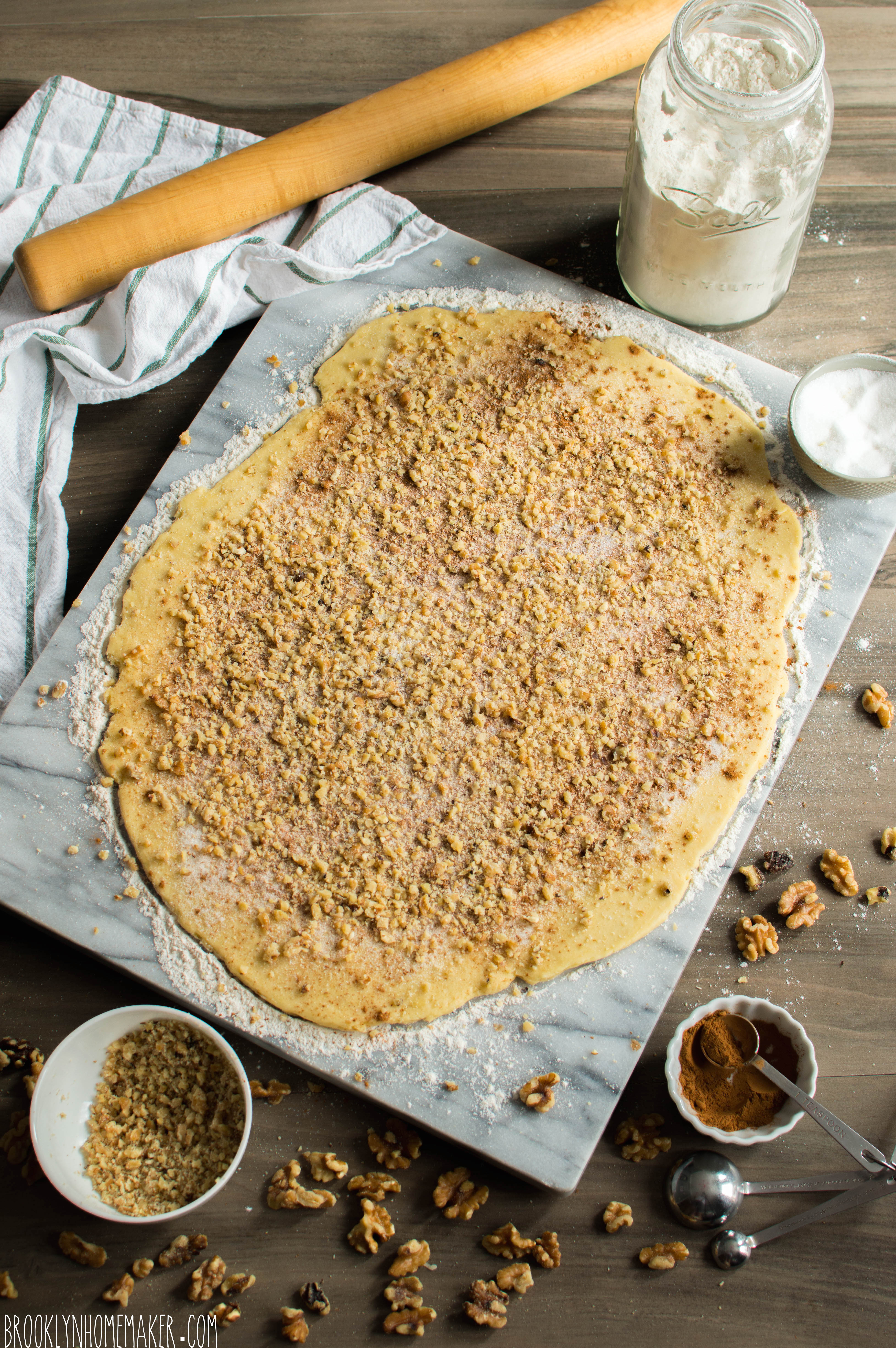
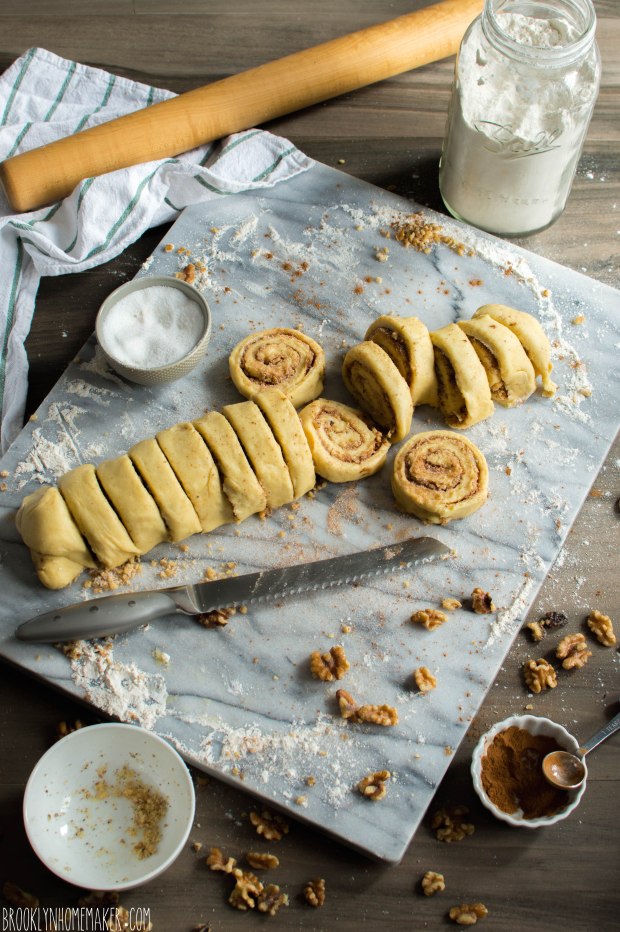
On a lightly floured board, roll the dough out into a rectangle. Mine was about 18″x12″, but the original recipe just said to roll it “thin”.  Sprinkle evenly with sugar, chopped walnuts, and cinnamon. Roll up and slice into 12 to 16 even slices using a sharp serrated knife with a gentle sawing motion.

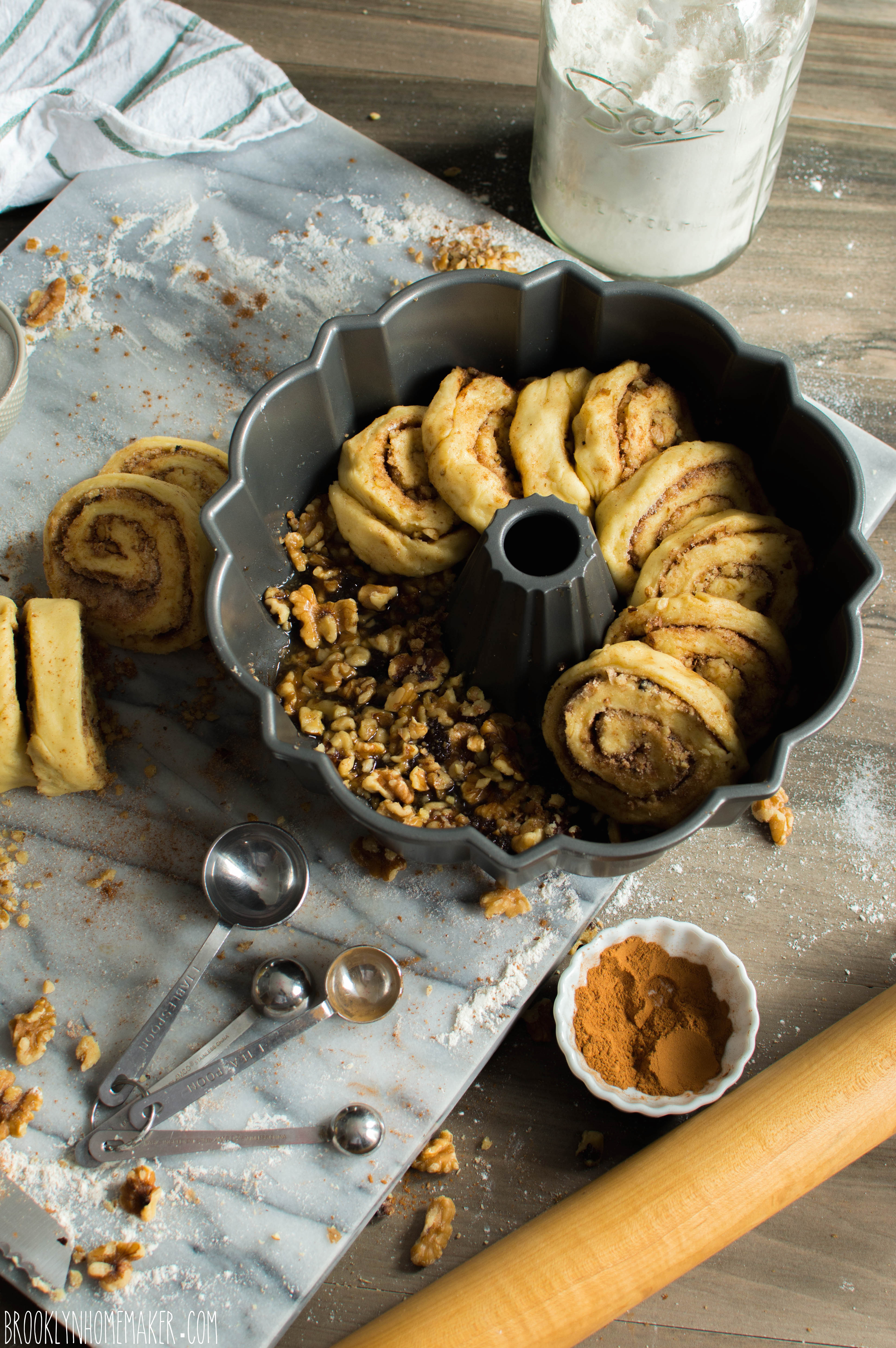
Pour melted butter into the bottom of a 10 to 12 cup bundt pan, reserving 2 tablespoons for later use. Tilt the pan to coat the sides in melted butter, but let most of it remain in the bottom of the pan. Sprinkle nuts in an even layer, and top with brown sugar in another even layer. Arrange rolls, at a slight angle, evenly around the pan atop the nuts and sugar. Brush with remaining butter. Cover with a damp towel and let rise for an hour to an hour and a half, or until doubled in size. Preheat oven to 350.

Bake until golden brown on top and a toothpick comes out clean, about 30 minutes. Turn out onto a serving plate or cake stand immediately. Do not leave in the pan or the sauce will stick. Serve warm.

*note: The original recipe called for cake yeast, but I couldn’t find it. Dry yeast worked out just fine.
**note: The original recipe called for heavy cream, but I found that it made the recipe too heavy and rich, with a greasy feeling. Milk will lighten it up a bit but the butter and egg yolks will ensure it’s still plenty rich.
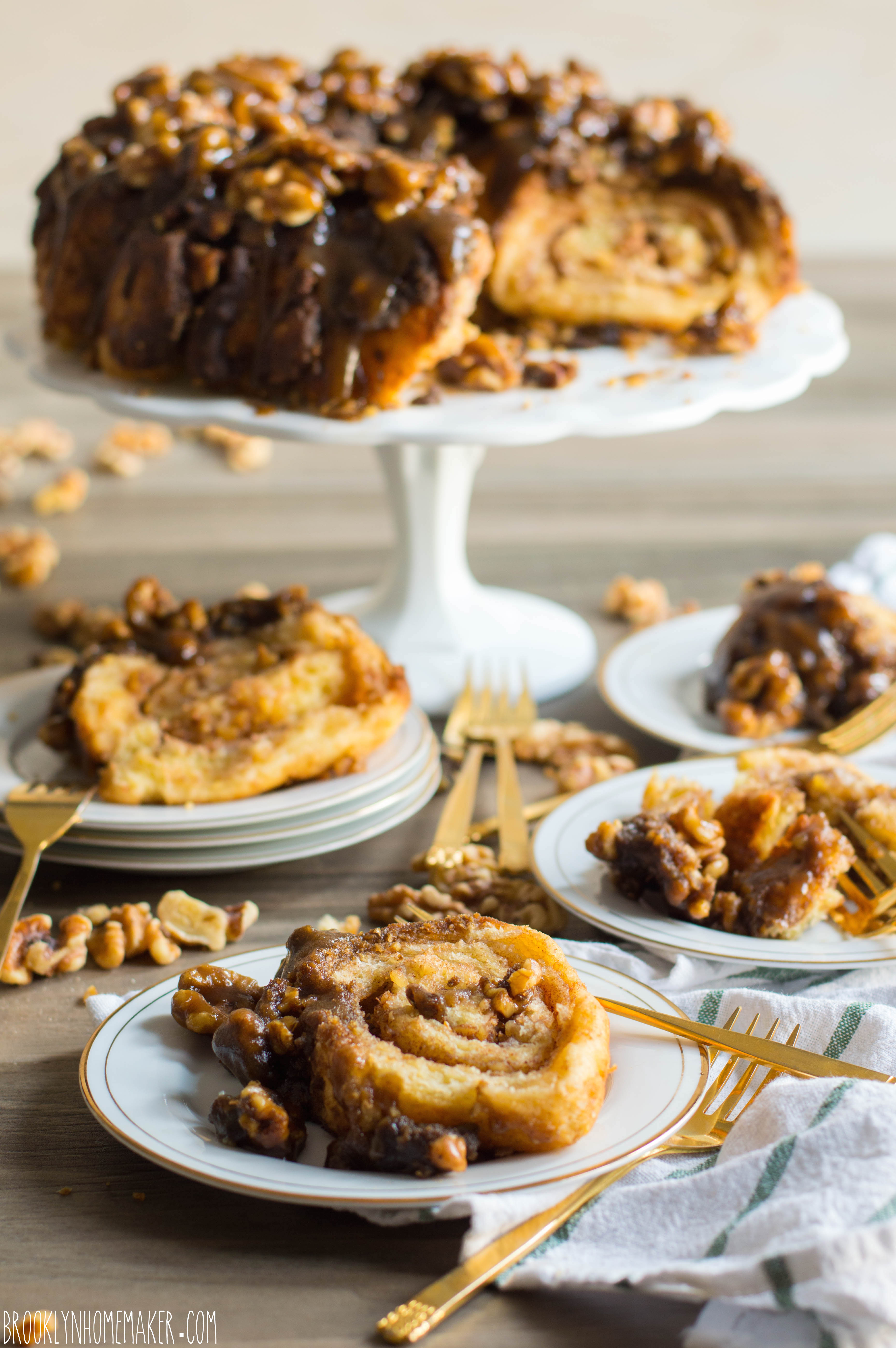
walnut schnecken bundt cake | German cinnamon roll cake | Brooklyn Homemaker

And don’t forget to take a peek at what other talented bakers have baked this month:

.

BundtBakers

.
#BundtBakers is a group of Bundt loving Bakers who get together once a month to bake Bundts with a common ingredient or theme. We take turns hosting each month and choosing the theme or ingredient. You can see all of our lovely Bundts by following our Pinterest Board.

Updated links for all of our past events and more information about BundtBakers can be found on our homepage.
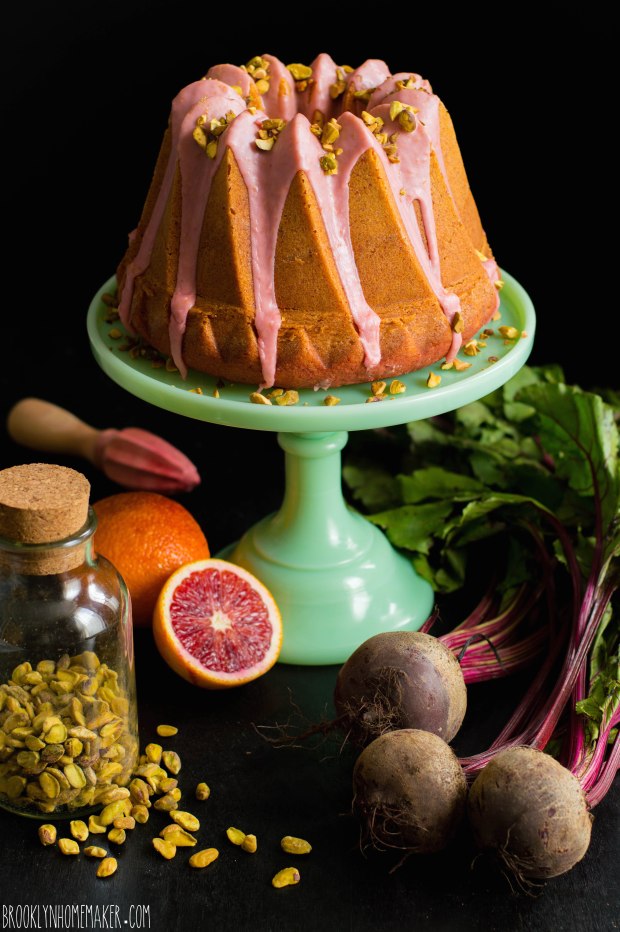
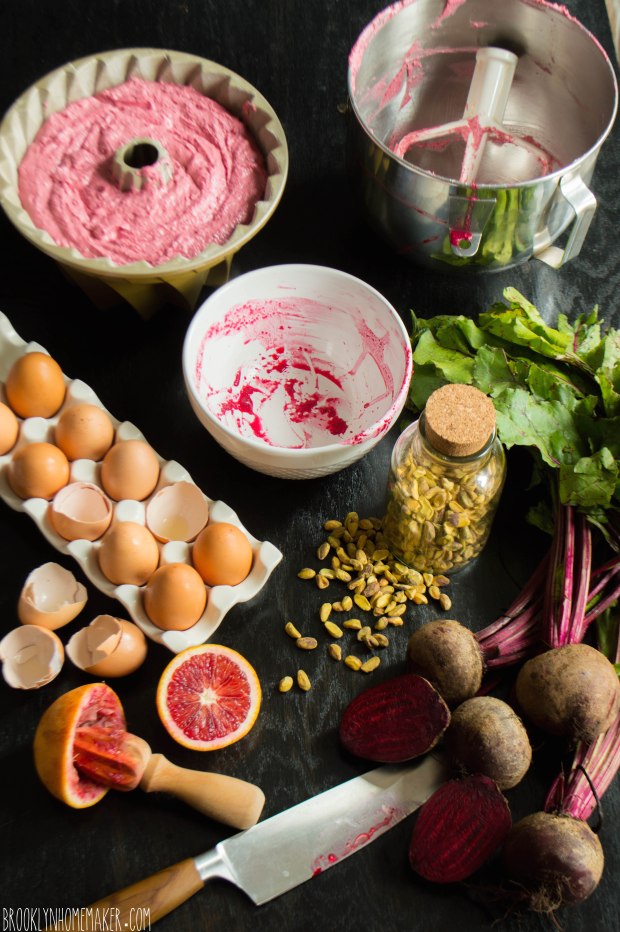
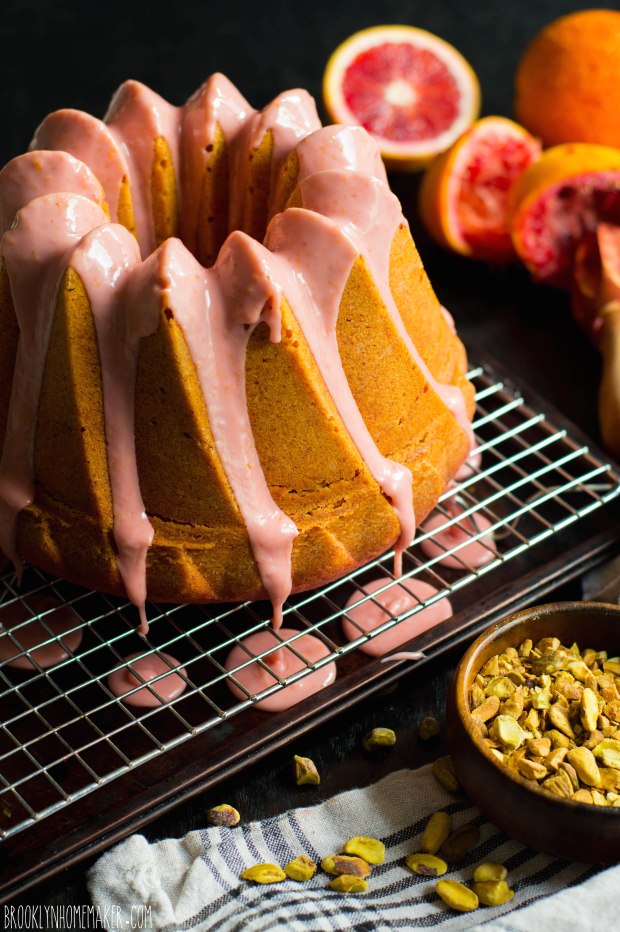
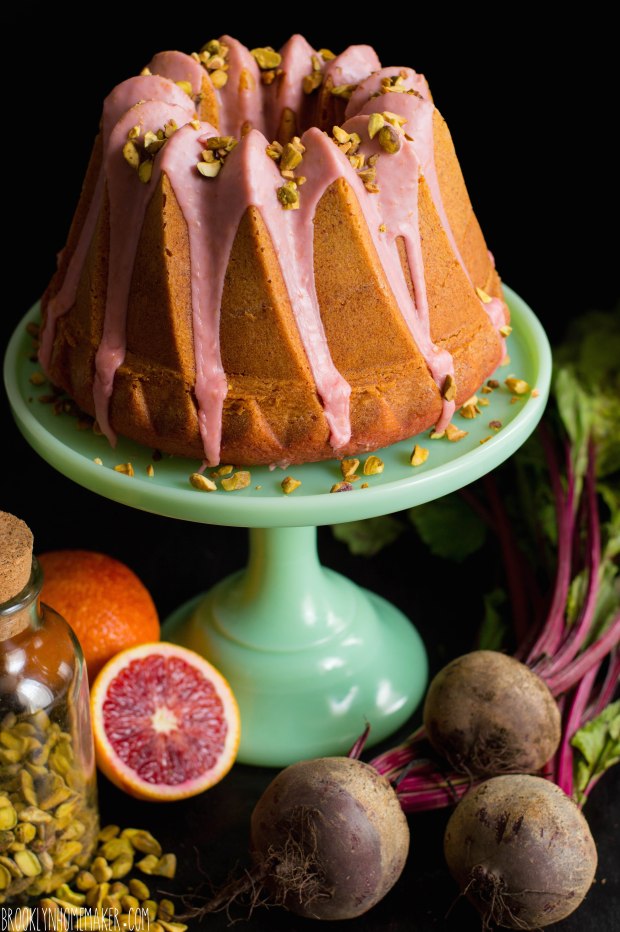
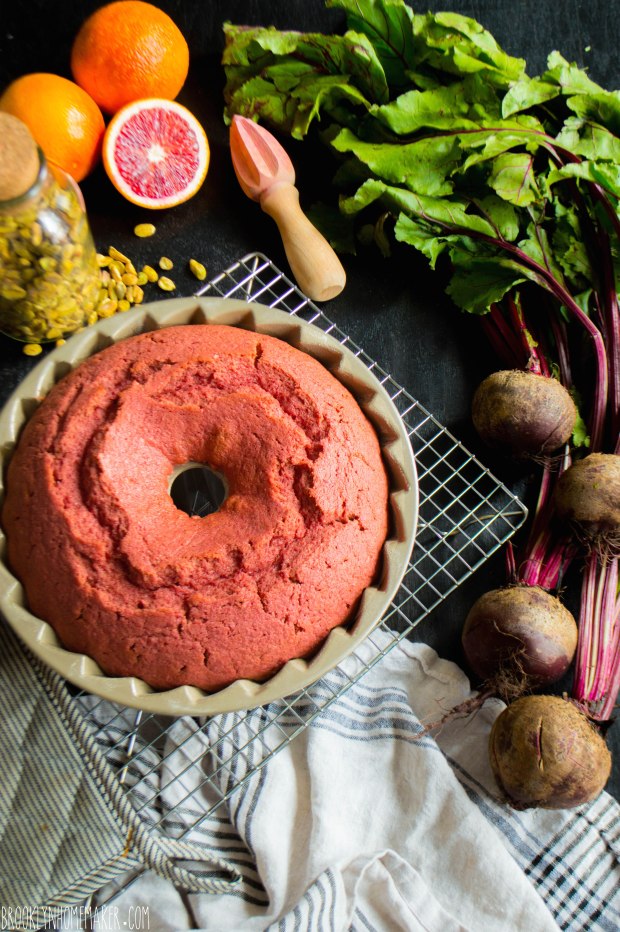
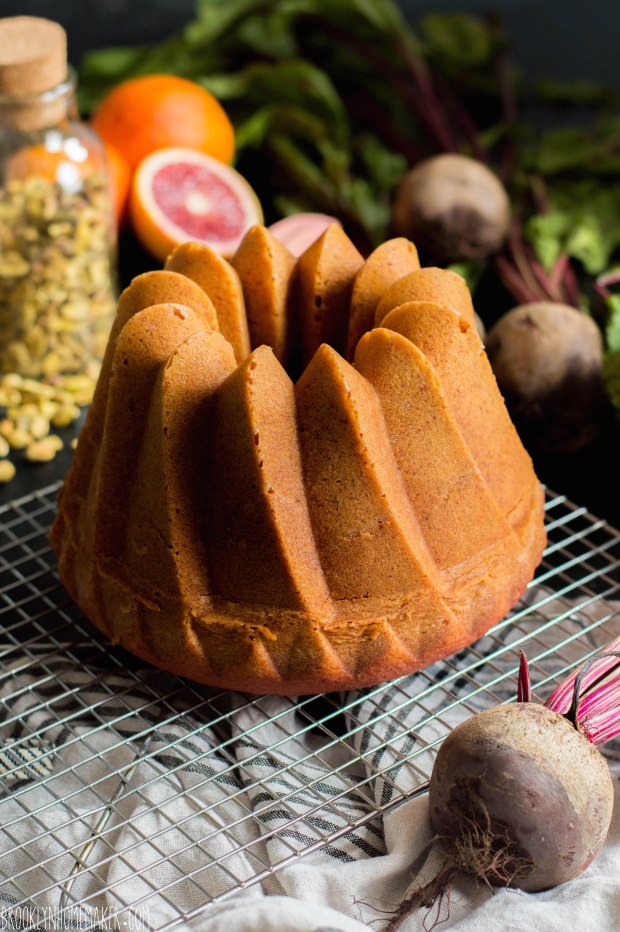
beet and blood orange bundt cake #bundtbakers

I’m sure you’ve heard the phrase “New Year, new you” at some point in your life.

beet and blood orange bundt cake | Brooklyn Homemaker

Well, I’ve decided that I don’t need a new me. I’m as happy as a clam with the current me, so I’m tossing that pesky little phrase out the window.

beet and blood orange bundt cake | Brooklyn Homemaker

What I could use in the new year though, is some new recipes. I really want to shake things up and learn some new tricks in the kitchen.

In my last #bundtbakers post I mentioned that I’d gotten an old cookbook from my mother and I wanted to try some new (to me) recipes from old cookbooks. Russell heard me loud and clear and found me some even older cookbooks on Ebay for Christmas, one of them dating back to 1884. Some of these recipes are so old, and so unfamiliar, that they actually feel completely fresh and new and innovative! I can’t wait to start cooking my way through them!

beet and blood orange bundt cake | Brooklyn Homemaker

Don’t get the wrong idea though. While I definitely want to revisit the recipes of the past, I also want to try a few things that are totally new and modern. New ways of doing things, new techniques tips and tricks, new spins on classic recipes, and new combinations of flavors.

beet and blood orange bundt cake | Brooklyn Homemaker

As fate would have it, our very own June of How to Philosophize with Cake chose “Strange but good / weird flavor combinations” as our #bundtbakers theme this month. Can you think of a better segue into trying something new and exciting in the great big world of bundts?

I sure can’t!

I wasn’t the only one who got excited about this month’s super fun and interesting theme. 25 bloggers are participating this month and some of the ideas they came up with are truly mind-blowing. Please scroll down past the recipe to check out everyone’s cakes, but be warned, you might want to grab a towel to wipe up the drool while you read through their posts.

beet and blood orange bundt cake | Brooklyn Homemaker

After some serious thought and option weighing I decided to try making a beet cake. I’ve always loved beets and have often thought that their earthy sweetness would work well in dessert. I’ve wanted to try experimenting with beets in sweets for a long while but until now haven’t had the drive to go for it.

Apparently I’m not the only one who thought beets worked well with this theme. While everyone’s cakes are totally different, there are a few others who used beets in their recipes too, and they all sound phenomenal.

I’m usually pretty good at being able to size up a recipe and know what changes I can make without screwing it up.
Unfortunately this was not one of those times. I had a one hell of a time getting this recipe right and had to make three cakes before I was happy with the results. My first plan incorporated ricotta along with the beet puree and orange juice, and while it tasted great there was too much added moisture and the texture was dense and gummy. The ricotta didn’t really add much in the flavor department either, so I nixed it. The next try was much closer to perfection but I knew I still had a little work to do before I could proudly and confidently share the recipe with all of y’all.

beet and blood orange bundt cake | Brooklyn Homemaker

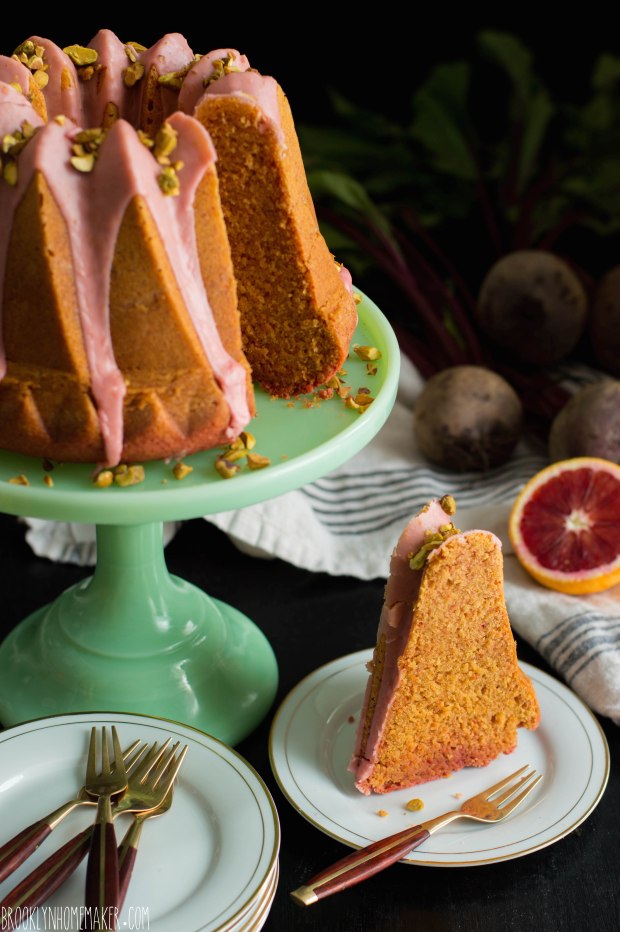
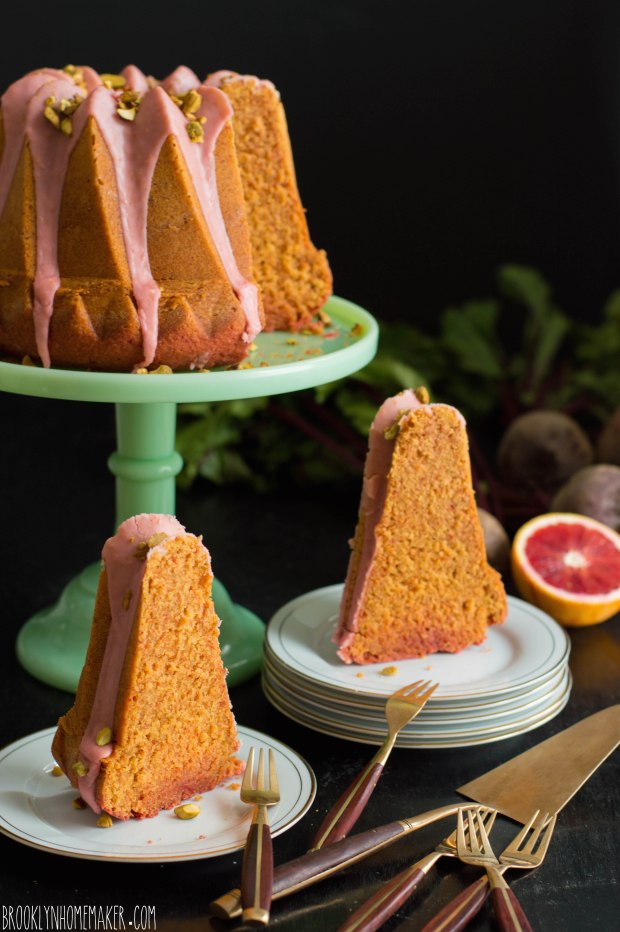
One thing I was sort of surprised and disappointed by was the way the bright red color of the beets baked out by the time the cake came out of the oven. For some reason the very top of the cake stayed red, but the interior turned a pale orange color. I tried a few things in my experimenting, and did some research online on how to preserve the color with acidic ingredients like orange juice, buttermilk, and baking powder (rather than baking soda which has a base PH). The bottom line though was that this cake needs to cook too long to be able to preserve the color, so making sure the cake is cooked all the way through means that you have to sacrifice that vivid red.

I thought about using food coloring to turn it red again, but that’s not really my style and it seemed unnecessary. The beets are there for flavor not color, and the flavor stays even after the color bakes out.

beet and blood orange bundt cake | Brooklyn Homemaker

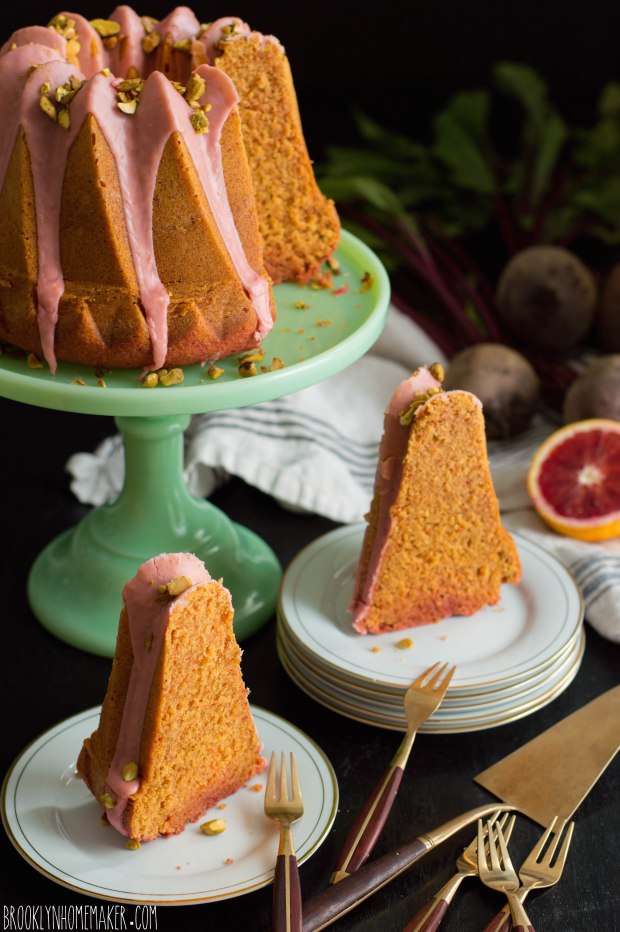
Let me tell you, this cake has amazing flavor in spades. You may think that using beets in a cake is weird or unappetizing, but think again. It may sound a bit weird in theory, but it’s seriously freaking delicious. Even people who don’t care for beets will probably enjoy this bright and citrusy cake.

Thanks to the moisture from the buttermilk and beet puree, this cake is incredibly moist and tender, with a light and delicate crumb. The bright citrusy acidity of the blood orange pairs beautifully with the sweet, earthy, almost floral flavor of the beet. Ground cardamom bolsters the floral notes in the beets, and a bit of ground clove bridges the gap between the bright citrus and earthy beet. A sunny blood orange glaze adds even more citrus flavor and a naturally pretty in pink color that’s missing from the cake itself. To top it all off a sprinkle of freshly toasted pistachios adds crunch, color, and an earthy floral flavor that compliments the rest of the cake perfectly.

beet and blood orange bundt cake | Brooklyn Homemaker

Beet and Blood Orange Bundt Cake

1 3/4 cups granulated sugar
zest of one blood orange
1/4 cup fresh squeezed blood orange juice
2 small to medium beets
1/2 cup buttermilk
3 cups AP flour
1 teaspoon salt
2 teaspoons baking powder
1 teaspoon ground cardamom (optional)
1/2 teaspoon ground cloves
1 cup unsalted butter, at room temperature
2 tablespoons peanut oil or canola or vegetable oil
1 tablespoon vanilla extract
4 large eggs

Orange glaze:
zest of one blood orange
2 tablespoons fresh squeezed blood orange juice
1 1/2 to 2 cups powdered sugar
1/4 cup toasted pistachios, roughly chopped

preheat oven to 350F.

Brush a 10 to 12 cup bundt pan with softened butter, dust with flour, and tap out excess. Refrigerate.

Combine orange zest and sugar in a large bowl and mix until well combined with an electric mixer. Set aside.

Wash and peel beets and cut into quarters. Place in a food processor with orange juice and puree until very smooth, about two to three minutes. Pour into a measuring cup and measure out exactly 1 cup of beet puree. Discard any extra if you have too much. If a little short you can top it off with a touch of extra buttermilk. Add 1/2 cup buttermilk to beet puree and stir well. Set aside.

Whisk flour, salt, baking powder, cardamom, and cloves together in a medium sized bowl.

Add softened butter to orange scented sugar and cream together on high speed until very light and fluffy, about 2 to 3 minutes. Add oil, vanilla, and one egg at a time, beating just enough to incorporate. Alternate flour and beet mixtures, beginning and ending with flour, scraping sides of bowl between additions.

Transfer batter to prepared bundt pan, tap out any air in the pan. Place pan on a baking sheet and bake at 350 for 55 to 65 minutes, or just until a toothpick or cake tester comes out clean.

Cool on a cooling rack for about 20 minutes before inverting pan to remove cake onto the rack. Cool on the rack until completely cool.

To make the glaze, whisk orange zest, orange juice, and powdered sugar toghether until smooth and completely free of lumps. The glaze should seem very thick, almost spreadable. If too thick add a few drops of water or orange juice, if too thin add more powdered sugar, 1/4 cup at a time until you reach the desired consistency.

Pour glaze over completely cooled cake, and before it dries, top with a sprinkle of pistachios.

Cake should keep, well sealed in an airtight container, at room temperature for up to 4 days.

beet and blood orange bundt cake | Brooklyn Homemaker

There are so many incredibly interesting and mouthwatering cakes this month. I know I say this all the time, but I really wish I could try them all. Some of these combinations of flavor are simply unbelievable that I’ve got to try them for myself.

.

BundtBakers

.
#BundtBakers is a group of Bundt loving Bakers who get together once a month to bake Bundts with a common ingredient or theme. We take turns hosting each month and choosing the theme or ingredient. You can see all of our lovely Bundts by following our Pinterest Board.

Updated links for all of our past events and more information about BundtBakers can be found on our homepage.
old-fashioned marble cake #bundtbakers

Are y’all ready for a very special holiday edition of #bundtbakers?

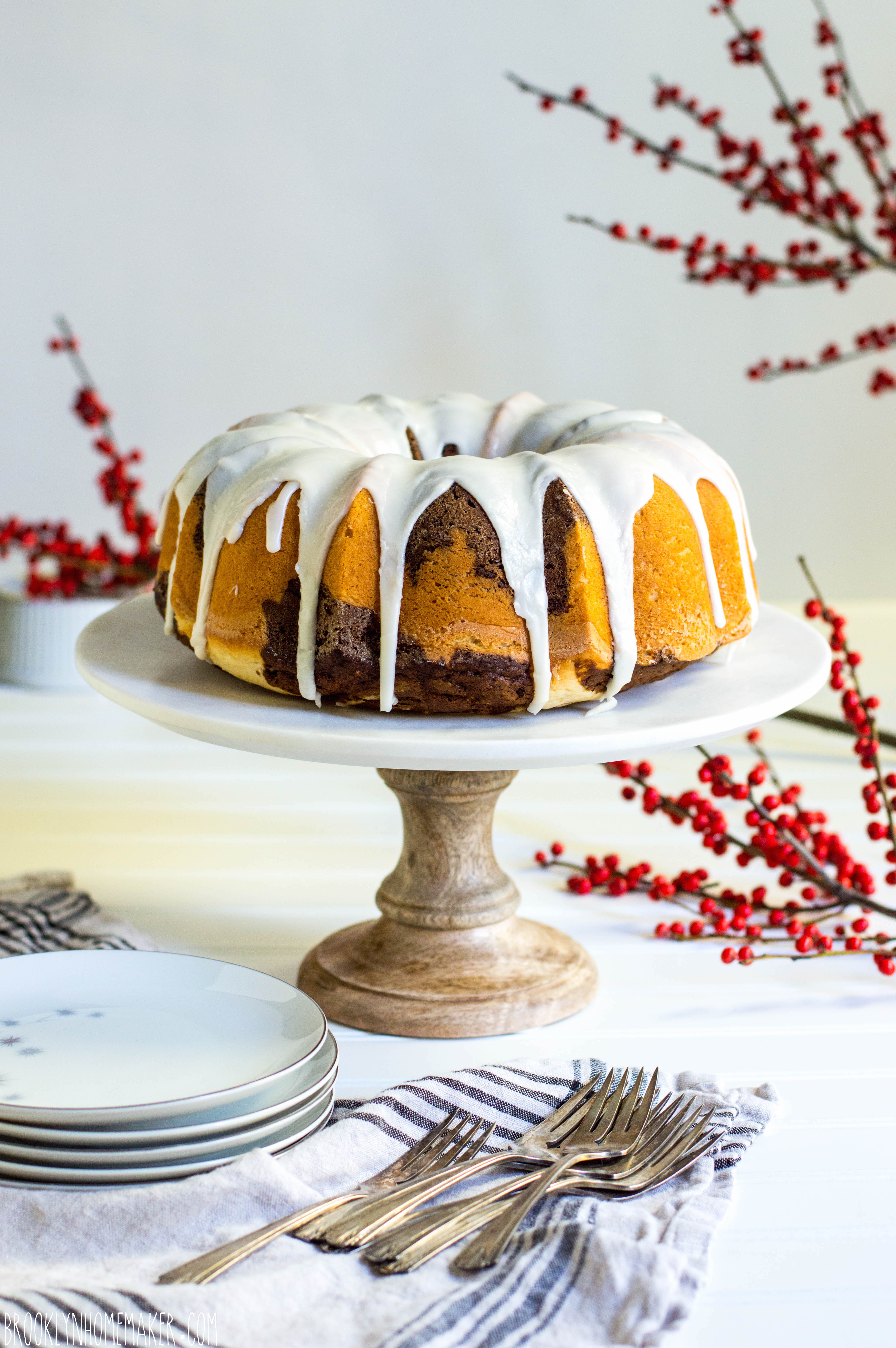
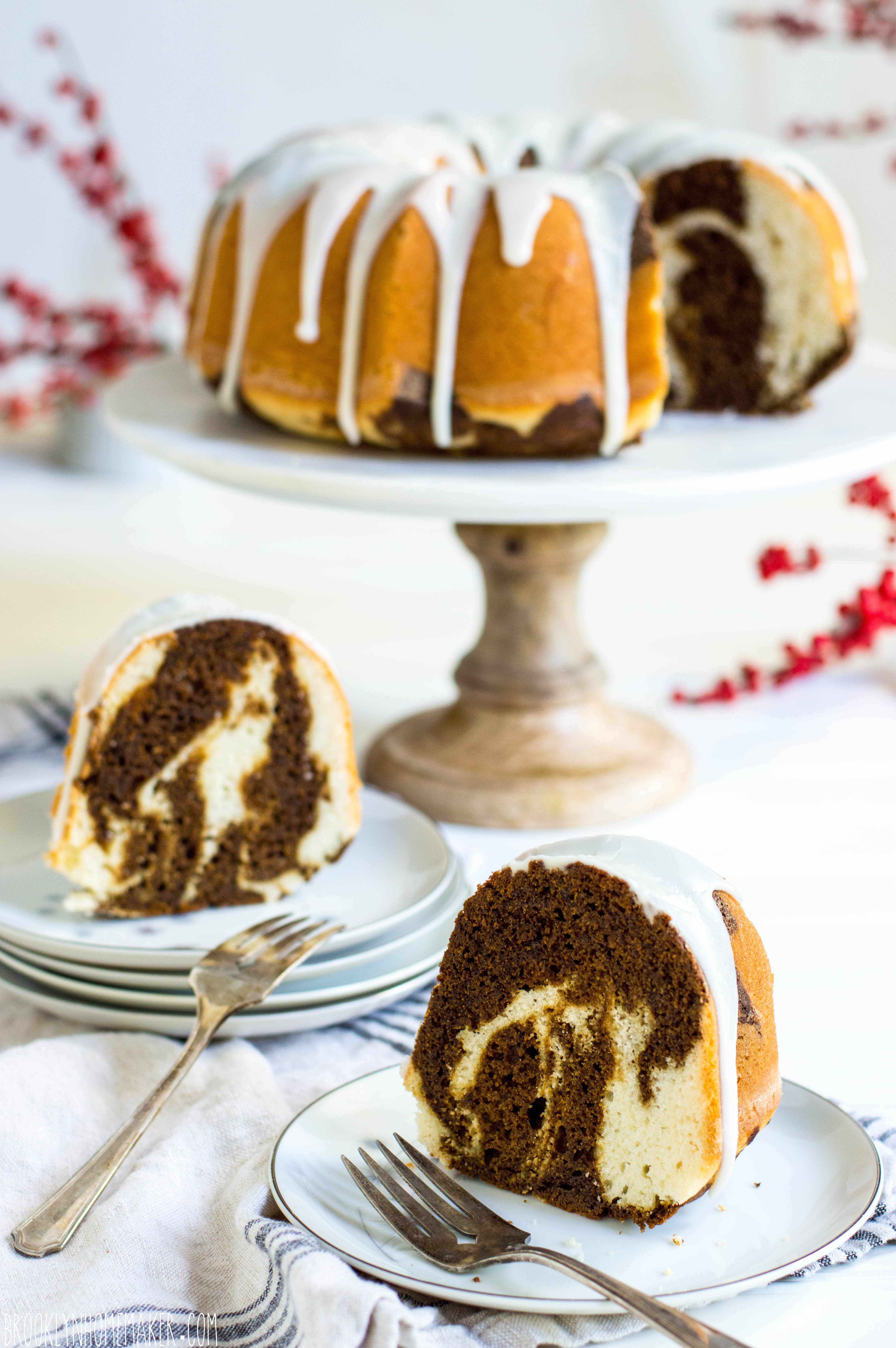
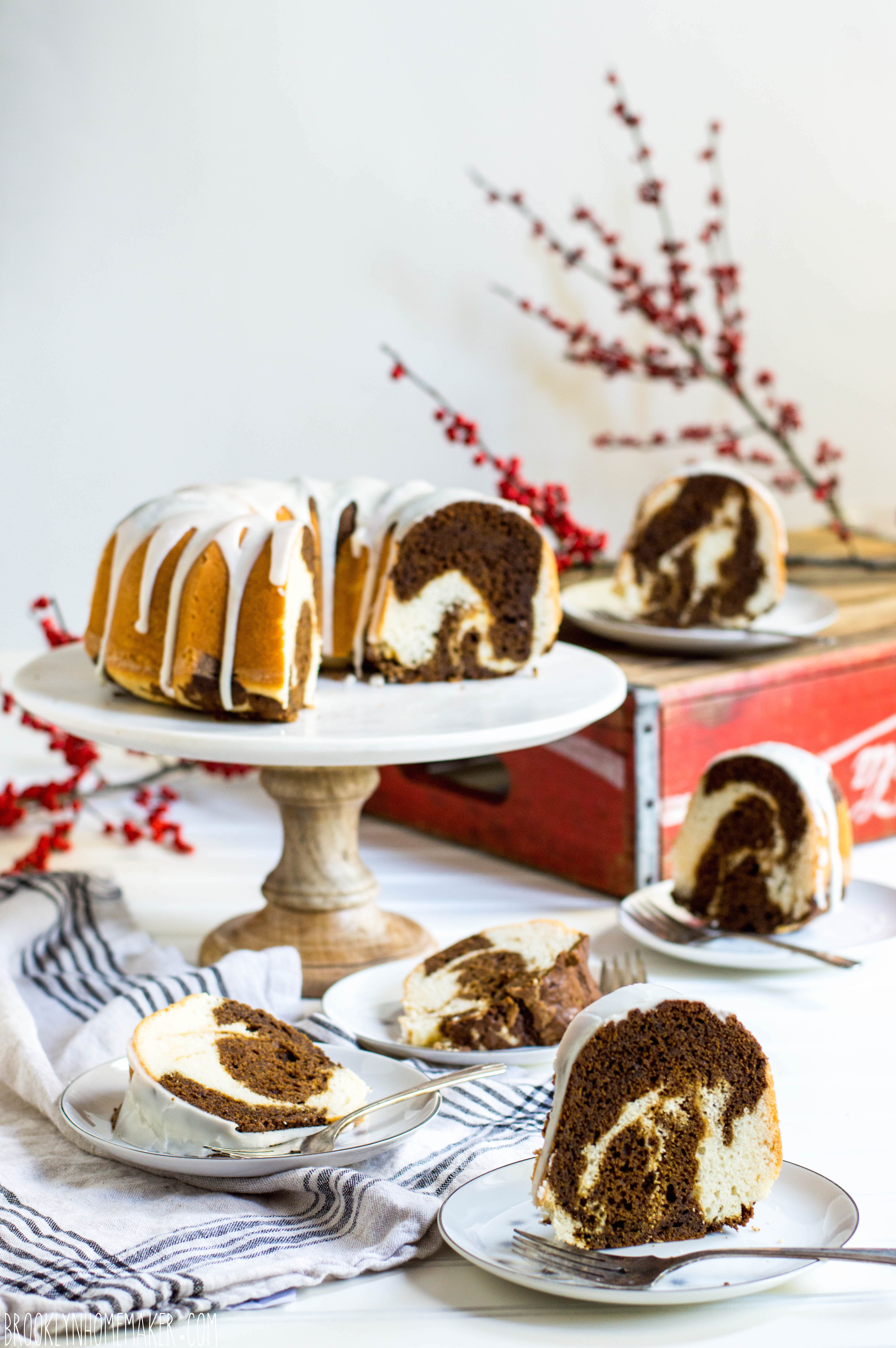
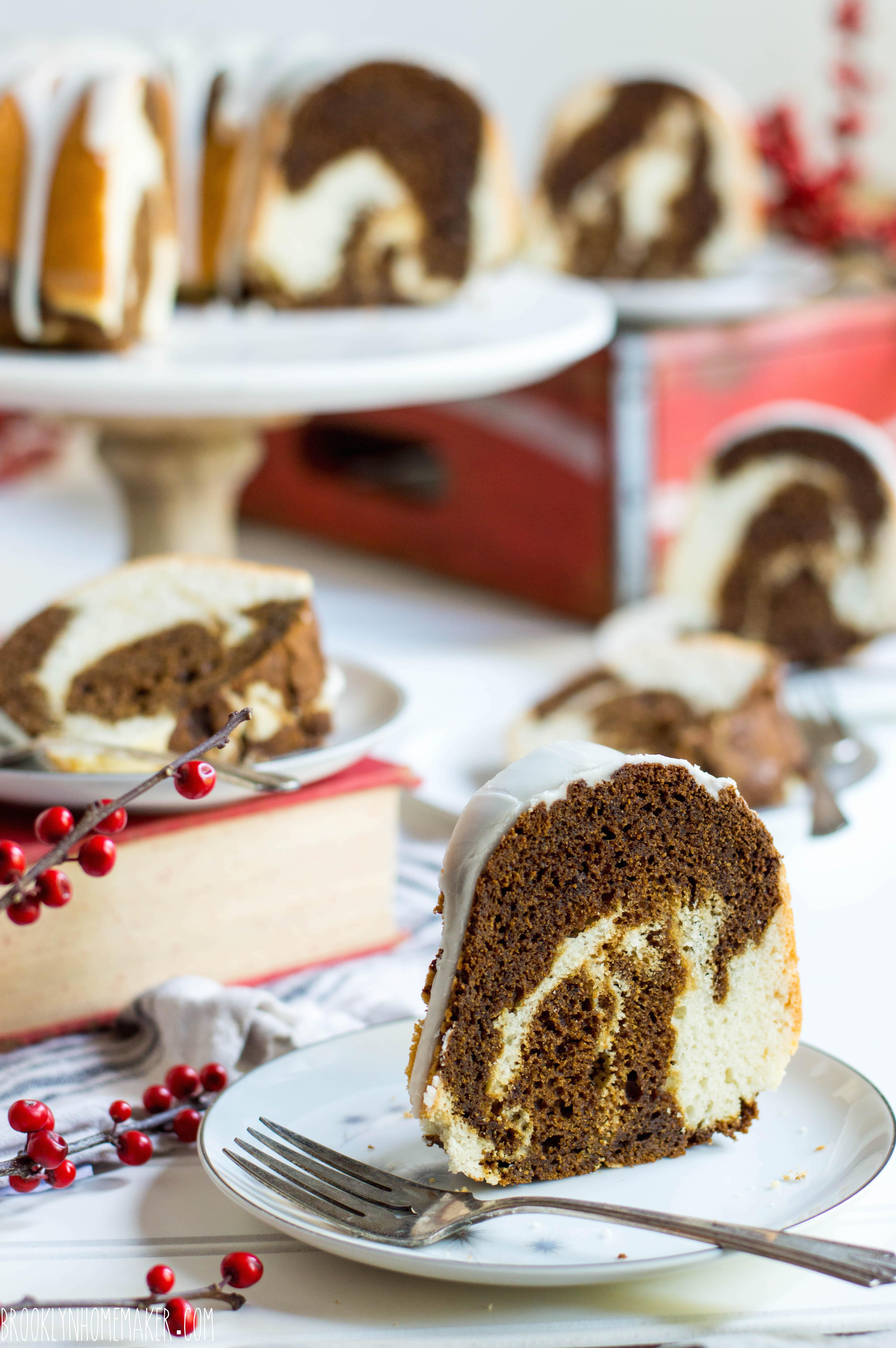
old fashioned marble cake | this heritage marble cake recipe is darkened with molasses and spice rather than chocolate | Brooklyn Homemaker

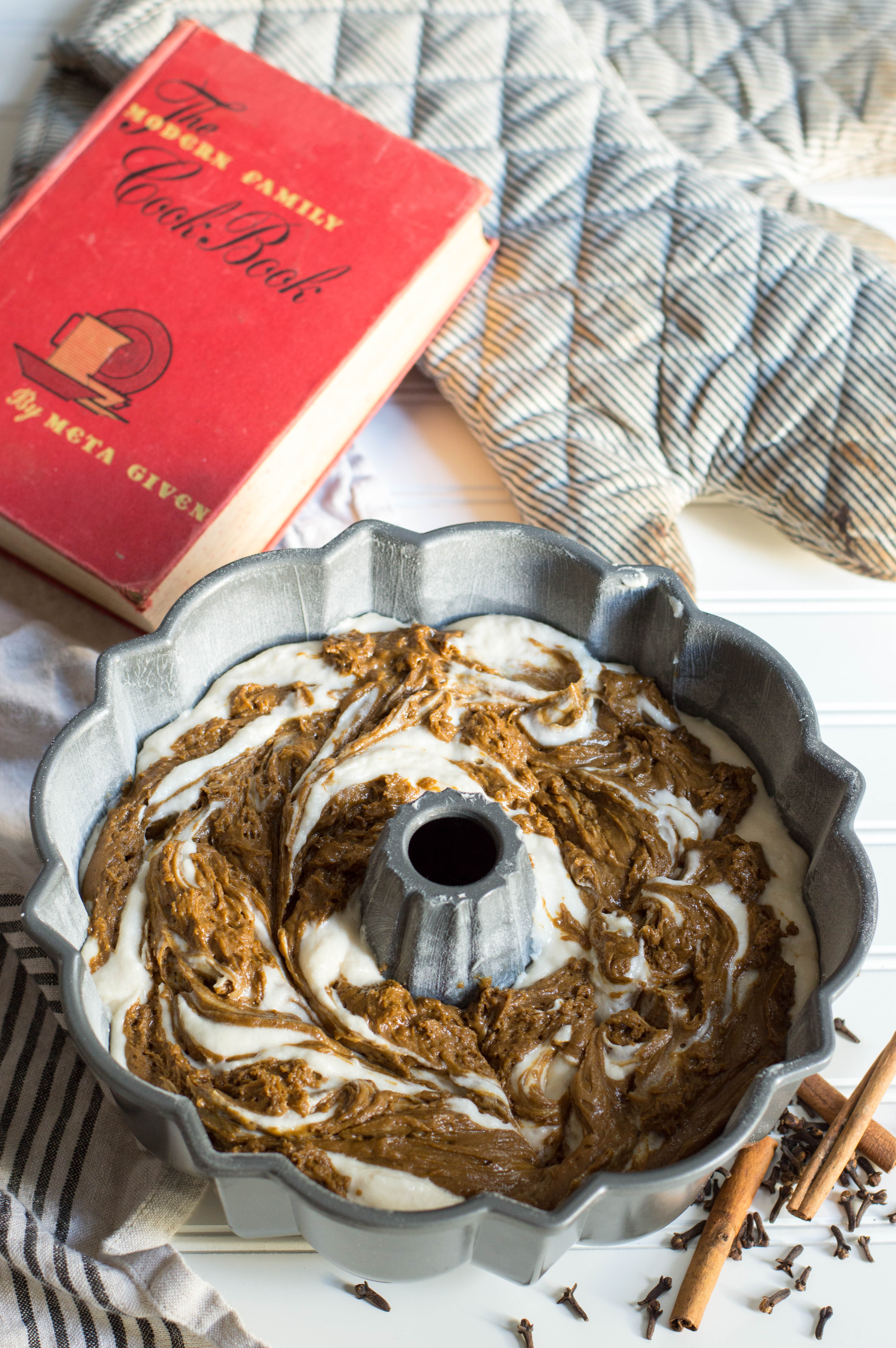
My mom recently renovated and moved into a new house, and a while she was unpacking she asked me if I wanted any of her old cookbooks. She was trying to downsize but the only one I asked for was a well worn book from the 1940s called “The Modern Family Cookbook” by Meta Given. She’d actually had it for so long that she couldn’t even remember where’d she’d gotten it, but thinks it was probably her Grandmother’s.

old fashioned marble cake | this heritage marble cake recipe is darkened with molasses and spice rather than chocolate | Brooklyn Homemaker

As soon as I got it home I started pouring over the recipes and wondering about all the funny old fashioned foods that no one eats anymore. It’s just filled with all kinds of things that I honestly can’t wait to try.

As you can probably imagine, I was most interested in the desserts. Surprise!

old fashioned marble cake | this heritage marble cake recipe is darkened with molasses and spice rather than chocolate | Brooklyn Homemaker

While flipping through the cakes section I came across a recipe that I instantly knew I needed to try. It was actually the caption under the title that really caught my eye.
“Old-Fashioned Marble Cake always has its dark part darkened with molasses and spices, because that’s the way Grandma used to make it.”

I’d never heard of a marble cake darkened with molasses. Have you?

In my mind marble cakes are always a mix of chocolate and vanilla, and to be honest, I’ve never really been a huge fan. I love chocolate and I love vanilla, but I prefer them as separate flavors. I feel like they sort of get lost in each other, and bring each other down rather than elevating one another when marbled together. But molasses and spice? Now that I could get into!

This version just sounded so terribly interesting, not to mention delicious!  I’ve always been fascinated by food history, and I just couldn’t resist the idea of making a recipe for a marble cake that pre-dates the one we all know today.

old fashioned marble cake | before chocolate, marble cake was darkened with molasses and spice | Brooklyn Homemaker

I find the very idea that the marble cake has evolved from one flavor profile to another completely intriguing. This got me to thinking about how and why this could have happened in the first place.

“Old-Fashioned Marble Cake always has its dark part darkened with molasses and spices, because that’s the way Grandma used to make it.” I soon realized that if this recipe was published in 1942, and it was the author’s grandmother’s recipe, then the recipe itself was probably from the late 1800s. Then it dawned on me that at that time in history cocoa and vanilla were rare, exotic, and expensive ingredients that many bakers just didn’t have access to. Molasses and spice were easy enough to find, so I’m sure that’s why they were used first.

Maybe it’s just the food nerd in me, but I find all this stuff to be so much fun and I just couldn’t wait to share this recipe and the story behind it with the bundt bakers!

old fashioned marble cake | this heritage marble cake recipe is darkened with molasses and spice rather than chocolate | Brooklyn Homemaker

I almost went ahead with this recipe back when I first saw it, but ultimately decided that I should wait until the holidays because it sounded so similar in flavor to gingerbread (just without the ginger). I was a little worried that I’d wait all that time and then my cake wouldn’t fit with the bundt bakers theme for December, but I decided I’d cross that river when I came to it.

Lucky for me, Liv of Liv for Cake played right into my hand and chose “naughty or nice” as the theme this month. How perfect is that? Richly spiced cake with dark, earthy molasses juxtaposed against an ethereal light and airy white cake. Naughty AND nice mixed and marbled together into one perfect holiday cake. Please make sure to scroll down past the recipe and check out all the other naught and nice cakes this month!

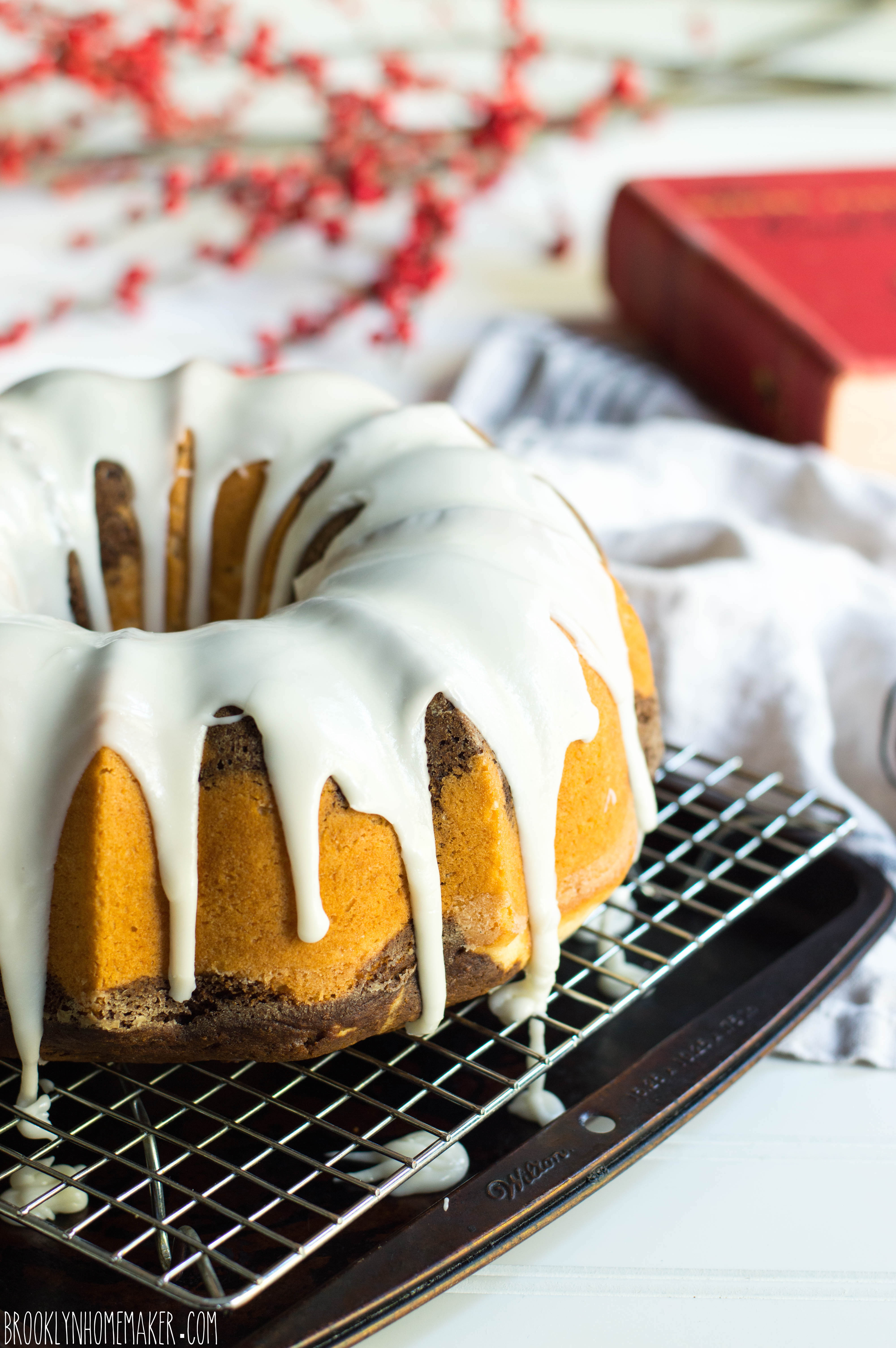
The original recipe didn’t call for a glaze but just said, “Frost if desired, but no frosting is required.” I thought I may as well go ahead and drive the naughty point home with a nice boozy rum glaze.

old fashioned marble cake | this heritage marble cake recipe is darkened with molasses and spice rather than chocolate | Brooklyn Homemaker

This cake lends itself perfectly to being baked as a bundt. The original recipe said to bake it in a tube pan like an angel food cake, but only because the bundt pan hadn’t yet been invented! They didn’t hit the scene until the 1950s.

I followed the recipe almost exactly, but did decide to add just a touch of vanilla to the white cake part. The original recipe didn’t call for it because it wasn’t readily available or affordable when it was developed, but now that it is available and affordable I saw no reason to leave it out. I’m sure it’d still be great without it, but thought it would really add a nice boost of flavor to the white cake.

old fashioned marble cake | this heritage marble cake recipe is darkened with molasses and spice rather than chocolate | Brooklyn Homemaker

It was sort of a a funny exercise rewriting a 70 year old cake recipe. The first paragraph was just about triple sifting the flour before measuring because flour back then didn’t come pre-sifted. The recipe was also sort of vague and inexact in some places, because most housewives back then already knew how to follow a recipe. It actually said to “bake in a slow oven for about an hour”.

I tried my best to update it and make it easier for the modern baker to follow. If the finished cake was any indication, I think I did a pretty good job.

old fashioned marble cake | this heritage marble cake recipe is darkened with molasses and spice rather than chocolate | Brooklyn Homemaker

I’m so glad to have the opportunity to revive a recipe that’s probably over a century old, and even more glad that it came out so absolutely wonderful! The cake is super light and tender, with a healthy dose of rich earthy molasses and a lovely bit of spice from the cinnamon and clove. When I first read the recipe I worried that the clove might be a bit overpowering, but I worried for nothing and wouldn’t change a thing. It tastes and smells just like the holidays, but if you want it to taste even more like gingerbread, you could easily add two or three teaspoons of ground ginger.

Ginger or no, this recipe is as fun and festive a holiday cake as you could ask for.

The rum glaze really adds another level of holiday cheer too, but if you’d prefer to keep this cake kiddo safe though, feel free to skip the rum and use an equal amount of milk instead.

old fashioned marble cake | this heritage marble cake recipe is darkened with molasses and spice rather than chocolate | Brooklyn Homemaker

Old-Fashioned Marble Cake

Adapted from Meta Given’s 1942 Modern Family Cookbook

Light Part: 
2 cups cake flour
3 teaspoons baking powder
1/4 teaspoon salt
3 egg whites
8 tablespoons butter (1 stick), at room temperature
3/4 cup granulated sugar, divided
1 cup buttermilk
2 teaspoons vanilla

Dark Part:
2 1/4 cups cake flour
1 1/2 teaspoons baking soda
1/4 teaspoon salt
1 1/2 teaspoons cinnamon
1 1/2 teaspoons cloves
3/4 cup butter (1 1/2 sticks), at room temperature
3/4 cup brown sugar, firmly packed
3 egg yolks, beaten
3 tablespoons molasses
3/4 cup buttermilk

Rum Glaze:
1 1/2 cups powdered sugar
1 1/2 tablespoon dark rum
1 1/2 tablespoon milk

Preheat oven to 325F. Generously butter and flour a 10 to 12 cup bundt pan and tap out excess flour. Refrigerate pan.

Light Part:
Measure flour, baking powder, and salt for the light part into a bowl and whisk together until evenly distributed. Beat egg whites until they reach stiff (but not dry) peaks in the bowl of an electric mixer. Gradually mix in 1/4 cup of the sugar. Transfer to a small bowl and cover while you proceed.

In the same mixer bowl, cream butter and blend thoroughly with remaining 1/2 cup of the sugar. In a separate bowl (or measuring cup) mix buttermilk with vanilla. Add flour mixture and buttermilk alternately to butter, beginning and ending with flour and beating well after each addition. Gently fold beaten egg whites into batter being careful not to overmix or deflate the whites. Transfer batter to another bowl and cover while you proceed.

Dark Part: 
Measure flour, soda, salt and spices for the dark part into a bowl and whisk together until evenly distributed. In the mixer bowl, cream butter until soft and smooth; add brown sugar and cream together thoroughly. Add beaten egg yolks and molasses, and beat until fluffy. Add flour mixture alternately with buttermilk, beginning and ending with flour and beating until smooth after each addition.

Drop alternating large spoonfuls of dark and light batter into the pan until all batter is used. Use a dull knife to make a swirled pattern in the batter for a marbled effect.

Bake for 50 to 60 minutes or until a cake tester or toothpick inserted into the center comes out clean and the cake springs back when pressed lightly with fingertips. Place on a cooling rack for 10 to 15 minutes to cool before inverting to remove cake and cool completely.

To make the glaze whisk the sugar, rum, & milk together in a small bowl until lump free. If too thick, add a drop or two of milk until you reach the desired texture. If too thin, add a bit more powdered sugar.

Drizzle glaze over completely cooled cake. Cake should keep, well covered and air tight at room temperature, for up to 3 days.

old fashioned marble cake | this heritage marble cake recipe is darkened with molasses and spice rather than chocolate | Brooklyn Homemaker

This month is filled with enough naughty and nice to make Santa’s head spin! Even the naughty cakes though, are plenty nice. I wish I could try each and every one!

.

BundtBakers

.
#BundtBakers is a group of Bundt loving Bakers who get together once a month to bake Bundts with a common ingredient or theme. We take turns hosting each month and choosing the theme or ingredient. You can see all of our lovely Bundts by following our Pinterest Board.

Updated links for all of our past events and more information about BundtBakers can be found on our homepage.
Happy holidays y’all!

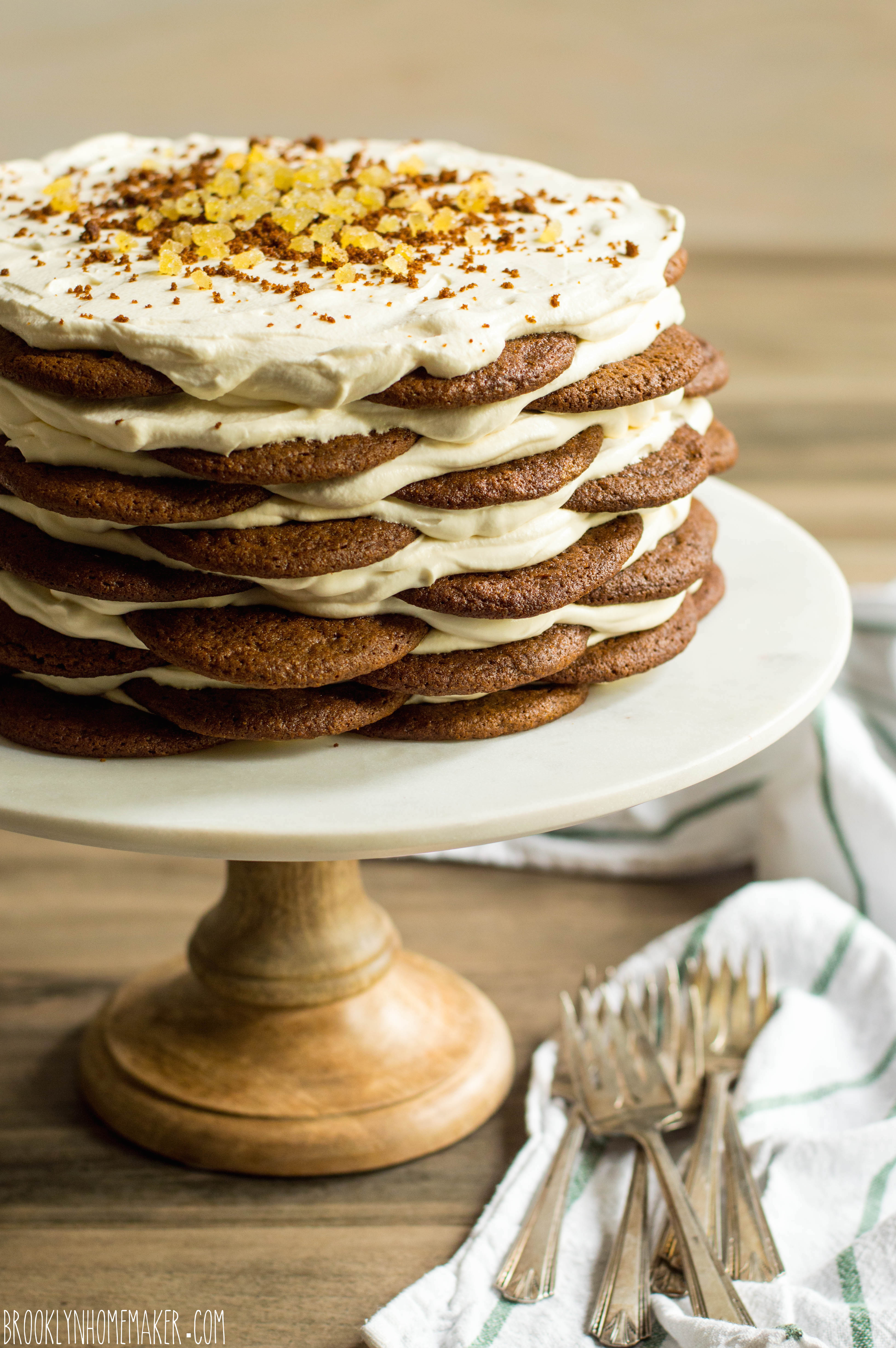
gingersnap icebox cake with maple mascarpone cream

Why hello there! It’s so nice to see you again!

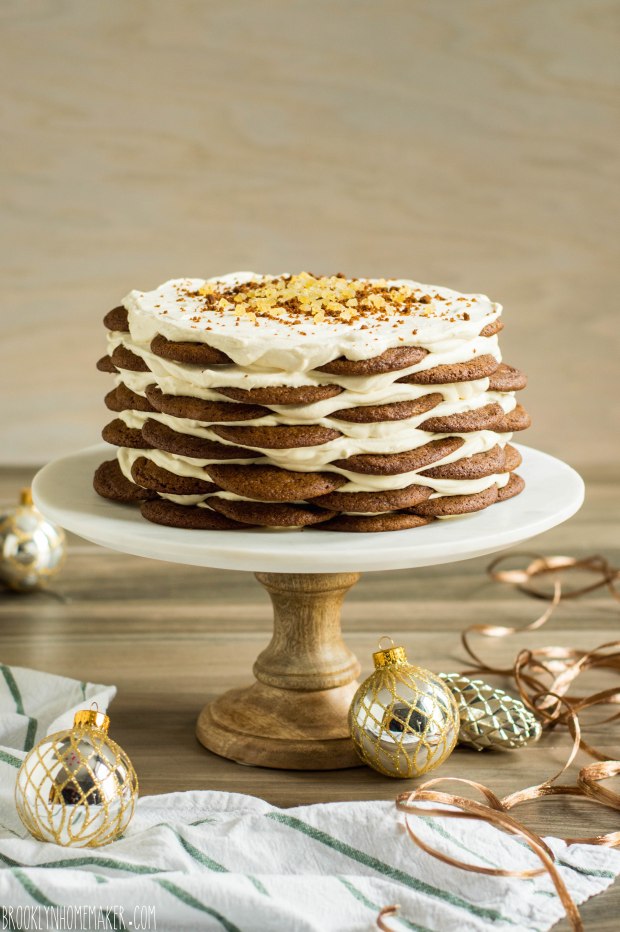
gingersnap icebox cake with maple mascarpone cream | Brooklyn Homemaker

First, I want to say that I hope you all had a perfectly wonderful (and delicious) Thanksgiving day. I know I did!

Second, I want to let you know that the pressure and the stress of making and testing and photographing and posting eight Thanksgiving recipes and making two actual Thanksgiving dinners (not to mention working at a kitchenware store leading up to the biggest food holiday in the US of A) was just too much for me. I promise that it was all worth it, but it actually killed me. I hate to be the bearer of bad news, but I’ve passed away.

gingersnap icebox cake with maple mascarpone cream | Brooklyn Homemaker

Despite my untimely demise, there’s no rest for the weary, and here I am again posting from the great unknown.

The holidays are fast approaching so I know that I need to get my blogging butt in gear and get baking! Being that I’m recently deceased though, I wanted to try to do something sort of easy(ish). Easy doesn’t mean that it shouldn’t also be really fun and impressive and totally delicious though!

gingersnap icebox cake with maple mascarpone cream | Brooklyn Homemaker

Thing is,
I don’t really do “easy”.

A while back I saw Martha (yes, THE Martha) on TV promoting her new entertaining cookbook and she made an icebox cake with thin, crisp homemade chocolate chip cookies. I’d never had an icebox cake, but her version sounded amazing and actually pretty simple (especially for Martha).

gingersnap icebox cake with maple mascarpone cream | Brooklyn Homemaker

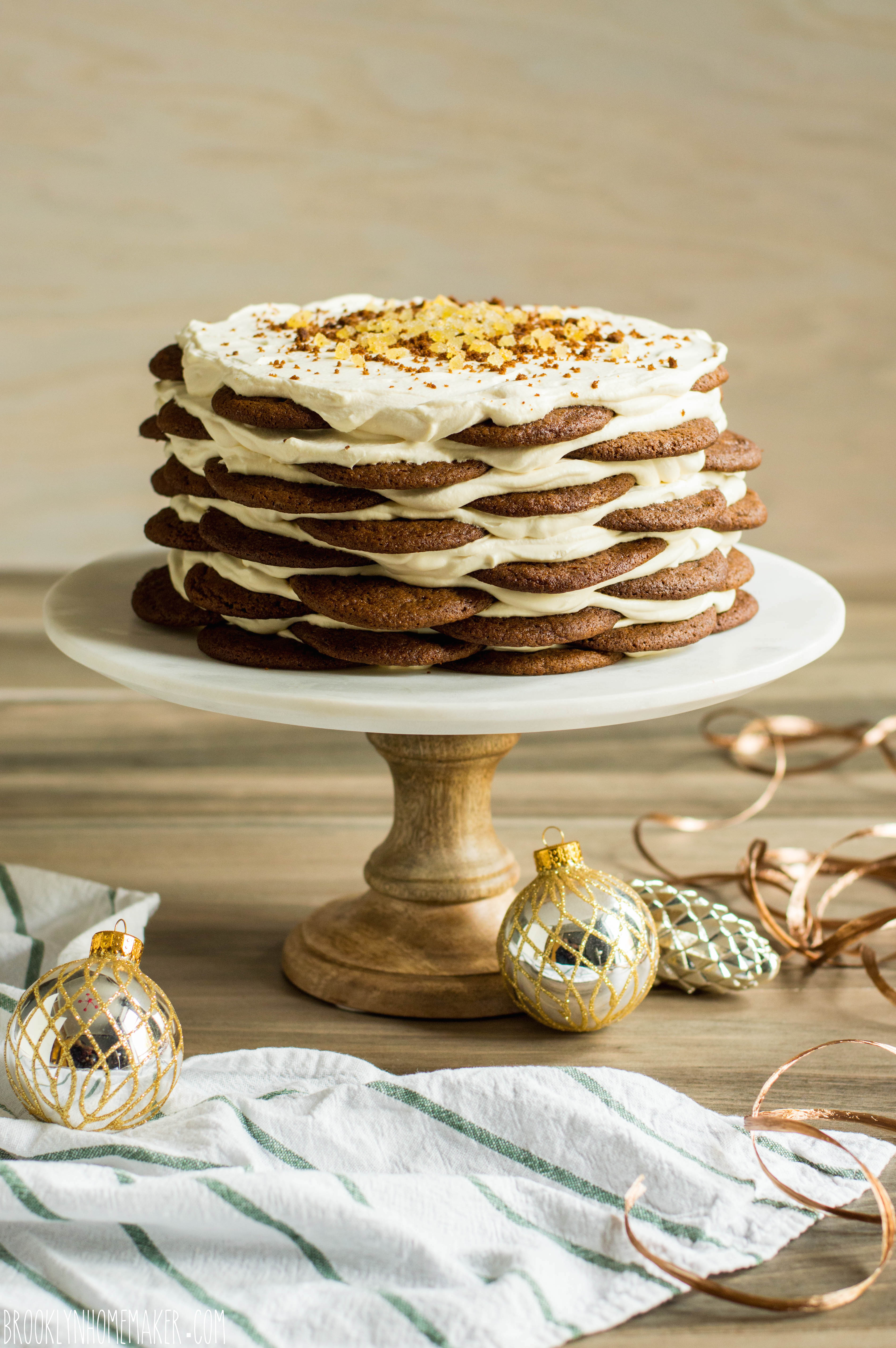
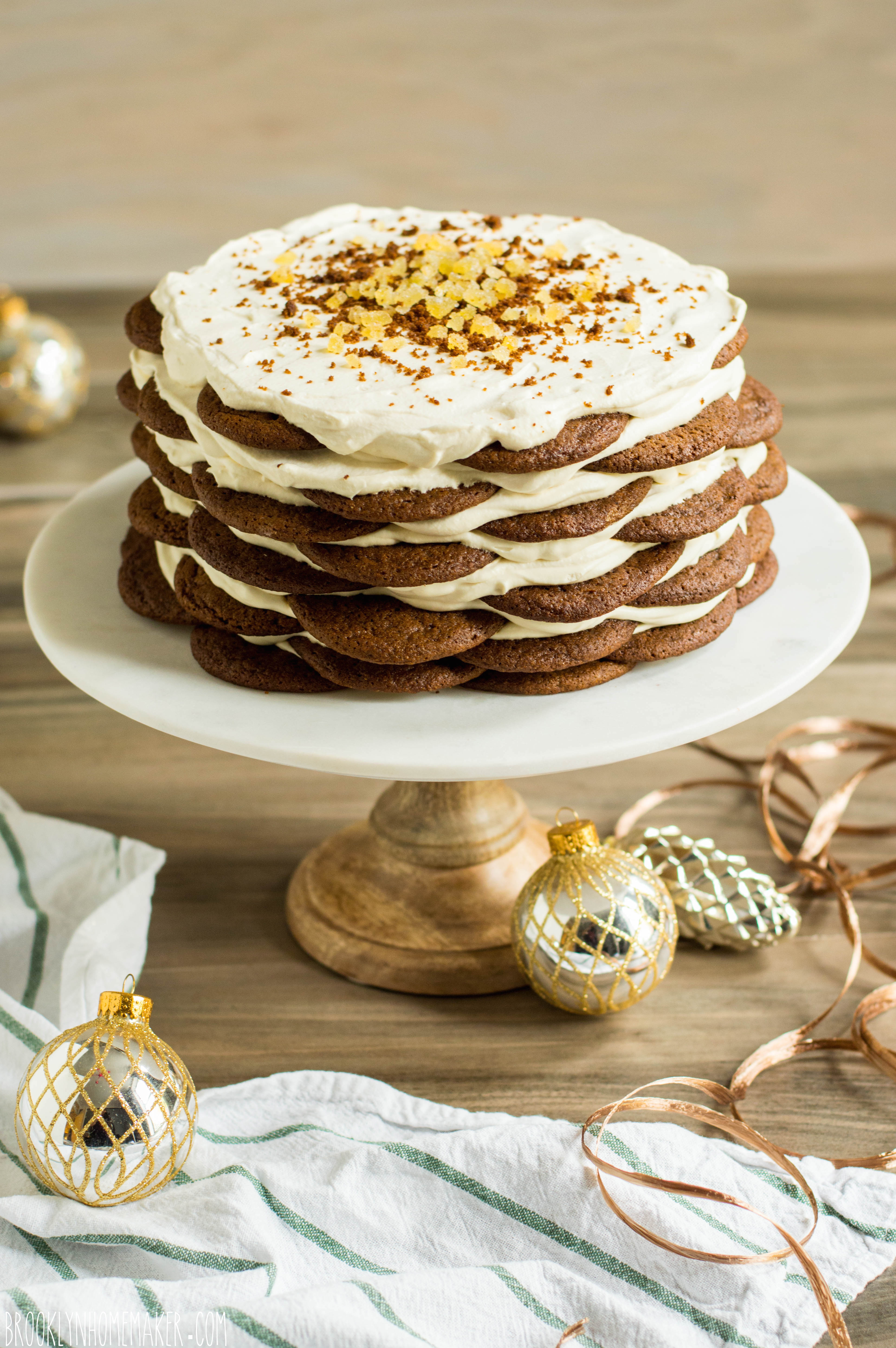
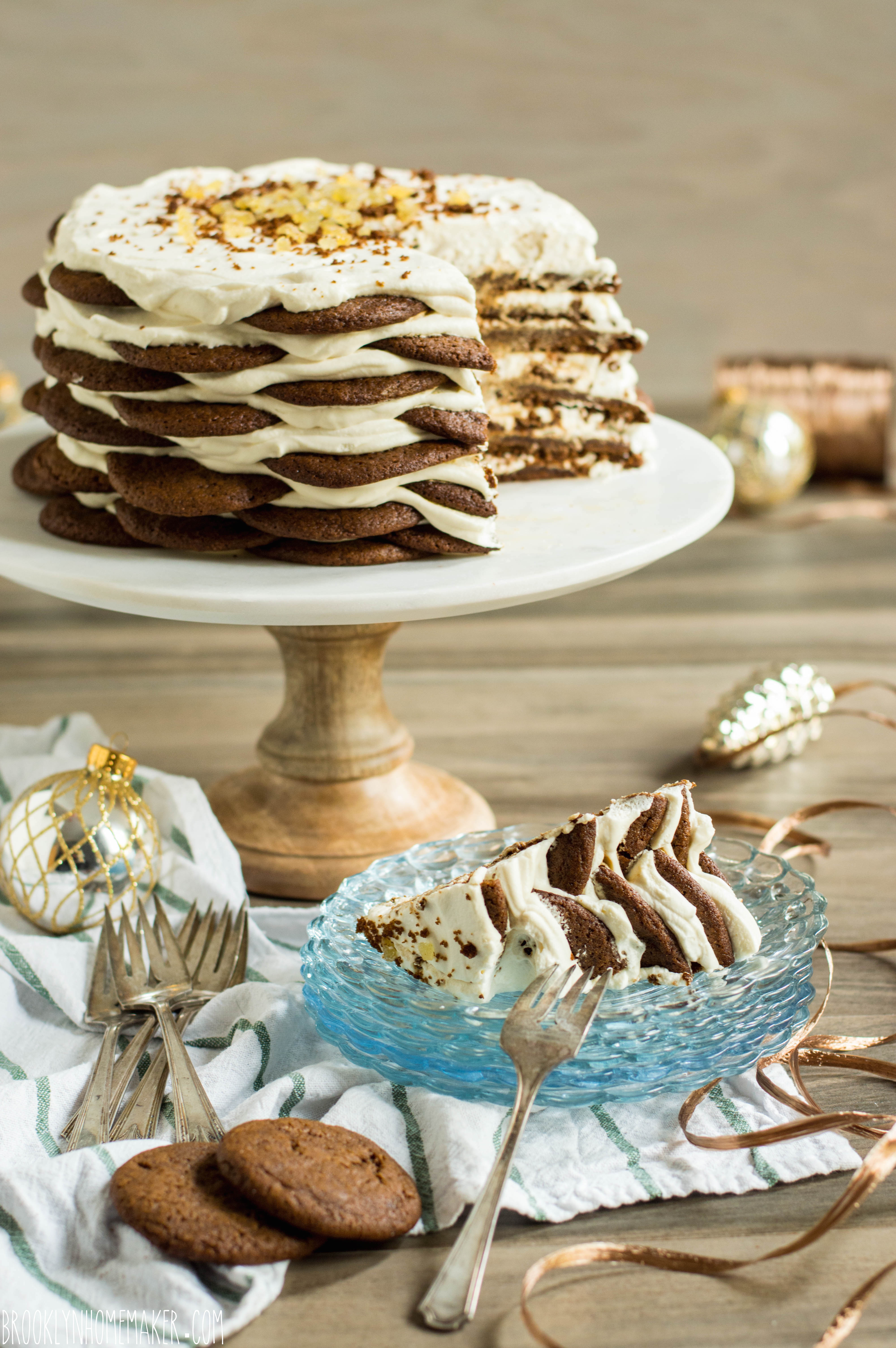
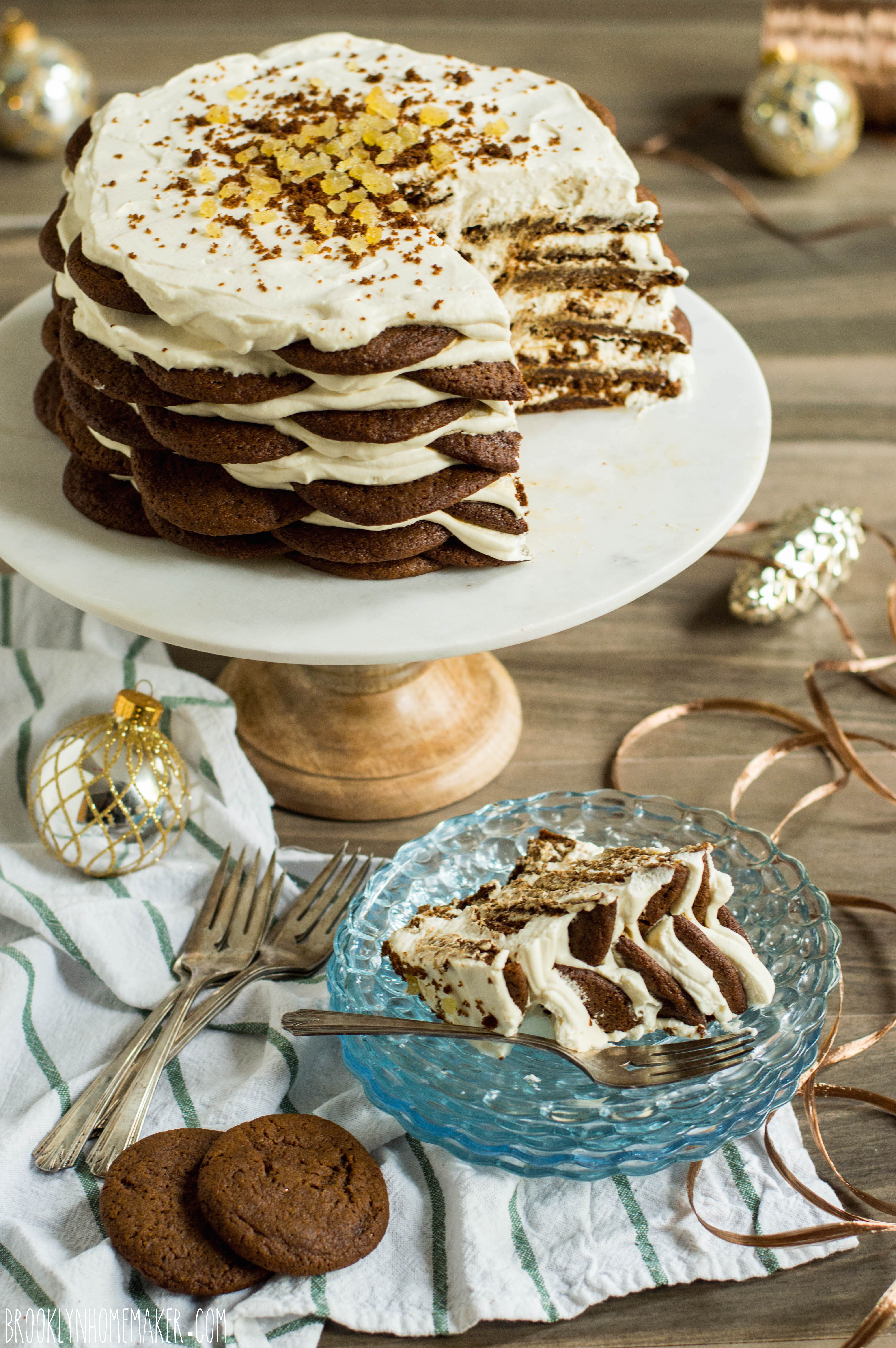
A traditional icebox cake is make with thin, store bought crisp wafer cookies sandwiched and stacked together with whipped cream. You do a layer of cookies, a layer of cream, a layer of cookies, a layer of cream, and so on and so forth until you suddenly have a round, cake shaped stack.

It doesn’t seem like this should work, but it does. You’d think that the cream would separate and wilt and the cookies would turn to mush and the whole thing would just fall apart and be weird and gross. But that’s not what happens. Magic happens.

gingersnap icebox cake with maple mascarpone cream | Brooklyn Homemaker

The crisp cookies soften as they absorb some of the liquid from the cream and so, rather than separating and wilting, the whipped cream actually thickens even more as the cookies soften up. When left for several hours (or overnight) the whole thing sort of takes on one perfect smooth, sliceable texture, just like a rich silky cake.

Like I said.
Magic.

gingersnap icebox cake with maple mascarpone cream | Brooklyn Homemaker

I decided that if it was good enough for Martha, it was good enough for me.

Rather than Martha’s chocolate chips, or the traditional chocolate wafer cookies, I wanted to do something a little more “holiday-y”. To me, growing up with German grandparents, the holidays were always filled with molasses and spice. Gingerbread and gingersnaps and the like. You know.

So I thought that a gingersnap icebox cake was just the ticket to kick off the holiday baking season. Like I said before though, I don’t really do “easy”. I know I set out to do an easy dessert, but once I got inspired and excited I decided that it would be more fun to make my own gingersnaps rather than using store bought. This is totally unnecessary, but I’m a weirdo so I totally enjoyed the process. If you do want to make your own though, I’d suggest using a little extra ginger in the cookies. The spice is mellowed out a bit by the cream so a little extra will kick it back up to where you’d expect a gingersnap to be.

gingersnap icebox cake with maple mascarpone cream | Brooklyn Homemaker

To add a little extra depth and richness to the standard whipped cream I added mascarpone and a touch of maple syrup. A splash of bourbon was a nice touch too but could easily be left out if you’re serving this to the under 21 crowd.

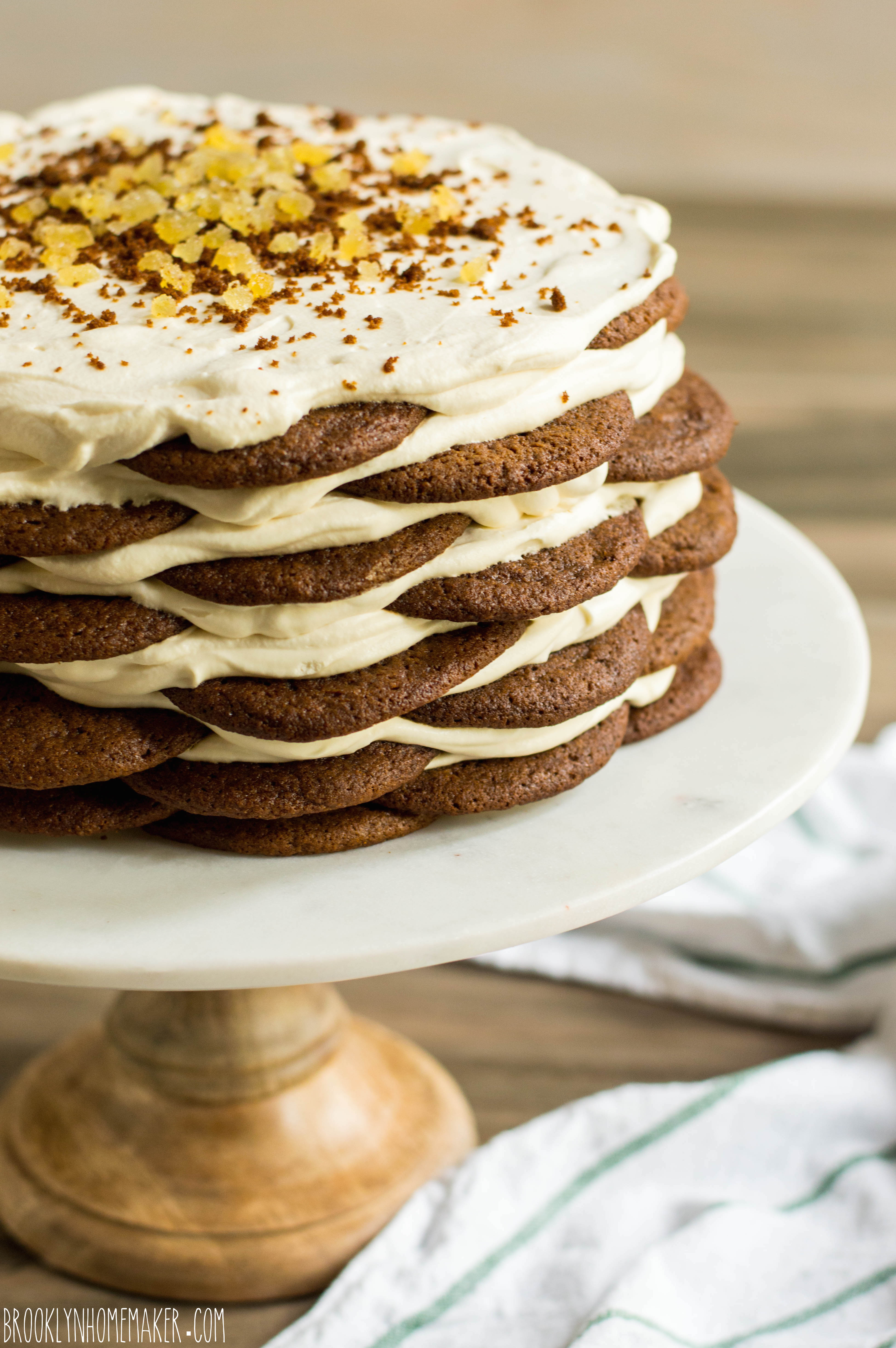
The ginger and molasses in the gingersnaps pairs perfectly with the sweet mascarpone maple whipped cream. The combination is like a rich velvety gingerbread flavored mousse. A sprinkle of chopped crystalized ginger adds a nice touch of extra spice and lets your guests know that rather than simple chocolate, this cake is made with sugar and spice and everything nice.

This cake is seriously amazing. Like, totally unbelievable. Russell has been raving about it ever since the last bite disappeared and keeps saying how he wasn’t expecting something so simple to taste so delicious. But, again, this cake is made of magic. You might even say that it’s special powers were strong enough to bring me back to life!

gingersnap icebox cake with maple mascarpone cream | Brooklyn Homemaker

Gingersnap Icebox Cake with Maple Mascarpone Cream

Maple Mascarpone Cream Icing:
2 1/2 cups cold heavy cream
1/4 cup sugar
1/4 cup real maple syrup
2 tablespoons bourbon or rum (optional)
1 tablespoon vanilla extract
8 oz mascarpone at room temperature
pinch of salt

At least 63 gingersnaps, for nine layers of seven cookies each
(I made my own using a double batch of smitten kitchen‘s recipe)
A tablespoon or two of finely chopped crystalized ginger, optional

In the bowl of an electric mixer fitted with the whisk attachment, whip the heavy cream until it begins to thicken and form soft peaks. In a separate bowl, stir together the mascarpone, sugar, maple syrup, bourbon, vanilla, & salt until smooth and well combined. Transfer mascarpone mixture to bowl with thickened cream and beat on low speed until almost smooth, 30 to 60 seconds. Scrape down the sides and fold to incorporate. Increase the speed to medium high and beat until the mixture is thick and holds firm peaks, another 30 to 60 seconds. Do NOT overbeat or the icing will become grainy.

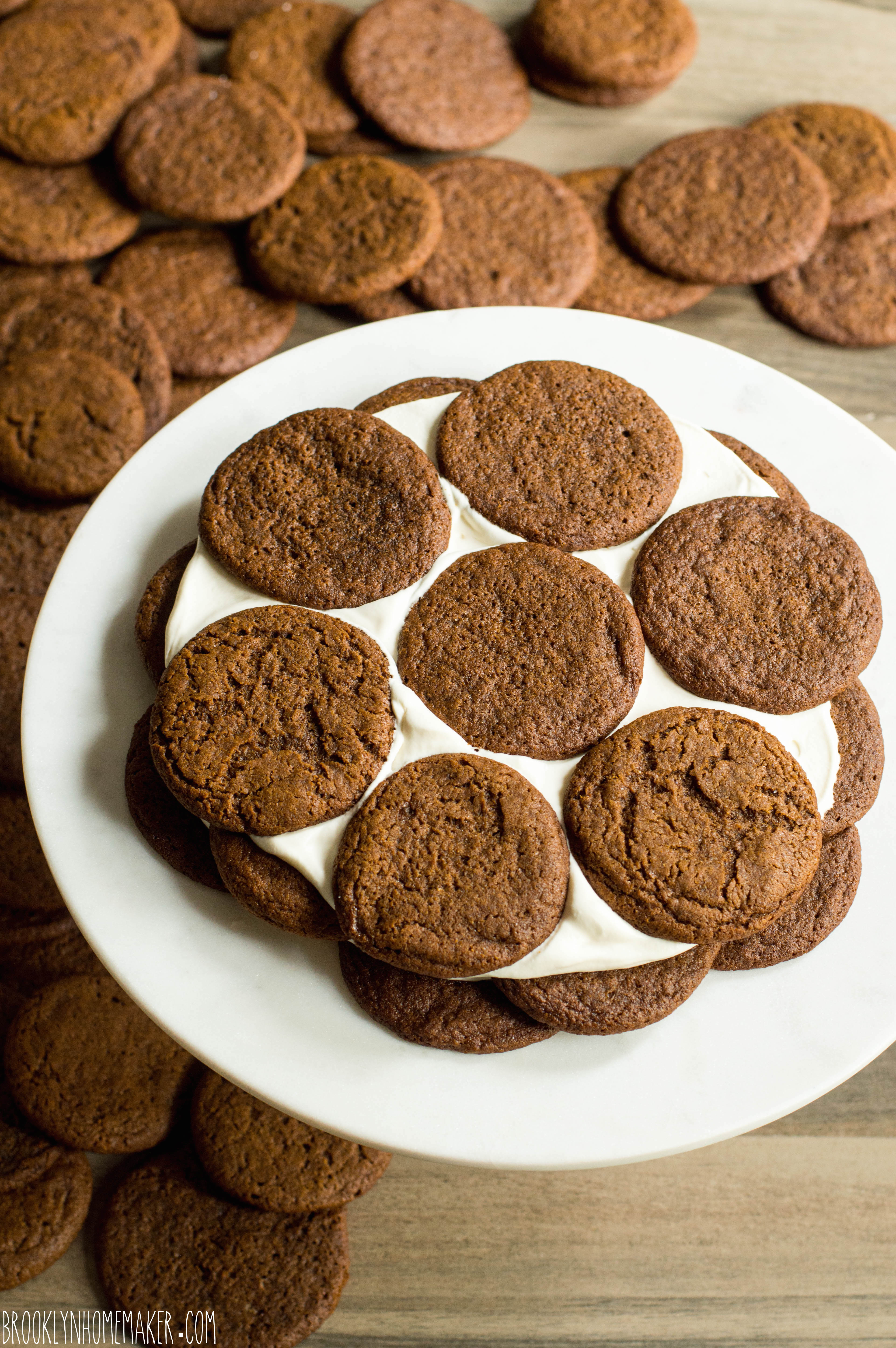
On an 8″ cake board, cake stand, or serving plate, arrange a layer of cookies into tight a circle. You’ll want one cookie in the center with a ring of cookies surrounding it with as little space between them as possible. With the size of the cookies I used I could fit 7 cookies per layer. Place about 3/4 to a cup of icing over the first layer of cookies and smooth it out with a small offset icing spatula. Spread the icing almost to the outer edge of the cookies, leaving just a small edge of cookies showing. Arrange another layer of cookies, alternating the layers so they appear staggered above one another. Repeat another layer of icing and then another layer of cookies, again and again until you have as many layers as you desire or until you run out of icing or cookies. Finish the top of the cake with a final layer of icing. My cake was 9 layers tall.

If you have a cookie or two left over, crumble it over the top and sprinkle with crystalized ginger if desired.

Transfer cake to refrigerator for a minimum of 6 hours (or overnight) before serving.