hella bitter giveaway

UPDATE: CONTEST HAS COME TO AN END. WINNER WILL BE CONTACTED VIA EMAIL

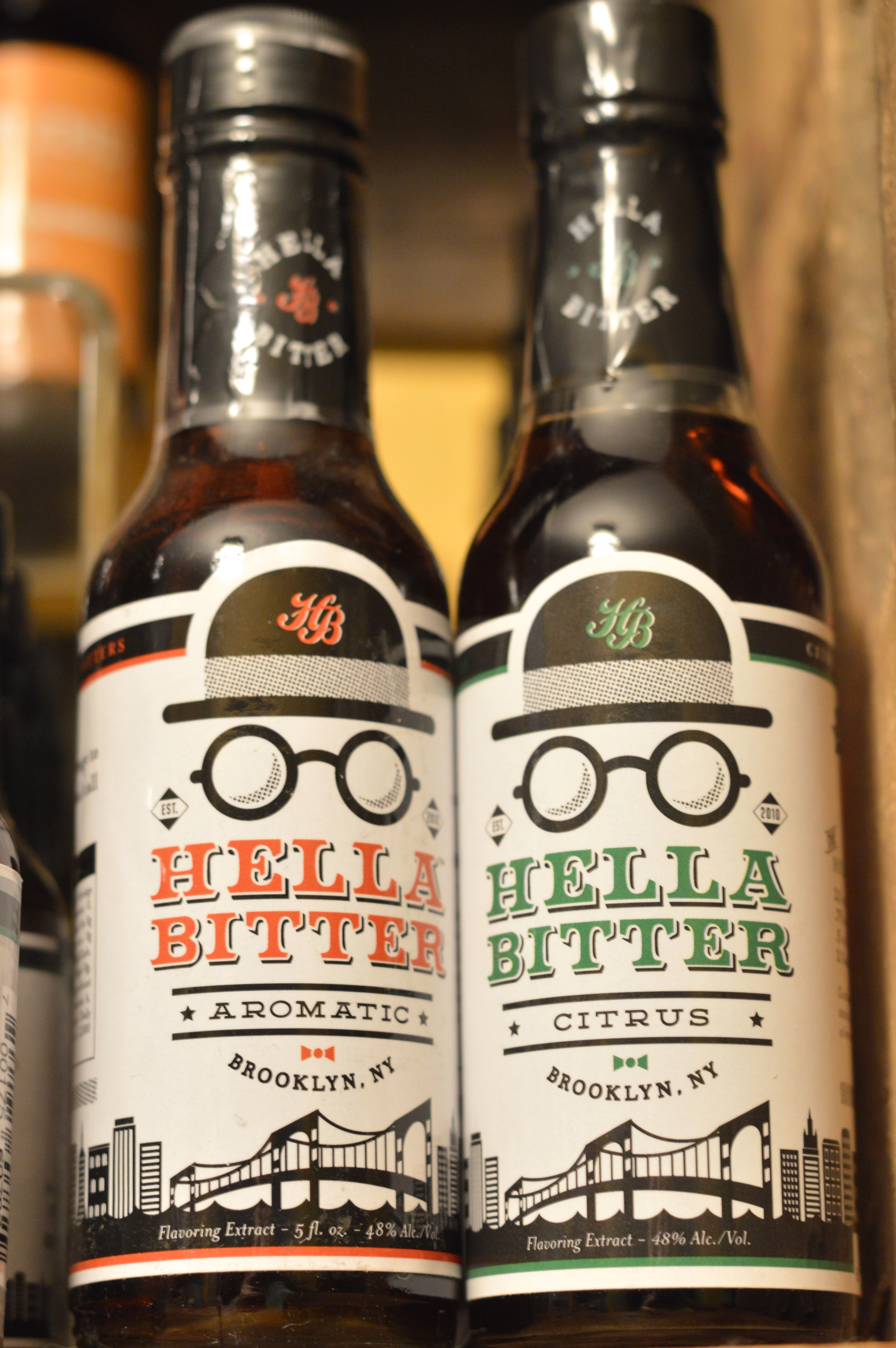
Good news everyone! For the next week you can enter to win your very own set of Hella Bitters!

hella bitter giveaway | Brooklyn Homemaker

Aren’t you excited? I sure am.

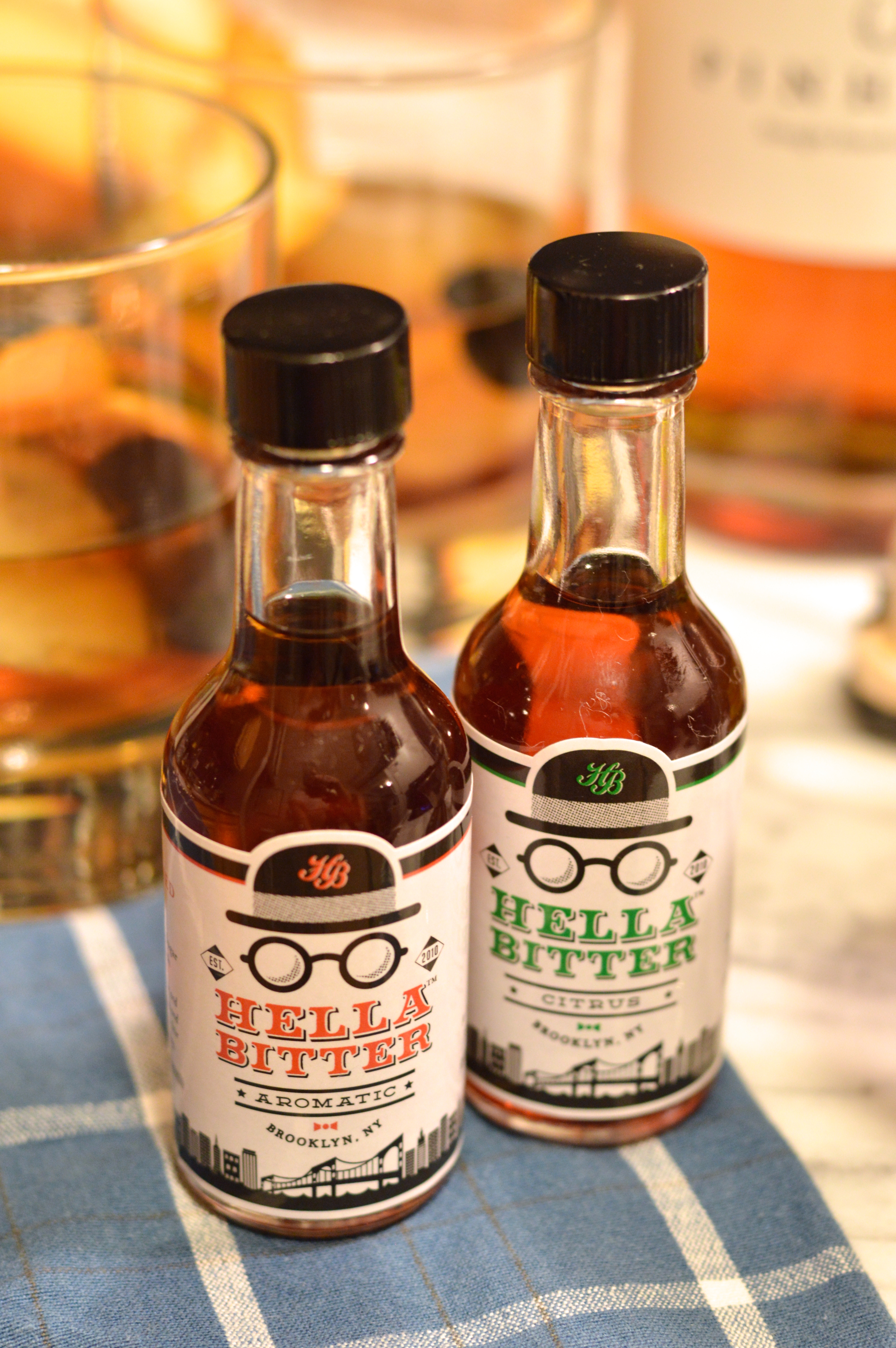
The winner will receive one 5oz bottle each of both the aromatic and the citrus flavors of Hella Bitter! If you’ve never tried them, you’re in for a real treat. Please enter by commenting on this post and following the contest rules listed at the bottom of the page.

hella bitter giveaway | Brooklyn Homemaker

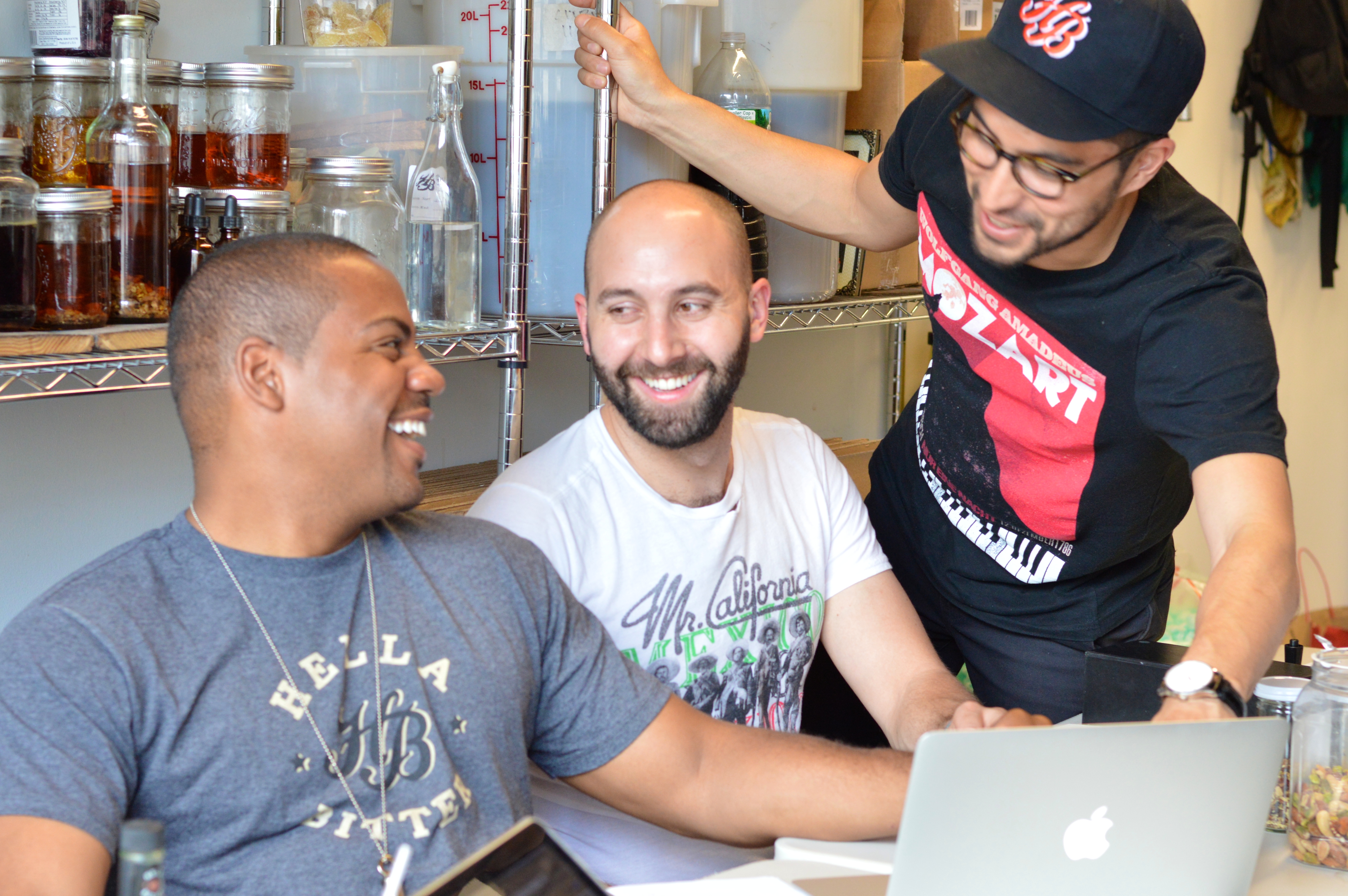
I visited Hella Bitter at their space in Long Island City’s Bad Ass Organic the other day, and I have to tell you, not only do they know their stuff and turn out some seriously delicious craft bitters, but they’re also a really great bunch of guys.

Meet the men behind Hella Bitter, from left to right, Jomaree Pinkard, Tobin Ludwig, & Eduardo Simeon:

hella bitter giveaway | Brooklyn Homemaker

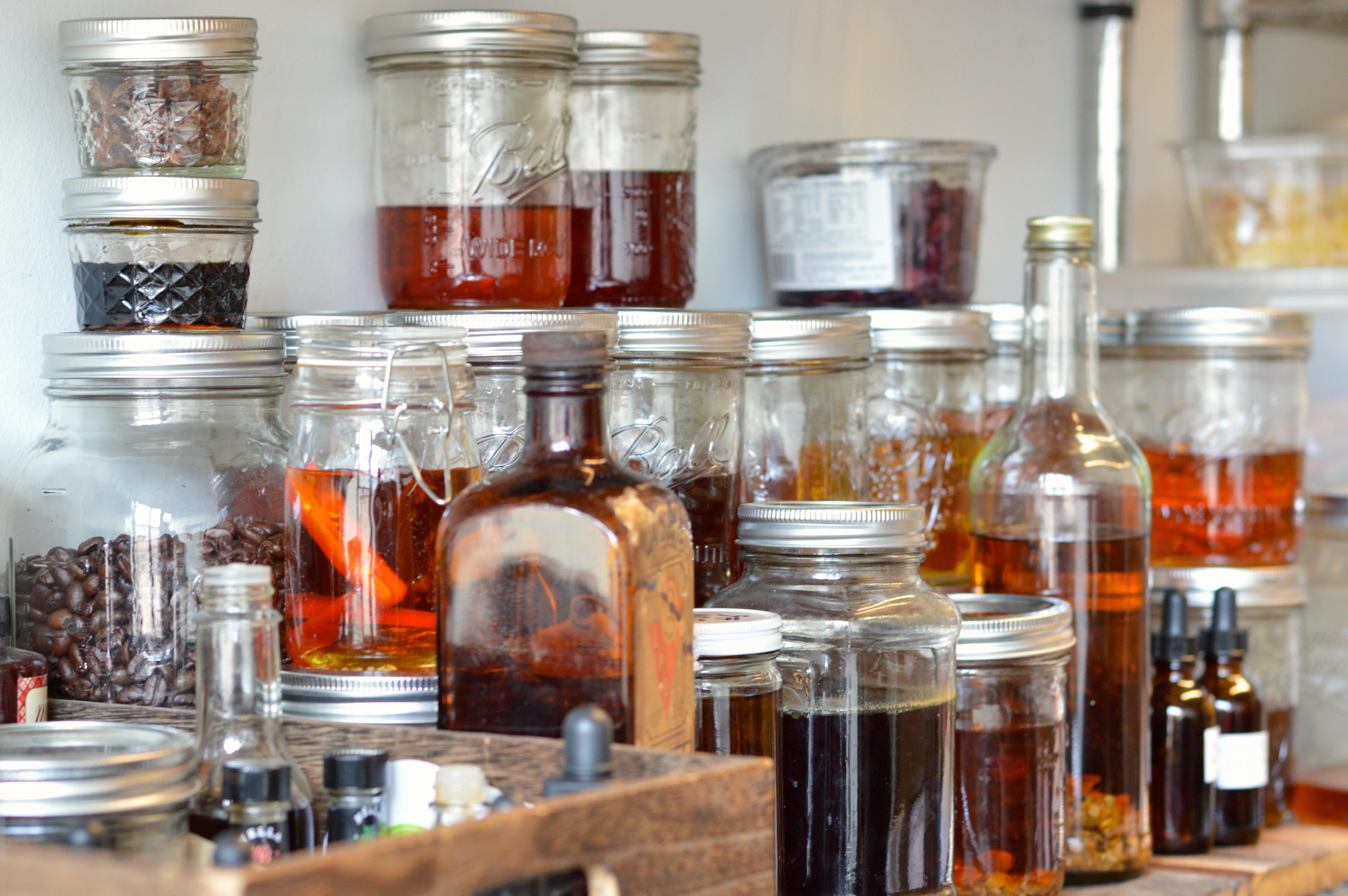
From their website: “Hella Bitter is an all-natural craft bitters company committed to being the premium alternative to mass-produced and often artificially flavored competitors. What began in the early 2000s as a hobby with roots in the Bay area, turned serious in 2011 when Hella Bitter was founded in Williamsburg, Brooklyn. With a modest Kickstarter.com fundraising project, pools of sweat, and a big dream, Hella Bitter went from being a weekend project, to being a serious pursuit of the delicious…

Citrus is the bitters that started it all, and we have refined a recipe that consistently outshines other orange bitters on the market. It is slightly more concentrated, and more noticeably citrusy than other bitters in its class. This is because our small-batch approach enables us to carefully regulate the different flavors and prevent any one from overpowering the others.

Perhaps the rockstar of the bunch, our Aromatic consists of more intriguing ingredients and stronger flavors to make a bitters that can stand up to the biggest bourbon whiskeys, but is still delicate enough to give subtle support to a gin cocktail. It gets its color from the beet juice that we use to help sweeten it.”

hella bitter giveaway | Brooklyn Homemaker

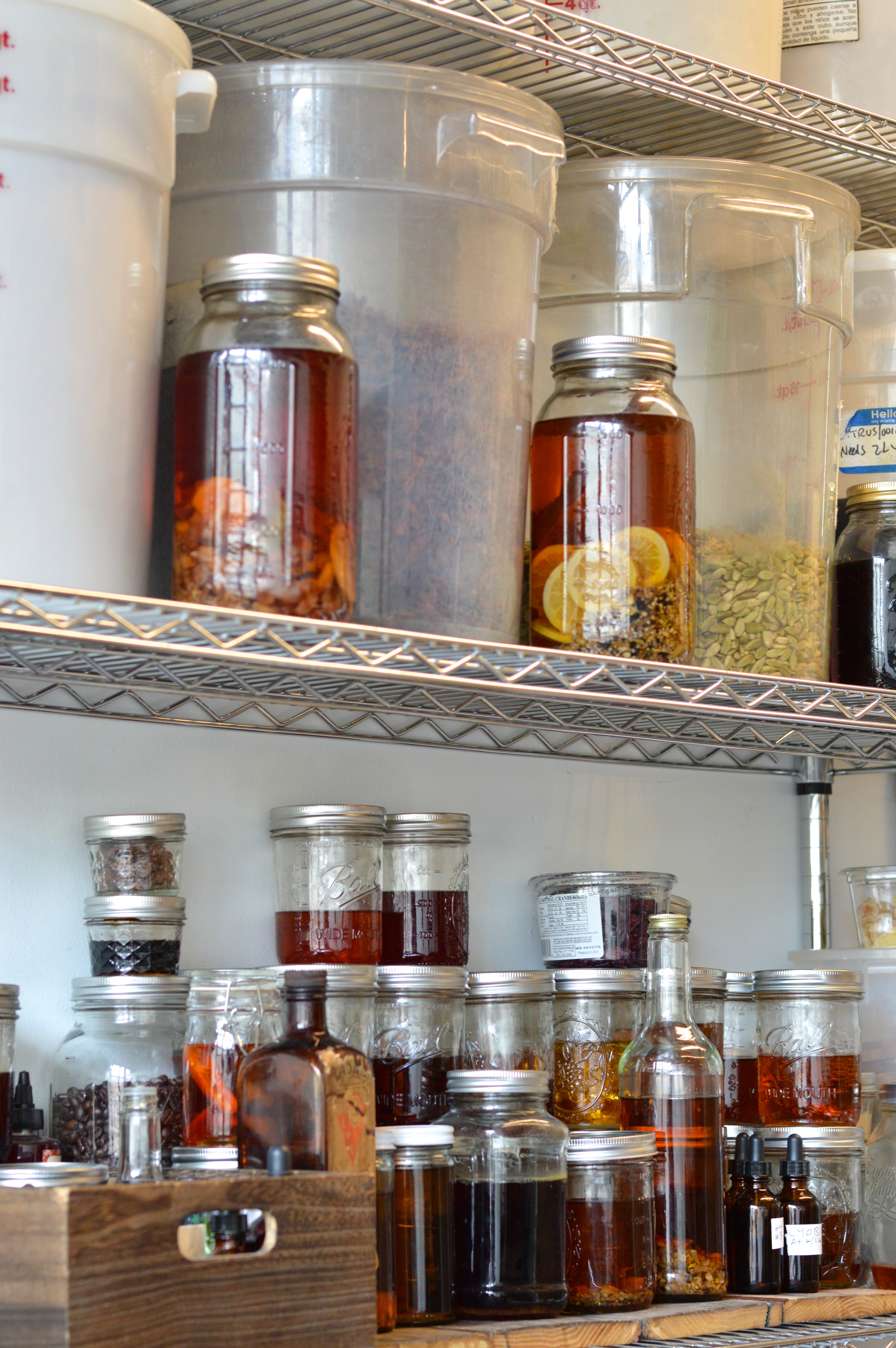
With the recipes for their current flavors perfected, they were excited to tell me about a few new ideas they have on the horizon. Right now they’re working to develop a kit for bitters enthusiasts to make their own bitters at home! Their kit will include a custom machined funnel and strainer set, along with two flavor blends and four tincture bottles to make your very own citrus and aromatic bitters. You’ll be able to make traditional bitters with their ready-to-use blends, or you could put your own twist on things by experimenting with other spirits or adding your own ingredients. Right now they’re working out the fine print, but soon they’ll be launching a kickstarted campaign to help get the project moving. I, for one, can’t wait.

hella bitter giveaway | Brooklyn Homemaker

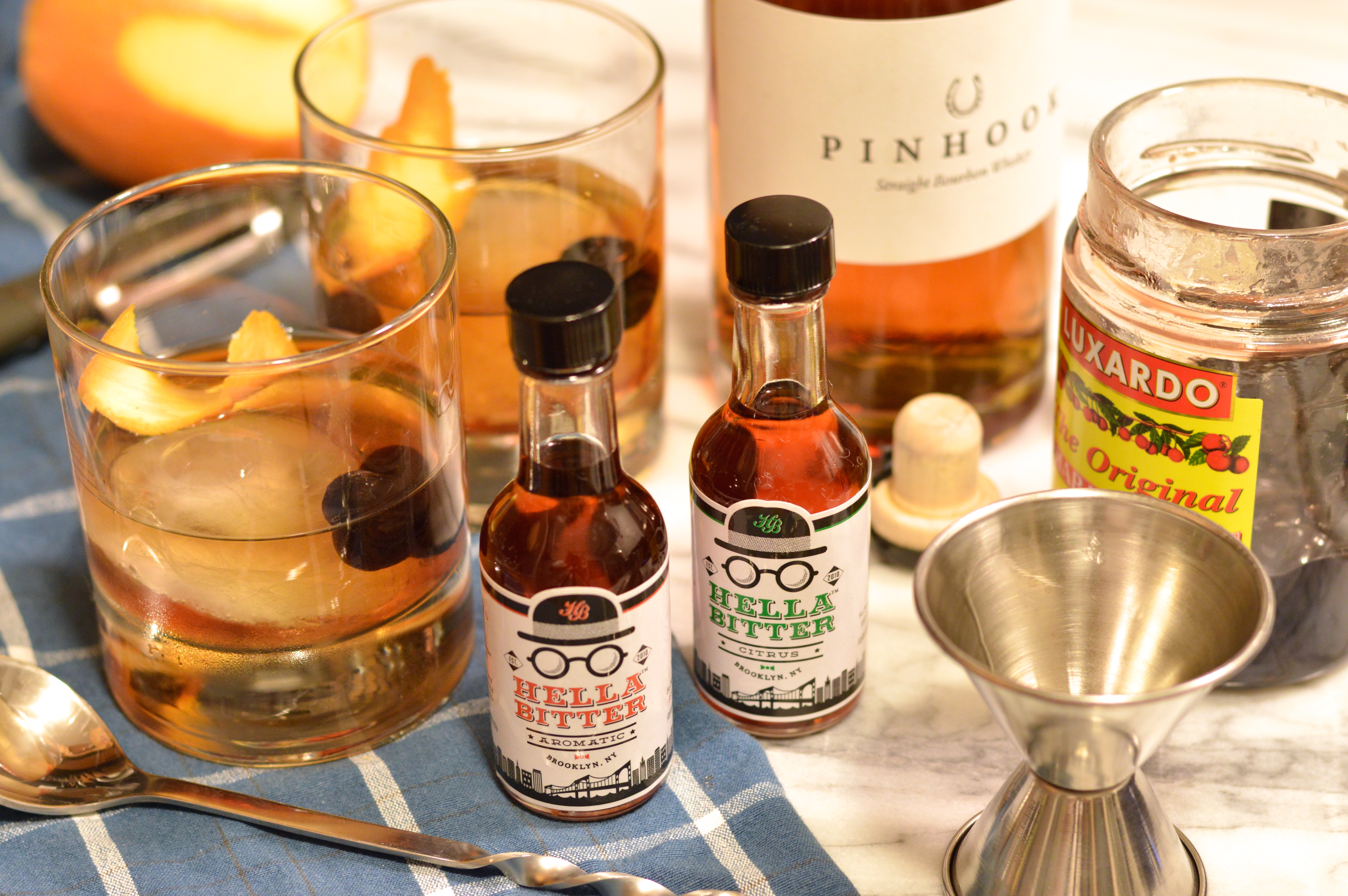
Along with cocktail recipes, their website includes ideas for ribs, roast chicken, even whipped cream flavored with their bitters. I decided to try out a recipe they gave me during my visit for one of my favorite cocktails, the classic Old Fashioned. Their recipe uses both flavors of Hella Bitter, working together in perfect harmony. It may have had something to do with the limited-edition small-batch bourbon I received as a birthday gift, but holy wow. This is one left me speechless.

No matter what you dream up to use them, both flavors of their bitters are phenomenal. Don’t just take it from me though, enter to win below and try them for yourself!

hella bitter giveaway | Brooklyn Homemaker

Hella Bitter Old Fashioned

  • Servings: 1 cocktail
  • Print
recipe from Hella Bitter.

2oz Rye Whiskey
2 Dashes Hella Bitter Citrus
2 Dashes Hella Bitter Aromatic
1 sugar cube or 1 tsp sugar
Orange twist for garnish

In a rocks glass, combine sugar and bitters. Mash up. Add whiskey. Add ice to top off whiskey and gently stir until ice has softened slightly or the cocktail is very cold. This can take 10-30 seconds depending on the size and texture of your ice. Stir in orange twist.

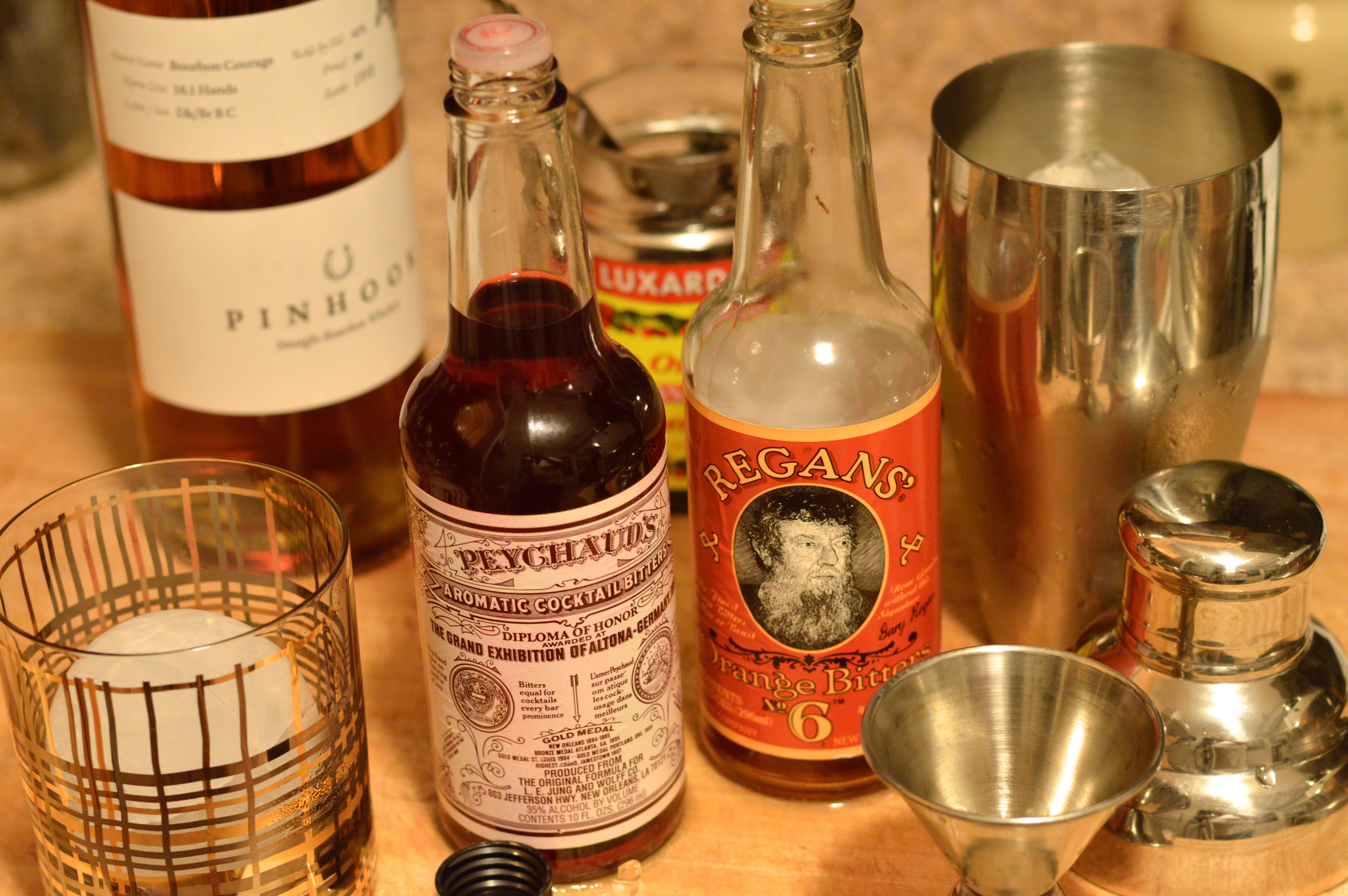
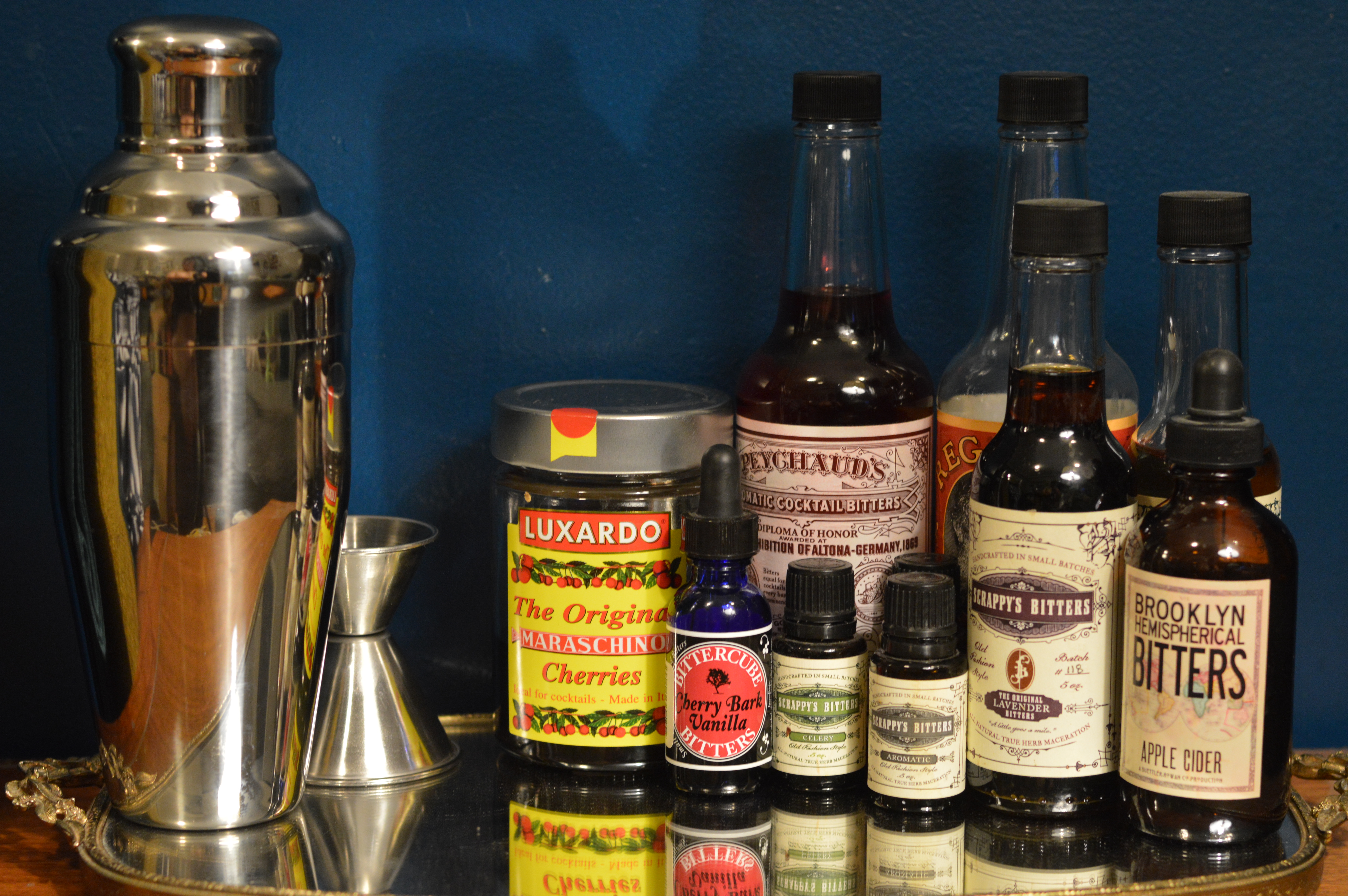
(I used bourbon because that’s what I had in the house, and I added some Luxardo cherries because I’m fancy like that.)

hella bitter giveaway | Brooklyn Homemaker

Contest rules:

Entries will be accepted until, and contest will end on, Thursday June 5th, at 6PM EST.

To enter, please follow these links and “like” both Brooklyn Homemaker and Hella Bitter on facebook. Then come back and leave the comment “Gimme Hella!” on this post, and tell me the first drink you’ll make with a shiny new set of Hella Bitters.

Only one comment per entrant, please.  Sorry, but immediate family is excluded. The winning bitters can only be shipped within the contiguous United States, so entrants must live or have a mailing address within the lower 48. Winner will be chosen, using a random number generator, from the total number of comments when the contest comes to a close. Winner will be contacted via email for shipping information.

bitters for beginners, part I

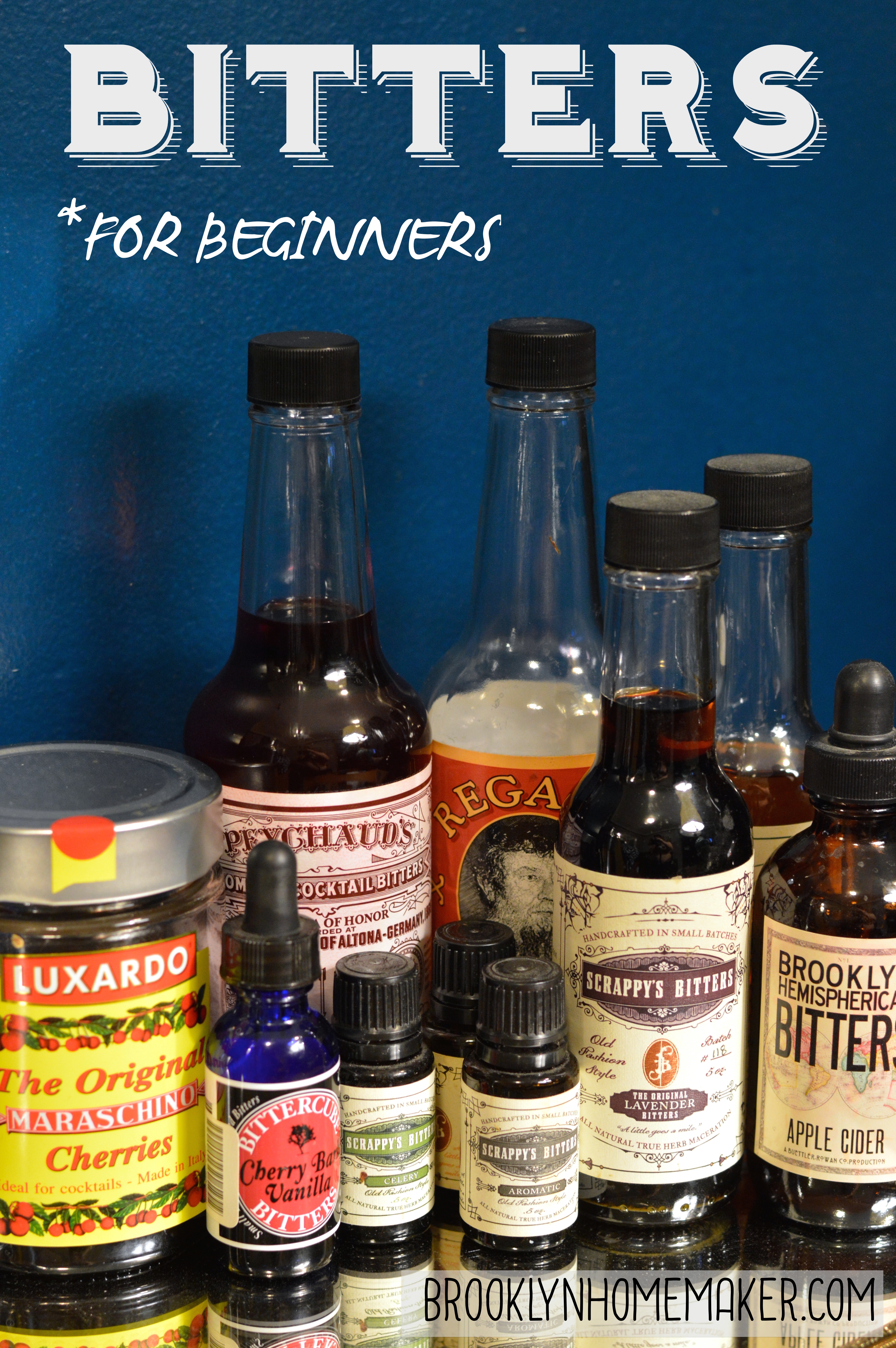
So, I’ve developed a little obsession with bitters lately and I thought I might share it with you.

bitters for beginners | Brooklyn Homemaker

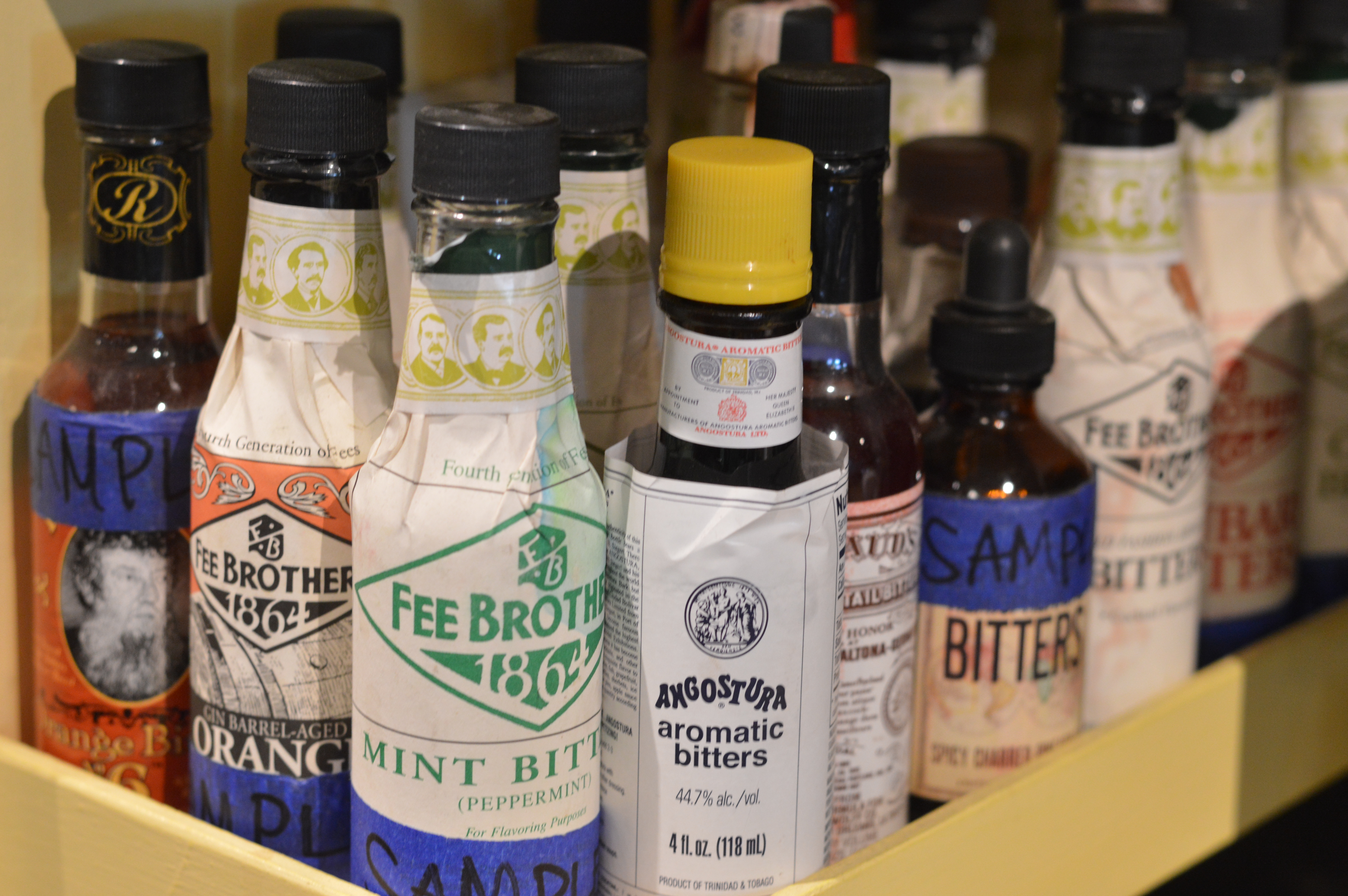
If you’re not familiar with bitters, they’re basically a bitter or bittersweet infusion of botanical ingredients, usually in a mix of water and alcohol, and sometimes, glycerine. Although many varieties were originally created for medicinal purposes, the main function of bitters today is a flavoring agent for cocktails. Much like adding spices to a meal, bitters serve to add depth, complexity, and flavor to drinks.

There are actually two kinds of bitters on the market today. First, there are digestive (or potable) bitters that can be consumed on their own, some of the more popular varieties being Campari, Aperol, or Fernet. What I’ll be discussing today though are cocktail bitters, which are what most people think of when they hear the word. These are usually used as a flavoring agent for alcoholic drinks, but can also be mixed with soda water, or any number of liquids. Some people even like to use bitters to flavor dressings, sauces, or baked goods. I myself have had great luck flavoring creme anglaise with lavender bitters.

bitters for beginners | Brooklyn Homemaker

Bitters may have been around as long ago as ancient Egypt, but they were further developed from the middle ages through the renaissance when the practices of alcohol distillation and making plant-based medicines were both widely practiced. Many brands of bitters sold today still reflect herbal remedies and tonic preparations that can be traced back to renaissance era traditions.

One of the most well-known brands, Angostura bitters, were created in Venezuela in 1824 by a physician who originally intended them as a cure-all for sea sickness and stomach ailments, and as a stimulant to keep malaria patients active and healthy. Many people still swear that a few dashes of these bitters in soda water is a great way to settle an upset stomach.

bitters for beginners | Brooklyn Homemaker

No one knows for sure when bitters made the leap into cocktails, but it may have all started with people adding spirits and sugar to medicinal bitters to make them more palatable. It seems that they really did need just a spoonful of sugar (and booze) to help the medicine go down.

By the 19th century, the practice of adding medicinal bitters to fortified wine was so widespread in Britain that it made its way across the Atlantic to the American colonies. As early as 1806, publications were referring to bitters as one of the essential ingredients in a new alcoholic beverage called a “cocktail”. The recipe, as printed in Hudson, New York’s Balance & Columbian Repository, called for four ingredients, “a stimulating liquor, composed of spirits of any kind, sugar, water, and bitters.” The popularity of bitters grew steadily through the early 20th century, and certain varieties of bitters became synonymous with specific cocktail recipes.

bitters for beginners | Brooklyn Homemaker

The popularity and availability of bitters came to a screeching halt when prohibition launched with the passing of the Volstead Act in 1919. A few bitters were able to survive this dark age in American history though, because some manufacturers were based outside the US; while some others, like Fee Brothers, used glycerine instead of alcohol to keep from being shut down. Speakeasies even started using bitters as a way to mask the off flavors of home-made bathtub gin and bootleg hooch. When prohibition was repealed many of the old bitters companies started producing again, but things took another turn for the worse as consumer tastes and drinking habits changed in the 1950s and 60s. This was too much for many companies who were still having a hard time recovering from prohibition and the depression, and most bitters varieties all but disappeared in this era. There are only a few brands left today that have lasted straight through since the 1800s under the same name.

bitters for beginners | Brooklyn Homemaker

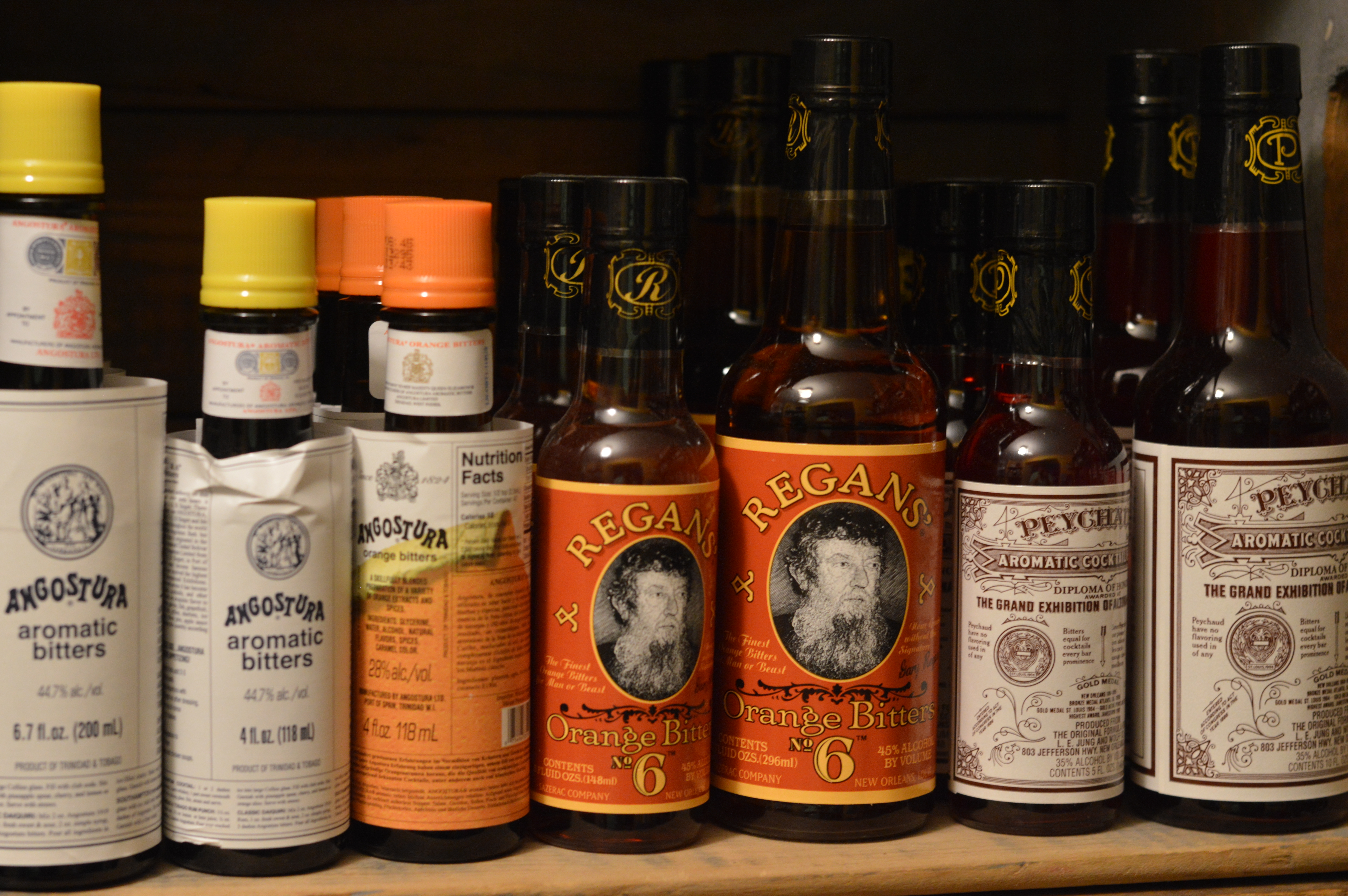
Many people credit revered mixologist and author Gary Regan with helping move the recent bitters renaissance forward. After researching and experimenting with century-old recipes for long-gone styles of cocktail bitters, he introduced his Regan’s Orange Bitters No. 6 in 2005. In less than a decade, the popularity of bitters (and old school craft cocktails) has exploded, and there are now hundreds of varieties of bitters on the market. Many of the current brands got their start with bitters enthusiasts experimenting with their own speciality bitters at home, and now some companies, like Hella Bitter, are working to develop DIY bitters kits for home use. Many brands are reviving old styles and “lost” recipes, while others are using old techniques to introduce new varieties like mole, grapefruit, black walnut, and sriracha.

Traditionally bitters are made by infusing alcohol with different botanical ingredients, but some companies also add glycerine to their bitters. Glycerine is a simple sugar alcohol compound that is colorless and flavorless. Bitters made with glycerine are generally cheaper because you can use inexpensive extracts, thin them out with water and alcohol, and use the glycerine to hold the flavors together and keep them shelf stable. It’s a much quicker process but produces a flatter, less complexly flavored bitter. While glycerine based bitters do have some alcohol in them, they have significantly less than traditional “craft” bitters. Glycerine can also add a bit of a waxy mouthfeel to a cocktail if too much bitters are used. This is not to say that glycerine based bitters are not as good as traditional bitters, it’s just that there’s a significant difference in their intensity and utility. Craft bitters tend to be more expensive because they’re usually made from higher quality ingredients and have a stronger, purer, more concentrated flavor. Since they’re made from alcohol they don’t affect the mouthfeel of your drink, and their highly concentrated flavor means they’re used very sparingly and will last longer.

bitters for beginners | Brooklyn Homemaker

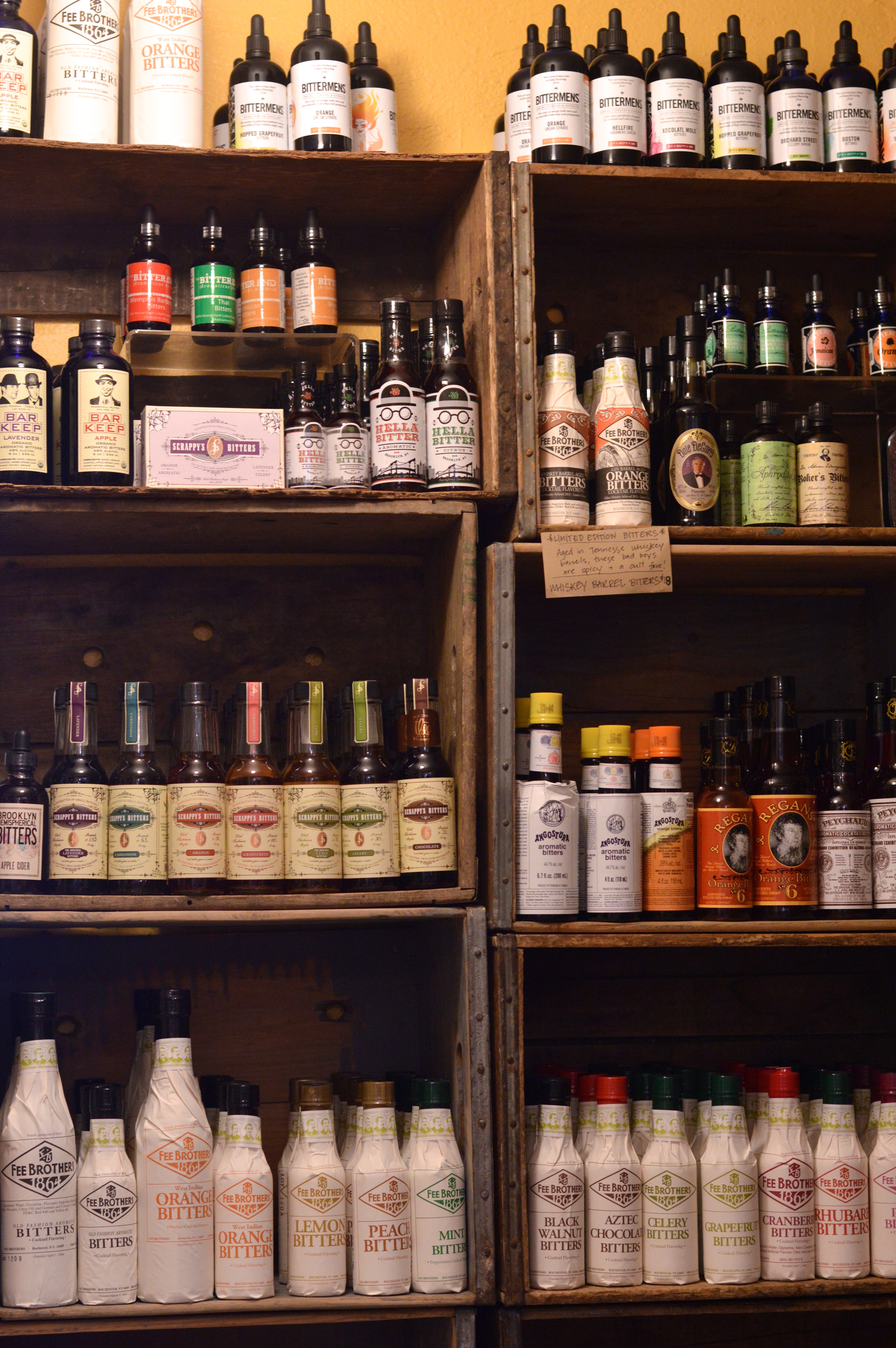
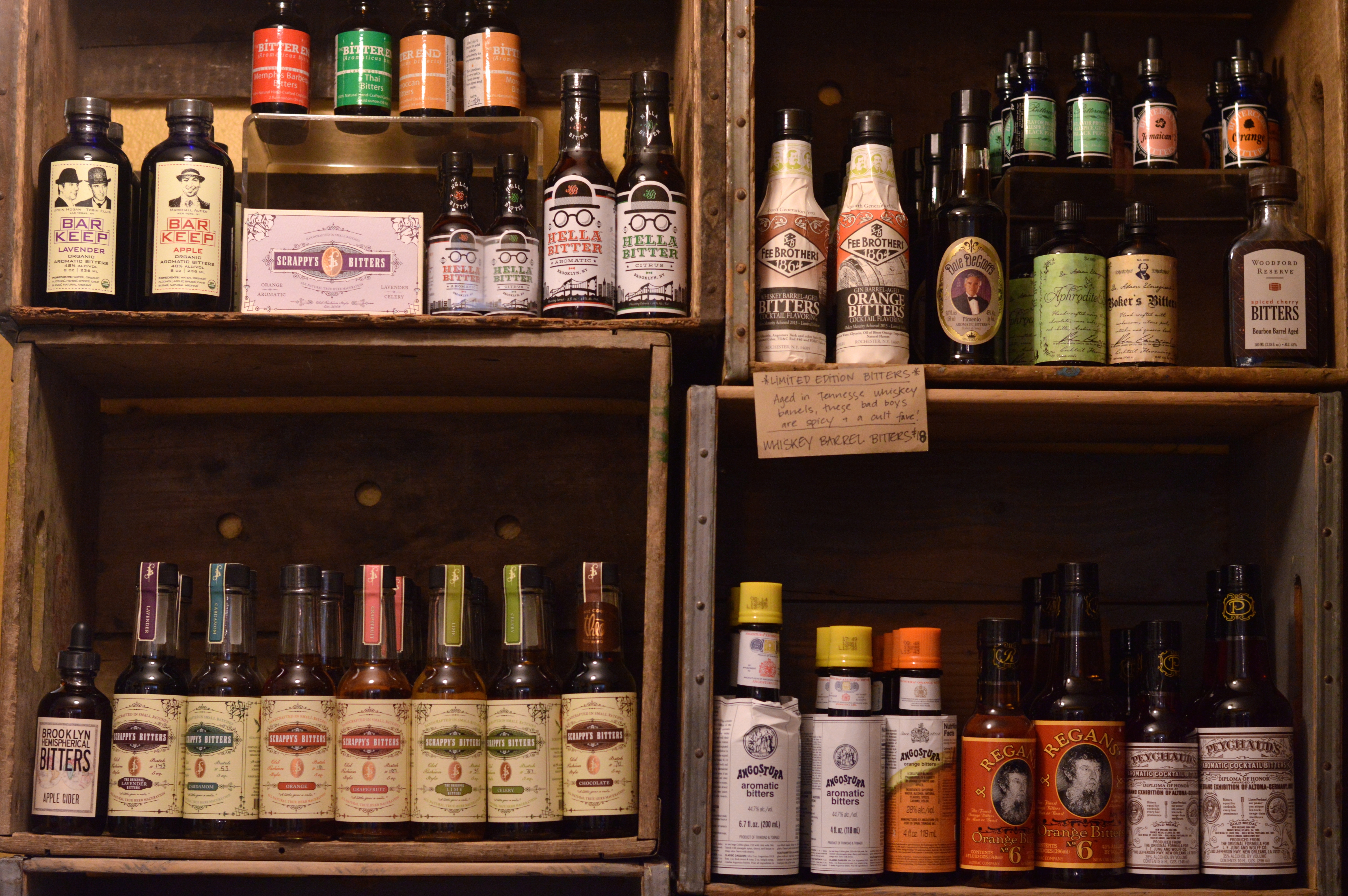
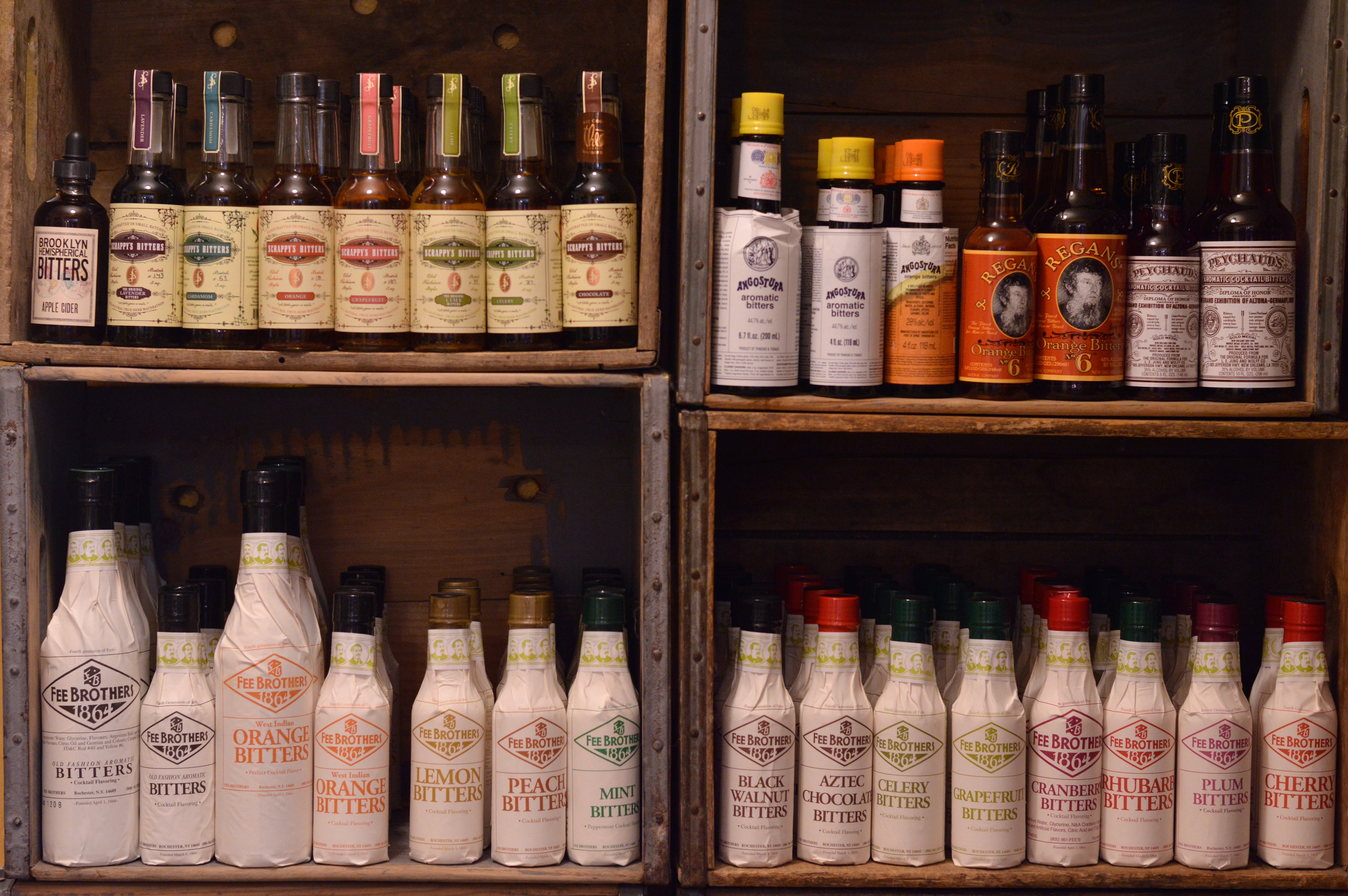
If you’re new to the world of bitters, and you’re curious about them or would like to start building a collection for your home bar, the best way to find out what you like is to taste some. Aromatic and orange bitters are the most commonly used styles and, along with many of the newer citrus flavors, they’re the most versatile when it comes to their utility. There are plenty of brands and styles to choose from, so if you’re not sure what you’d like, go to your local bar and see if they’ll let you taste what they have. Or, if you’re fortunate enough to have a store in your area, like Whisk, that will let you sample bitters before taking the plunge, all the better. That way you can familiarize yourself with a variety of different flavors, taste the differences between certain brands, and choose what will work best for you.

bitters for beginners | Brooklyn Homemaker

There is no end to the different styles and  varieties on the market today, so experiment with them and have fun. Just think of what you normally like to drink, and odds are that someone out there is making a style that corresponds to your favorite tipple or mixer. Get creative! That’s what building a collection of bitters is all about. You can play with flavors, throw things together, see what works for you and what doesn’t. It’s all about personal taste and there’s no rules that dictate what you can and can’t do. It’s just like building a collection of liquor for your home bar. Just go with what you like.

There are far too many varieties of bitters on the market for me to list them all, but check back next week for part II of bitters for beginners, and I’ll outline a basic guide to a few popular styles, and give you a few simple ideas on how to use them.

bitters for beginners | Brooklyn Homemaker

*This post was written in collaboration with whisk, a store with an extensive cocktail section and one of the largest collections of bitters in NYC.

funfetti birthday cake

So, I guess May is cake month here at Brooklyn Homemaker.

funfetti birthday cake | cake construction tips | Brooklyn Homemaker

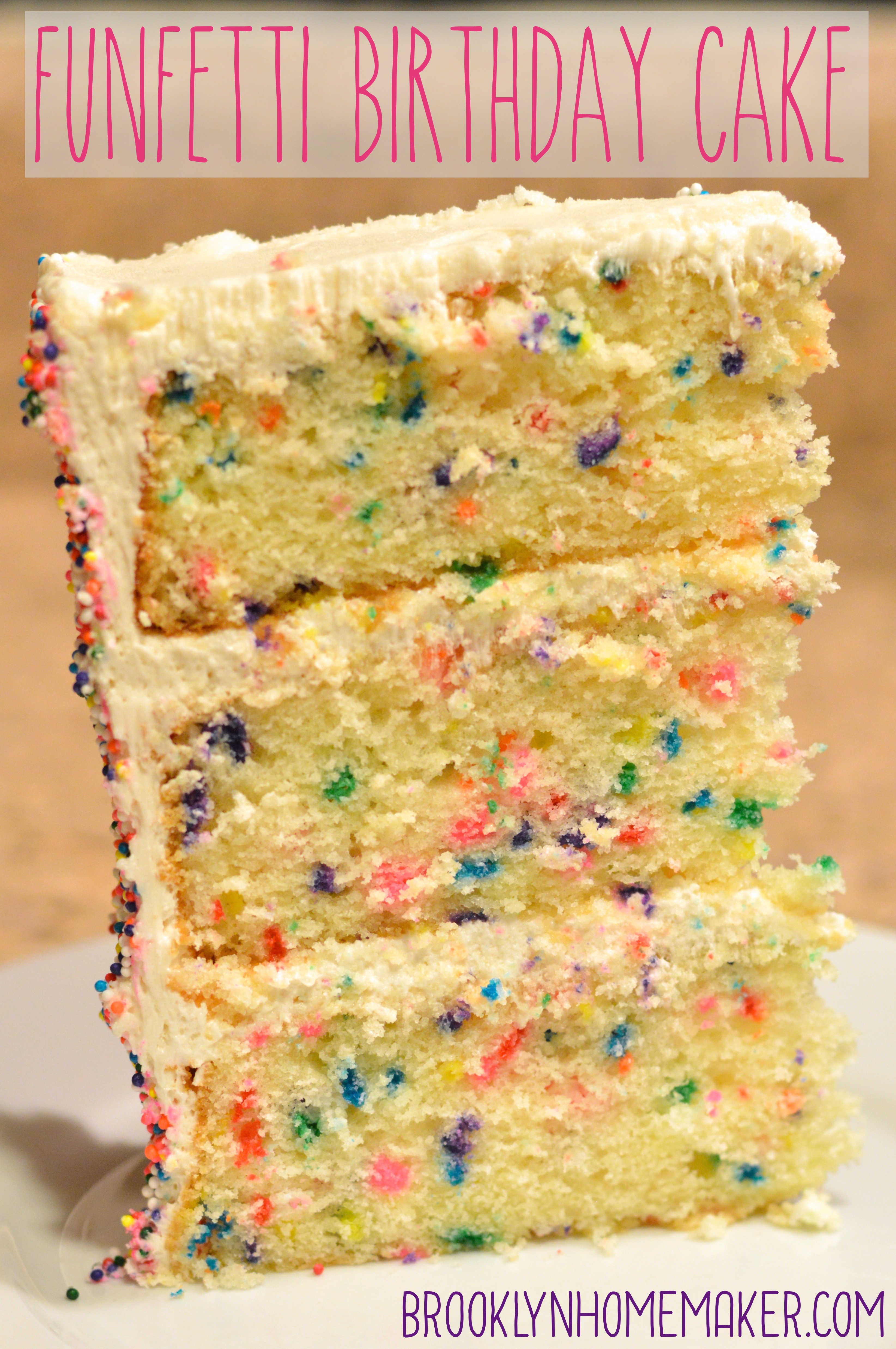
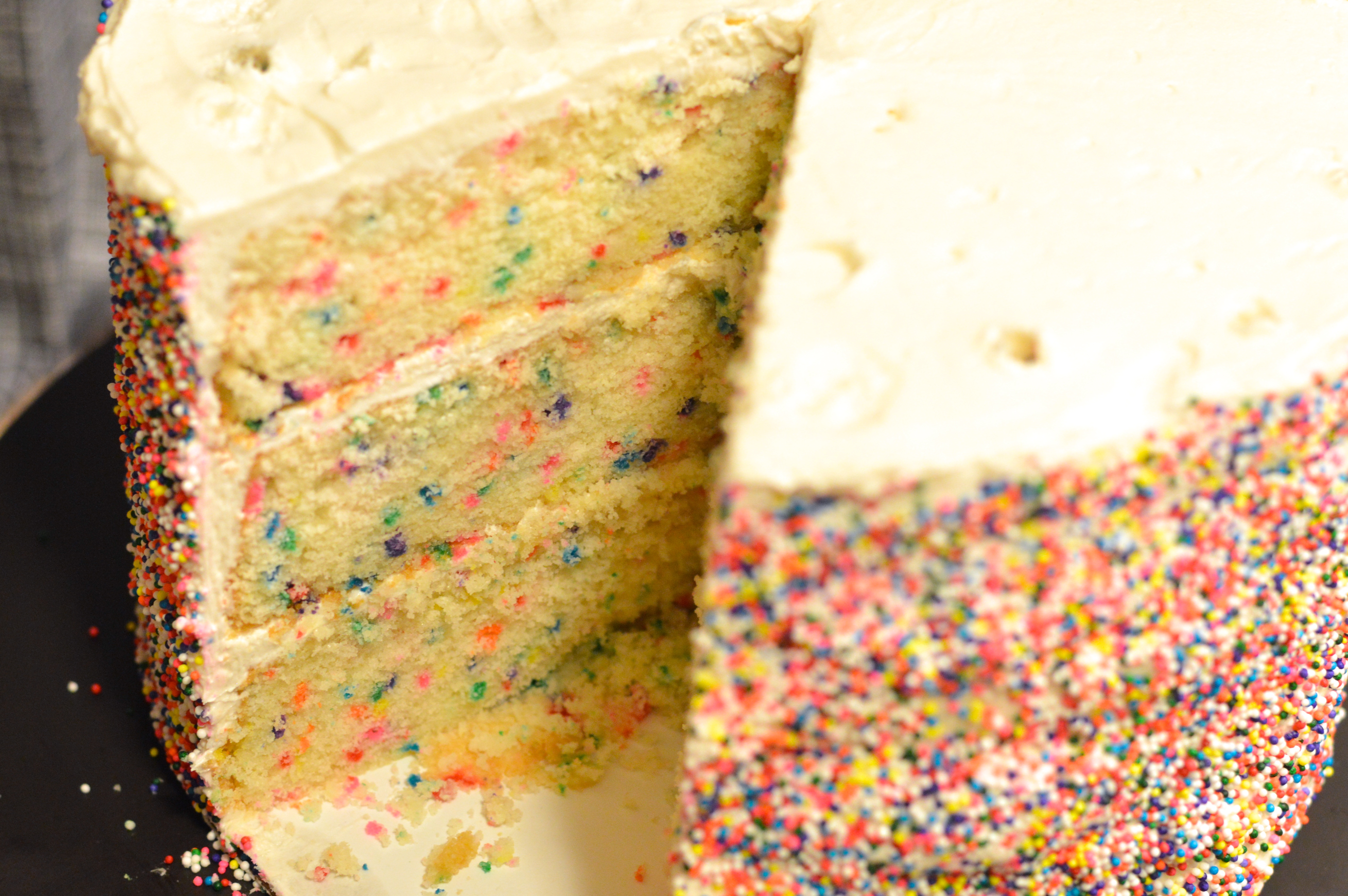
Sunday was my birthday. We had a cookout in the yarden with a bunch of friends and copious amounts of food and booze. Russell offered to buy me a cake, but I insisted on making my own. I know that you’re, like, “not supposed to” make your own birthday cake, but I love to bake, and I’m pretty good at it. Any cake he could find locally wouldn’t be half as good as what I could make myself, and anything he ordered from a fancy specialty bakery would cost a small fortune. So I won. I made my own birthday cake, and I went all out and did a super colorful funfetti cake with rainbow sprinkles inside and out.

funfetti birthday cake | cake construction tips | Brooklyn Homemaker

The only weird part of making my own cake was that I wanted to share it with you here, so after candles and singing I rushed the cake back into the house to cut and photograph it before reemerging 20 minutes later to ask for help carrying the sliced cake back outside. It’s a funny thing to have to stop and remove yourself from a party to stage and photograph a cake, especially when it’s your party (and you’ve had a few cocktails).

I’m committed though. What can I say? You’re welcome.

funfetti birthday cake | cake construction tips | Brooklyn Homemaker

A few friends and fans have been asking me lately about tips on constructing layer cakes, so I’m going to share some today. I’m really not a professional baker (more like a talented amateur), so I’m sure there might be easier or better ways of doing things, but these techniques have worked well for me over the years, and I think they’ll really help you up your cake baking game. If you really want even more in-depth training from a real professional, I’d suggest checking out this great “Modern Buttercream” class from Craftsy. It’s really helpful and informative, and free!

Anyway, one of my favorite things to do when baking a layer cake is to turn off the damned TV and put on some great music. I’m partial to Dolly Parton’s All I Can Do album, just in case you were wondering.

funfetti birthday cake | cake construction tips | Brooklyn Homemaker

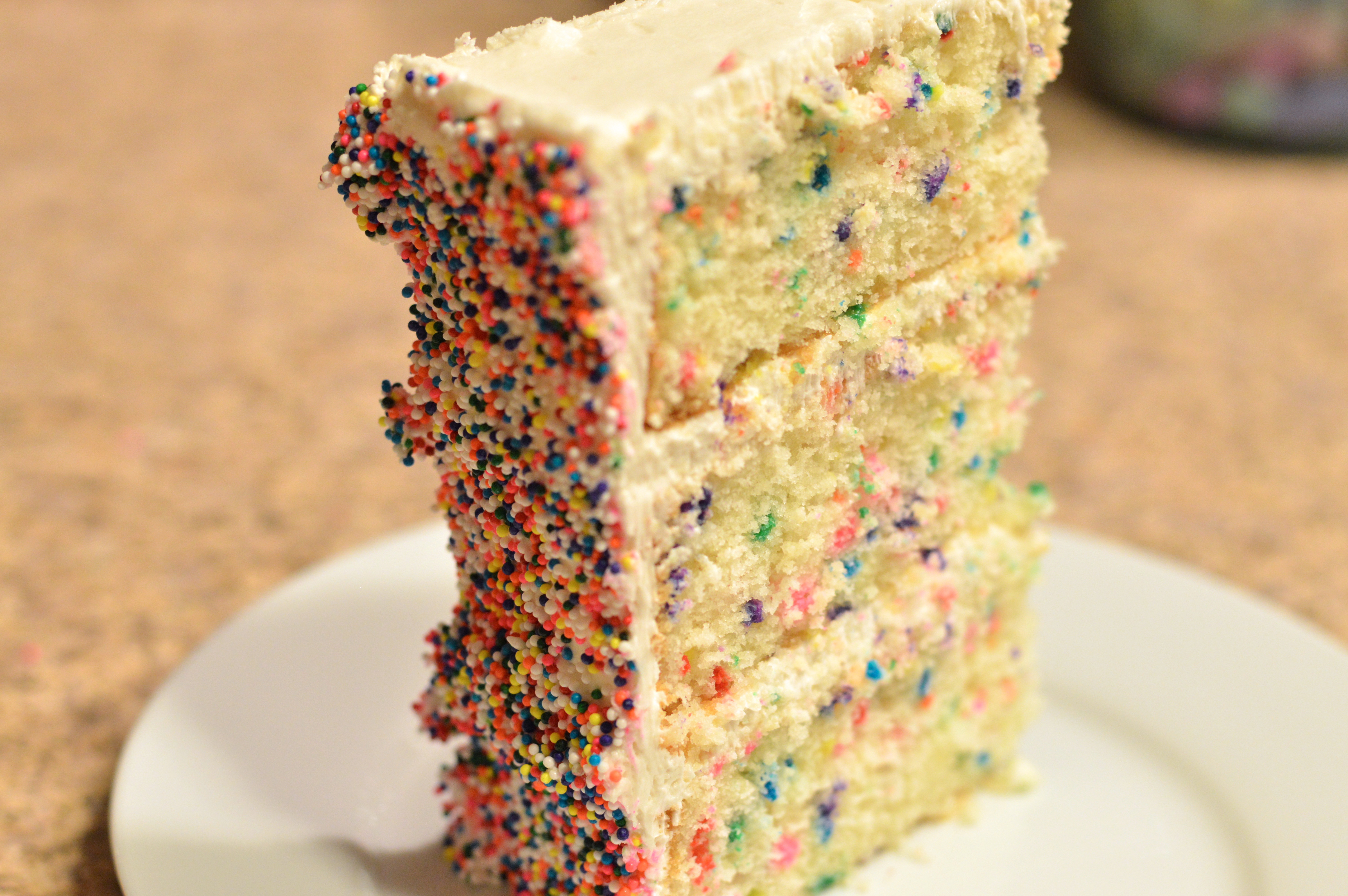
The first step in making a layer cake is choosing the size. If you visit the site regularly, you’ve probably already noticed that I’m very partial to three layer cakes. Two layer cakes already require more effort than bundt or sheet cakes, so I think adding that third layer makes a cake much more impressive without adding much more work. I think a three layer cake looks, I don’t know, fancier, because of its impressive height and multiple layers of cake and filling when sliced.

I also tend to lean toward 8 inch cakes rather than 9 inch because, again, I think they look fancier. The same amount of batter poured into a 9 inch pan will spread thinner, where an 8 inch layer will be thicker. If your goal is height, obviously the 8 inch pan will get you closer, but there’s also an optical illusion at work that makes a skinnier cake look taller.  Obviously the difference is slight, and a 9 inch cake will still be pretty damned impressive and just as delicious, so if that’s all you have, go for it.

This may sound like a no brainer, but when you bake your layers, make sure you’re using 3 cake pans at once, not baking each layer individually. Cake batter has leavening agents in it that will weaken if they’re left sitting around too long, so if you want a 3 layer cake, you need 3 pans. If you only have 2 pans, another option would be to bake two layers and slice them in half to give you four layers. Extra fancy! Obviously baking times will need to be adjusted if you go this route.
funfetti birthday cake | cake construction tips | Brooklyn Homemaker

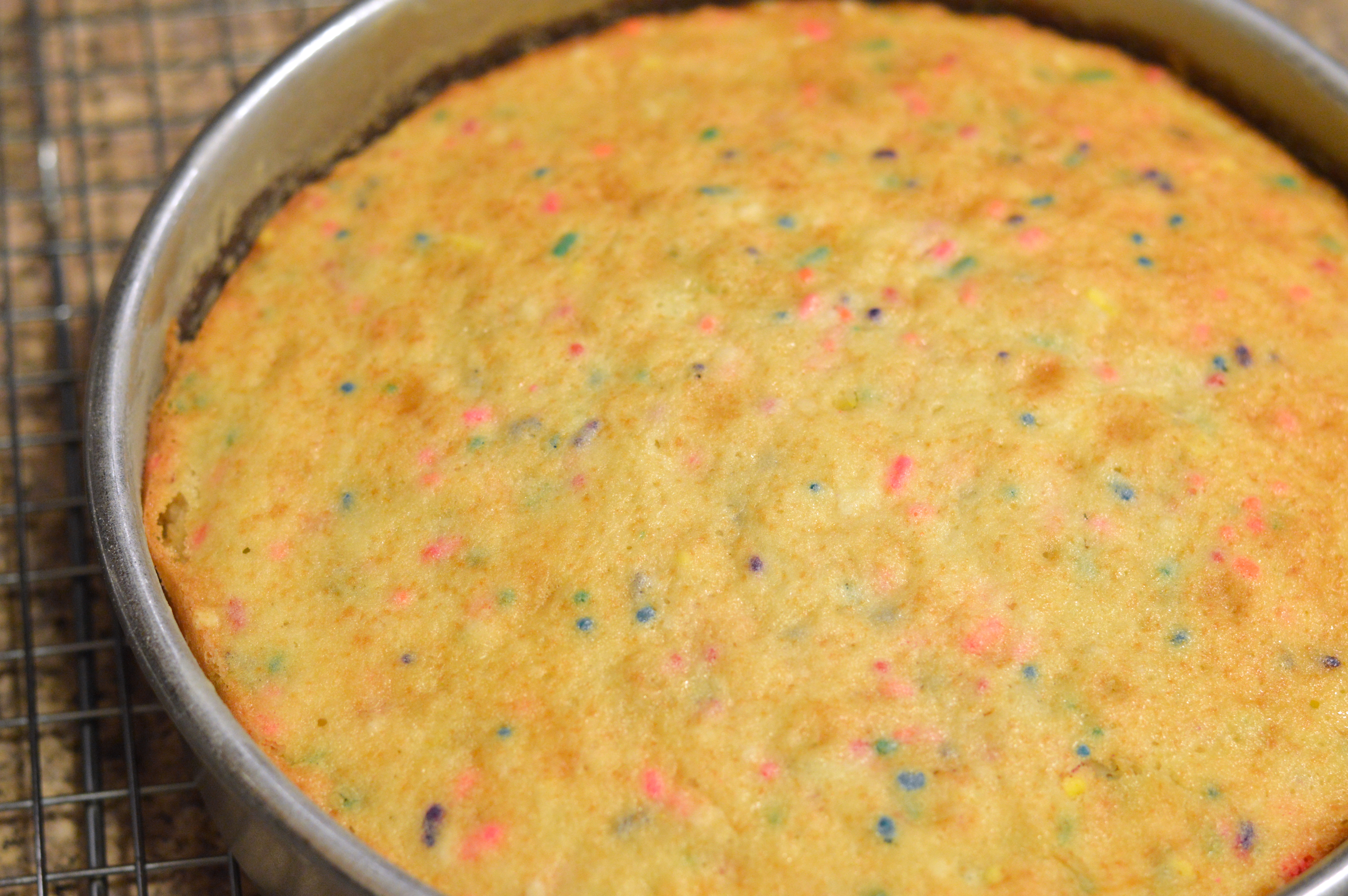
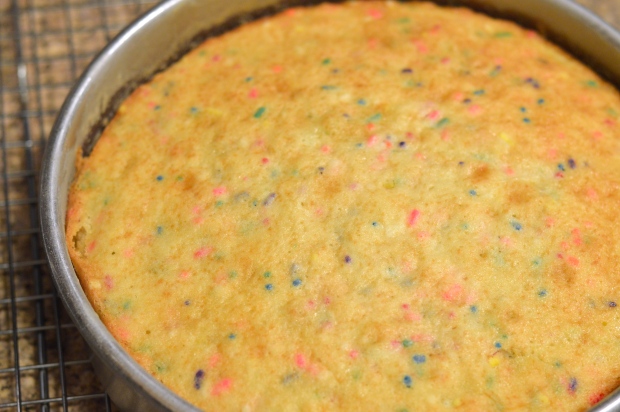
To make sure my cakes release easily, I always butter my pans before baking, then add a pre-cut parchment round to the bottom of the pan. Then I butter that and dust the whole pan with flour. After baking I usually place my cake pans on wire racks to cool for 20 or 30 minutes, or until I can see that the sides of the cake are pulling away from the pan. A super hot cake will fall apart if you mess with it too early.

To get the layers out once they cool a bit, you can use an offset icing spatula to loosen them, but I have this weird little trick I use. I try to gently bounce the pan on one side, almost like the motion of tossing food in a sauté pan, to see if I can feel the layer lift off the bottom. Then I rotate the pan and do it a few times until I’m sure it’s going to release easily. To remove it I firmly but gently press one hand on the top of the cake, and flip the pan upside down with my other hand. Another way of doing this would be to press your cooling rack against the top of the pan and flip the cake directly onto the rack.

Once you have your layers out of the pan, it’s important that they’re completely cool, if not cold, before moving forward. Even barely warm cake layers will begin to melt and thin out your icing, and the filling can get slippery making the layers slide around when you’re trying to put on your crumb coat. It’s annoying and unnecessary and can make it difficult to get your icing smooth and professional looking. Don’t be impatient because you’ll just end up frustrated later.

For this cake I actually baked the layers at night the day before my party, let them cool most of the way, and then wrapped them tightly in Saran wrap and refrigerated them overnight before icing the next morning.

funfetti birthday cake | cake construction tips | Brooklyn Homemaker

Another important step in building a beautiful and professional looking cake is making sure that your cake layers are flat and level. If your cake layers are each domed, and you stack three of them up, you’re going to have a big weird hump on the finished cake. I use this special cake leveling wire, which is also great for cutting layers in half for filling. If you’re careful about keeping your cuts level though, a sharp bread knife will do the trick just as well.

It’s also really helpful to use a turn table or lazy Susan to help get your cakes picture perfect. They have specialized cake decorating ones like this, but you can use any small lazy Susan if you have one. I actually have a marble lazy Susan for cheese serving that I received as a gift a while back, and it sees way more action for cake decorating than it ever has for cheese.

Before you start building your cake, you might also want to put down a cake board. This is especially helpful if you want to transport the cake or if you want to be able to pick the cake up for decorating.

funfetti birthday cake | cake construction tips | Brooklyn Homemaker

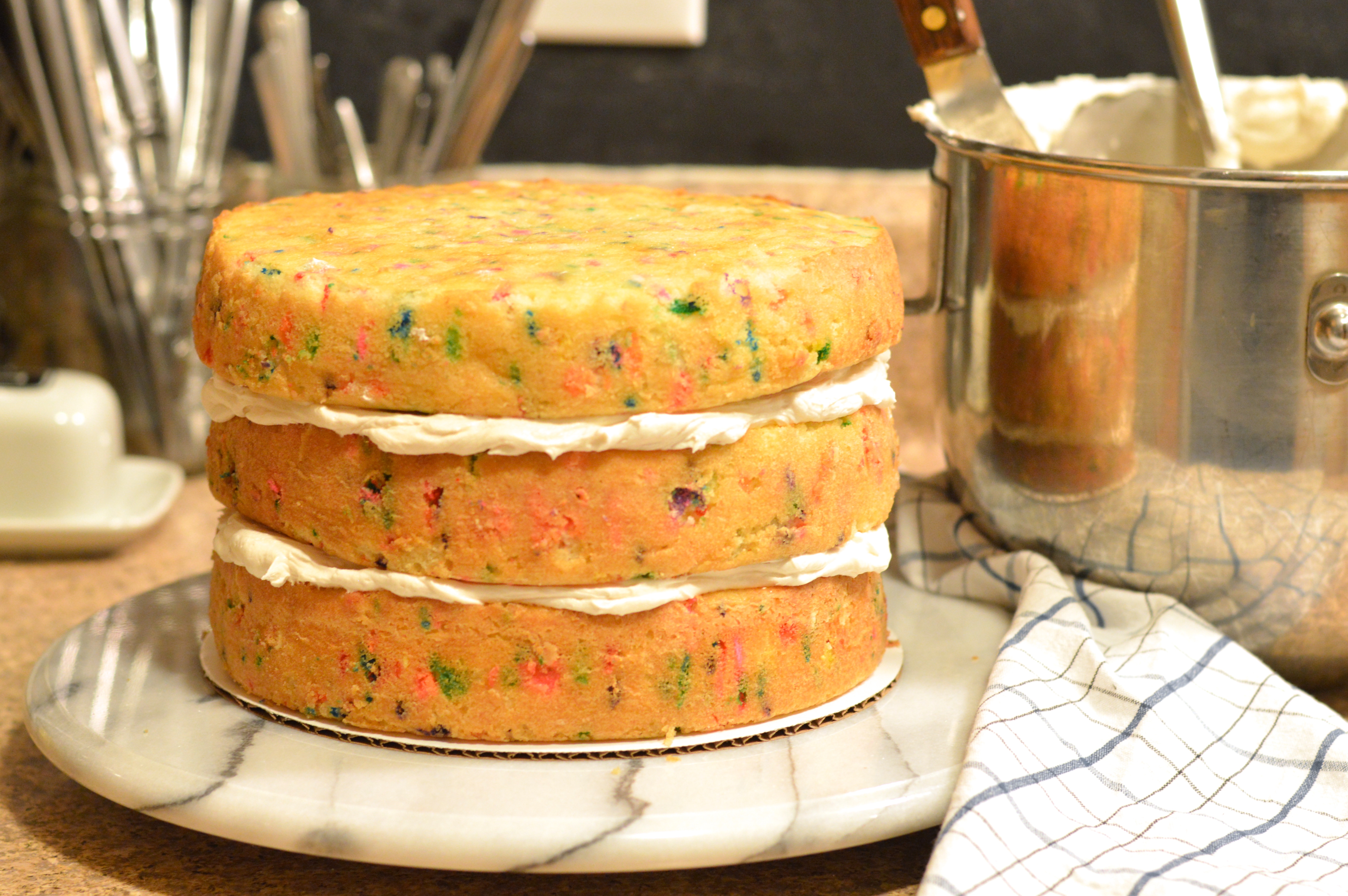
When choosing what filling to use between your cake layers, your options are limitless. The easiest option would be to fill with the same icing you’re using on the outside of your cake. For an 8 or 9 inch round cake I usually use about 3/4 of a cup to 1 cup of icing between each layer. You could also fill with another flavor of icing or a ganache, just be careful to seal it in with your crumb coat so it doesn’t show through on the outside. Another great option would be a softer filling like jam, pudding or fruit curd, but for this you’ll need to pipe a thick border or dam of icing around the outside edge of each layer to hold the filling in the center. This way it won’t smoosh out the sides when you add the next layer.

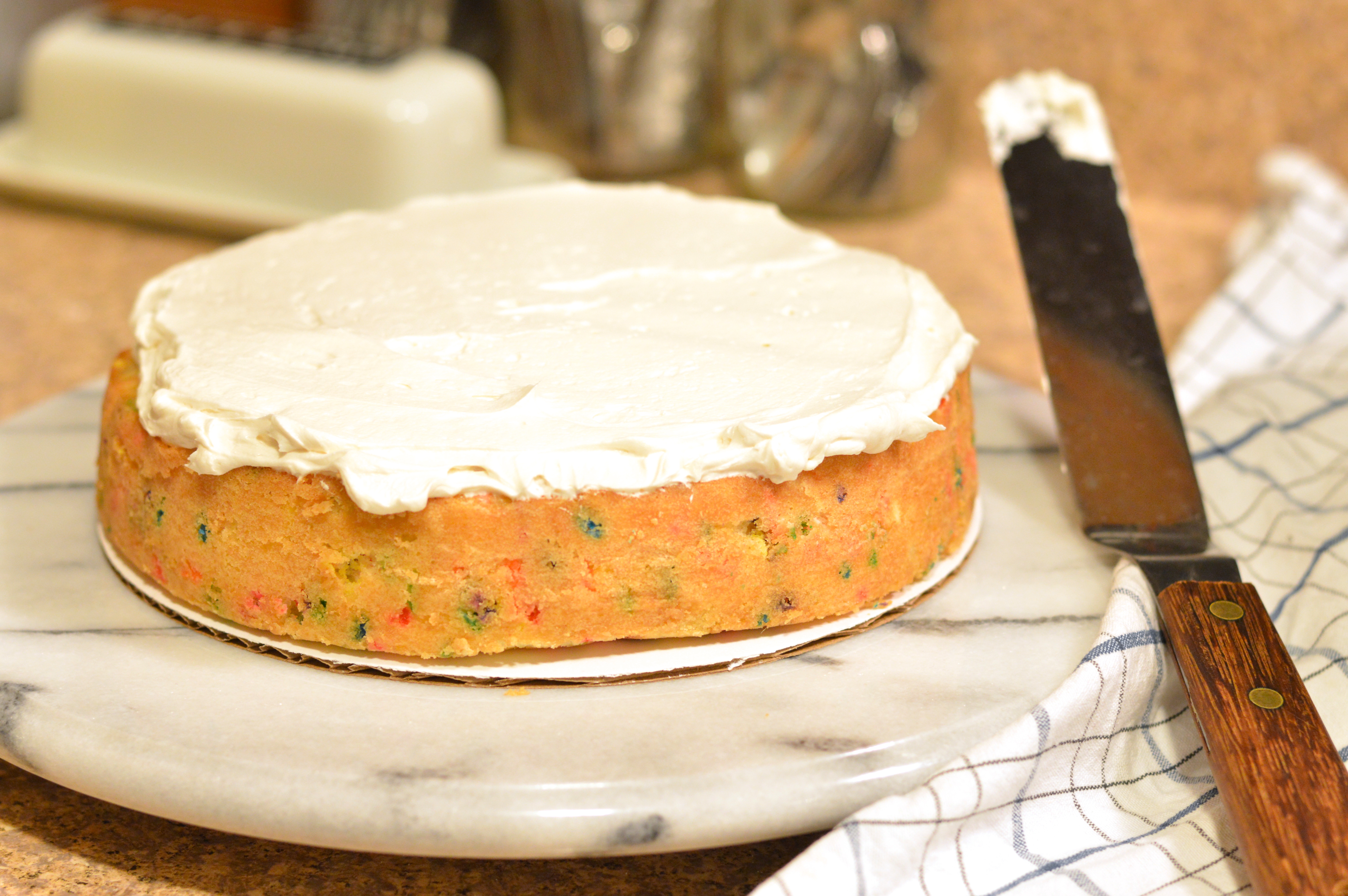
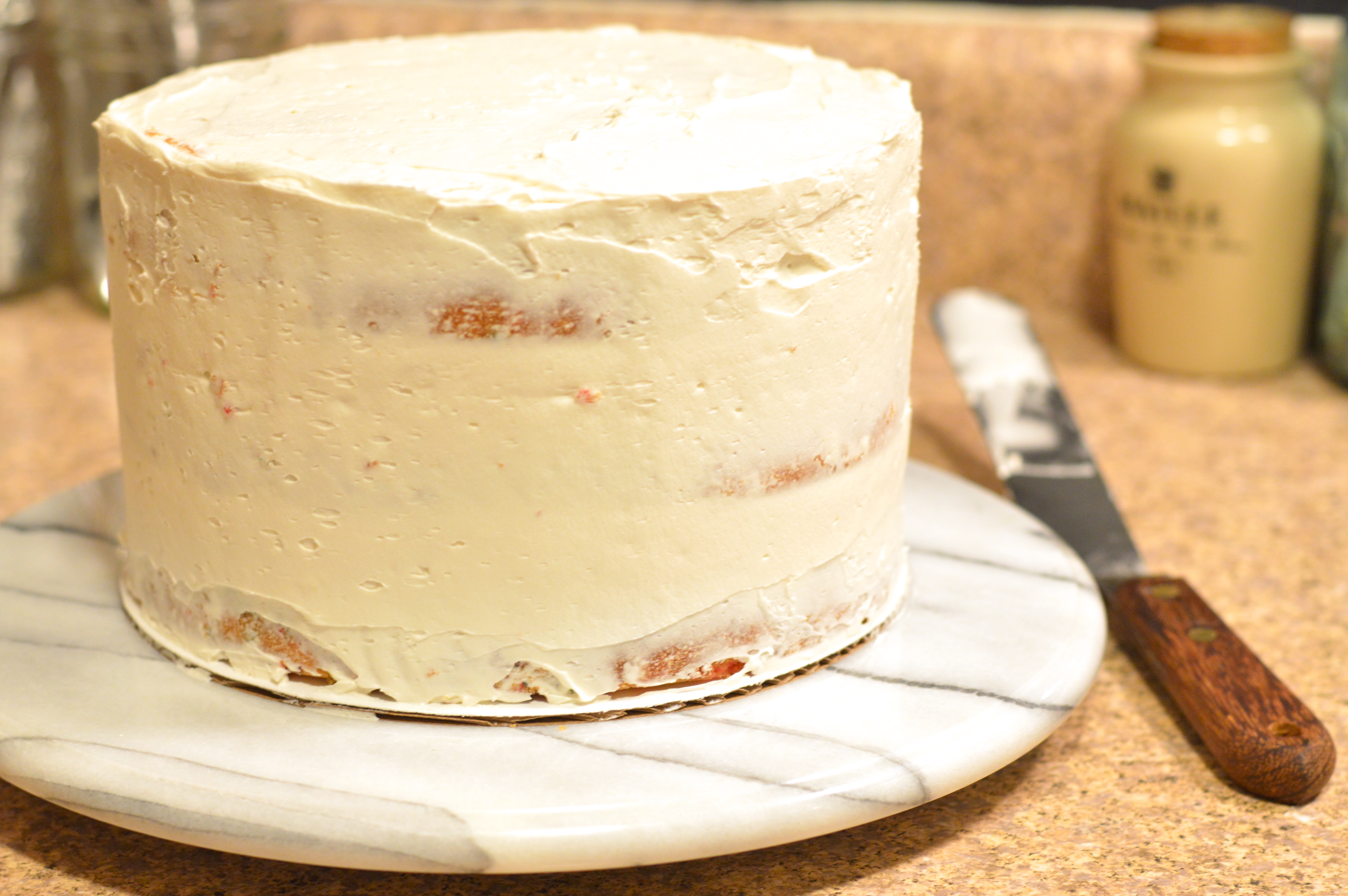
When you stack each layer of cake, try to look at if from a few different angles, just to be sure everything is level and evenly lined up before moving on. Once you have all the layers stacked up and everything looks good and level, you’ll want to spread a thin even layer of icing over the cake to seal in the crumbs or any filling that squishes out from the layers. This is referred to as the crumb coat. When I first started baking I thought this step was unnecessary and silly, but I make enough cakes now to realize it actually does make a big difference in getting a smooth professional icing job. I like to start at the top, pile up some icing and push it toward the outside edge, and pull the icing down the sides with an icing spatula, rotating the cake as I go. It doesn’t need to be a thick layer, and it’s fine if the cake shows through a little. I try to just make sure everything is coated, and then go back around and smooth it out.

funfetti birthday cake | cake construction tips | Brooklyn Homemaker

Once the crumb coat is smooth and even, you’ll want to refrigerate your cake for at least 30 minutes, or up to an hour, to firm up the icing and filling so the cake layers don’t slide and the crumb coat doesn’t mix with the next layer of icing. When you ice the cake, you basically just do the same thing you did with the crumb coat, just thicker. Then once your icing is smooth, you get to move on to the fun part.

I usually like to keep things simple and do a small border of sprinkles or nuts around the edge of the top of the cake. You could also do a piped border around the top edge and base of the cake, but you’ll obviously need to reserve some icing for that. The icing recipe below left me just enough for a piped border, but I decided to skip it and keep it simple. To do a swirled design like I did here, start in the center of the top of your cake, and slowly turn your turntable as you pull the spatula out trying to keep the swirl as evenly spaced as possible. If it doesn’t come out as pretty as you want, you can always smooth it out and try again.

funfetti birthday cake | cake construction tips | Brooklyn Homemaker

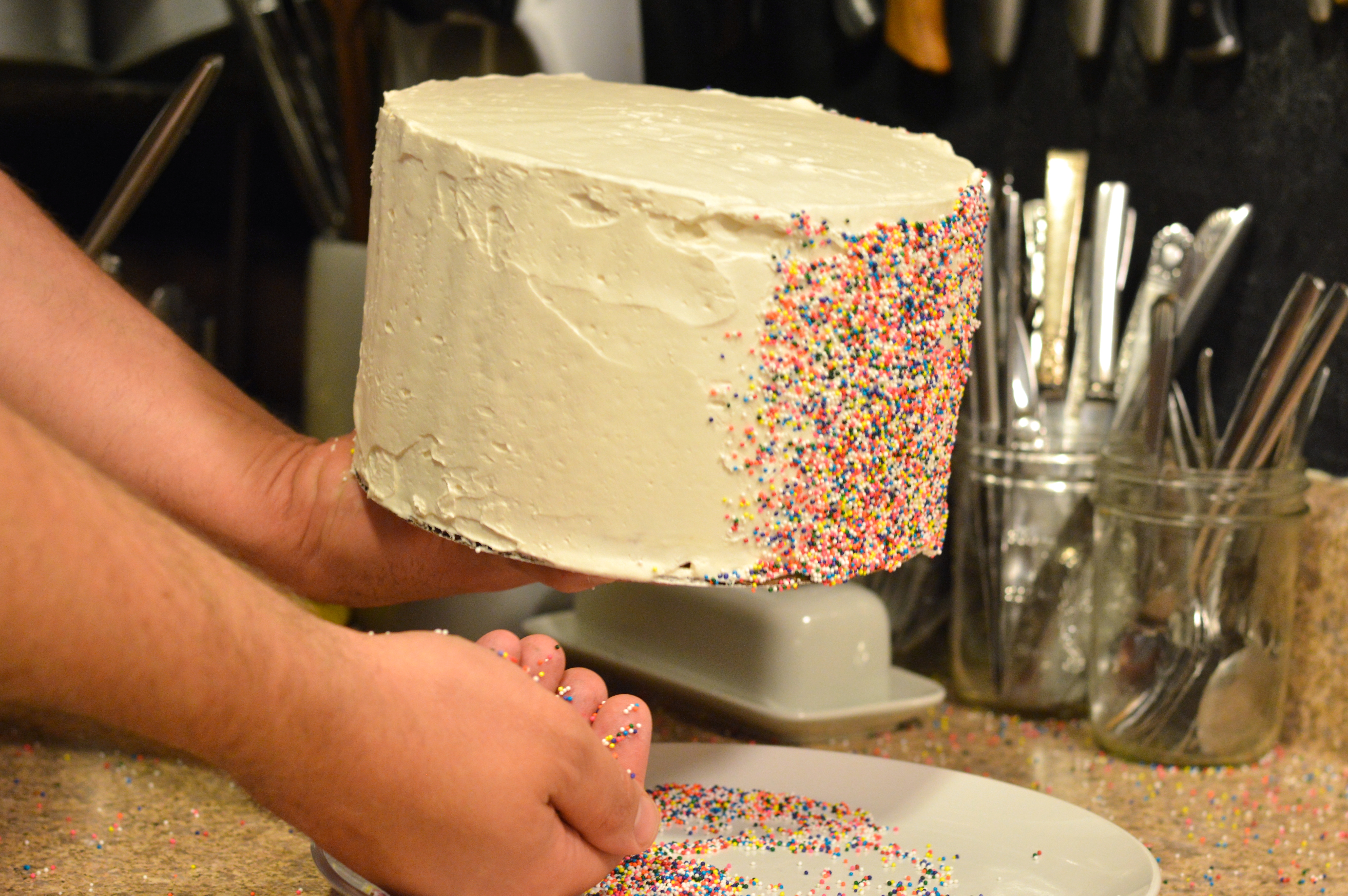
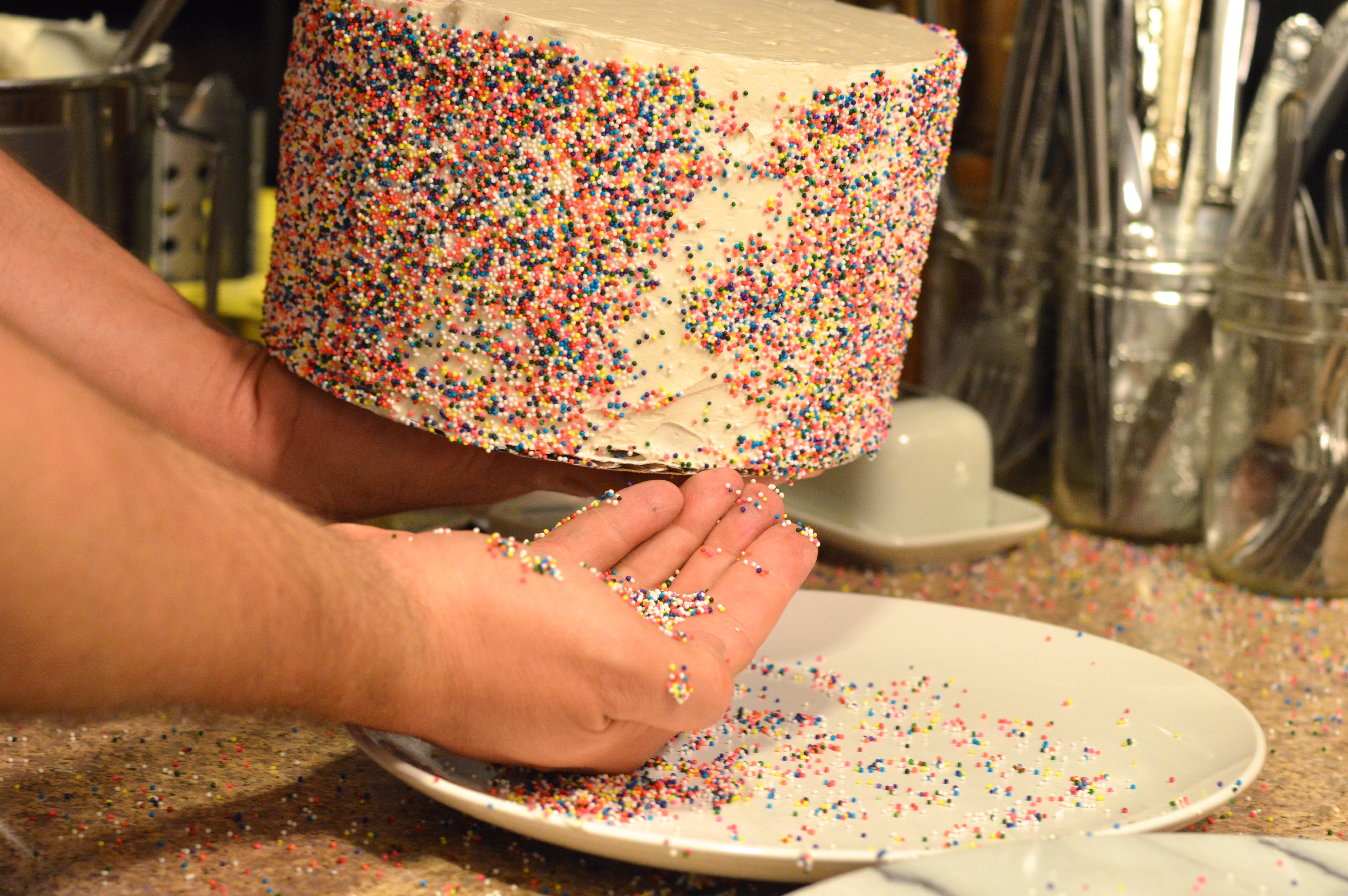
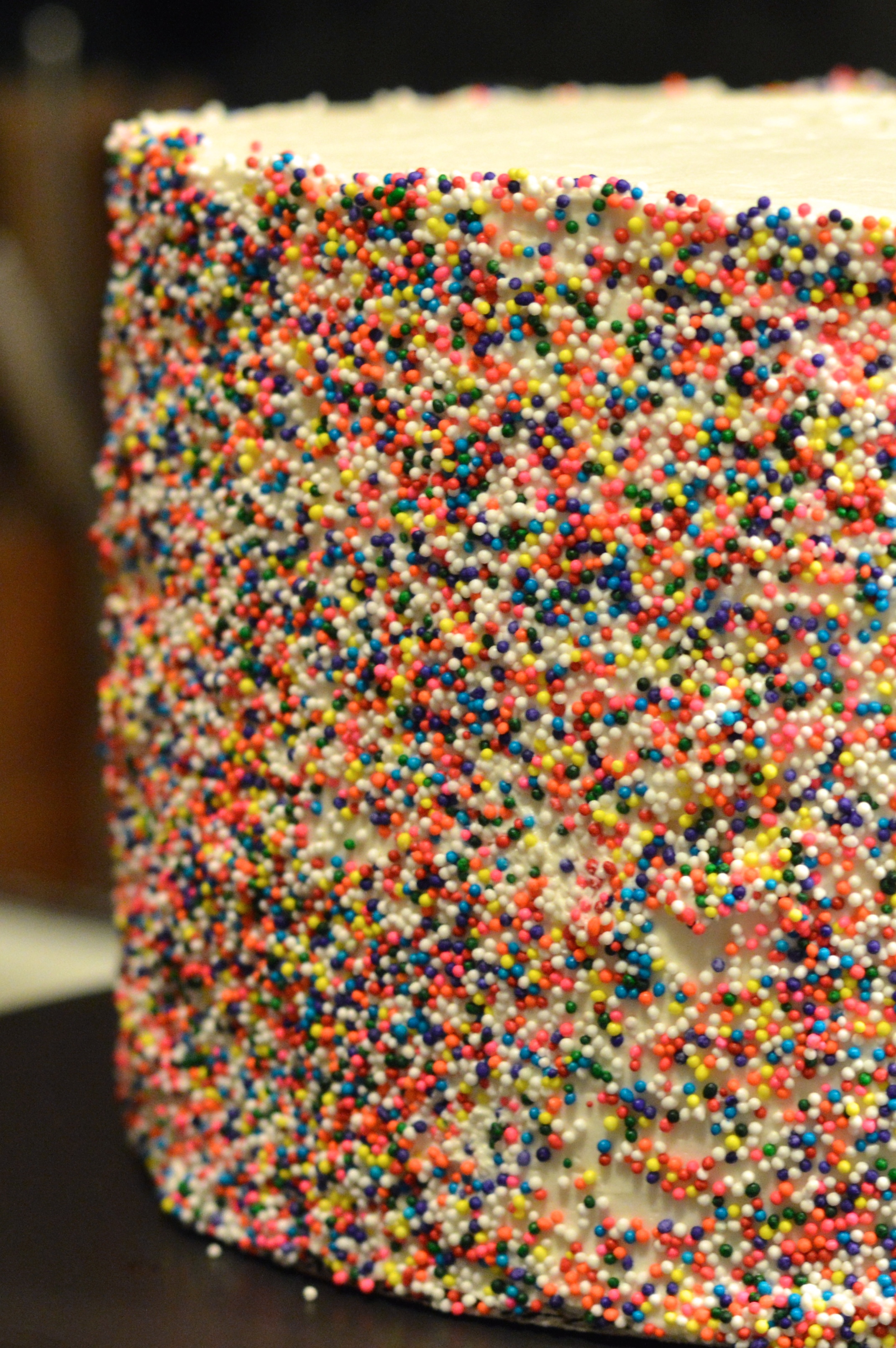
For this cake I completely covered the sides with rainbow nonpareils. Fair warning, this is a challenging technique for beginners. It’s best to use a cake board for this so you can pick the cake up, but the cake gets heavy in your hand after a while. Basically you pick the cake up with one hand and try your best to hold it over a plate and not make a mess (look closely, I still made a mess), while you gently press the decoration into the icing with the other hand. Just slowly work your way around the cake, rotating as you go, until you’re finished.  It can be done without picking the cake up if you can’t get (or don’t have) a cake board, but it’s even messier.

funfetti birthday cake | cake construction tips | Brooklyn Homemaker

You could also do this with cake crumbs as I did with the Brooklyn Blackout cake, which is actually a great way to use up any cut cake you have leftover from leveling the layers. That is, if you didn’t already eat it all.

funfetti birthday cake | cake construction tips | Brooklyn Homemaker

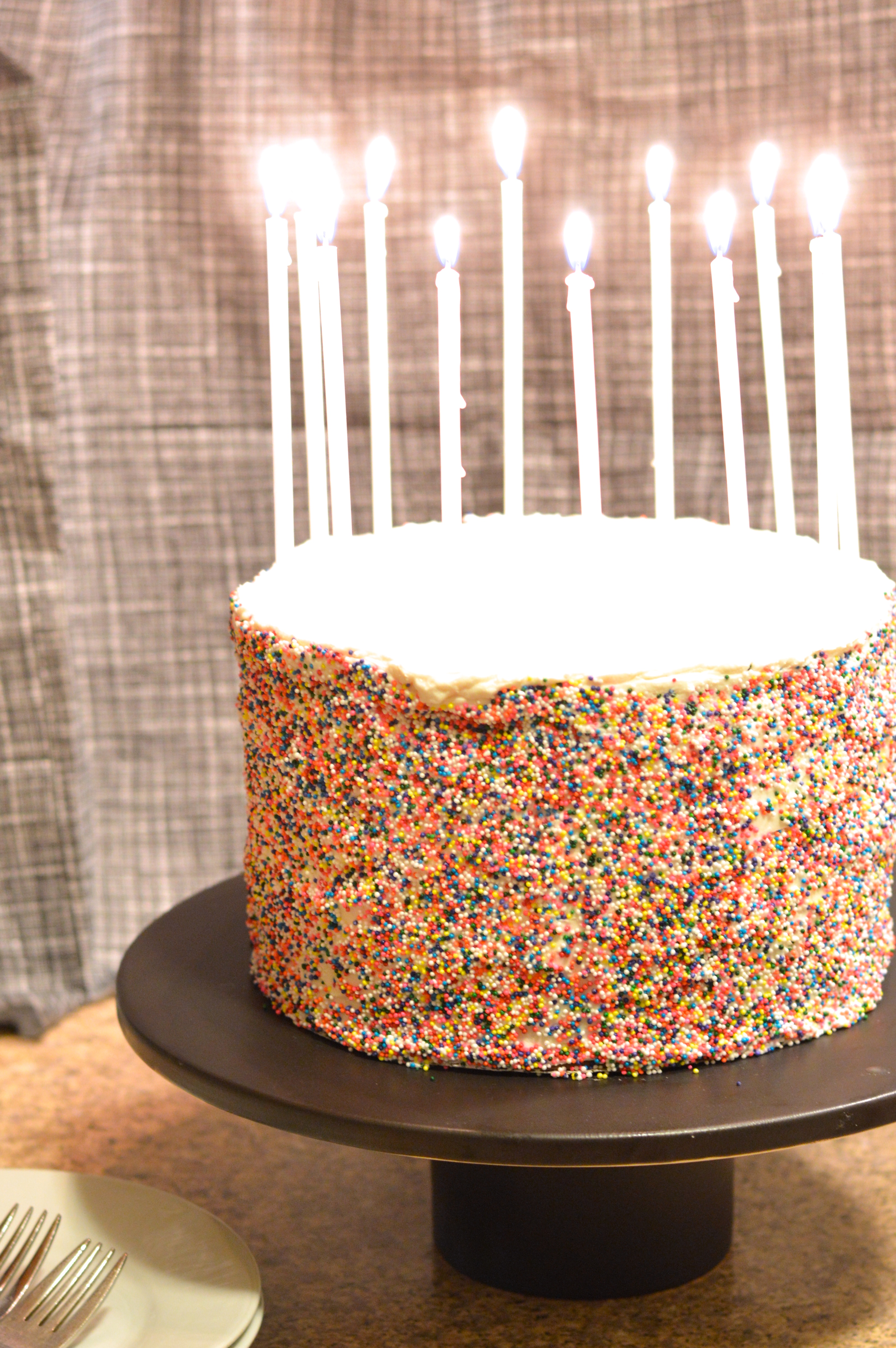
Look how pretty it came out though! It definitely was worth the extra effort, even if I am still finding those little nonpareils hiding behind my butter dish.

funfetti birthday cake | cake construction tips | Brooklyn Homemaker

Happy birthday to me!

funfetti birthday cake | cake construction tips | Brooklyn Homemaker

I hope you learned something new and you’re feeling brave enough to try a layer cake for yourself! You should definitely give this one a shot the next time you want to do something special for someone’s birthday. The funfetti cake is super moist and delicious, with tons of bright vibrant color, and the classic american buttercream is the perfect sweet and creamy compliment to a fun and festive birthday cake.

funfetti birthday cake | cake construction tips | Brooklyn Homemaker

funfetti birthday cake

makes one 3 layer 8 inch cake
adapted from Sweetapolita

For the Cake:

3 cups cake flour
1 tablespoon plus 1/2 teaspoon baking powder
1/2 teaspoon salt
1 cup (2 sticks) unsalted butter, at room temperature
2 cups sugar
5 whole eggs, at room temperature
2 teaspoons vanilla extract
1/4 cup peanut (or vegetable) oil
1 1/4 cups buttermilk, at room temperature
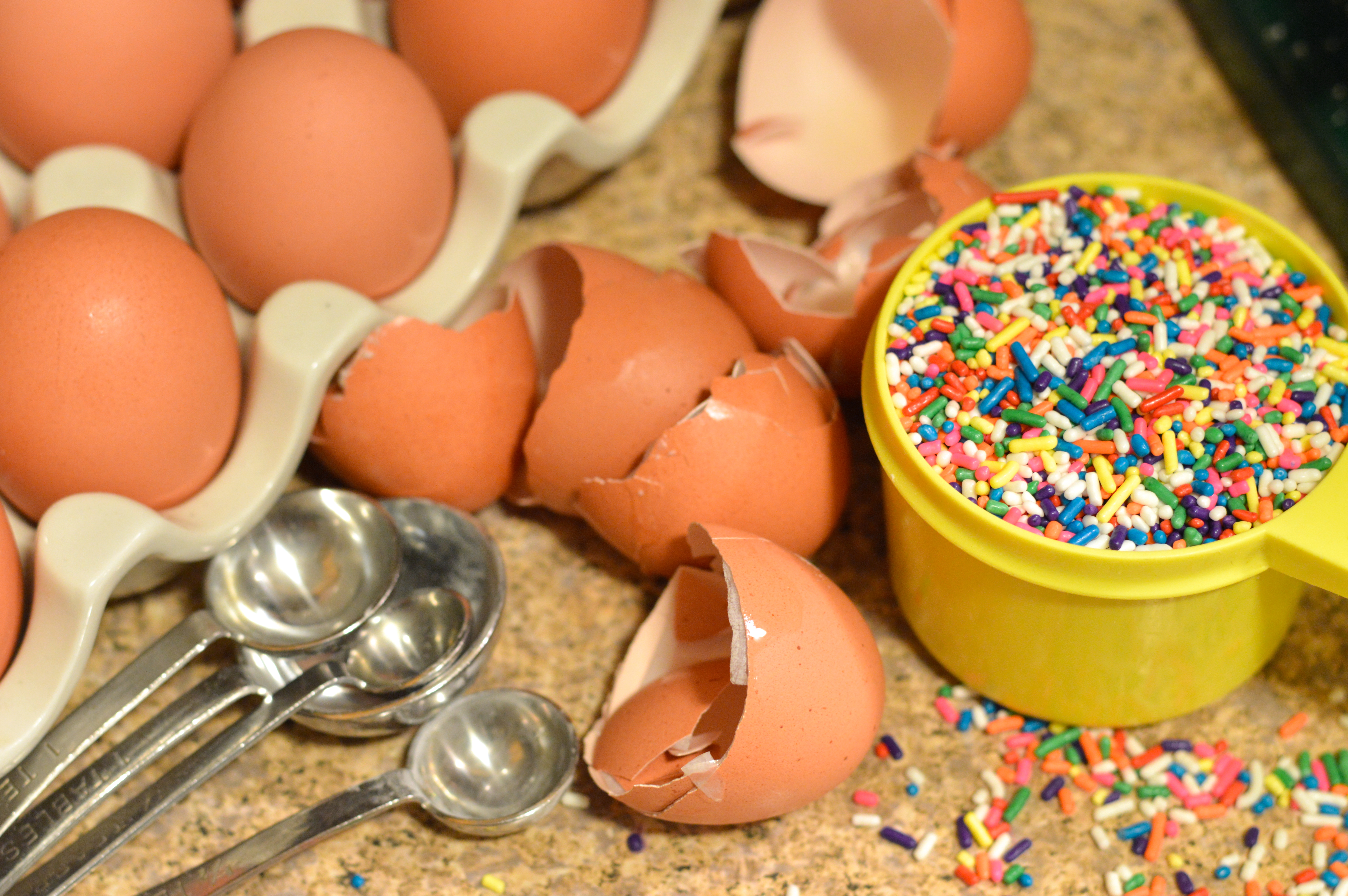
3/4 cups rainbow sprinkles (or jimmies)

Preheat the oven to 350° F. Butter the bottoms and sides of three 8-inch round cake pans, line bottoms with parchment round, butter the rounds and dust with flour.
Sift together flour, baking powder, & salt. Set aside.
In the bowl of a stand mixer, cream the butter and sugar together at high speed until light and fluffy, 3 to 5 minutes. Beat in eggs until incorporated, one at a time, scraping sides of bowl between each addition. Add vanilla and oil and mix until thoroughly incorporated.
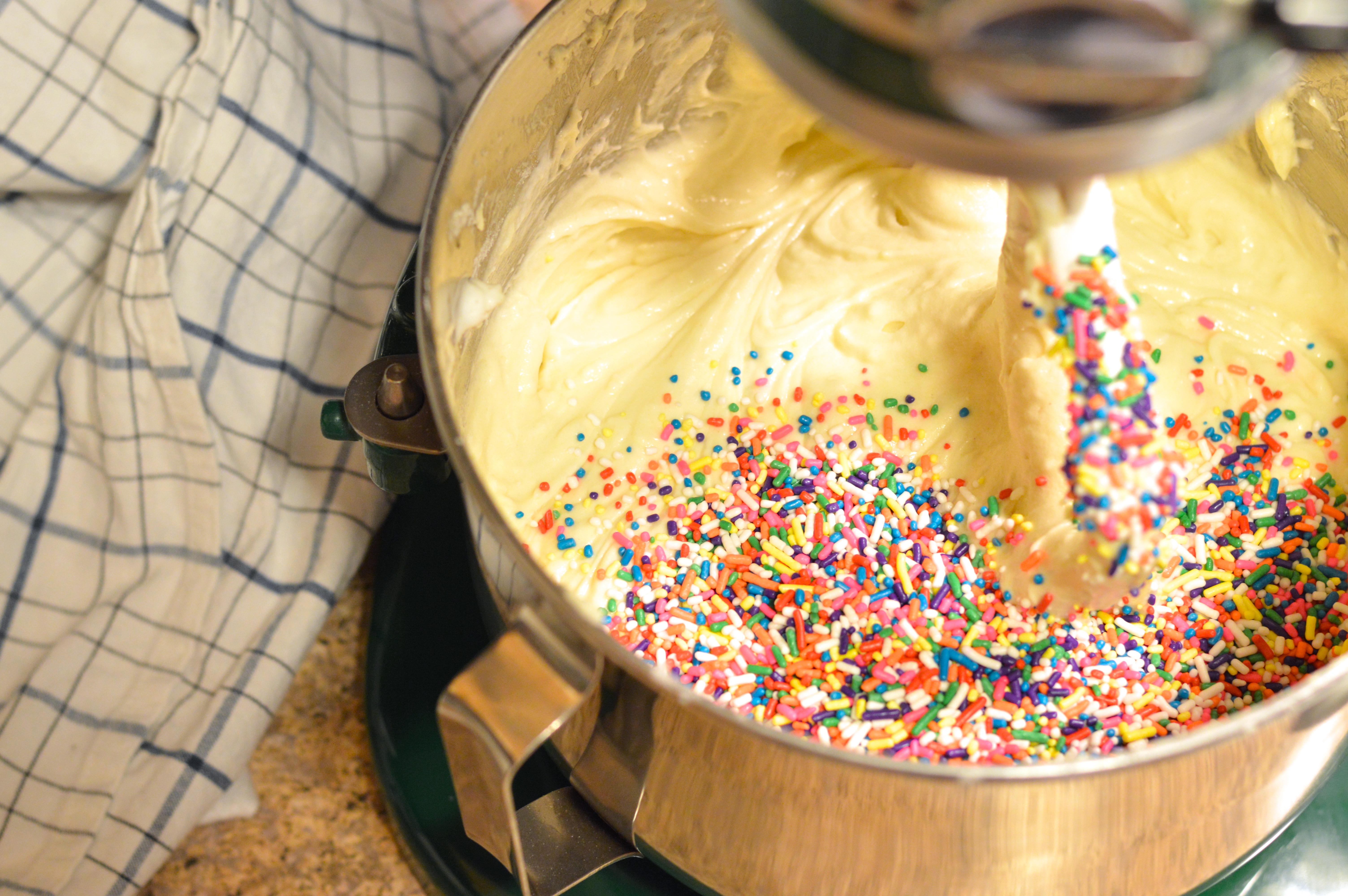
Add 1/3 of flour, and beat on low speed until just combined. Scrape bowl, mix in 1/2 of buttermilk, and scrape again. Repeat until all flour and buttermilk is mixed in. Gently stir in sprinkles until just combined. Do not over mix.

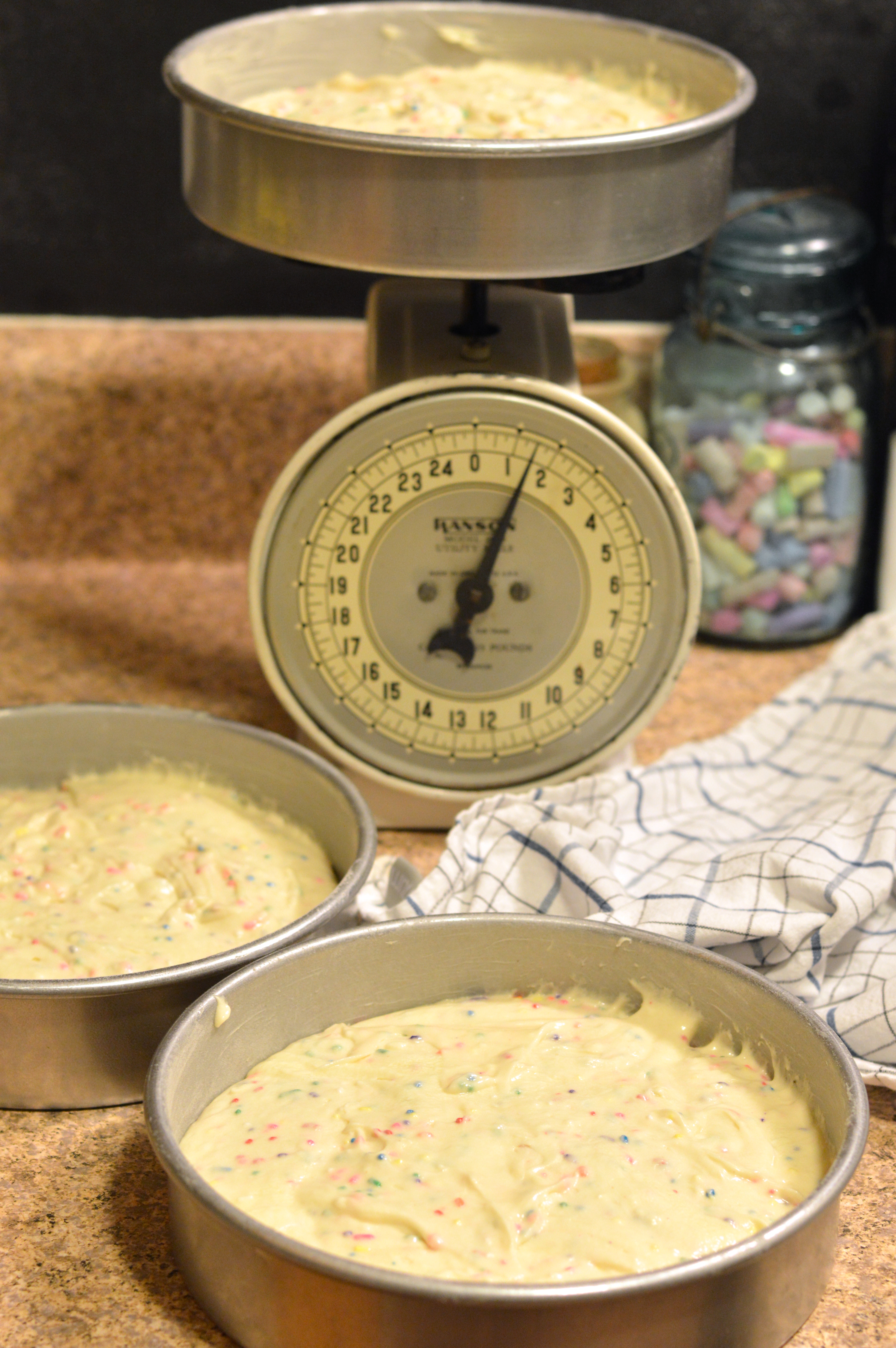
Divide batter evenly among the 3 prepared pan (I like to use a kitchen scale to ensure even layers). Bake for 28-32 minutes, or until a cake tester or toothpick inserted into the center comes clean and the cake begins to pull away from the sides of the pan. Let the layers cool in the pans for 10 minutes, then carefully turn out onto wire racks, peel of the paper liners, and let cool completely.

Classic American Buttercream:
adapted from Savory Sweet Life

2 cups (4 sticks) unsalted butter, softened and cut into cubes
6-8 cups confectioners’ sugar, sifted
3-6 tablespoons milk
2 tablespoons pure vanilla extract
1/4 teaspoon salt
rainbow non-pareils, or any sprinkles you like for decorating

In the bowl of an electric mixer fitted with the paddle attachment, whip butter for 5 minutes on medium speed. Butter will become very pale & creamy. Add 6 cups of powdered sugar and turn your mixer on the lowest speed until the sugar has been incorporated with the butter. Increase mixer speed to medium and add vanilla extract, salt, and 3 tablespoons of milk and beat for 5-7 minutes. If your frosting needs a more stiff consistency, add more sugar 1/2 cup at a time, until desired consistency is reached. If your frosting needs to be thinned out, add remaining milk 1 tablespoons at a time.

To assemble cake, make sure cake layers are cool or cold. If necessary, remove the domed tops of the layers with a cake leveler or sharp bread knife. Place one layer on a cake plate, serving plate, or cake board. Evenly spread about 3/4 cups of icing over the first layer. Top with another cake layer and another 3/4 cups of icing. Spread evenly and top with your final layer.

With an icing spatula, spread a thin layer of icing over top and sides of cake, Be sure to fill in any gaps between layers and make the sides and top smooth and flat as possible. This thin layer of icing is referred to as the “crumb coat” and is meant to seal in any crumbs so they’re not seen in your final layer of icing. Refrigerate cake for 30 minutes. Spread most (or all) of remaining icing evenly over top and sides of cake, trying to get as smooth a surface as possible. If desired, reserve some for piped decoration, otherwise, slather it all on. Decorate as desired.

This cake is at it’s best the day it’s baked, but can be covered and refrigerated for up to 2 days. If refrigerated, it will need to come up to room temperature before serving.

maple bacon bundt cake with bacon pecan streusel swirl #bundtbakers

Do you like bacon? Of course you do.

maple bacon bundt cake with bacon pecan streusel swirl | Brooklyn Homemaker

Sorry. I guess that was a dumb question. The real question is, can you get down with the sweet and salty bacon trend? If you spend any time in Brooklyn, or probably any other urban area, I’m sure you’ve come across at least one (if not many) of these sugary bacon treats. Candied bacon, bacon cupcakes, bacon brownies, chocolate covered bacon, bacon lollipops, even bacon infused cocktails! If you can dream it up, it’s probably out there somewhere.

maple bacon bundt cake with bacon pecan streusel swirl | Brooklyn Homemaker

Up until recently, I’ve managed to resist the urge to jump on the bacon bandwagon. That all changed though last week, when I stumbled upon a group of food bloggers who share a fondness for an intense love of mine.

No, not bacon… Bundt Cakes! It’s no secret that I’m obsessed.
maple bacon bundt cake with bacon pecan streusel swirl | Brooklyn Homemaker

This bundt loving bunch call themselves, appropriately enough, the #BundtBakers, and as soon as I read about them I knew I needed to be involved.

maple bacon bundt cake with bacon pecan streusel swirl | Brooklyn Homemaker

The basic premise is this: A theme is picked in advance for each month, all the bloggers who’d like to participate bake a bundt fitting that theme, and one devoted blogger hosts the event (meaning they help compile all the information and the links to all the posts). I was very excited about getting in on the action, but didn’t think I’d have the time until next month. That was, until I saw that May’s theme was “Breakfast” and instantly decided to drop everything and get planning!

maple bacon bundt cake with bacon pecan streusel swirl | Brooklyn Homemaker

Some of the themes can be pretty wild (I mean… breakfast!?!), so these events are not just limited to sweet cakes. Anything goes, as long as it’s baked in a bundt pan. This months group came up with some pretty amazing ideas, and any one of them is sure to be a hit at your next brunch. Some made breads, others did baked egg dishes, but many kept it sweet and made a cake. I had a plan hatching and I was definitely going sweet.

maple bacon bundt cake with bacon pecan streusel swirl | Brooklyn Homemaker

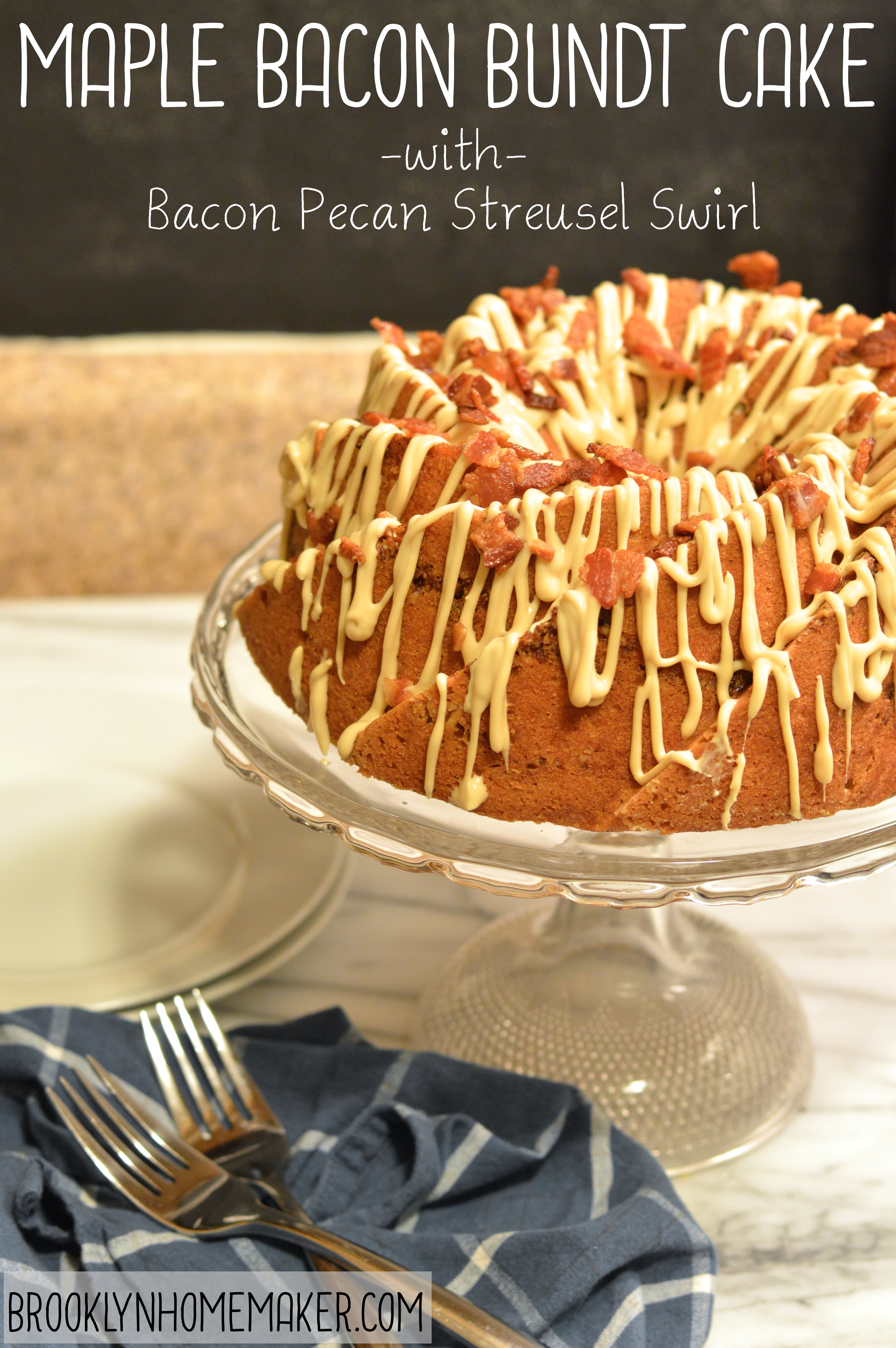
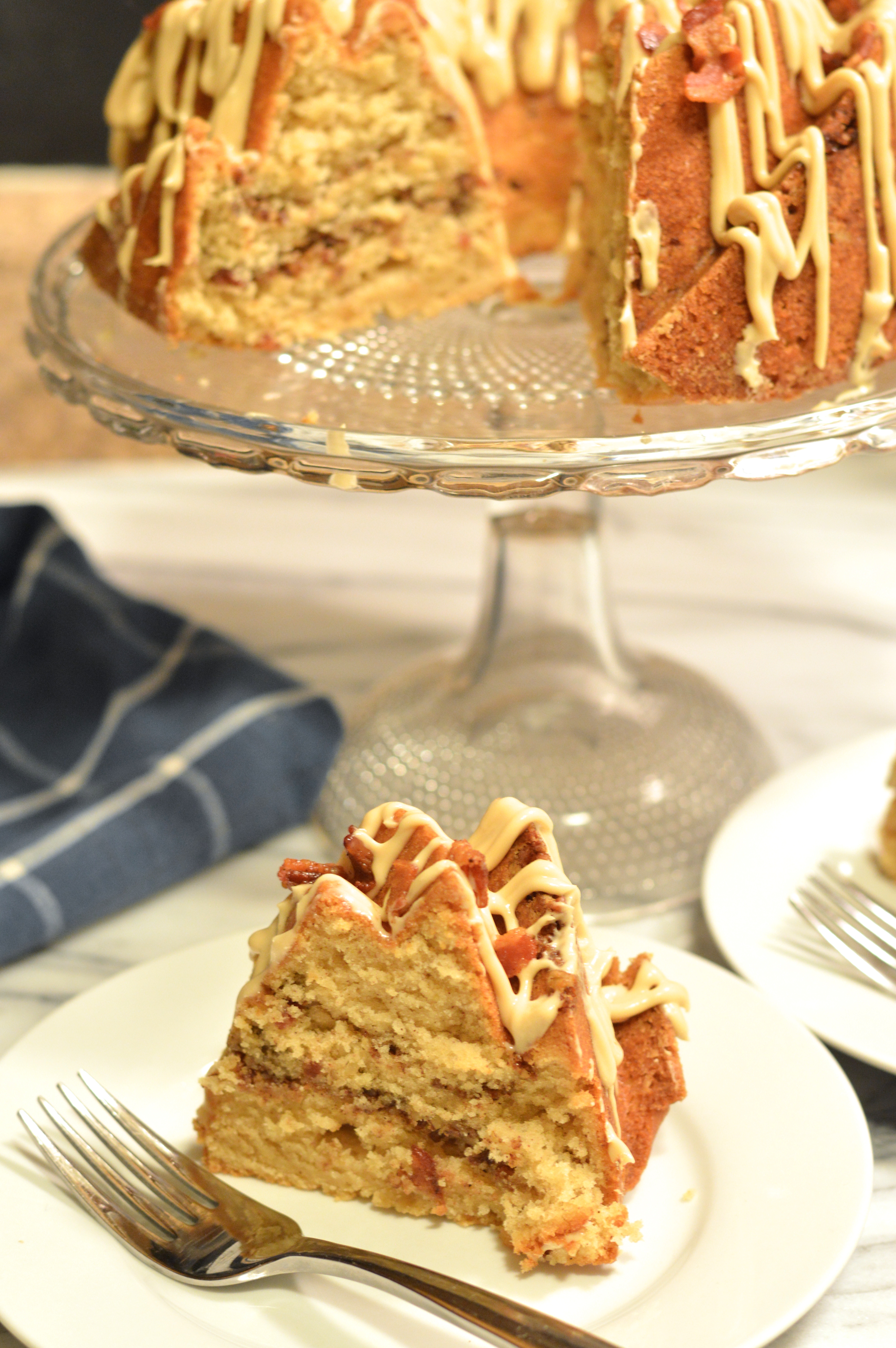
Thus was born the maple bacon bundt cake. This was a bit of an experiment, but boy did it work out! I was a little afraid that I might have used too much bacon (like that’s actually a thing), but once I tasted it I knew it was perfect. I brought it in to work to share for a bacon loving co-worker’s birthday, and everyone absolutely went crazy for it! I think I had everyone a little freaked out at first because I kept referring to it as the “experimental bacon cake”, but after one bite everyone was hooked and assuring me I’d definitely done something right.

maple bacon bundt cake with bacon pecan streusel swirl | Brooklyn Homemaker

I started with a really moist buttermilk bundt recipe for the base of the cake, but substituted some bacon fat for some of the butter, and grade B maple syrup for some of the sugar. I definitely wanted pieces of bacon mixed into the cake too, rather than just crumbled on top, but I was afraid that just mixing bacon into the batter would make the bacon flabby and unappetizing. I decided to experiment with a sort of streusel to distribute between layers of batter right before baking, and it worked out really well. I crumbled some of the bacon up with a nut grinder along with some pecans for extra crunch, and added some brown sugar and spice to make it feel like a true streusel. After the cake cooled I topped the whole thing off with an amazing maple & cream cheese drizzle and even more bacon.

maple bacon bundt cake with bacon pecan streusel swirl | Brooklyn Homemaker

I’m not gonna lie. This cake is anything but traditional, and it’s definitely not for everyone. Seriously though, it’s freakin’ AMAZING! It’s kinda weird. But good weird. Like REALLY good weird. If you love bacon, especially if you love bacon in a sweet and salty platform, you gotta try this.

It’s got the perfect amount of warm sweet maple-y goodness from the syrup and just a tiny hit of spice from the cinnamon. The bacon fat adds a really faint hint smokiness to the cake, and the bacon pecan streusel gives it a wonderful texture and interest. The glaze is delicious, sweet and tangy, and the crumbled bacon on top not only gives every bite a salty touch of baconiness (that’s a word now, FYI), but also announces BACON! to anyone looking at this delicious (not to mention gorgeous) cake.

maple bacon bundt cake with bacon pecan streusel swirl | Brooklyn Homemaker

Before we get to the recipe, I really want to give a big big thank you to Kelly of Passion Kneaded, for hosting this month.  I also want to urge you to please make sure you scroll down below the recipe to check out all the amazing and beautiful breakfast themed bundts everyone came up with. Every single entry looks totally delicious and you should really take some time to explore the links. You’re probably going to need an excuse to host a brunch now, amiright?

I’m so lucky to have found this group of bundt loving kindred spirits!

maple bacon bundt cake with bacon pecan streusel swirl | Brooklyn Homemaker

Maple Bacon Bundt Cake with Bacon Pecan Streusel Swirl


8 oz thick cut bacon (to be used throughout recipe)

Cake:
2 1/2 cups all-purpose flour, plus extra for dusting pan
2 teaspoons baking powder
1/2 teaspoon fine sea salt or table salt
1 teaspoon cinnamon
3/4 cup (1 1/2 sticks) unsalted butter, at room temperature
1/4 cup cooled bacon fat
1 1/4 cups granulated sugar
1/2 teaspoon vanilla extract
1/2 cup grade B maple syrup
3 large eggs, at room temperature
3/4 cup buttermilk

Streusel:
2/3 cooked bacon
1/2 cup pecans
2 teaspoons flour
1/4 cup brown sugar
1/2 teaspoon cinnamon

Glaze:
4 oz cream cheese, softened
1 tablespoon unsalted butter, softened
1/4 cup firmly packed brown sugar
2 tablespoons maple syrup
1 tablespoon buttermilk
1/3 crumbled cooked bacon

Preheat oven to 350°F. Generously butter and flour a 10-cup Bundt pan.*see note.
Remove the bacon from the package but do not separate the slices. With a sharp knife, cut thin strips across the slices, then break up while cooking. Cook in a heavy skillet over medium heat, stirring frequently, until well browned and crispy. Remove bacon to drain on a paper towel, and reserve bacon fat and let cool. Set aside.
In a medium bowl, whisk or sift flour, 1 tsp cinnamon, baking powder and salt together and set aside.
Finely chop pecans and 2/3 of your cooked bacon and combine with brown sugar, 1/2 teaspoon cinnamon, and 2 teaspoons flour. Mix well and set aside.
In the bowl of a stand mixer, beat butter, bacon fat and sugar until light and fluffy, about 3 to 5 minutes. If you don’t have enough bacon fat, you can use more butter. You want 1 cup of fat total. Then, with the mixer on low speed, add vanilla and maple syrup and mix until combined. Then add your eggs one at a time, scraping down the bowl between each addition. Add 1/3 flour mixture to batter, beating until just combined, followed by half the buttermilk, another 1/3 of the flour mixture, the remaining buttermilk and remaining flour. Scrape down from time to time and don’t mix any more than you need to.
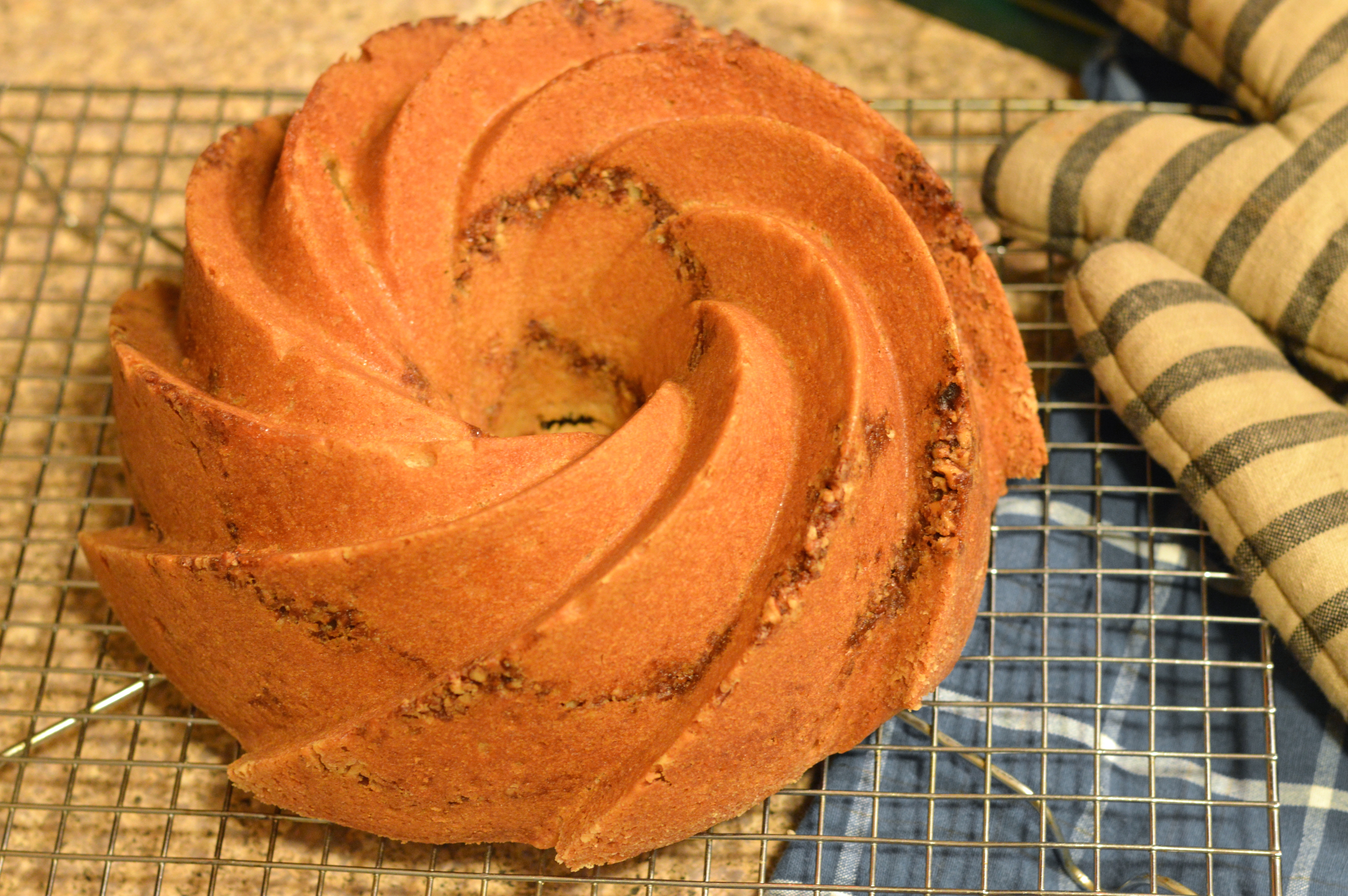
Spread 1/3 cake batter in the pan and spread the top smooth. Add 1/2 streusel mix evenly over batter. Top another 1/3 cake batter, smooth again and repeat until all streusel and batter are in the pan. Bake for 55 to 60 minutes, rotating the cake once after 30 (to make sure it browns evenly). The cake is done as soon as a tester comes out clean of batter. Set cake pan on a wire rack to cool for 30 minutes, and invert cake onto rack to cool the rest of the way.

When the cake is completely cool, prepare the glaze. In the bowl of a stand mixer, combine cream cheese, butter, sugar, maple syrup and buttermilk. Beat vigorously until completely smooth with no visibly specks of cream cheese left in the glaze. If glaze is too thick, add more buttermilk, 1 teaspoon at a time.
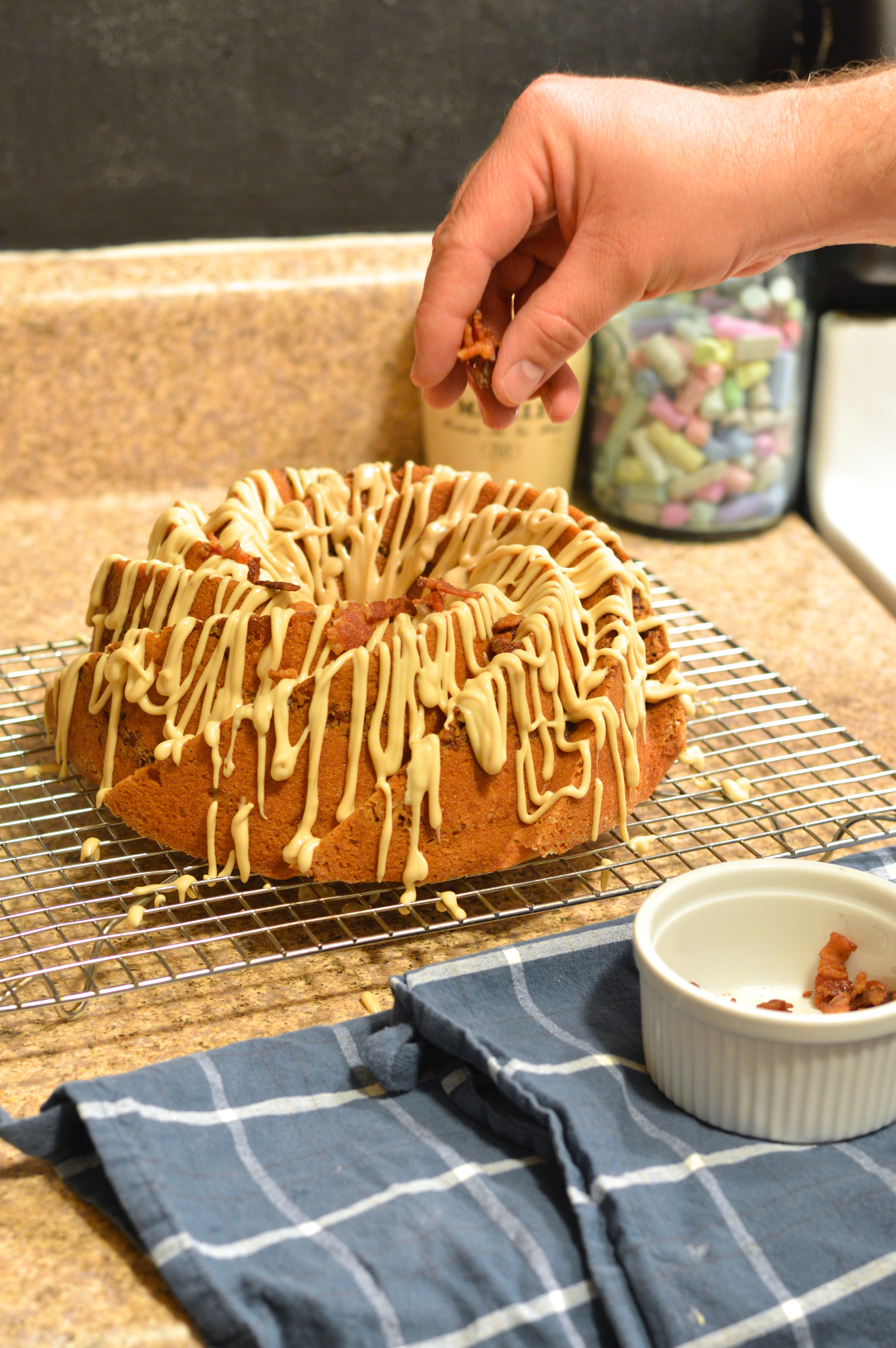
Place cooling rack and cake into a clean jelly roll pan or baking sheet to catch any glaze that drips off the sides. Pour or pipe glaze over cake, letting it trickle and drip down the sides. I used a squeeze bottle to help distribute glaze evenly. Sprinkle remaining bacon over the cake making sure it sticks in the glaze.
Cake can be stored, covered, at room temperature for 3 to 4 days.

*To prevent sticking, make sure every little nook and cranny is well-coated with butter, and then dust the inside with flour. If you’re really nervous, refrigerating your pan while you prepare the cake will help firm the butter for extra insurance.

BundtBakers

This month, the Bundt Bakers are baking up breakfast. We have 15 beautiful Bundts (both sweet and savory) that would be perfect for your breakfast or brunch table.

#BundtBakers is a group of Bundt loving bakers who get together once a month to bake Bundts with a common ingredient or theme. We take turns hosting each month and choosing the theme/ingredient. You can see all our of lovely Bundts by following our Pinterest board right here. Links are also updated after each event on the BundtBaker home page here.

If you are a food blogger and would like to join us, just send an email with your blog URL to foodlustpeoplelove@gmail.comIf you are just a lover of Bundt baking, you can find all of our recipe links by clicking our badge above or on our group Pinterest board.