holidays

cherry, almond, & dark chocolate shortbread cookies

Well. It’s official. Summer is over, and with it, so is cherry season.

cherry, almond, & dark chocolate shortbread cookies | Brooklyn Homemaker

I know cherry season has actually been over for some time, but all the other fruit coming through my kitchen this summer has kept me sufficiently distracted. This week though I suddenly realized that it was fall and my beloved cherries were long gone. Apples and pears are still around, so don’t worry, I’ll survive, but it’s still a real bummer.
cherry, almond, & dark chocolate shortbread cookies | Brooklyn Homemaker

Fortunately, cooler weather brings with it the season of warm ovens, and one of the best things to do with a warm oven is bake cookies!  I swear the oven just happened to be on because of the weather, so I was forced to oblige and bake some cookies.

cherry, almond, & dark chocolate shortbread cookies | Brooklyn Homemaker

Lucky for me, the beginning of fall also means the beginning of dried fruit season. I must admit that I’m not actually a big fan of raisins, but that doesn’t stop me from adding plenty of dried fruit to my baking. I use dried cherries or dried cranberries in place of raisins in almost all baking recipes, especially cookies. What better way to mourn the end of summer and cherry season than to make cookies with some tart chewy dried cherries?

cherry, almond, & dark chocolate shortbread cookies | Brooklyn Homemaker

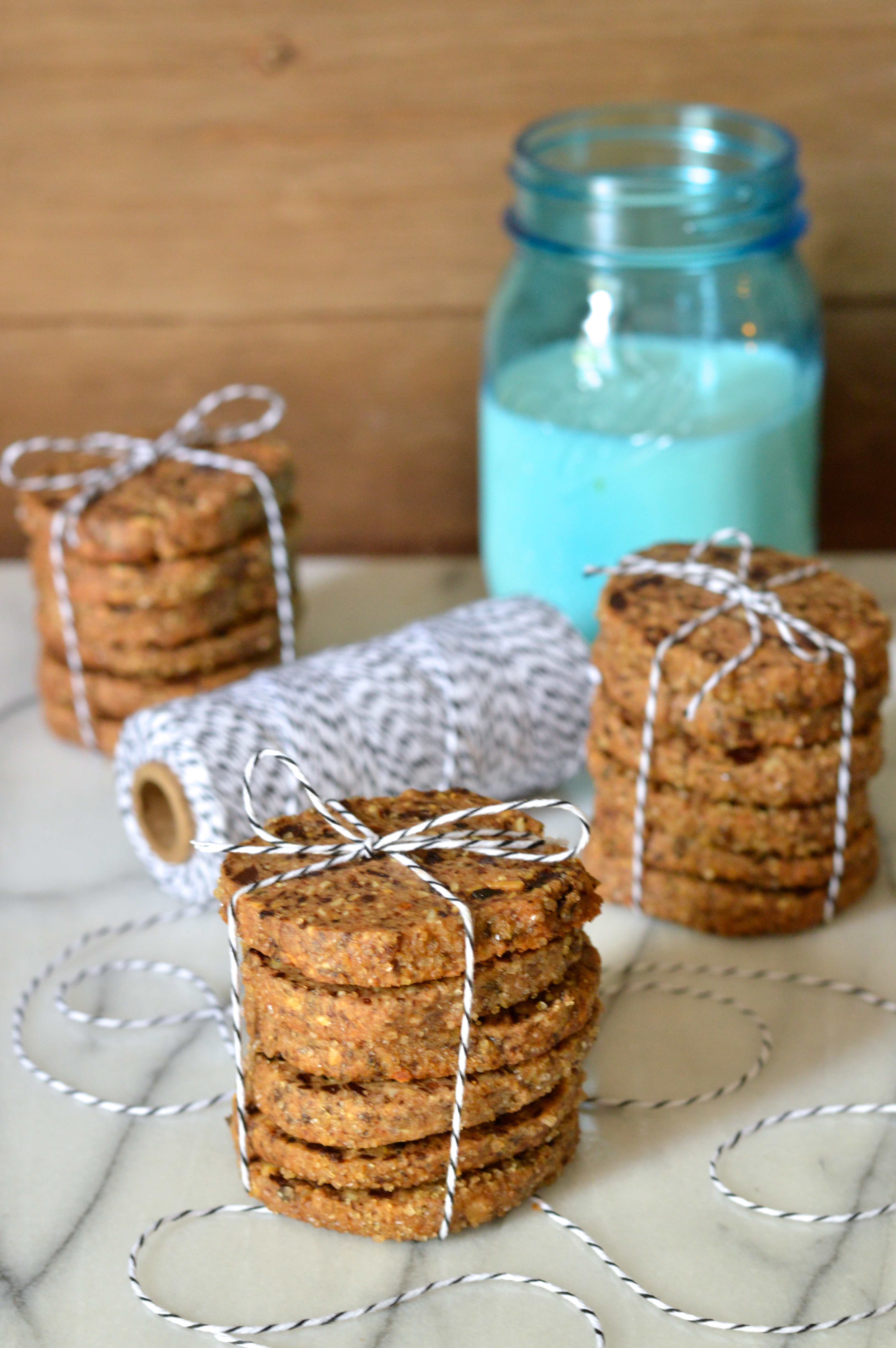
My boss knows my fondness for dried fruit, so when she went on a business trip to Japan recently she returned with bags full of dried figs and cherries for me. Let me tell you, those cherries were some of the best i’ve ever had. Most dried cherries you buy in the store are sweetened to taste like candy, but these cherries were just dried in their natural state and had the most amazing bright tart and just-sweet-enough flavor. I knew I would have to find a special way to put them to good use, and I couldn’t think of any better way than to chop them up with dark chocolate and almonds in a crisp buttery shortbread cookie.

cherry, almond, & dark chocolate shortbread cookies | Brooklyn Homemaker

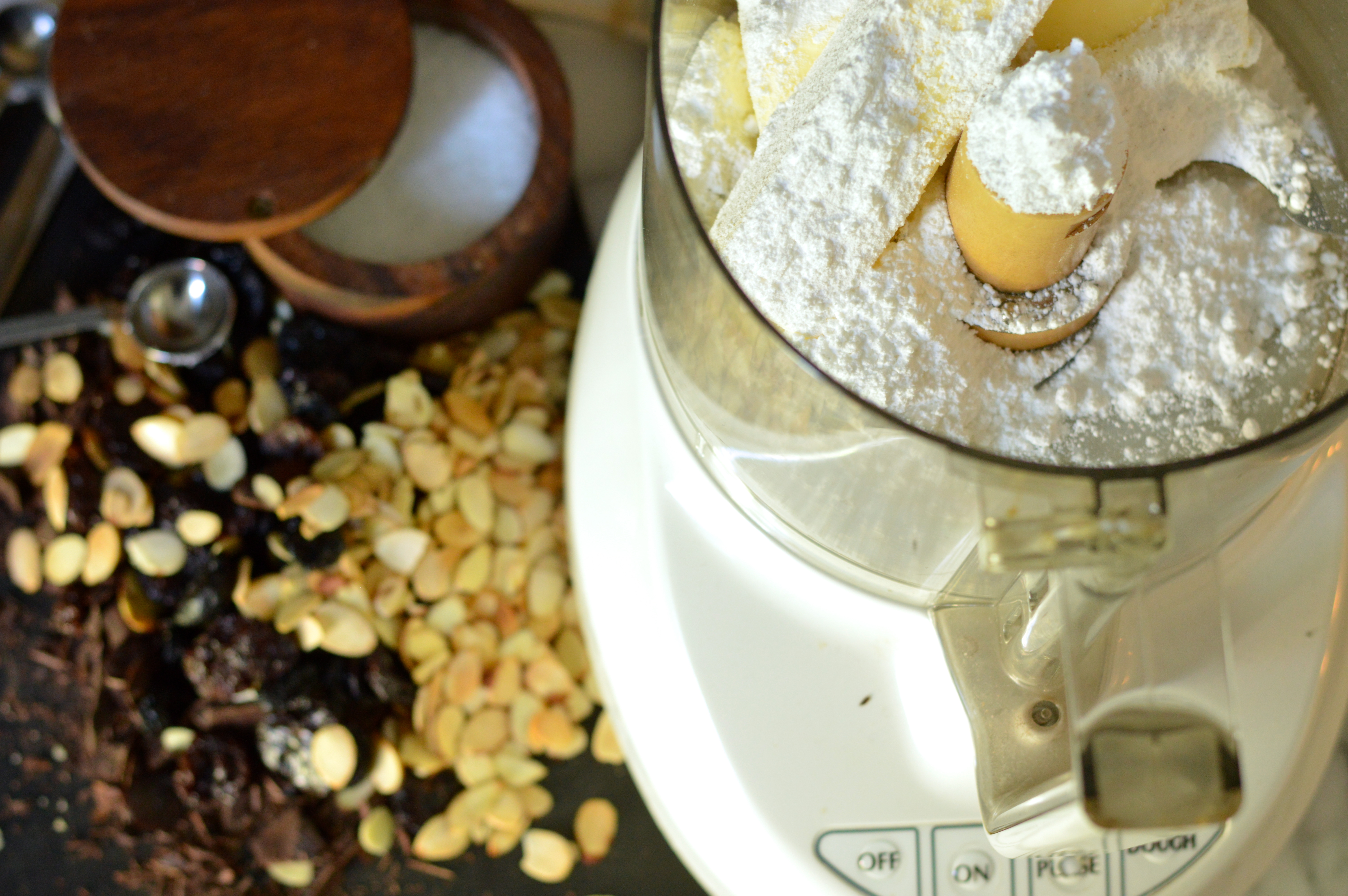
To make sure these ingredients were well distributed throughout the cookie I pulsed everything in the food processor while combining the sugar and butter. I think that it would have been better texturally if I’d waited to add theses “extras” until I added the flour. The flavor is absolutely amazing; the chocolate, cherries, and almonds marry perfectly together; but I think I would have preferred juuust slightly larger pieces of everything to be able to taste each ingredient individually as well as all together. In the recipe below I made this small change and noted that these ingredients should be pulsed with the flour, not earlier. Either way though, these cookies are crisp and buttery and ever so slightly salty, with a perfect combination of bitter dark chocolate, chewy tart cherries, and crunchy nutty almonds.

If you cant find unsweetened dried cherries, sweetened will work just as well. These cookies are perfect for fall but the flavors will translate well any time of year. I even think that these could make an excellent (and beautiful) addition to your holiday cookie tray.
cherry, almond, & dark chocolate shortbread cookies | Brooklyn Homemaker

Dark Chocolate, Cherry, & Almond Shortbread Cookies

  • Servings: 24 to 36 -ish
  • Print
adapted from Martha Stewart

3/4 cups sliced almonds
1 cup (2 sticks) unsalted butter, room temperature
3/4 cup confectioners’ sugar
1 teaspoons coarse salt
3/4 cups dried cherries (unsweetened if available)
3/4 cups good dark chocolate, coarsely chopped (or dark chocolate chips)
2 cups all-purpose flour
1/4 cup coarse raw sugar (optional)

Preheat oven to 375. Spread almonds in an even layer on a baking sheet, and toast almonds for 5 to 10 minutes, checking frequently that they don’t burn. They should smell super nutty and be just barely beginning to brown. Remove from oven and cool completely.

In a food processor, combine butter, confectioners’ sugar, and salt; process until smooth and well blended. Add flour, chocolate, cherries, and almonds, and pulse until just combined and beginning to hold together. If you don’t have a food processor you could do this with a pastry blender, or even an electric mixer, but you’ll need to chop the cherry, chocolate, and almonds ahead.

Place the dough in the center of a 16 inch long sheet parchment paper. Plastic wrap would work too. Form dough into an 12-inch-long round log; and roll parchment up around it tightly to help get it smooth and perfectly round. There should be roughly 2 inches of extra parchment on either end; twist the ends up until tight and fold them over. Freeze the log until firm, at least 30 minutes (or up to 1 month).

Preheat oven to 350 degrees, with racks in upper and lower thirds. If desired, let the dough soften for about 15 minutes and roll entire log in coarse sugar to coat. Cut dough into 1/4-inch-thick slices and transfer to two parchment-lined baking sheets. Bake until cookies are golden brown around edges, 15 to 18 minutes, rotating sheets halfway through. Let cookies cool 5 minutes on sheets. Transfer to wire racks to cool completely.

conversation heart mini cakes

Valentine’s Day is one of those holidays that most people either love or hate. Usually you hate it when you’re single, and suddenly appreciate it when you’re in a relationship. Growing up gay in a small town in upstate New York, for most of my life I was on the team against this holiday. Once I started dating I began to like it, but even then usually thought of Valentine’s Day as an excuse for restaurants to pack as many couples as possible into a tight space and charge a small fortune for a “prix fixe” menu. After a bottle (or two) of cheap champagne and several courses of dinner, I was usually done for the night, and that was that. Now that I’m married and don’t have to try so hard to impress my dates or seal the deal or whatever it is people do on Valentine’s day, I finally have a new appreciation for it. My husband Russell and I usually skip the over-priced meals and crowds and try to re-create the date experience at home. We like to use this holiday as an excuse to brighten our home with fresh-cut flowers, cook a nice meal, drink some wine and, of course, buy some chocolates. My favorite part of this holiday was, is, and always will be the chocolates.

conversation heart mini cakes | Brooklyn Homemaker

This day hasn’t always been all about chocolates and flowers though. Valentine’s Day has its roots in ancient Rome, and the holiday’s two namesakes were Roman saints who both shared the name Valentine. Though there are some rumors, there is no evidence linking either saint to the romantic ideas people have about the holiday today. Back then this holiday was strictly about martyrdom and religious beliefs. It wasn’t until the medieval era, when the tradition of courtly love flourished in the spring, that people started tying Saint Valentine’s Day to romance and love.  Men would pick spring flowers and write love songs to try to woo their fair maidens, but even then sugar was a precious commodity in Europe, so candy wasn’t yet a part of the experience.

conversation heart mini cakes | Brooklyn Homemaker

It wasn’t until the 1800s that the British chocolate manufacturer Cadbury started marketing chocolate candies for Valentine’s Day. Before then, chocolate was usually consumed as a hot beverage. When Cadbury made some improvements to its chocolate manufacturing technique they were left with an excess of cocoa butter. It was then that they started to produce a wide array of their “eating chocolate” and recognized Valentine’s Day as a marketing opportunity. Richard Cadbury started designing and selling ornate decorated boxes filled with an assortment of his new chocolate candies.  Victorians were already in the practice of showering each other with cards and gifts for Valentine’s Day, and Cadbury’s chocolate boxes were a wild hit. Within a few decades these elaborately decorated boxes were everywhere, and their popularity continued to grow until governments started rationing sugar during World War II. By then the idea of candy, chocolate, and heart-shaped everything was deeply tied to Valentine’s day, and continues to be today.

conversation heart mini cakes | Brooklyn Homemaker

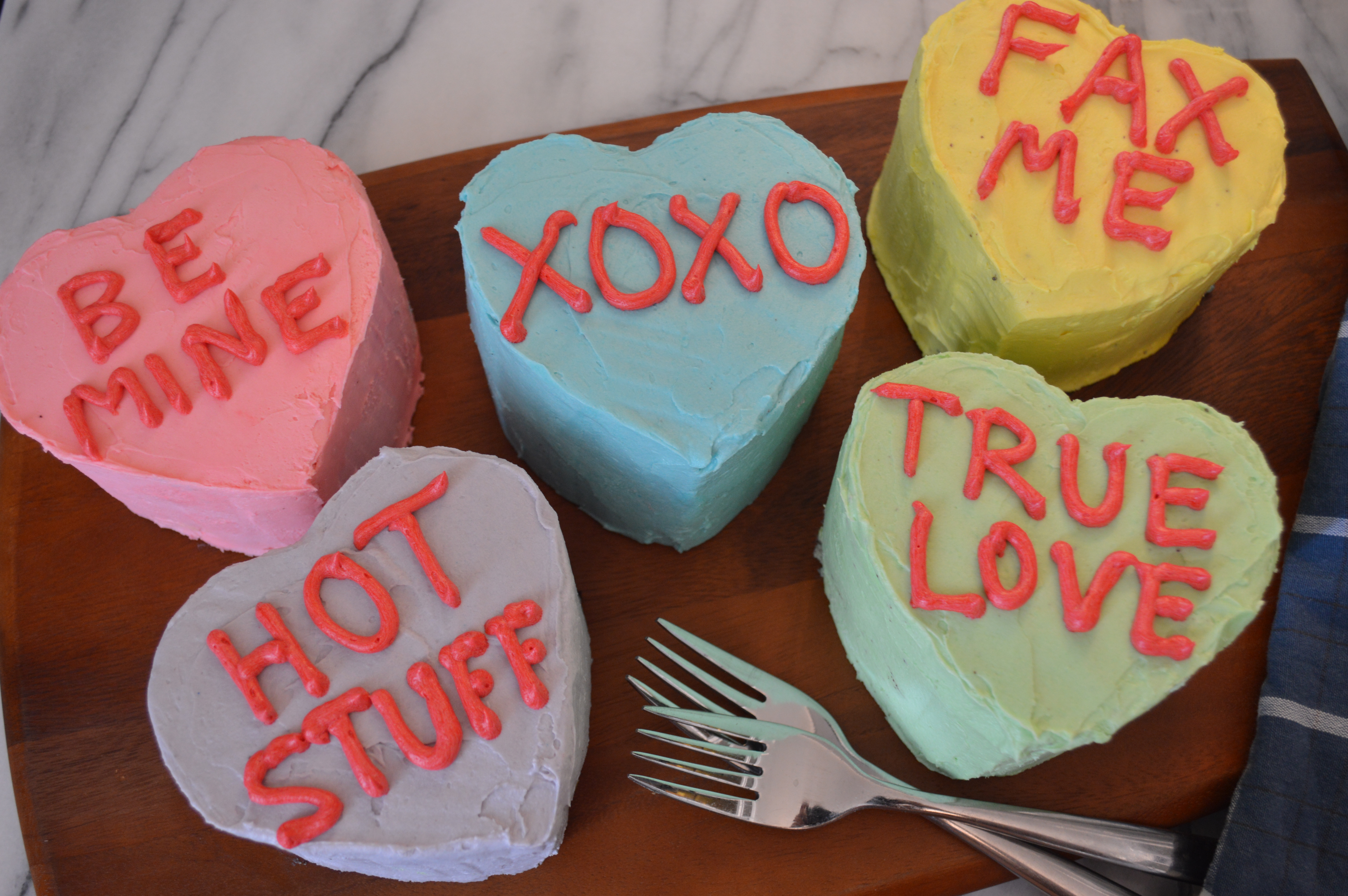
Another Valentine’s Day confection that roots back to Victorian England is the conversation heart. The English had a tradition of writing phrases and sayings on small pieces of paper embeded inside of small colored sugar candies. The Victorians took this fashion even further by creating “conversation lozenges”, which came in various sizes and shapes, and were common all year round. Some of the more common phrases on them included “Can you Polka?” and “How do you flirt?”, but they were even sometimes used as marketing tools with the names of businesses written on them. In 1866 a device was invented to imprint the phrases into the candies rather than hand writing them, and in 1901 the Necco company, makers of Necco wafers, starting cutting their conversation lozenges into heart shapes and marketing them as Valentine’s Day “Sweethearts”. For decades some of the most popular phrases on conversation hearts were “Be mine”, “Kiss Me”, and “I’m Yours”. In the 1990s the company decided to update some of their phrases and retire others, introducing new phrases like “Email Me”, “Hot Stuff”, and Russell’s favorite, “Fax Me”.

conversation heart mini cakes | Brooklyn Homemakerconversation heart mini cakes | Brooklyn Homemaker

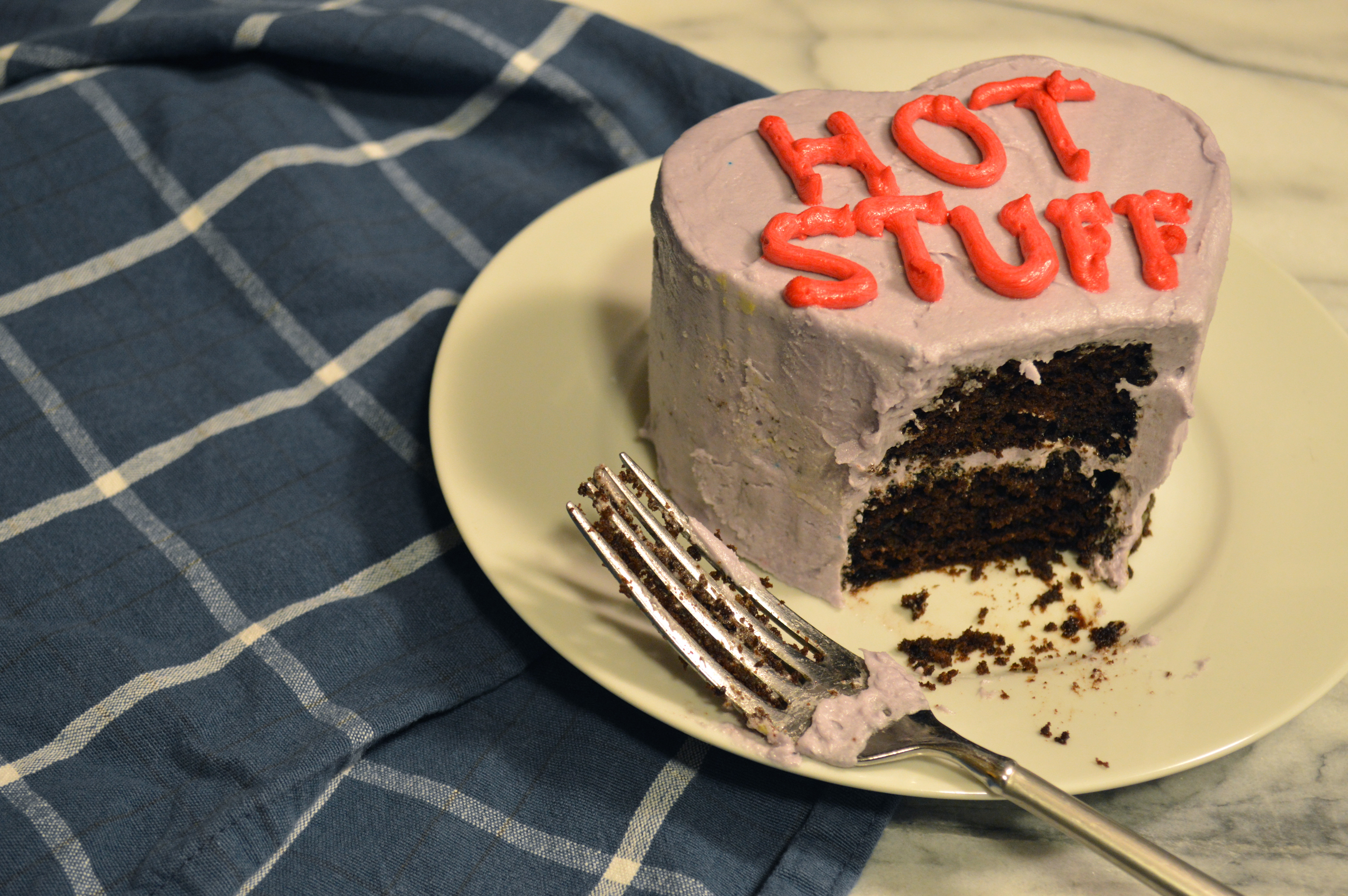
When I was trying to decide on a dessert to make for Russell on Valentine’s Day, I thought it would be really fun to try combining these two traditions. I’m not really a fan of real conversation hearts, but I am a big fan of chocolate! So, prepare to have your mind blown, I decided to make conversation hearts made of chocolate! Boom. Rather than trying to make tiny hearts out of real chocolate I decided that little chocolate cakes were where it’s at.

conversation heart mini cakes | Brooklyn Homemakerconversation heart mini cakes | Brooklyn Homemaker

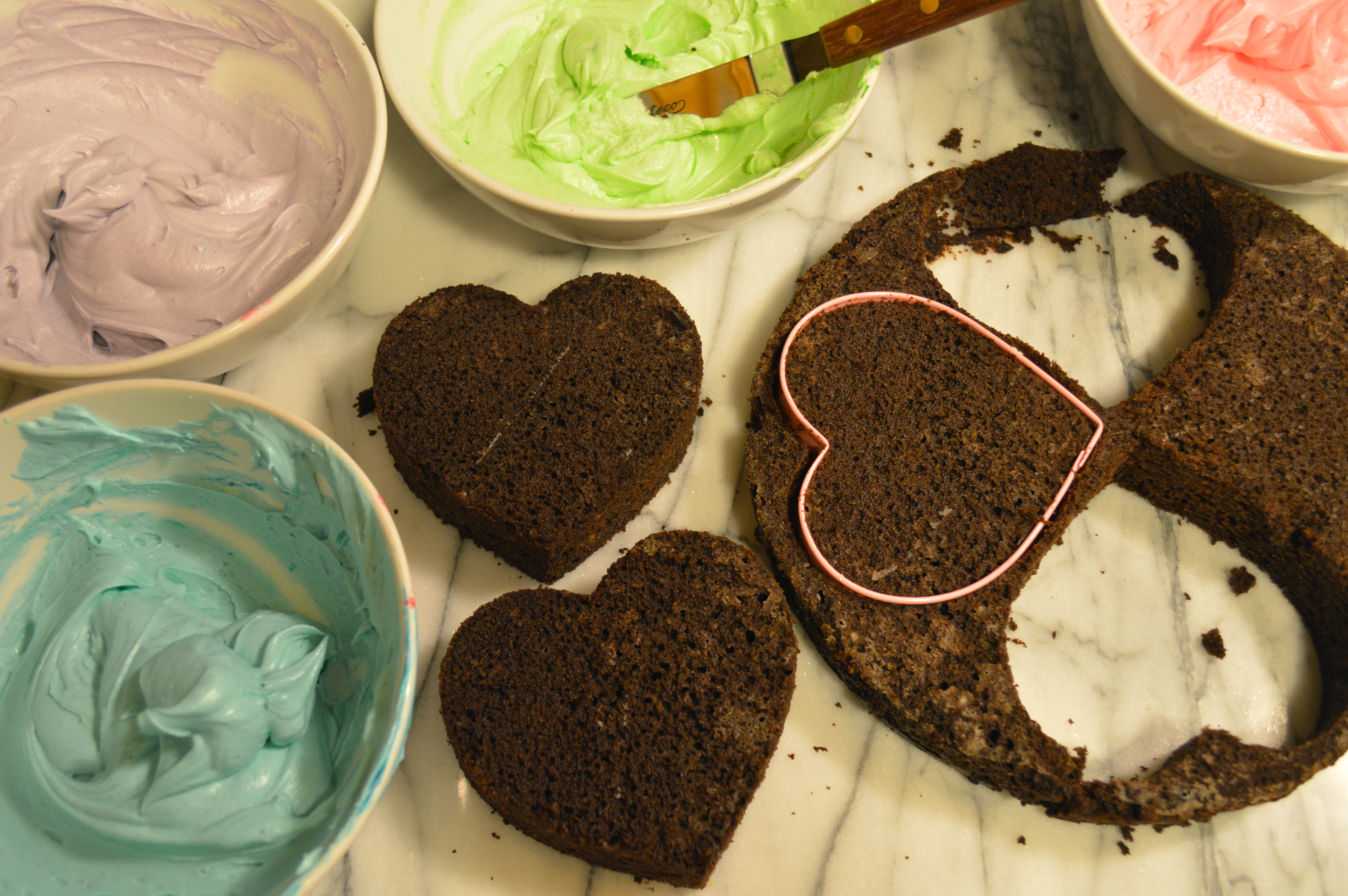
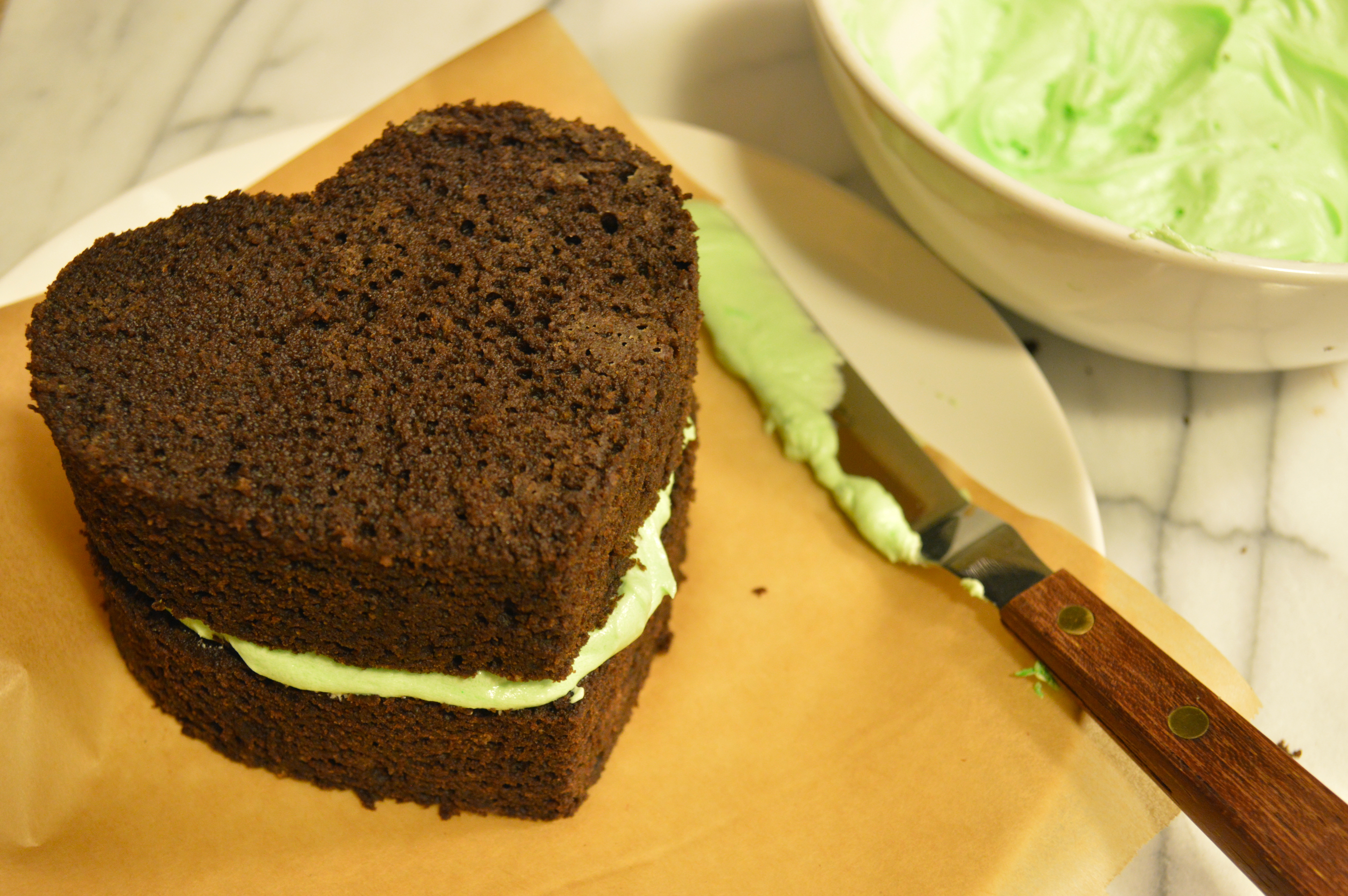
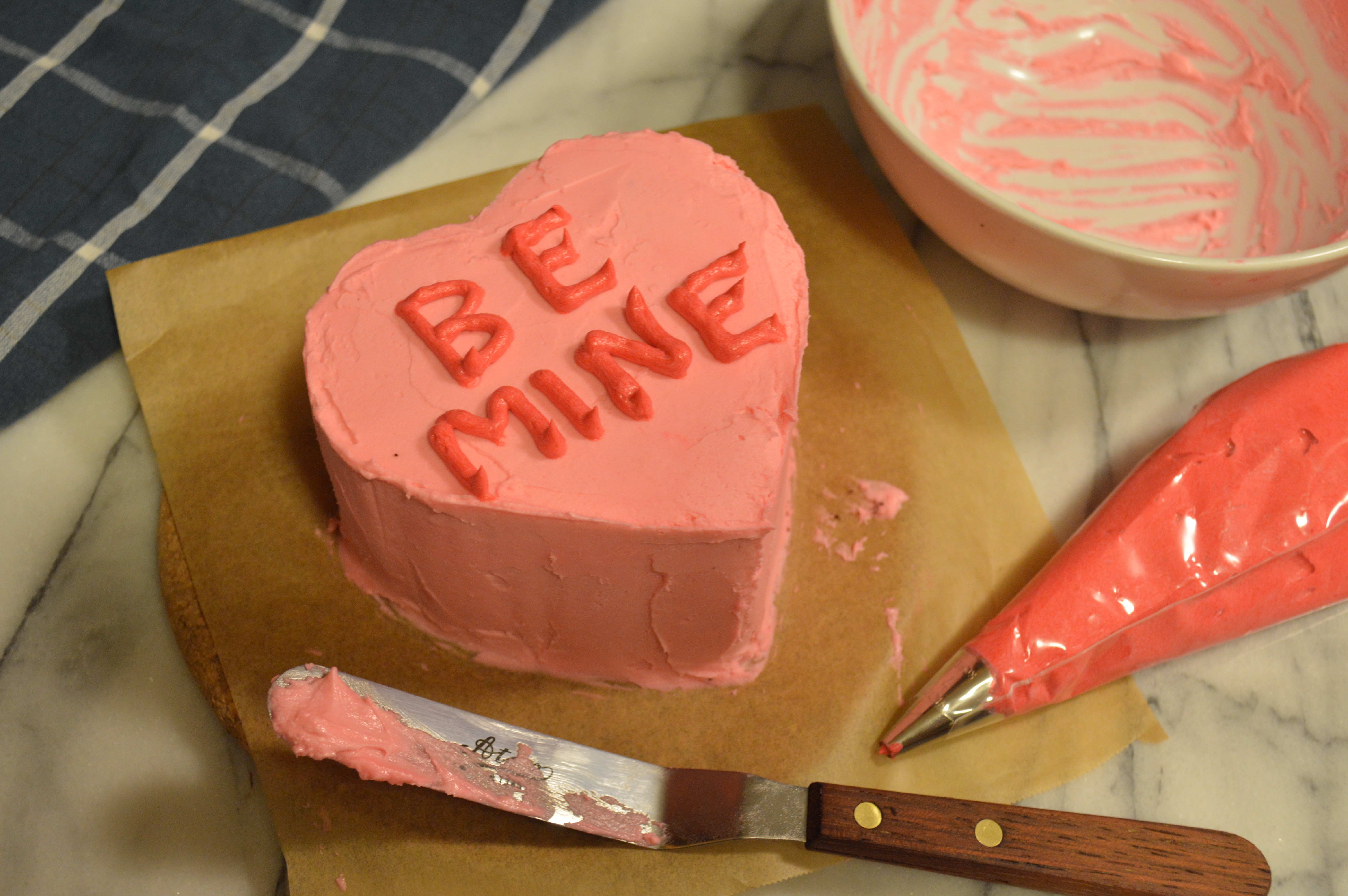
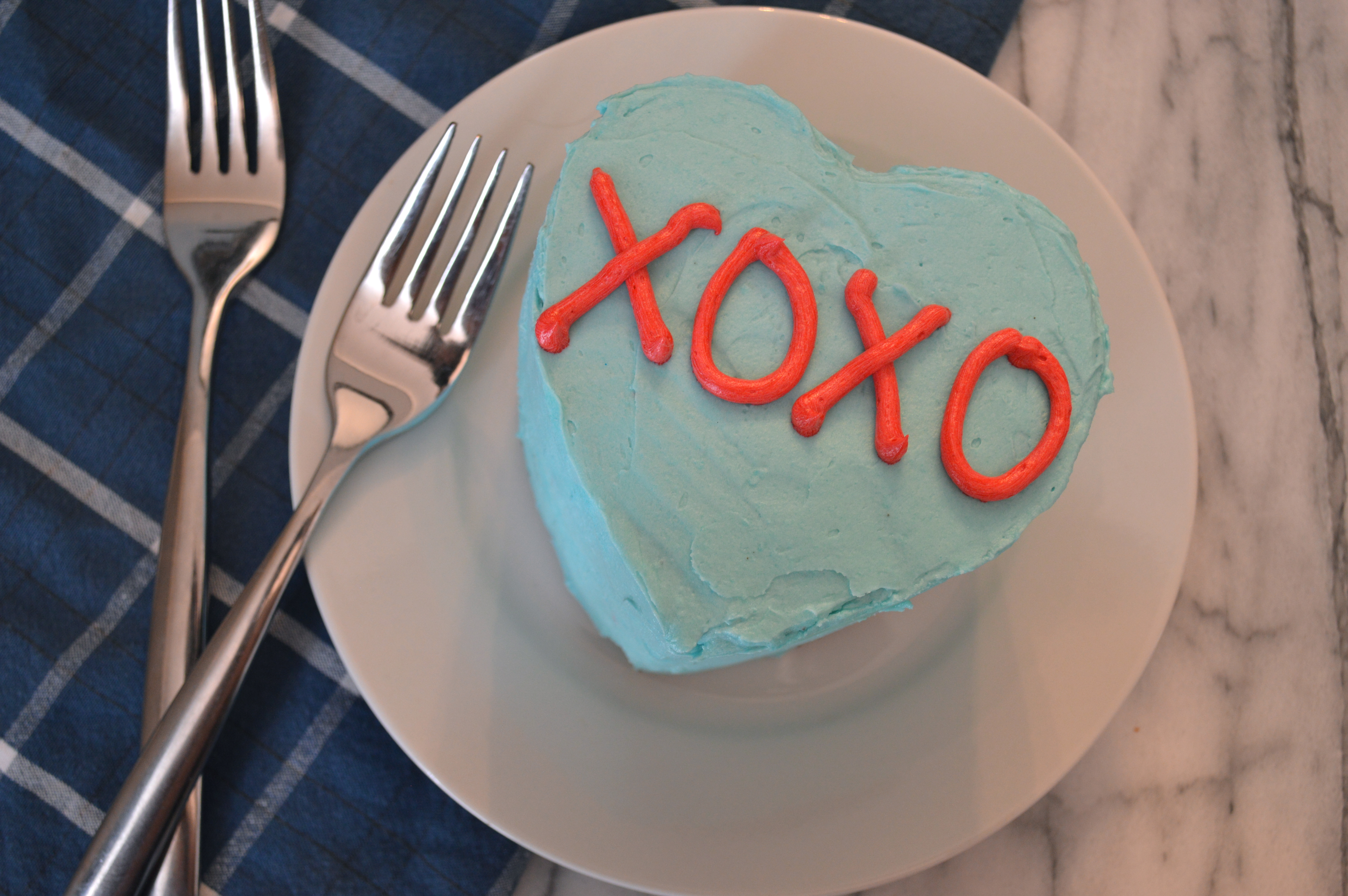
I started with my favorite recipe for Devil’s Food Cake from Russell’s birthday, but decided to ice them with a traditional American buttercream. For fancy layer cakes I’m usually a bigger fan of meringue buttercream because American buttercream tends to be too sweet and have a slightly gritty texture, but I thought it was the clear choice for these cakes. Since they’re so cutesy and retro, and since they’re the size of large cupcakes, I thought this old school classic would be the perfect complement. I baked three 9-inch layers of Devil’s Food Cake and used a 4-inch heart-shaped cookie cutter to cut out twelve Devil’s Food hearts. Then I filled, stacked, and iced the hearts to make 6 mini heart layer cakes. To make the cakes look just like traditional conversation hearts, I chose pastel tones for my icing and piped on phrases in red.

conversation heart mini cakes | Brooklyn Homemaker

Not only are they completely adorable, they’re totally delicious. Super moist, tender & chocolatey cakes covered with rich sweet & creamy icing. Heaven. The recipe below makes 6 cakes, which each feed 2 people at least, so they’re perfect for a party. If you wanted to just make 2 heart cakes you could cut hearts from one layer and freeze the other two layers of cake for another use. If wrapped good and tight in plastic, these cake layers should keep for up to a month in the freezer.

I really hope you give these a try. They might be a little advanced for beginners, but if you are a confident crumb-coater and can pipe a straight line, I promise you can handle it.

conversation heart mini cakes | Brooklyn Homemaker

Conversation Heart Mini Cakes

  • Servings: makes six 2-layer 4-inch heart cakes, serves 12ish
  • Print
Devil’s Food Cake

butter and flour for pans
2 cups peanut oil or vegetable oil
1 1/2 cups unsweetened natural cocoa powder
1 1/2 cups hot water
3 1/4 cups cake flour
1 1/4 teaspoons coarse salt
1 teaspoon baking powder
1 teaspoon baking soda
1 cup granulated sugar
1 1/4 cup packed brown sugar
4 large eggs
4 teaspoons vanilla extract
1 cup buttermilk

Preheat oven to 350 degrees. Butter three 9 inch round cake pans, line bottoms with parchment paper, butter paper, and dust pans with flour. Whisk together cocoa powder and hot water until smooth.

Sift together flour, salt, baking powder, and baking soda; set aside. Beat oil and sugar together on medium-low speed until combined.
Add eggs, one at a time, beating after each addition. Beat in vanilla and cocoa mixture. Reduce speed to low. Add flour mixture in two batches, alternating with buttermilk and beginning and ending with flour. Beat until just combined.
Divide batter between pans, and bake until a cake tester inserted into centers comes out clean, 35 to 40 minutes. Transfer pans to a wire rack to cool for 15 minutes. Invert cakes onto rack, peel off parchment, and let cool completely.
Classic American Buttercream
just enough for six 4″ heart cakes

2 cups unsalted butter (4 sticks or 1 pound), room temperature
6-8 cups confectioners sugar, SIFTED
1/2 teaspoon table salt
2 tablespoons vanilla extract
4-6 tablespoons milk

Beat butter for a few minutes with a mixer with the paddle attachment on medium speed. Add first six cups of confectioners sugar, one cup at a time, with your mixer on the lowest speed until the sugar has been incorporated. Increase mixer speed to medium and add vanilla extract, salt, and 4 tablespoons of milk and beat on high for 3 minutes. If your frosting needs a more stiff consistency, add remaining sugar, a cup at a time. If your frosting needs to be thinned out, add remaining milk 1 tablespoons at a time. For these hearts you want the icing fairly stiff.

Assemble the heart cakes

Wrap each 9″ cake layer in plastic wrap and refrigerate for at least an hour, or over night. Level each layer with a sharp bread knife or cake leveler, and using a 4″ heart-shaped cookie cutter, cut four hearts out of each layer, giving you 12 hearts. Keep the heart cut-outs cold in the refrigerator while you’re working on each cake.

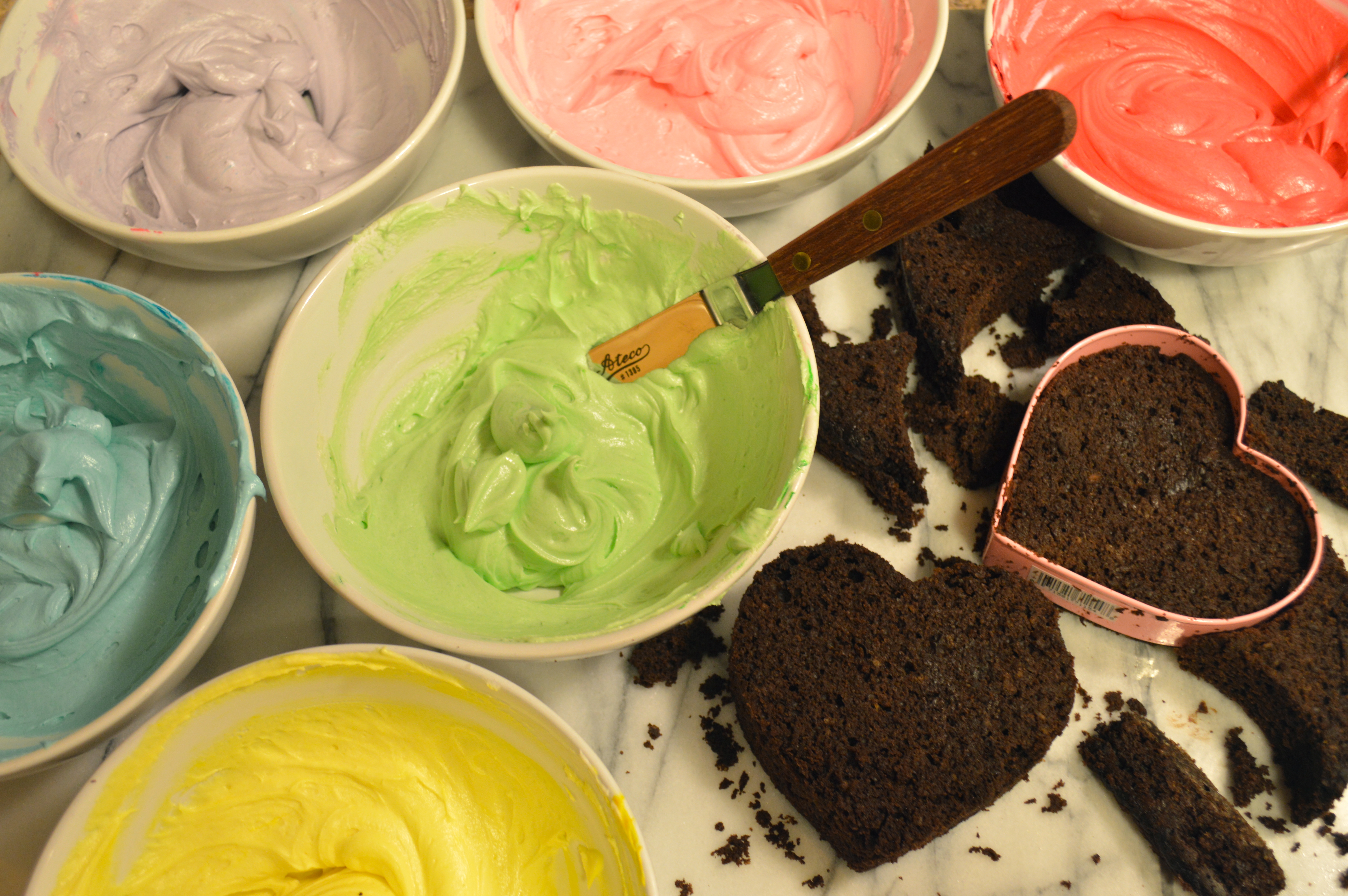
Divide your icing into 7 bowls. You’ll need about a cup of icing for each of the six cakes, and about 1/2 a cup of icing for the seventh bowl which you’ll use for the writing. Color the writing icing bright red, and then color each of the 6 remaining bowls whichever colors you prefer. Keep in mind that conversation hearts come in pastels so go easy on the food coloring. Fit a piping bag with a medium writing tip, I used a Wilton #7 , and fill the bag with your 1/2 cup of red icing. I used CK Products gel colors (available here) to avoid thinning out the icing. A little goes a long way, so use sparingly.

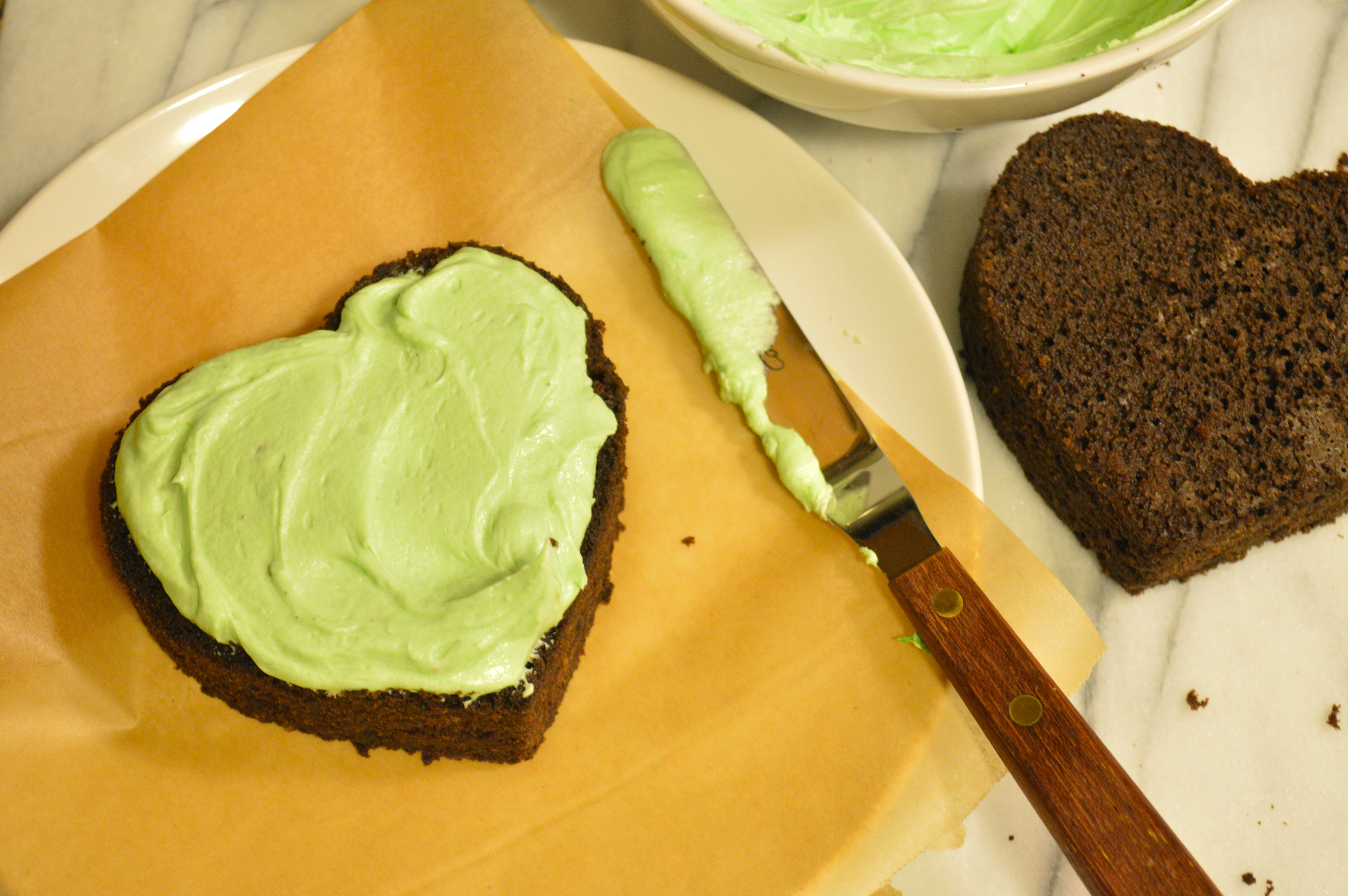
Working with one color at a time, spread about 1/4 cup of icing on the top of one heart cut-out and layer with another cut-out. Using another 1/4 cup of icing spread a thin layer to cover sides and top of the cake. This is called the crumb coat, and since these cakes are cut-outs they produce a lot of crumbs. This step is very important if you don’t want visible crumbs in your icing. Once your cake is completely crumb coated, refrigerate while you work on remaining five cakes. Repeat until all 6 cakes are crumb coated and each has refrigerated for a minimum of 30 minutes or more.

Working with the same color the cake was crumb coated with, ice each cake with remaining 1/2 cup of icing. Use a small offset icing spatula to get a nice smooth finished surface. Once iced, write your favorite conversation heart phrase on top with red icing. Repeat with remaining five cakes. Take pictures and show your friends, family, co-workers, first grade teachers, and college RAs.

New Years Day Brunch

Happy 2014! I hope everyone had an amazing New Year’s!

new year's day brunch | vegetarian collard greens and black eyed peas | Brooklyn Homemaker

In New York City people tend to make a BIG deal of New Year’s Eve. Since the town we call home sets the precedent for what a New Year’s celebration is supposed to be, New Yorkers tend to go big. Usually a little too big.

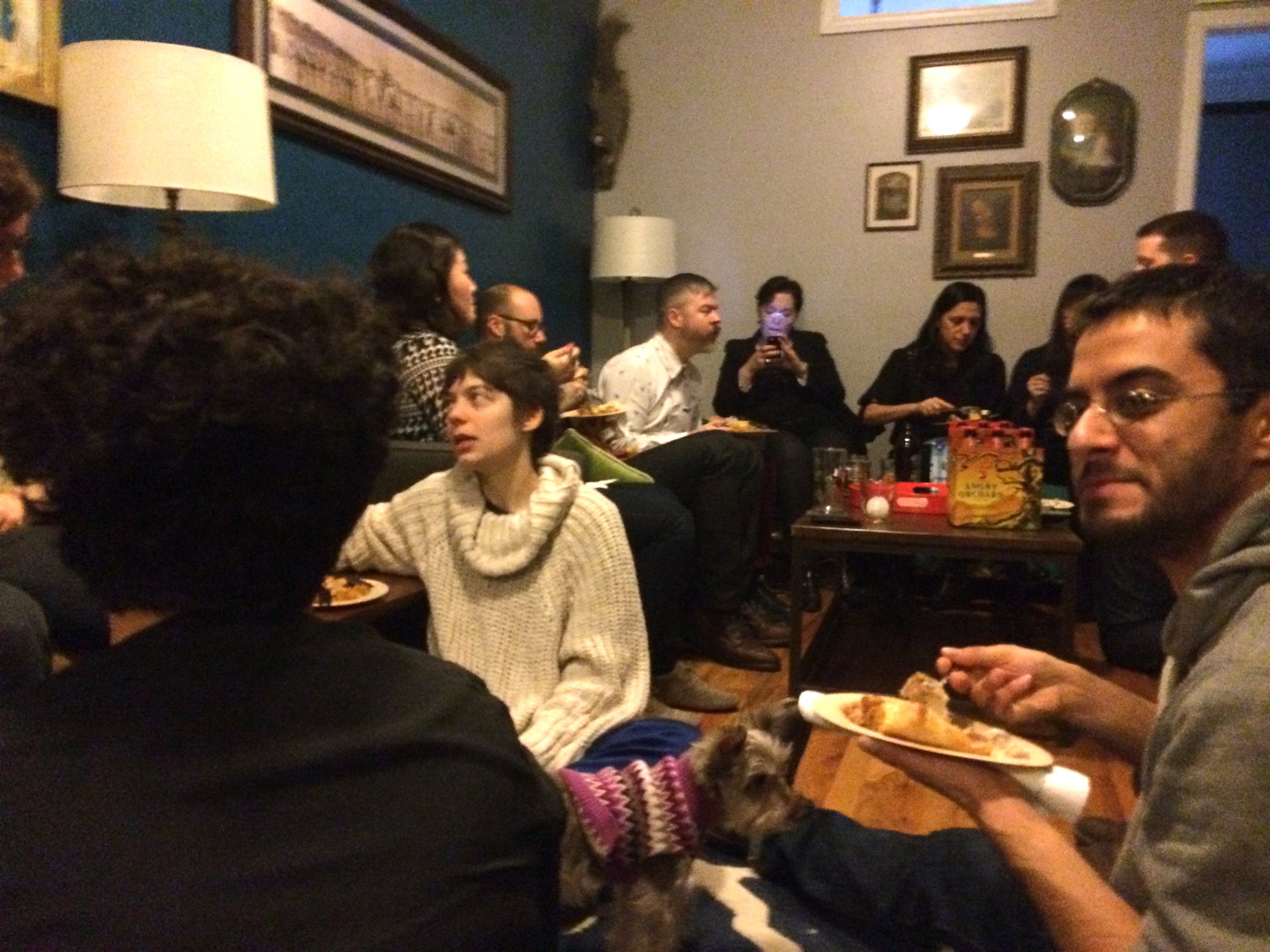
Russell and I however usually stay home, cook a big meal, and watch Dick Clark’s New Year’s Rockin’ Eve. I proposed on New Year’s Eve a few years ago, so we tend to think of that night as a night for each other. A night to be alone together. Rather than go out and party like lunatics, we prefer to stay at home with each other and our pups. Our little family is a motley crew but we’re happy being with each other.

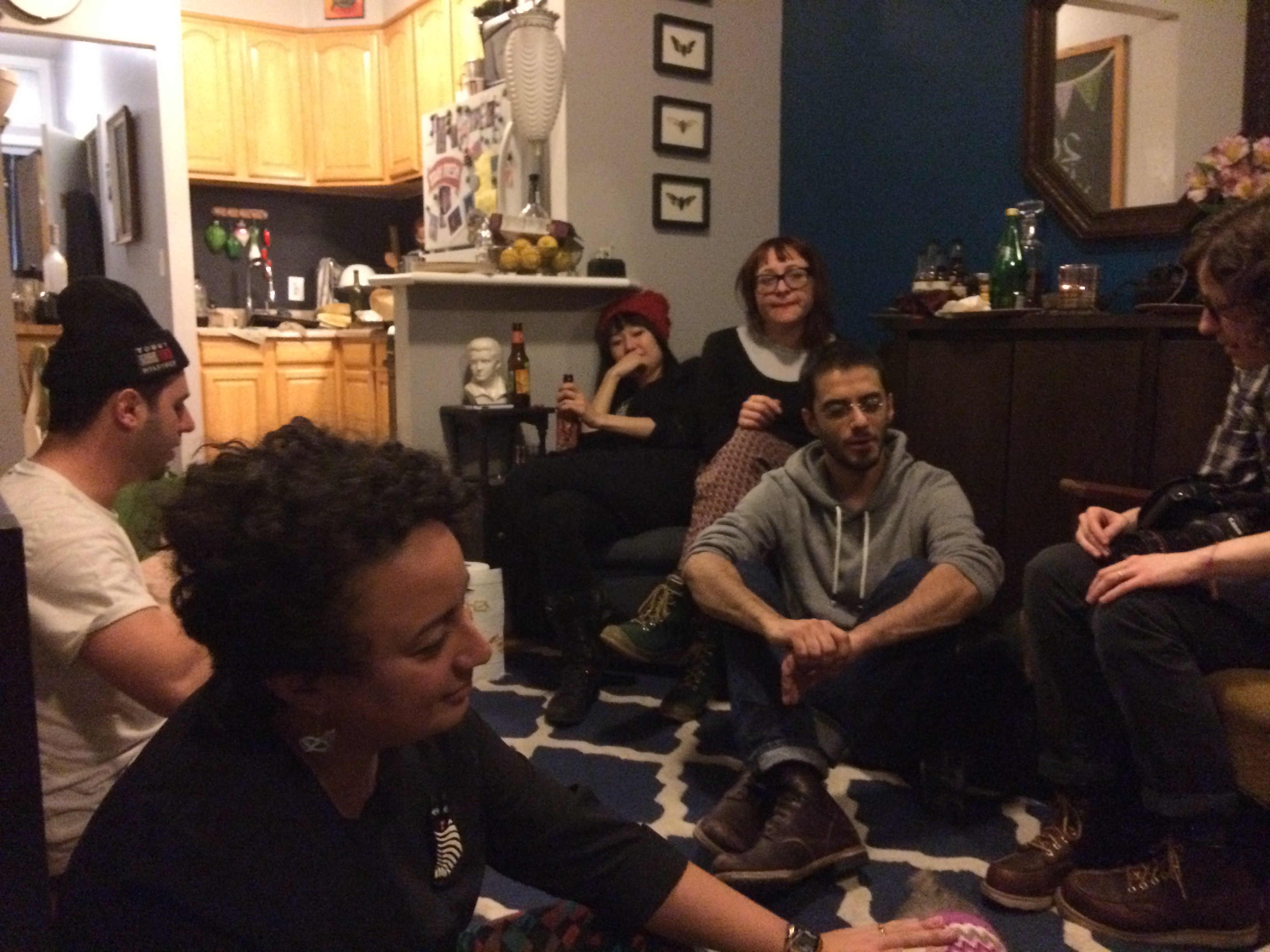
This year however a good friend invited us to a party directly across the street from our apartment, so we decided we should probably put some pants on and go be social. Of course, like the rest of New York, we let the mood of the evening get the best of us and we got carried away. We had an amazing evening having a blast with our friends and we’re so glad we went, but considering out plans for the next morning, maybe we should have stuck with tradition and stayed home. We had a little bit of a hard time getting moving the next morning, but in the end we pulled it together and had a pretty wonderful New Year’s day too.

new year's day brunch | vegetarian collard greens and black eyed peas | Brooklyn Homemaker new year's day brunch | vegetarian collard greens and black eyed peas | Brooklyn Homemakernew year's day brunch | Brooklyn Homemaker new year's day brunch | vegetarian collard greens and black eyed peas | Brooklyn Homemaker

This year we decided to host a brunch for New Year’s Day and bring together the people we love in New York and get the new year started right. 2013 was an amazing year for us and we thought a brunch with our favorite people would be a great way to make sure 2014 would be just as great.  In 2013 we were married, we got our second schnauzer Betty, I celebrated my 30th birthday, we visited Europe, and I started Brooklyn Homemaker. It’s going to be a tough year to beat, but we’re sure going to try!

Planning a menu for New Year’s day is pretty much a no brainer. Southern food is super traditional for New Year’s day so I didn’t really have to put any thought into other options. There is a lot of symbolism behind the foods we eat on New Year’s day, and everything on the plate is supposed to help bring something great into your life in the coming year.

new year's day brunch | vegetarian collard greens and black eyed peas | Brooklyn Homemaker

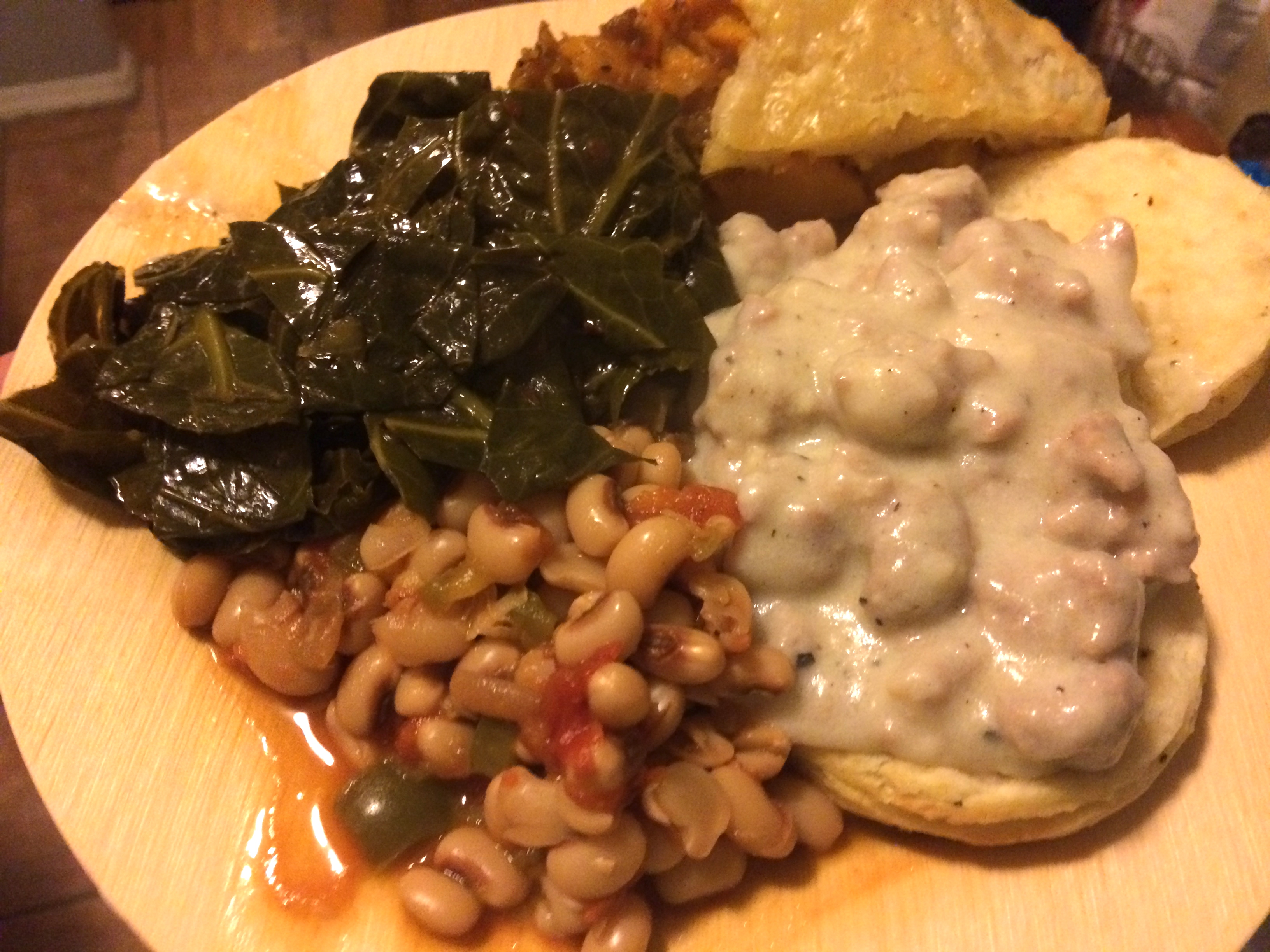
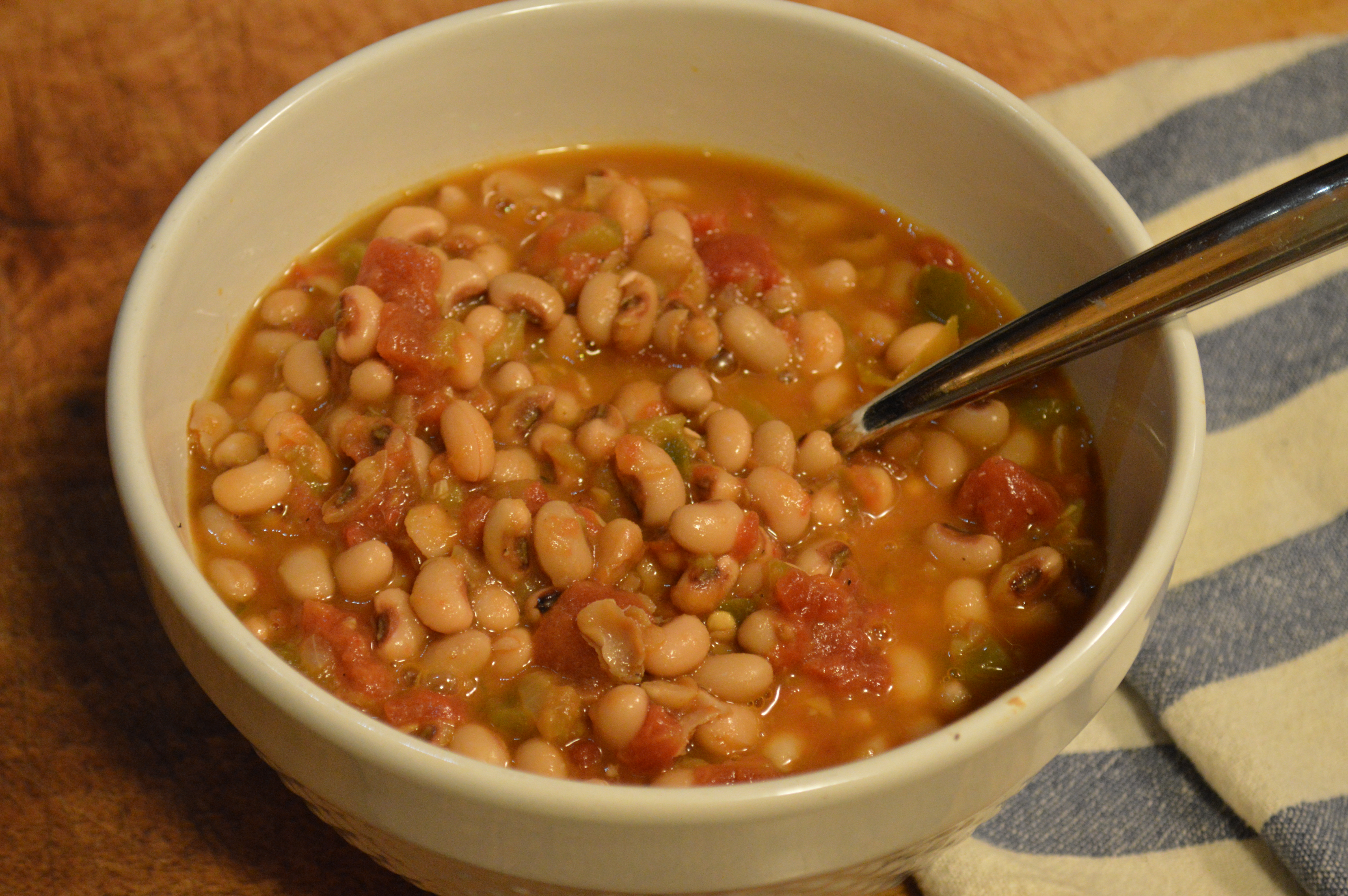
Black eyed peas are one of the most important foods on the New Year’s plate, and for good reason. Black eyed peas have been a symbol of good luck in Jewish culture for centuries, but in Southern cooking, the tradition dates back to the Civil War. The story goes that when Union troops rolled through the southern countryside they stripped large areas of all stored food and livestock and destroyed many crops and farms. At the time, black eyed peas weren’t really eaten in the north and usually went overlooked or ignored, leaving that crop to be what helped feed Southerners while they rebuilt. Since black eyed peas swell when you cook them, they’re also supposed to symbolize prosperity and growth in the new year.

Other Southern traditional foods include braised greens, usually collard, turnip, or mustard greens; along with pork or ham of some kind. Greens are meant to symbolize money since they’re, well, green; and since pigs can’t look backward without turning around, they’re meant to symbolize forward motion and moving on from the past.

new year's day brunch | vegetarian collard greens and black eyed peas | Brooklyn Homemaker

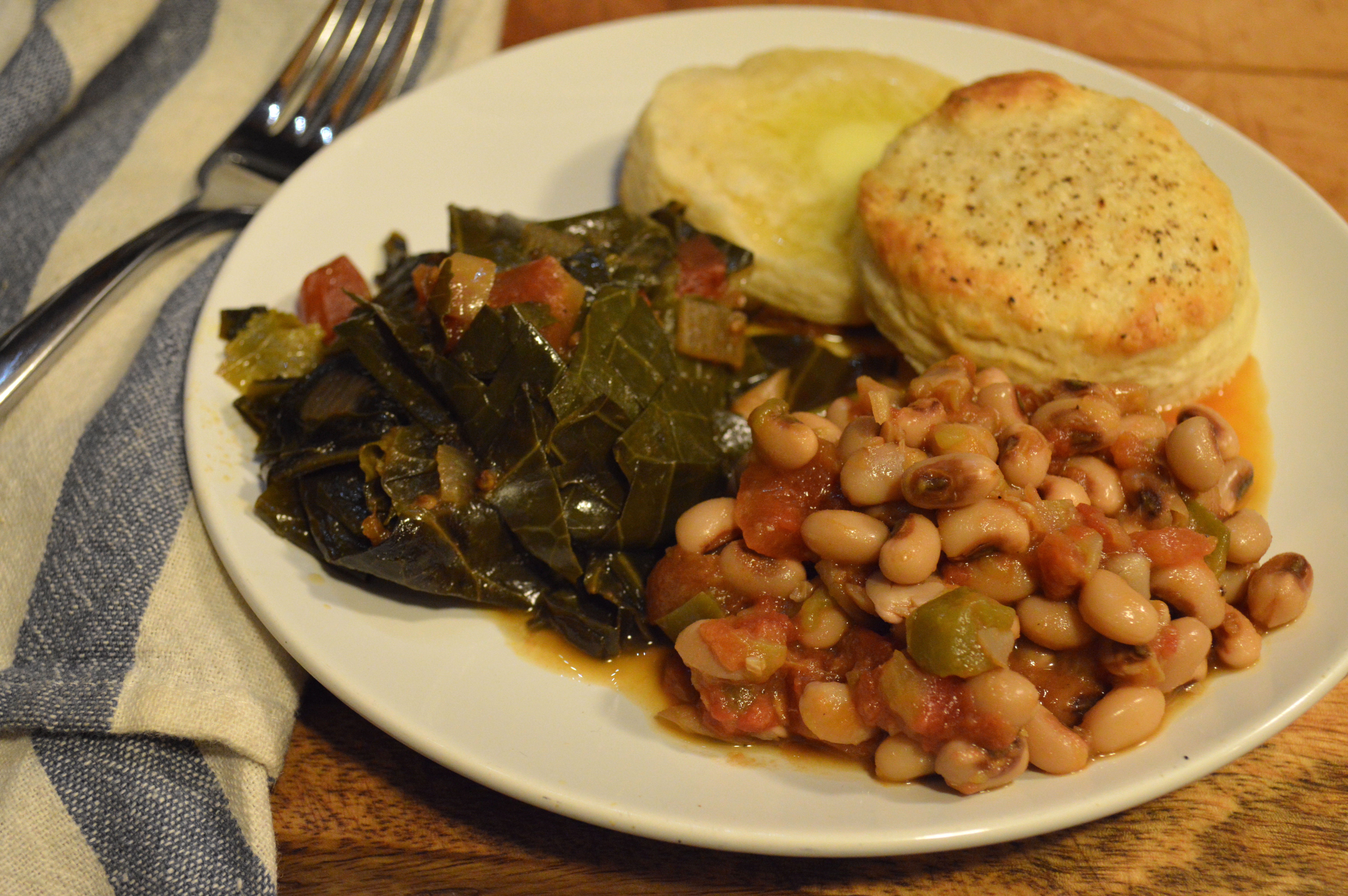
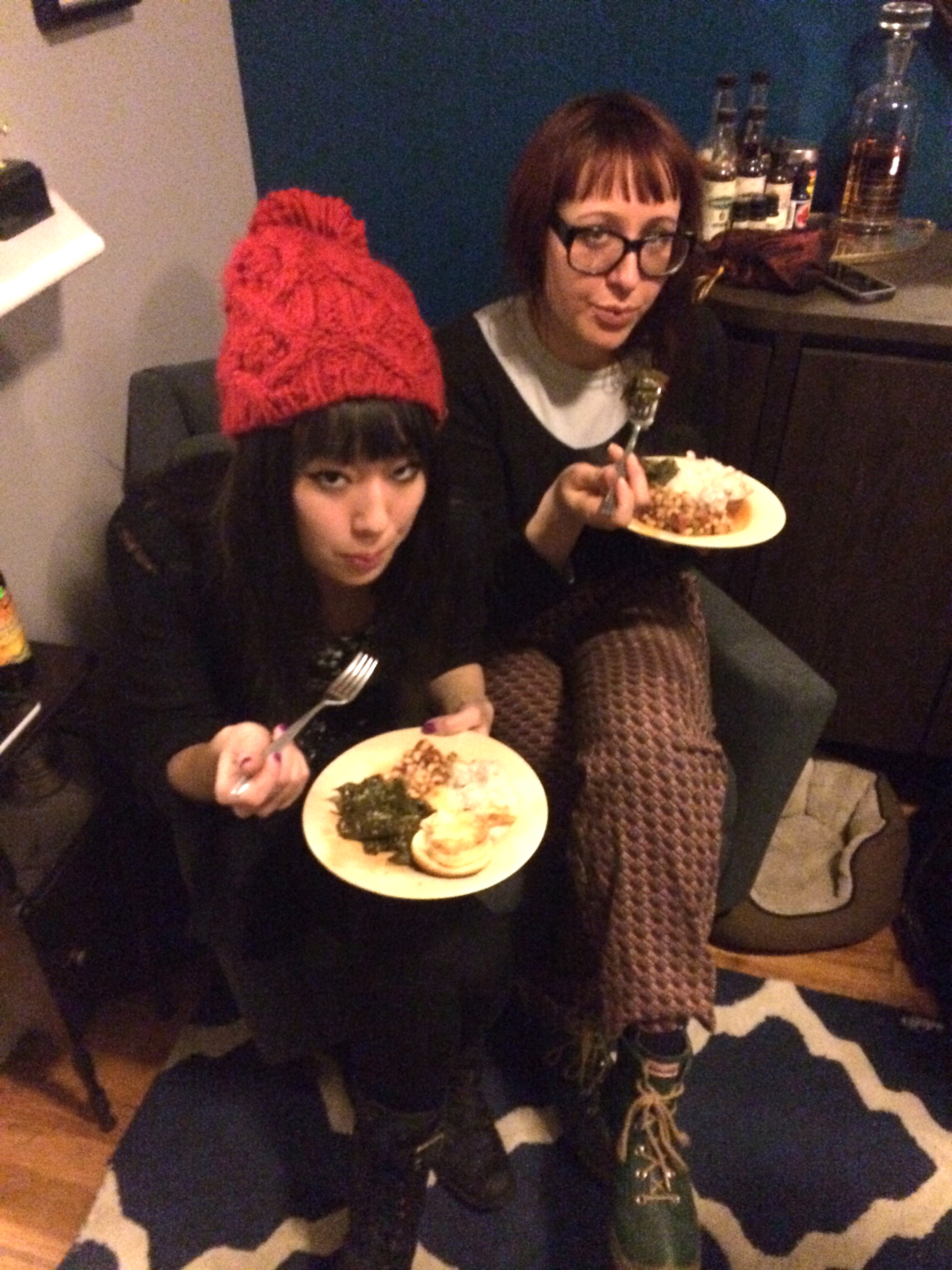
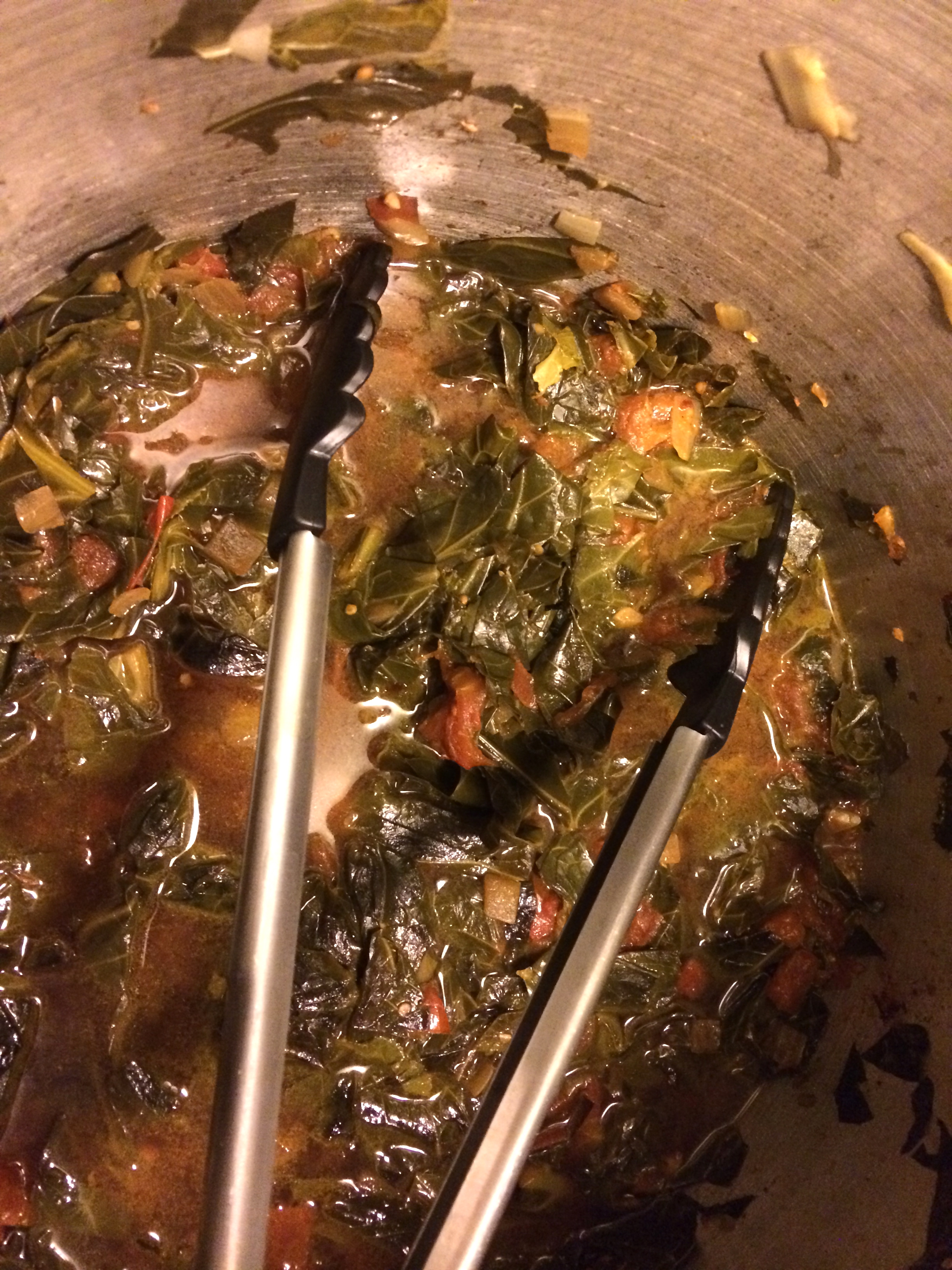
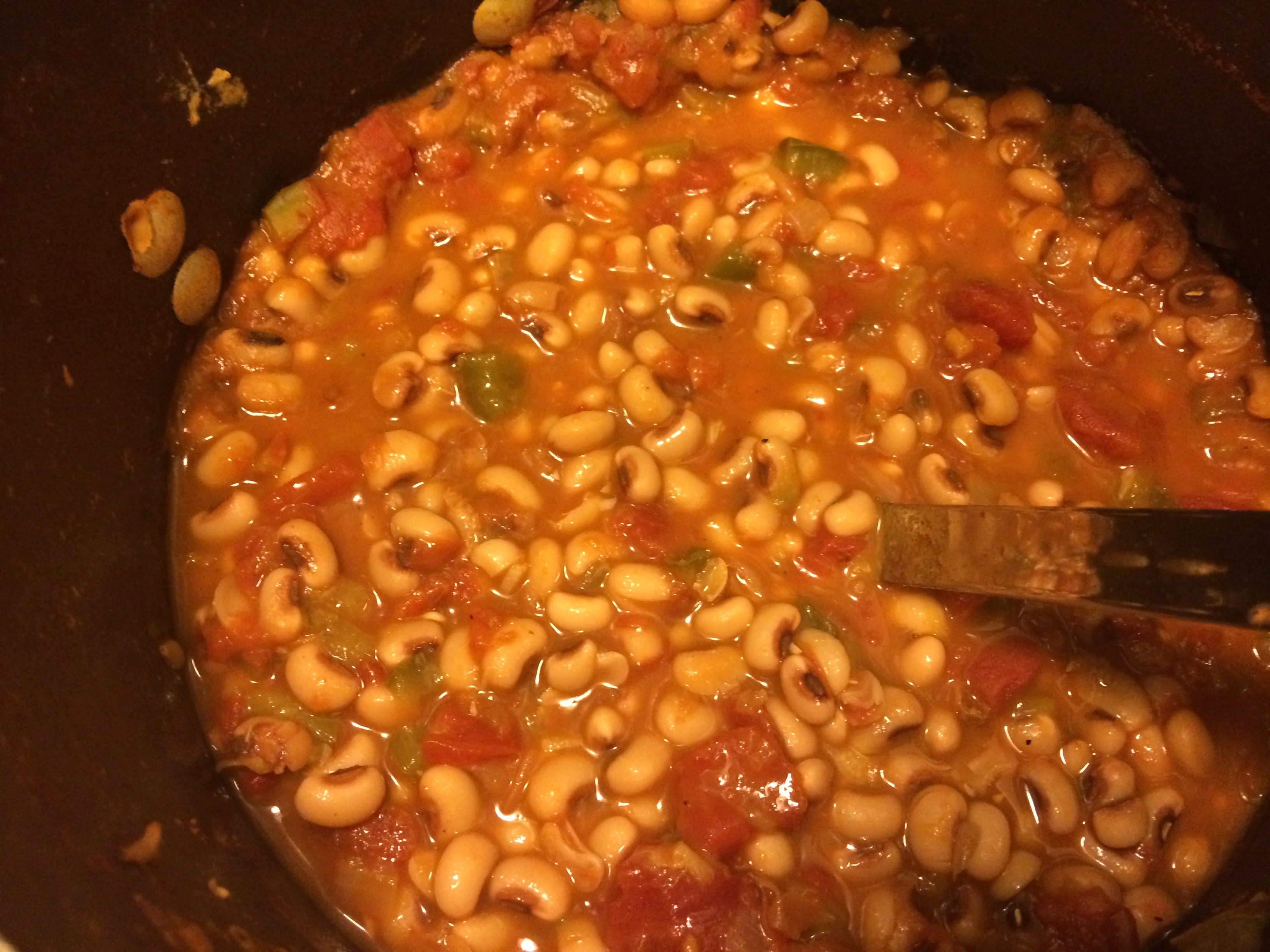
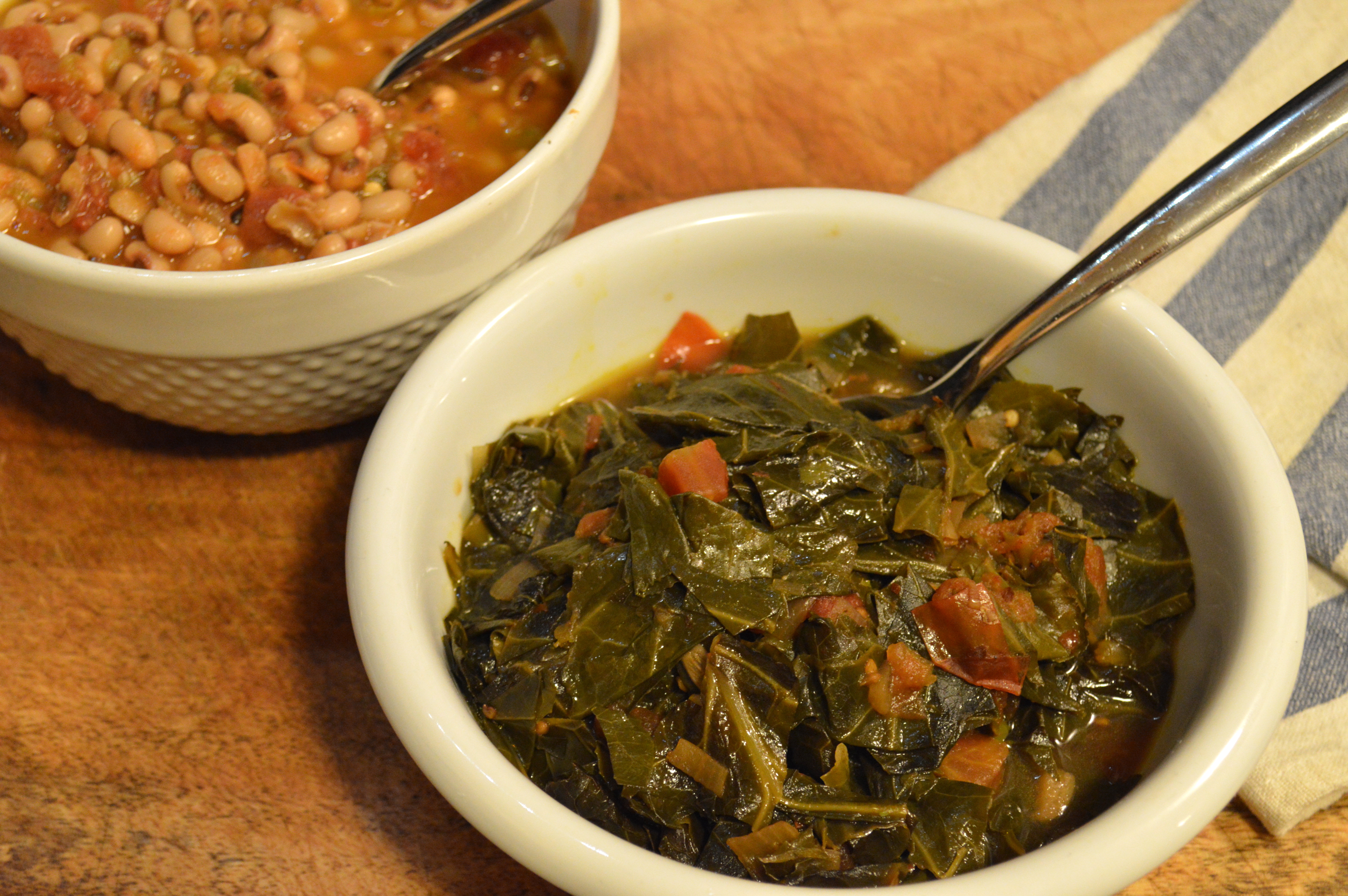
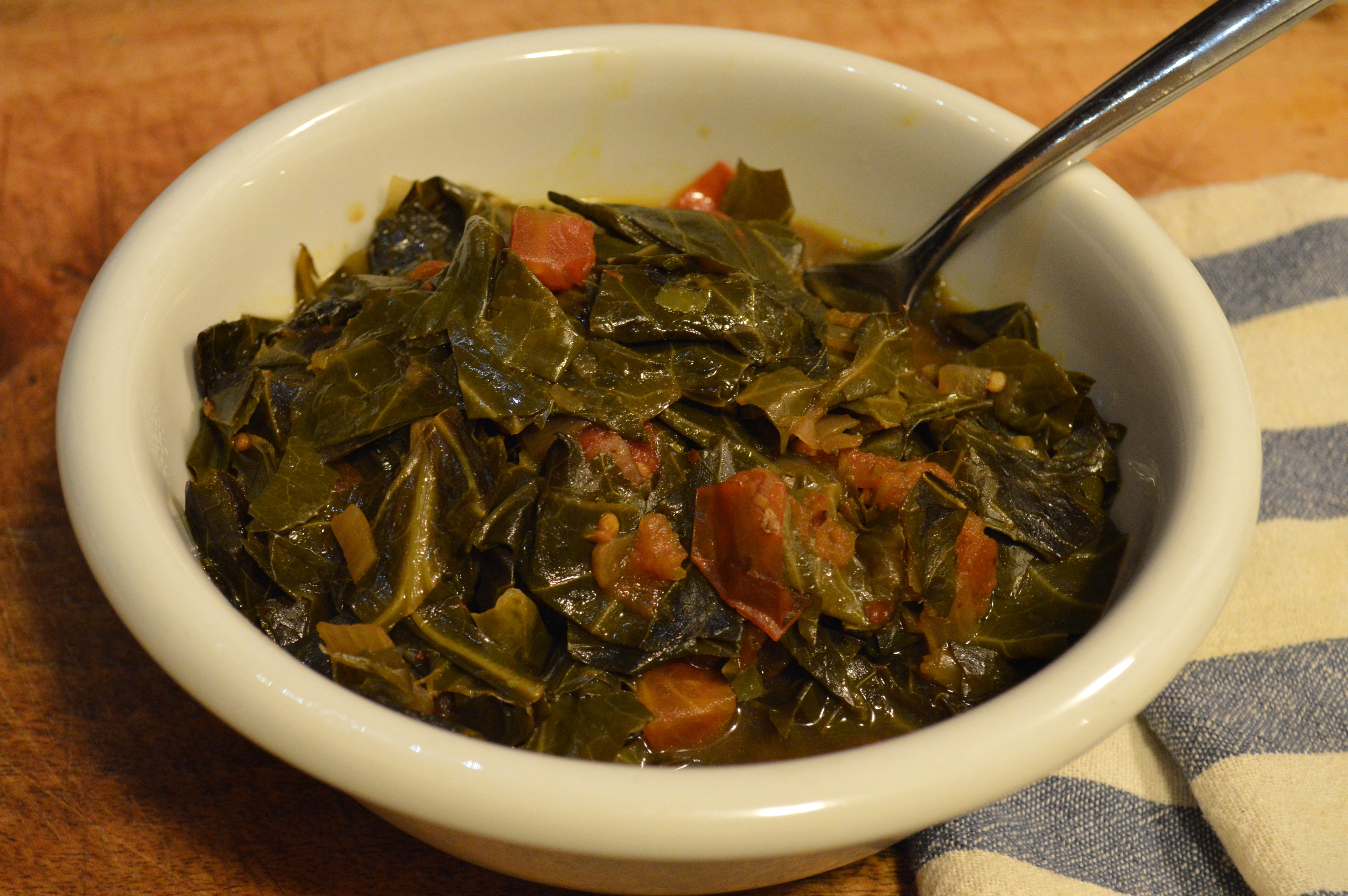
I decided to go all out traditional Southern with black eyed peas, braised collard greens, buttermilk biscuits, and pork sausage gravy. When making these foods, ham is usually used to help flavor your peas and greens, but of course, I don’t live in the south. I live in Brooklyn, so I had dietary restrictions to keep in mind and had to find vegetarian alternatives to add flavor to my peas and greens, and had to thicken my sausage gravy with rice flour for my friends who simply will not tolerate gluten. In the end though, our plates were packed with flavor and I wouldn’t have changed a thing! To accompany our meal I served up a big pitcher of Southern sweet tea, and those of us that wanted some hair of the dog spiked it with lemon vodka. Afterward we dug into a harvest cake, similar to carrot cake, complete with cream cheese icing and pecans.

new year's day brunch | vegetarian collard greens and black eyed peas | Brooklyn Homemaker

Below I’ve shared my recipes for vegetarian black eyed peas and collards. There’s a bit of spice to both recipes to help build flavor, but of course you could skip that if you’re not up for it. Come back soon for a special post on making biscuits and my recipe for gluten free (or not) sausage gravy. I suspect that you’ll probably want to know more about my harvest cake too, so keep checking in and you won’t be disappointed!

new year's day brunch | vegetarian collard greens and black eyed peas | Brooklyn Homemaker

Vegetarian Black Eye Peas

1 lb dried black eyed peas
2 tablespoons butter
1 green bell pepper, diced
1 medium onion, diced
2 cloves garlic, minced
1 teaspoon sugar
1 teaspoon ground black pepper
1 26 oz can diced tomatoes
1 4 oz can diced green chilies
1/4 cup cider vinegar
water
1 teaspoon salt

Rinse your dried black eyed peas with water, and then soak them in water overnight. You want the water to be a few inches above the dried beans because they’ll expand.

In the bottom of a heavy bottomed stockpot or dutch oven, combine the onions and peppers and cook over medium high heat until tender and beginning to brown. Add garlic and cook 2 minutes more, stirring frequently. Drain and rinse the soaked beans, and add to pot. Add canned tomatoes and chilies, including liquid, along with sugar, pepper, and vinegar. Top off with enough water to come to the top of the beans.

Bring pot to a boil and reduce heat to a simmer. Simmer, covered, for 1 1/2 to 2 hours or until beans are tender. Add salt, taste and adjust seasoning if necessary.

new year's day brunch | vegetarian collard greens and black eyed peas | Brooklyn Homemaker

Vegetarian Collard Greens

2 tablespoons butter
1 small onion
1 teaspoon red pepper flakes, optional
2 cloves garlic, minced
1 lb (or large bunch) collard greens, stems removed and leaves roughly chopped or torn
2 cups vegetable stock
2 tomatoes, diced
1/4 cup cider vinegar
salt & pepper to taste

In a heavy bottomed stockpot or dutch oven over medium high heat, melt butter and cook onions until tender and translucent. Add red pepper flakes and garlic and cook 2 minutes more, stirring frequently. Add collard greens, stir well and cook another minute or two. Add vegetable stock, tomatoes, and vinegar, and season with salt and pepper.

Bring to a simmer, cover, & cook for about 45 minutes. Taste and adjust seasoning if needed.

Julia Child’s Boeuf Bourguignon

Hi guys! I hope you had an amazing holiday! I sure did.

boeuf bourguignon | Brooklyn Homemaker

Russell and I spent the day at home with our pups opening presents and eating and drinking and eating. and drinking.

In the morning we exchanged gifts, called family, ate bagels and pfeffernusse, and snuggled with the dogs. I gave Russell a fancy pants super-powered blender that he’s had his eye on, so of course we had to see what it could do. When the clock struck noon we ran around the corner to see if the liquor store was open, and came home with some tequila & triple sec, along with some lime juice and frozen strawberries. Within minutes we had some delicious and perfectly blended frozen strawberry margaritas! I think they’ll have to be a new Christmas tradition!

christmas at Brooklyn Homemaker

After lunch, with a good buzz going, I got started on dinner.

I decided it was high time I tried my hand at Julia Child’s Boeuf Bourguinon. This recipe is kind of an all day event so I thought it would be the perfect thing for Christmas. We had the whole day to hang out at home and do nothing, and at the end we’d have a phenomenal meal to top it all off.

You basically start by browning some bacon, then some beef, then some veggies. Then you throw it all in the pot with some herbs, tomato stock, beef stock, and red wine. Almost a whole bottle of wine. Julia’s my kind of woman. Then it goes into the oven for a good long time and gets all happy, while you cook some tiny white onions in beef broth and then brown some mushrooms on the stove top. When the stew comes out of the oven the broth gets strained out and reduced in a saucepan, and everything goes into the pot together.

I used a California Merlot, but you can really use any full-bodied red wine. The originally recipe recommended Chianti because that was so readily available to American home cooks in the 1960s. I went for the Merlot because I figured it would be closer to the flavor of a true Burgundy, but you can use whatever you want. It cooks for so long that the flavor changes completely anyway.

boeuf bourguignon | Brooklyn Homemaker

I know that Julia is untouchable and that it’s, like, against the law to make any changes, but if I were to make this again I think I’d either just toss the small white onions in at the same time as the carrots, or skip them all together. They’re kind of fussy, took a while, required my attention when I could have been playing with the dogs, and I didn’t really think they added anything special. I know I’m not allowed to say that, but there it is. The stew was absolutely phenomenal and I think they got kind of lost with everything else and didn’t seem to be worth all the extra effort. But that’s just me.

I’m glad that I followed the recipe exactly the first time, and you totally should too, but if I make this again (I will) I’ll make this one tiny tweak.

boeuf bourguignon | Brooklyn Homemaker

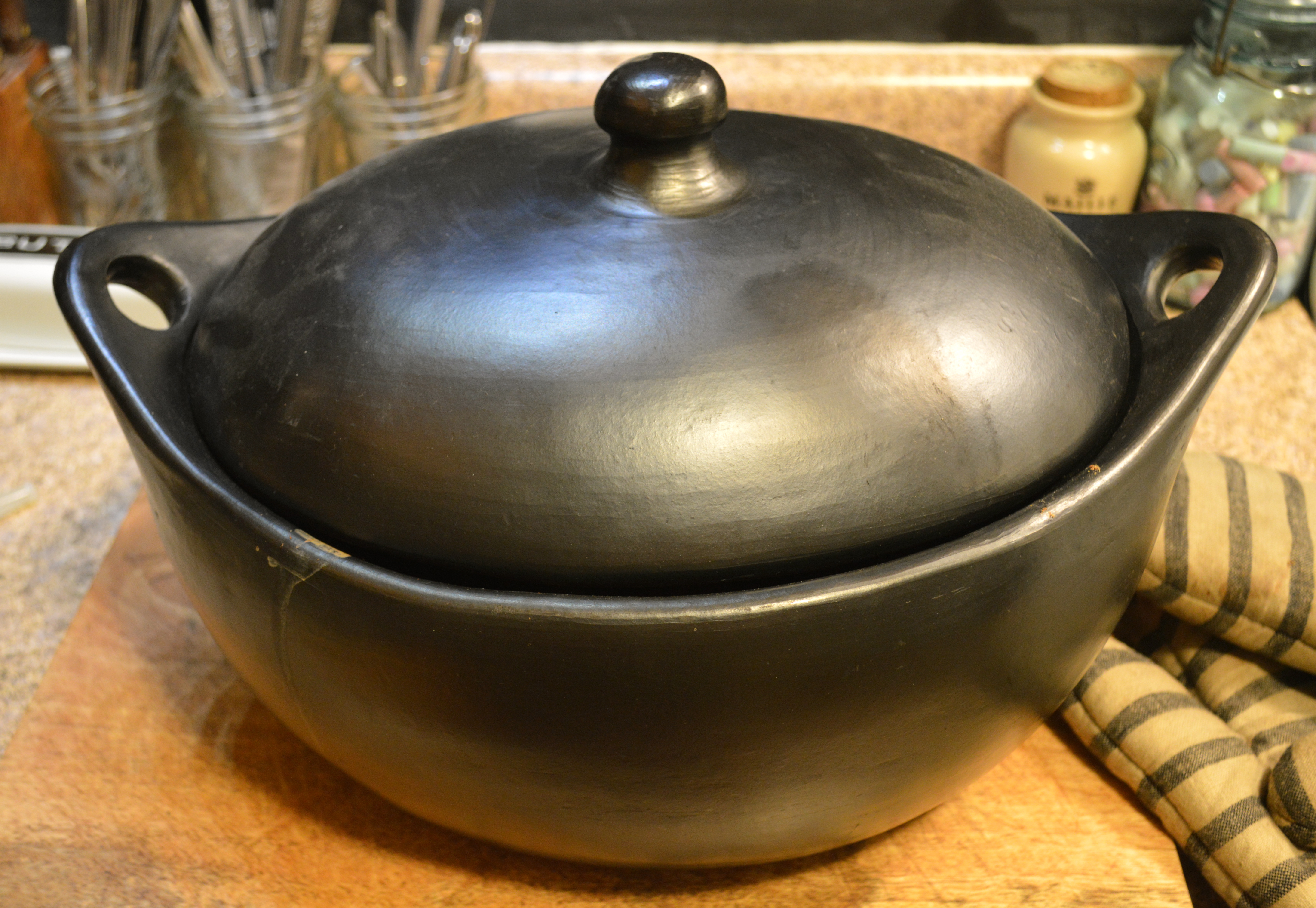
I made this using my La Chamba oval roaster. This is not a proper enameled cast iron dutch oven like Julia would have used, but it worked really well for me. If you’re not familiar, La Chamba pots are oven and stove top safe cookware handmade in Columbia from volcanic black clay. It’s made of magic.

When I first got this roaster I was a bit afraid of using it over a flame. I tried my best to use caution and keep the flames low and safe, but it’s hard to brown anything over a low flame. Most braising recipes call for the meats and vegetables to be browned in the pot to build flavor before the liquids added, and my initial fear made for some, well, subtle braises. Anyway, after using this pot a few times I’ve learned that it can handle pretty much anything I can throw at it. High heat, high flame, hours in the oven, you name it. The only cautions I’d offer up are that it won’t take temperature shocks well, so don’t take it from the refrigerator to the stove top, and that you do need to use some kind of cooking oil or liquid when cooking in it.

boeuf bourguignon in la chamba roaster | Brooklyn Homemaker

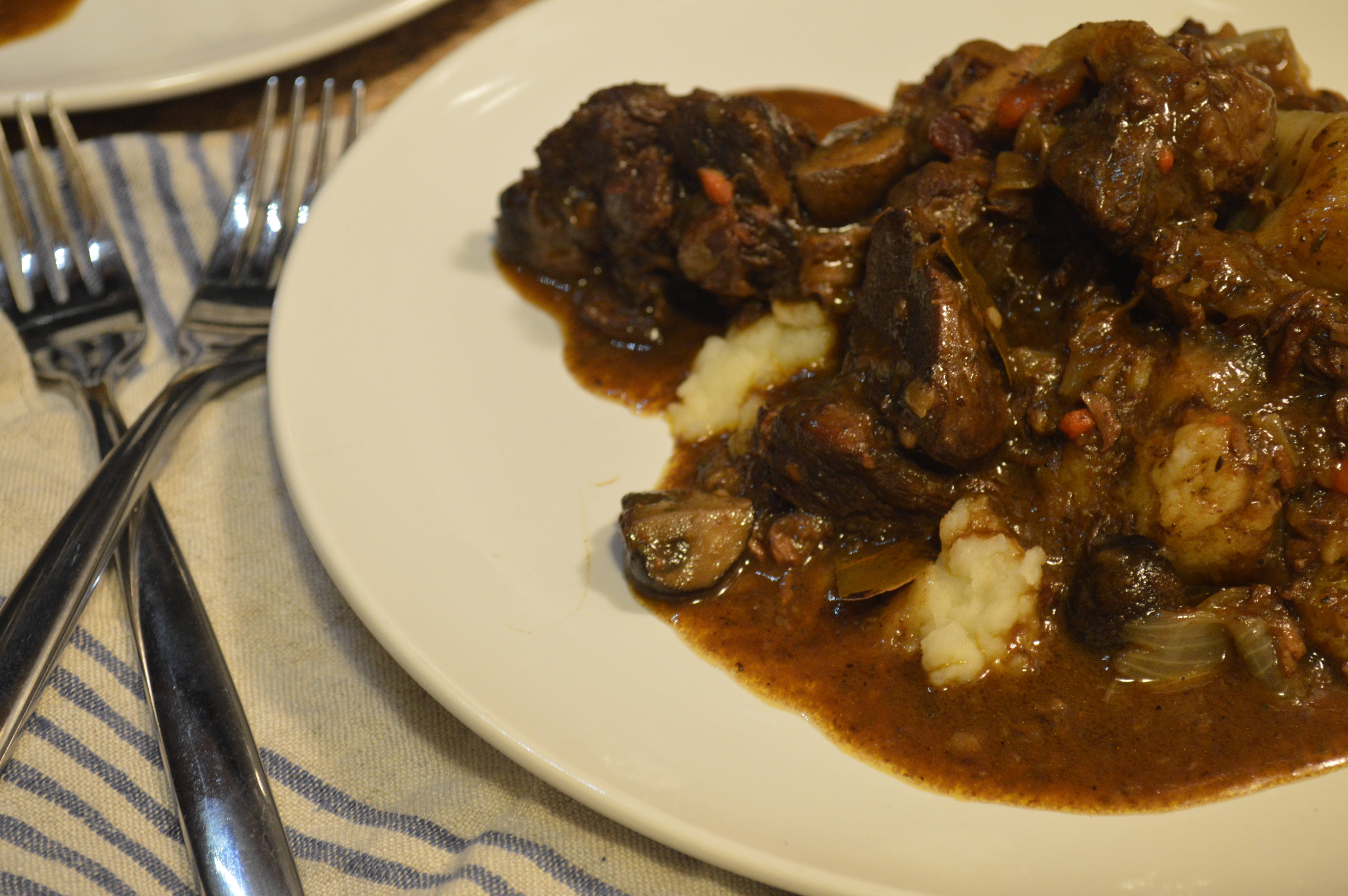
So, fussy onions or not, this recipe is seriously unbelievable. It took every ounce of strength in us not to eat the whole pot of stew in one sitting. It was a lot of work with all the browning and cooking and straining and reducing and all, but it was well worth it. Seriously amazing. The time in the oven mellows the flavor of the wine and it just comes out tasting super rich and hearty, and not at all like what you started with. I served it over mashed potatoes with a couple big glasses of, you guessed it, red wine.

I’m not really someone who cooks much beef at home, and have never been a huge fan of beef stew. I’ve tried a few different recipes and have never really loved the results. This recipe has changed everything. The meat is crazy tender, turning to mush when it sees the fork coming at it. It’s hearty and rich and wonderful. It’s so amazing that I don’t have words. I can’t even begin to describe how good this is. You’ll just have to find out for yourself.

This will have to be another new Christmas tradition for us.

boeuf bourguignon | Brooklyn Homemaker

Boeuf Bourguignon

adapted from Mastering the Art of French Cooking

One 6-ounce piece of chunk bacon
3 1/2 tablespoons olive oil
3 pounds lean stewing beef, cut into 2-inch cubes
1 carrot, sliced
1 onion, sliced
Salt and pepper
2 tablespoons flour
3 cups red wine, young and full-bodied
2 1/2 to 3 1/2 cups brown beef stock
1 tablespoon tomato paste
2 cloves mashed garlic
1/2 teaspoon thyme
A crumbled bay leaf
18 to 24 small white onions
3 1/2 tablespoons butter
Herb bouquet (4 parsley sprigs, one-half bay leaf, one-quarter teaspoon thyme, tied in cheesecloth)
1 pound mushrooms, fresh and quartered

Remove bacon rind and cut into lardons (sticks 1/4-inch thick and 1 1/2 inches long). Simmer rind and lardons for 10 minutes in 1 1/2 quarts water. Drain and dry.
Preheat oven to 450 degrees.
Sauté lardons in 1 tablespoon of the olive oil in a flameproof casserole over moderate heat for 2 to 3 minutes to brown lightly. Remove to a side dish with a slotted spoon.

Dry beef in paper towels; it will not brown if it is damp. Heat fat in casserole until almost smoking. Add beef, a few pieces at a time, and sauté until nicely browned on all sides. Add it to the lardons.
In the same fat, brown the sliced vegetables. Pour out the excess fat.
Return the beef and bacon to the casserole and toss with 1/2 teaspoon salt and 1/4 teaspoon pepper. Sprinkle on the flour and toss again to coat the beef lightly. Set casserole uncovered in middle position of preheated oven for 4 minutes. Toss the meat again and return to oven for 4 minutes (this browns the flour and coves the meat with a light crust).

Remove casserole and turn oven down to 325 degrees. Stir in wine and 2 to 3 cups stock, just enough so that the meat is barely covered. Add the tomato paste, garlic, herbs and bacon rind. Bring to a simmer on top of the stove. Cover casserole and set in lower third of oven. Regulate heat so that liquid simmers very slowly for 3 to 4 hours. The meat is done when a fork pierces it easily.

While the beef is cooking, prepare the onions and mushrooms.

Heat 1 1/2 tablespoons butter with one and one-half tablespoons of the oil until bubbling in a skillet. Add onions and sauté over moderate heat for about 10 minutes, rolling them so they will brown as evenly as possible. Be careful not to break their skins. You cannot expect them to brown uniformly. Add 1/2 cup of the stock, salt and pepper to taste and the herb bouquet. Cover and simmer slowly for 40 to 50 minutes until the onions are perfectly tender but hold their shape, and the liquid has evaporated. Remove herb bouquet and set onions aside.

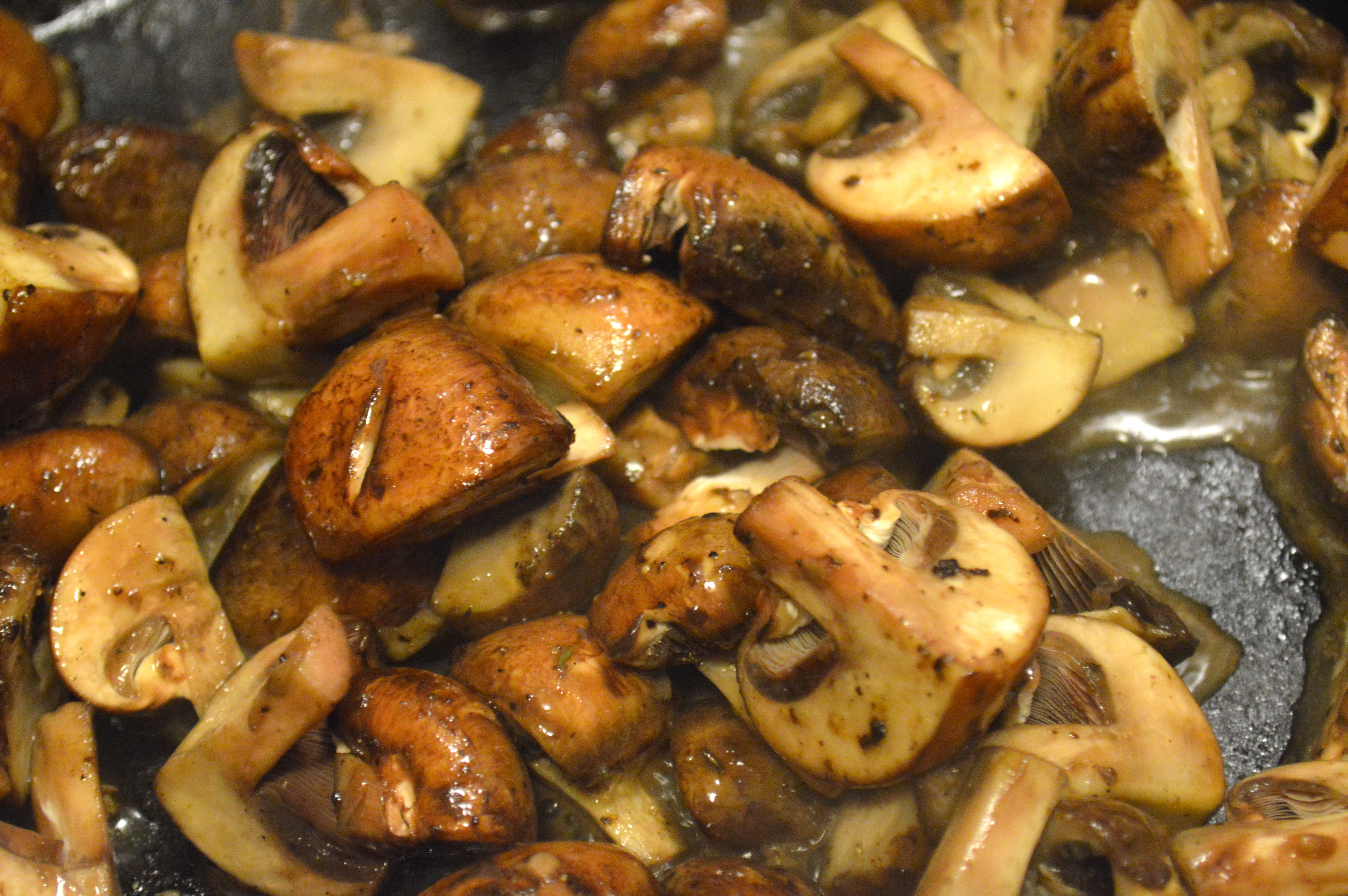
Wipe out skillet and heat remaining oil and butter over high heat. As soon as you see butter has begun to subside, indicating it is hot enough, add mushrooms. Toss and shake pan for 4 to 5 minutes. As soon as they have begun to brown lightly, remove from heat.

When the meat is tender, pour the contents of the casserole into a sieve set over a saucepan. Wash out the casserole and return the beef and lardons to it. Distribute the cooked onions and mushrooms on top. Skim fat off sauce in saucepan. Simmer sauce for a minute or 2, skimming off additional fat as it rises. You should have about 2 1/2 cups of sauce thick enough to coat a spoon lightly. If too thin, boil it down rapidly. If too thick, mix in a few tablespoons stock. Taste carefully for seasoning. Pour sauce over meat and vegetables. Cover and simmer 2 to 3 minutes, basting the meat and vegetables with the sauce several times.

Serve in casserole, or arrange stew on a platter surrounded with potatoes, noodles or rice, and decorated with parsley.