Desserts

Pfeffernusse

My family background is mostly German. Both sides of my family have German origins, but my paternal grandfather is the most recent to have moved to the US, having immigrated after WWII. I remember when I was younger he would spend hours on the phone speaking German to his brothers and sisters, most of whom all live spread throughout upstate New York. Christmas was always a time when they would send each other gifts that reminded them of home, and that time of year meant my grandparents house would be filled with all kinds of German treats.
pfeffernusse | Brooklyn Homemaker

Grandpa had an ever growing collection of beer steins that his cousins would send him from Germany. When my sisters and I turned 21 we started trying to find his favorite types of German liqueurs (he’s a fan of the sweet stuff) like Kirschwasser and Barenjager. My grandmother never really cared much for German food or cooking, so the German edibles around the house tended to be candies, cookies and cakes. One of his favorites was Stollen, a bready yeasted fruitcake filled with marzipan, candied fruit and nuts, and usually covered in powdered sugar or a thick white glaze.  I never really developed a taste for Stollen, but another one of his favorites, Pfeffernusse, I absolutely love.
pfeffernusse |Brooklyn Homemaker

Pfeffernusse, AKA Peppernuts, is a strongly flavored European spice cookie. It’s kind of similar to a strong gingerbread in flavor, but with a bit less ginger, and with finely ground black pepper instead. Pfeffernusse traditionally has some ground or finely chopped nuts in it, along with citrus zest, molasses and brandy. Some say this is an acquired taste, but I just think it’s not what people expect when they pick them up. Either way, this is an amazing underrated cookie that you will love if you give it a chance. They have a very subtle sweetness with a pleasant old-world holiday spice flavor. They also have a really fun name. Just say it out loud. Pfeffernusse. Pfeffernusse. Pfeffernusse!
pfeffernusse |Brooklyn Homemaker

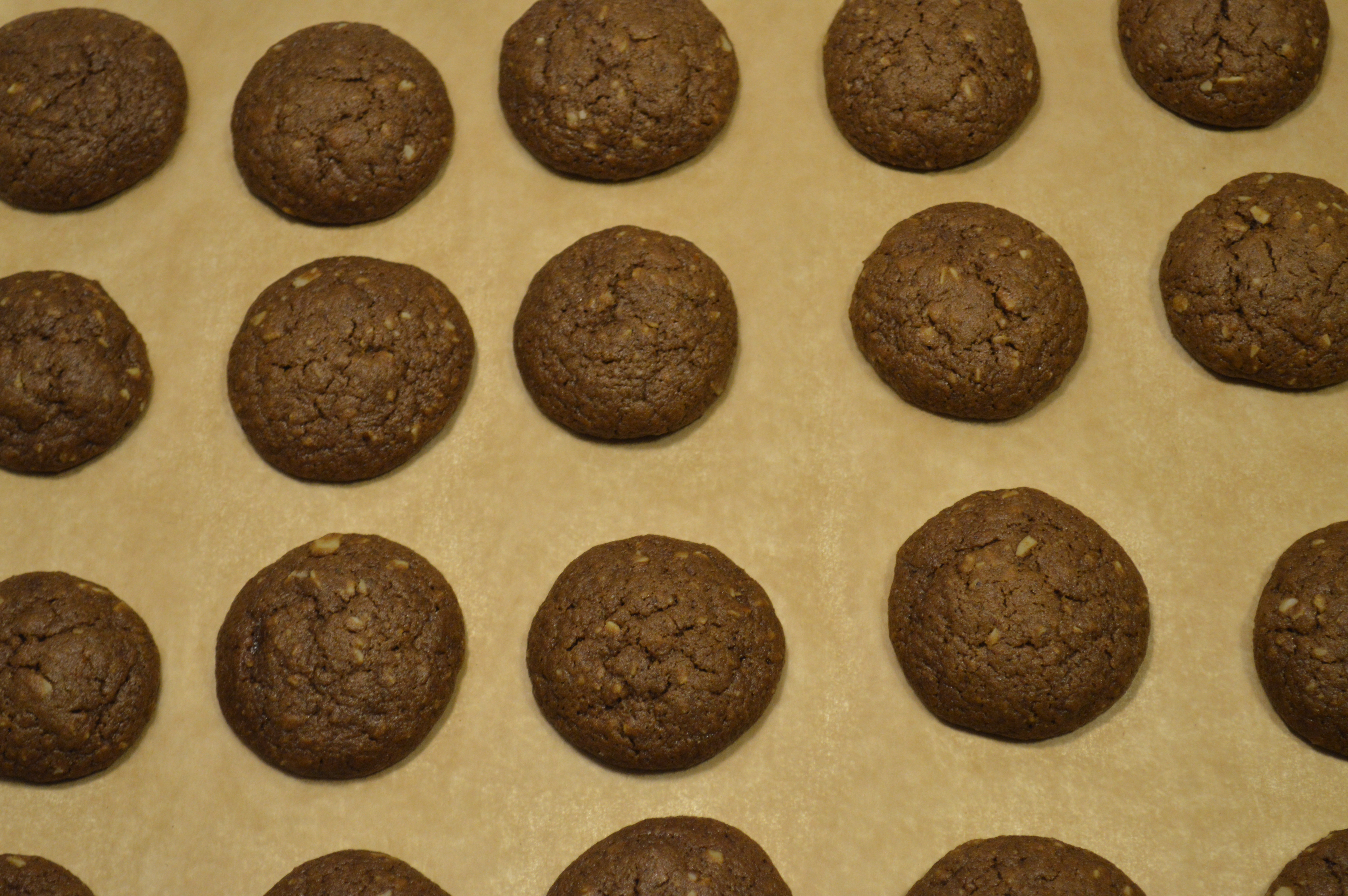
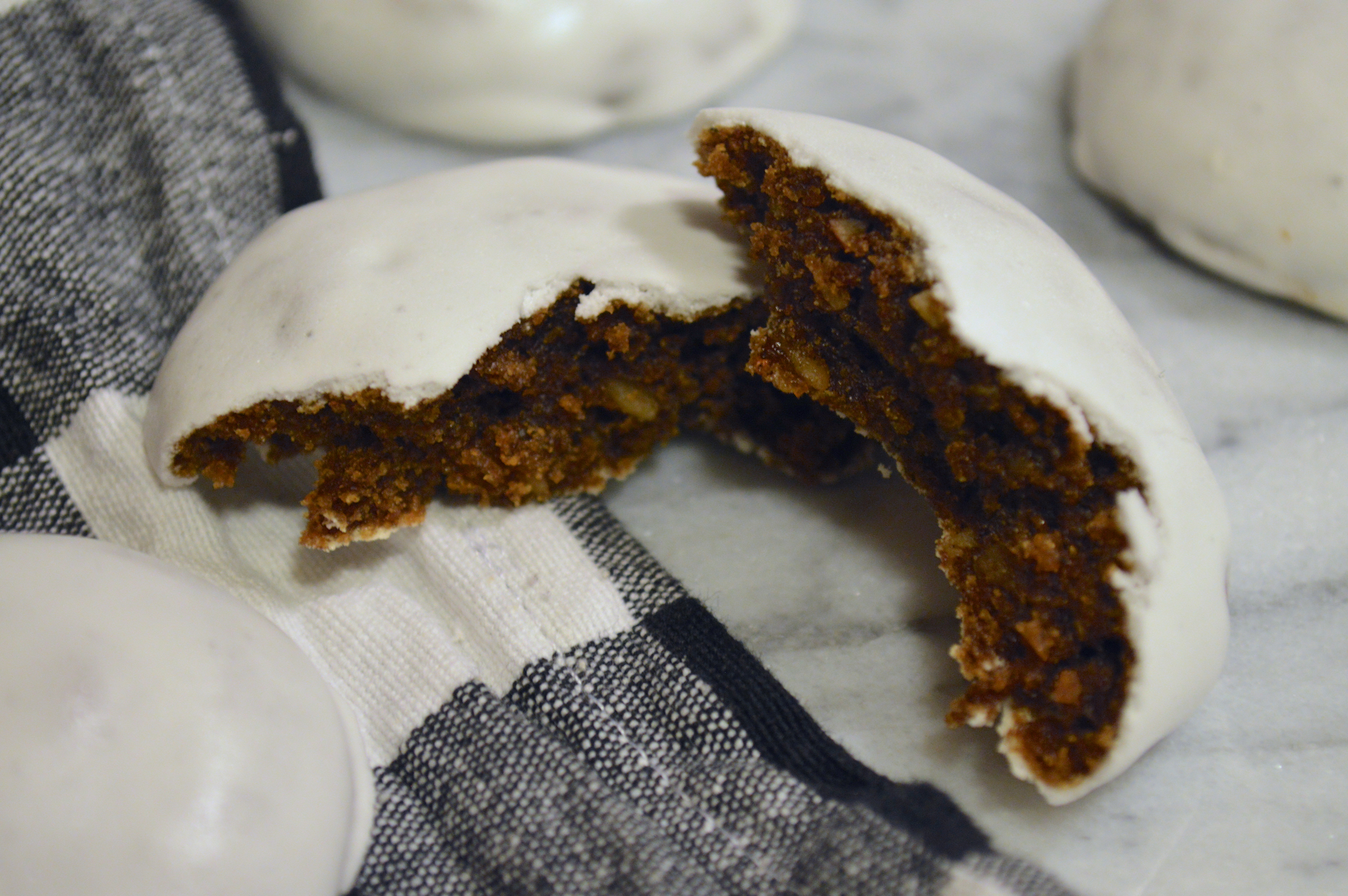
There are a lot of pfeffernusse recipes out there, but this one is as close to traditional as I could find. A lot of recipes I found didn’t have enough spice, many of them skipped the nuts and citrus, and most omitted the brandy. This recipe, from the Joy of Cooking, is just what I was hoping for. Store bought pfeffernusse can sometimes be a bit dry, but this recipe produces a moist, chewy and cakey cookie. It’s got a very respectable amount of spice, the molasses and brandy flavors really come through with the citrus close behind, and the soft almonds give it a bit of texture.
pfeffernusse | Brooklyn Home

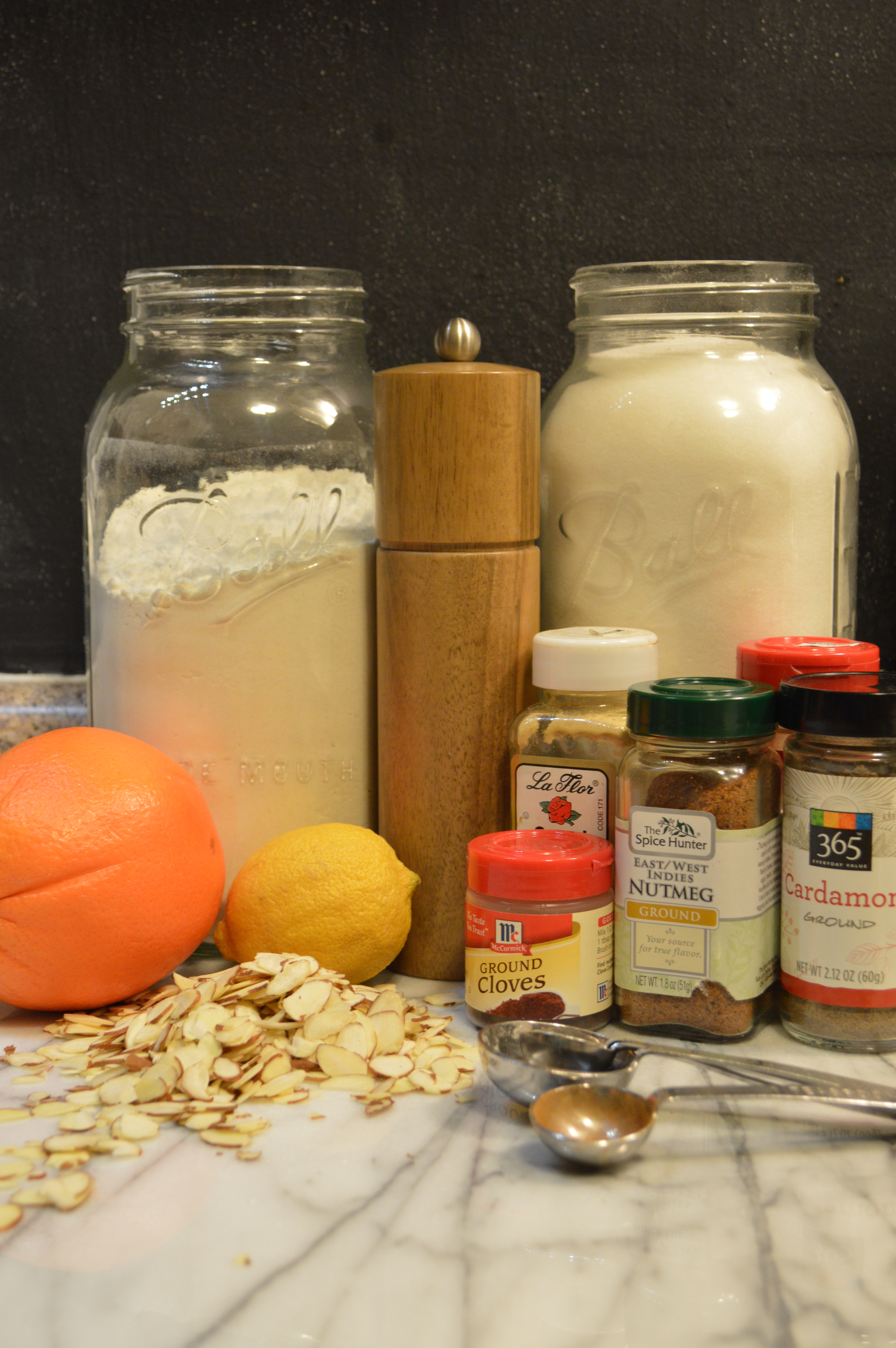
The list of ingredients in this recipe is substantial, with many different spices going into this cookie to give it it’s distinctive flavor. One spice you might not have in your cabinet is cardamom, but I implore you to try to find it. It has an exotic floral citrus flavor and is slightly reminiscent of cinnamon & ginger. It goes really well in spice cakes and similar desserts, especially desserts with apples. I love to add it to apple pie, and when I used to make apple butter I considered it my secret ingredient. As for the brandy in this recipe, it mostly bakes off in the oven, but imparts a great flavor and adds moisture, so I definitely wouldn’t skip it. If you don’t have brandy and don’t want to buy it to use a few tablespoons, you could sub it with another alcohol like rum or bourbon. Orange liqueur could be nice too but might make the cookies too sweet so you might want to reduce the sugar a tablespoon or two. I wouldn’t use Irish or Scotch whiskey because the flavor can be too strong or even smoky.
pfeffernusse | Brooklyn Homemaker

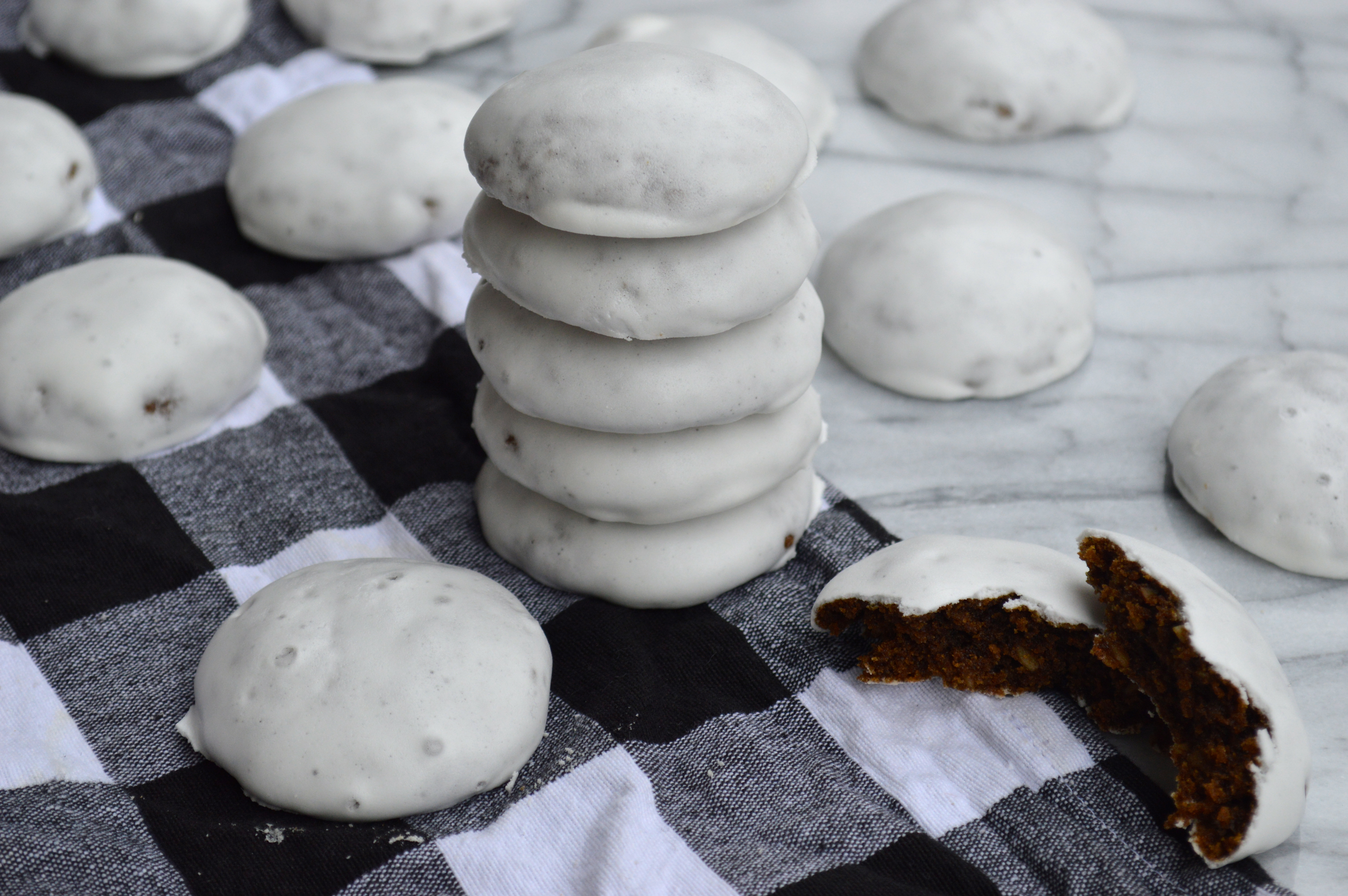
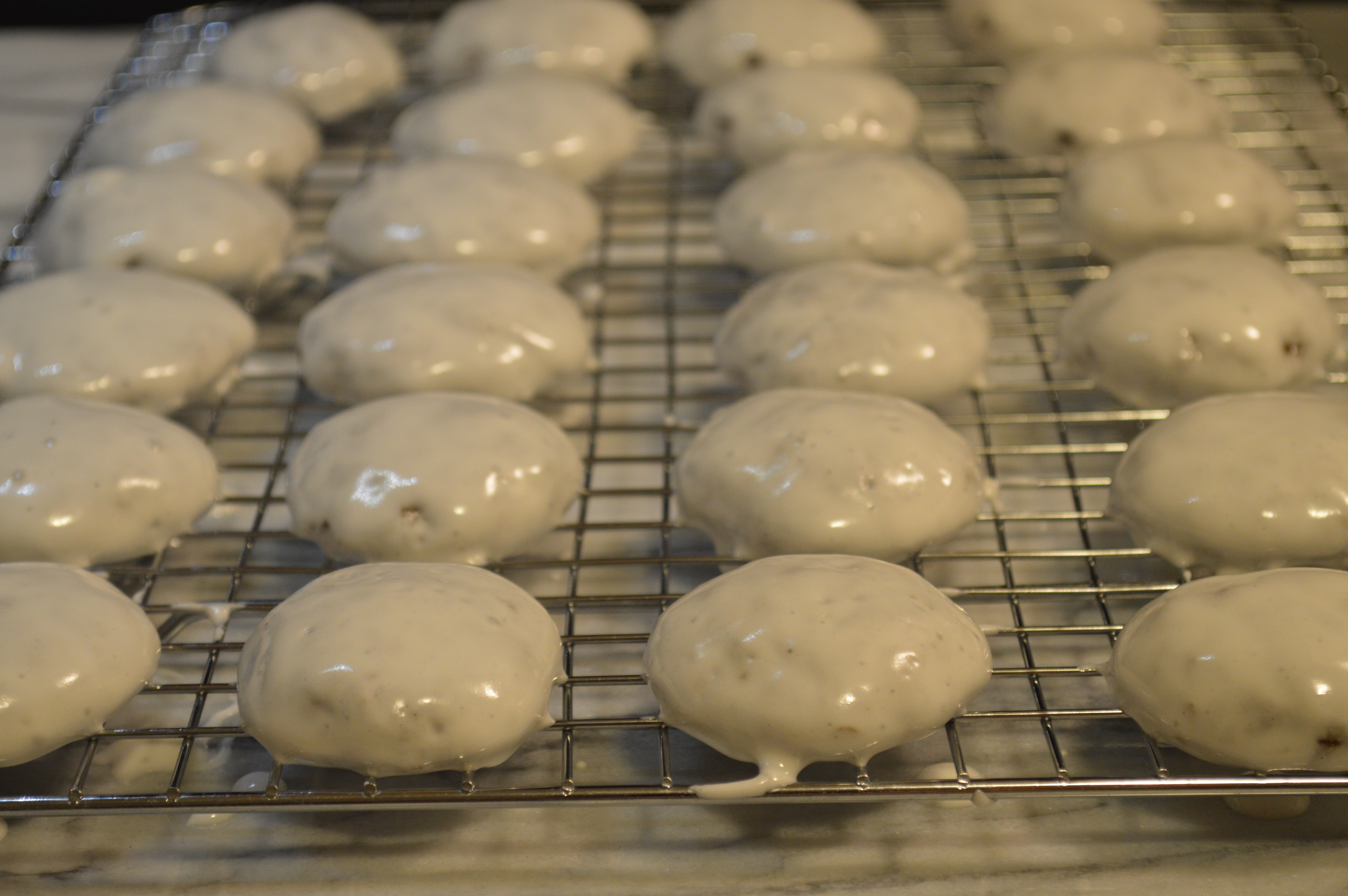
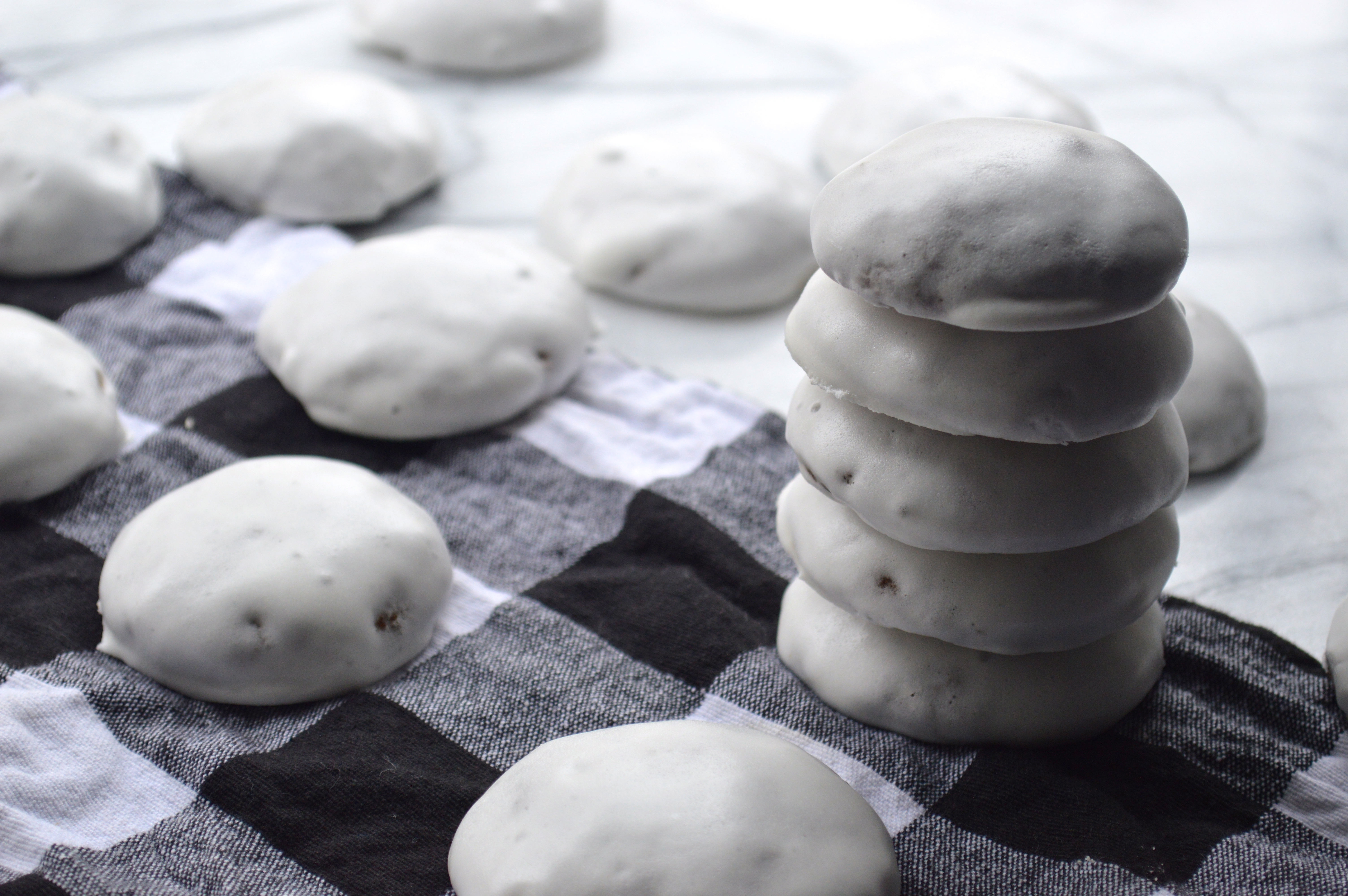
Most Pfeffernusse recipes I found called for them to be rolled warm through confectioners sugar. I’ve had them this way and they’re delicious, but I remember the cookies my grandfather eating when I was young having a stiff white shell of glaze, so that’s what I wanted. After a bit of searching I found what I was after. When you whip this glaze up it resembles marshmallow fluff, but thinner. You basically dip the whole cookie into it, let the excess drip off, and then dry the glaze in the oven while it’s cooling. Once the glaze has hardened you’re good to go. To dip these cookies I attempted to be dainty and polite, using a slotted spoon, but I quickly realized this was a job for clean hands. You’ll have it everywhere, and it’s sticky, but it’s so worth it. Once all your cookies are dipped you transfer them back to your baking sheet to dry. I used a small offset icing spatula, but a large butter knife should work well too.
pfeffernusse | Brooklyn Homemaker

If you’re looking for a new cookie recipe for the holidays, look no further. These cookies are said to be a favorite of Kris Kringle’s and they’re about to become one of yours. They might be a little unexpected, but most people with a grown up pallet will appreciate this European holiday treat. Anyone who enjoys spice cakes and gingerbread will surely fall in love with pfeffernusse. Traditionally they’re a small cookie, about an inch across when baked, but I made mine just slightly larger. I used a #60 cookie scoop, or about a tablespoon of dough for each cookie. I’d say a more traditional size would be about 2 teaspoons of dough, which would give you a few more finished cookies. They store and travel really well, so they’re perfect for taking home to family for Christmas, for sharing with friends at a cookie swap party, giving as gifts, or even mailing to the grandparents. They even improve with a few days age, so making ahead is a good idea, and they stay fresh for two weeks or more, so you might want to make extras!
pfeffernusse | Brooklyn Homemaker

Pfeffernusse

  • Servings: about 4 dozen 1.5 inch cookies
  • Print
Adapted from Joy of Cooking

2 cups plus 2 tablespoon all purpose flour
1/2 teaspoon baking powder
1/4 teaspoon baking soda
1/4 teaspoon salt
2 teaspoons ground cinnamon
1 teaspoon ground cardamom
1/2 teaspoon ground cloves
1/2 teaspoon grated or ground nutmeg
1/2 teaspoon ground ginger
1/2 teaspoon freshly ground black pepper
1/2 cup softened unsalted butter
1 cup sugar
2 large egg yolks (whites reserved for glaze)
1/2 cup finely chopped sliced or slivered almonds
2 teaspoons finely grated lemon zest
2 teaspoons finely grated orange zest
6 tablespoons molasses
6 tablespoons brandy (or rum or whiskey if you don’t have brandy)

Glaze:
3 egg whites
1 1/2 cups confectioners sugar

Whisk together flour, baking soda, baking powder, and spices in a medium bowl. With an electric mixer beat butter and sugar until very fluffy. Add egg yolk and beat until well combined. Stir in almonds and citrus zests, and scrape bowl. In a small bowl mix the brandy and molasses. Alternate stirring in flour mixture and brandy mixture until combined. Cover and refrigerate for at least 8 hours, up to 2 days, to allow flavors to blend together.

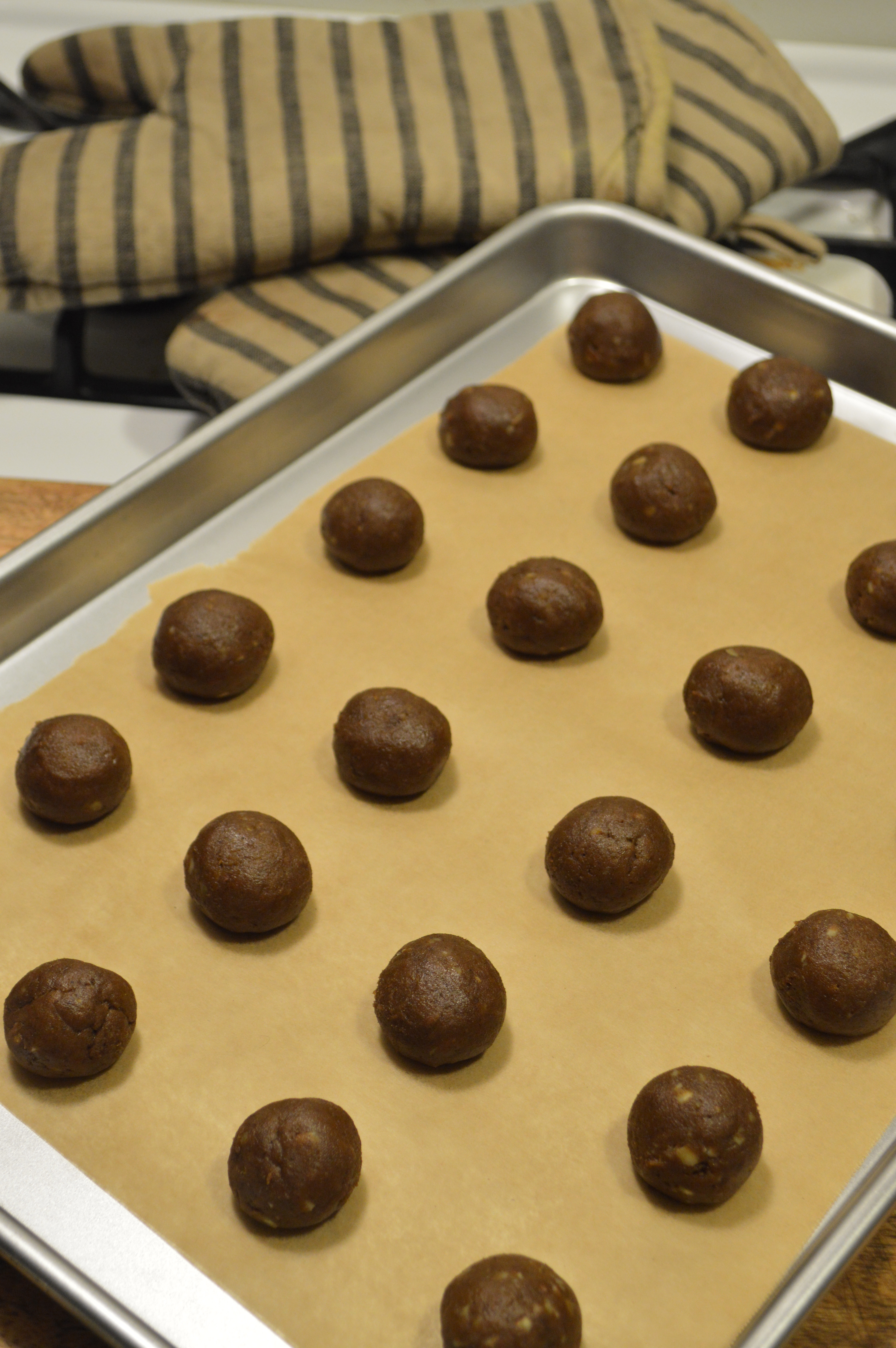
Preheat your oven to 350 degrees and line cookie sheets with parchment paper. Scoop about a tablespoon of dough, I used a #60 scoop, and roll into a ball in your hands. Line up cookies about an inch away from each other on your parchment. Refrigerate for 10 minutes or more, then bake, 1 sheet at a time, for 12-14 minutes or until lightly browned and no longer wet looking on top. Let cool for about 5-10 minutes before dipping in glaze.

To make your glaze, whip your egg whites to stiff peaks with an electric mixer. Slowly mix in confectioners sugar, and whip until completely combined with no lumps. With clean hands, dip your still warm cookies into the glaze and completely cover them. Let glaze drip back into the bowl and transfer cookies to a wire rack to allow any excess glaze to drip off. Once all your cookies are glazed transfer them back to your parchment lined pan and put them back in the still warm oven with the door open just a crack. Let the glaze dry in the oven for 5-10 minutes and transfer the pan to the counter. Let the glaze harden completely, for an hour or more, before serving or storing. If storing immediately, turn the cookies over and let the bottoms dry for an hour before stacking, and divide layers with parchment or wax paper to avoid sticking.

Red Velvet Cake with Ermine Icing

Okay so here’s the thing about red velvet… I don’t get it.

I used to work at a cupcake shop for a while, and our red velvet cupcakes were probably the best selling item on the menu. People went nuts for those cupcakes. Every day just as many red velvet cupcakes were baked as were all the other flavors combined, and on most days the red velvets were sold out before anything else. I thought most of the cupcakes there were phenomenal, but the red velvet was probably my least favorite. It was kind of bland, with no distinct flavor beside the cream cheese icing swirled on top. Not enough vanilla to be vanilla cake, so little cocoa flavor that I’m not convinced any was actually used. There were plenty of tastier and more interesting flavors to choose from, and I could never figure out why people always went for the red velvets. Are people really just into red velvet because it’s red? There has to be more to it than just the color right?

red velvet cake with ermine icing | Brooklyn Homemaker

Curiosity got the best of me and I started doing some digging on the internet. It turns out that the history of red velvet, the roots of it’s popularity and the original recipe, are pretty tough to nail down. There are almost as many stories about the origins of red velvet as there are recipes for “real” red velvet. “Real” red velvet means very different things to different people.

I’d always heard that red velvet cake originally turned “red” because of a chemical reaction between acid in buttermilk or vinegar and natural cocoa powder. This wouldn’t actually turn a cake RED, but it would, supposedly, produce a very slight reddish hue in a cocoa cake. The same is supposed to be true of the origins of devil’s food cake, but with a lot more cocoa. This sounded believable-ish to me, so in my mind the real “original” red velvet cake was supposed to be deep reddish brown, with a slight cocoa flavor, and of course, topped with cream cheese icing.

red velvet cake with ermine icing | Brooklyn Homemaker

Once I started digging though, I started running into some problems. First there were the various origin stories. Some people think the cake was invented in Canada by the wife of a wealthy department store president, others convinced that this quintessential southern cake was invented in the south, and others still are certain that it was invented at the Waldorf Astoria Hotel in New York City.

Then there were the recipes. Everyone believes that their red velvet recipe is the one true way it should be done. Google “real red velvet” and you’re going to come up with some wildly varied recipes. There are also a lot of “rules” about red velvet out there, many of them conflicting with the rules of the next guy. Most of the rules dictate something about the color, flavor, or icing of this iconic cake.

red velvet cake with ermine icing | Brooklyn Homemaker

According to the internets, the color of red velvet should always come from artificial color. If you don’t pour in the red food color, it’s not red velvet. Also, red velvet cake should never contain artificial color. If you’re using red food color, you’re doing it wrong. The color should come from cocoa powder and buttermilk, or vinegar, or both. The truth is that the red in red velvet cake needs a boost, but not from food color. Along with the cocoa and acid reaction, an additional boost of red should come from red wine. Actually it should come from beet juice.

Red velvet cake should have a very specific flavor profile that should not be messed with. It seems that red velvet cake is supposed to be a mildly chocolatey cocoa cake, since the red color comes mostly from natural cocoa’s reaction with acidic ingredients. Also, red velvet cake should have only a very slight, almost indistinguishable, cocoa flavor, since the color of this cake should be the star and too much cocoa would muddy the color. At the same time, recipes for red velvet cake should never contain any cocoa powder. Red velvet cake is a bright red buttermilk cake and cocoa would ruin both the color and flavor of this beloved cake.

The one thing I thought everyone agreed on was the icing. Everyone knows that red velvet cake calls for tangy cream cheese icing, always. Well, yeah. It turns out that some people think that the OG icing for red velvet was ermine icing, also known as butter roux icing, or boiled milk icing.

red velvet cake with ermine icing | Brooklyn Homemaker

Once I started weeding through the conflicting stories and varied rules and recipes, I started to uncover some facts. It seems that the name most likely evolved as the public’s tastes in sweets were changing at the turn of the last century. At first the name was mostly symbolic and never really had anything to do with the color of the cake.

In the late 1800s what we know as brown sugar used to be commonly known as red sugar. Any cake that used finely ground cake flour and had a fine crumb was referred to as a “Velvet” cake. So, at that time any cake with “red sugar” and fine cake flour could be referred to as a red velvet, but no one was really going crazy for red velvet yet, and there is little evidence of any printed recipes for anything like what we have today. At that time natural cocoa was the most commonly available cocoa on the market. Unlike today’s more common dutch process cocoa, the PH of natural cocoa does cause a chemical reaction with acid causing a very slight reddish hue. Devil’s food cake made with natural cocoa would have a slight reddish hue to the deep dark chocolate cake, and that is most likely the origin of that name. Red velvet cake is devil’s food’s less chocolatey cousin, but again, the cake was never really RED. At the time, these cocoa cakes were often referred to as “mahogany cakes”.

It wasn’t until the depression that red velvet cake turned truly red. Food additive and extract companies were struggling at the time because most Americans were cutting back on such luxury items. As a way to boost sales, the Adams Extract Company started marketing their food coloring and flavorings by giving out recipes for a truly red red velvet cake, complete with color photo, in grocery stores. That was when red velvet started taking off, especially in the south. The popularity waxed and waned for generations, and then there was the groom’s cake in Steel Magnolias. Boom. Everyone knew and wanted red velvet. And then a decade or so later, the cupcakes shops started popping up and pushing the red velvet on us.

red velvet cake with ermine icing | Brooklyn Homemaker

I’m no historian, and I don’t claim to know that any of what I’ve read is the absolute truth, but this seems like the most likely story. Unfortunately I haven’t been able to dig up the depression era recipe that made red velvet the popular cake that it is today. So, the “real” recipe still seems to be something of a mystery, but based on the history I think that natural cocoa is as important to the recipe as the red food color.

red velvet cake with ermine icing | Brooklyn Homemaker

Another point of contention is the icing. I’d always heard, and believed, that cream cheese was king when it came to red velvet cakes, and I was shocked to find out that this wasn’t always so. Cream cheese icing wasn’t really common with red velvet until the mid-twentieth century. Before that the traditional topping for red velvet was a creamy and light icing made by cooking milk and flour together, and whipping into creamed sugar and butter. It can be called Butter Roux frosting or Ermine frosting. In the south this icing was very popular because it’s whipped texture is similar to whipped cream, but it’s much more heat stable and keeps better.

red velvet cake with ermine icing | Brooklyn Homemaker

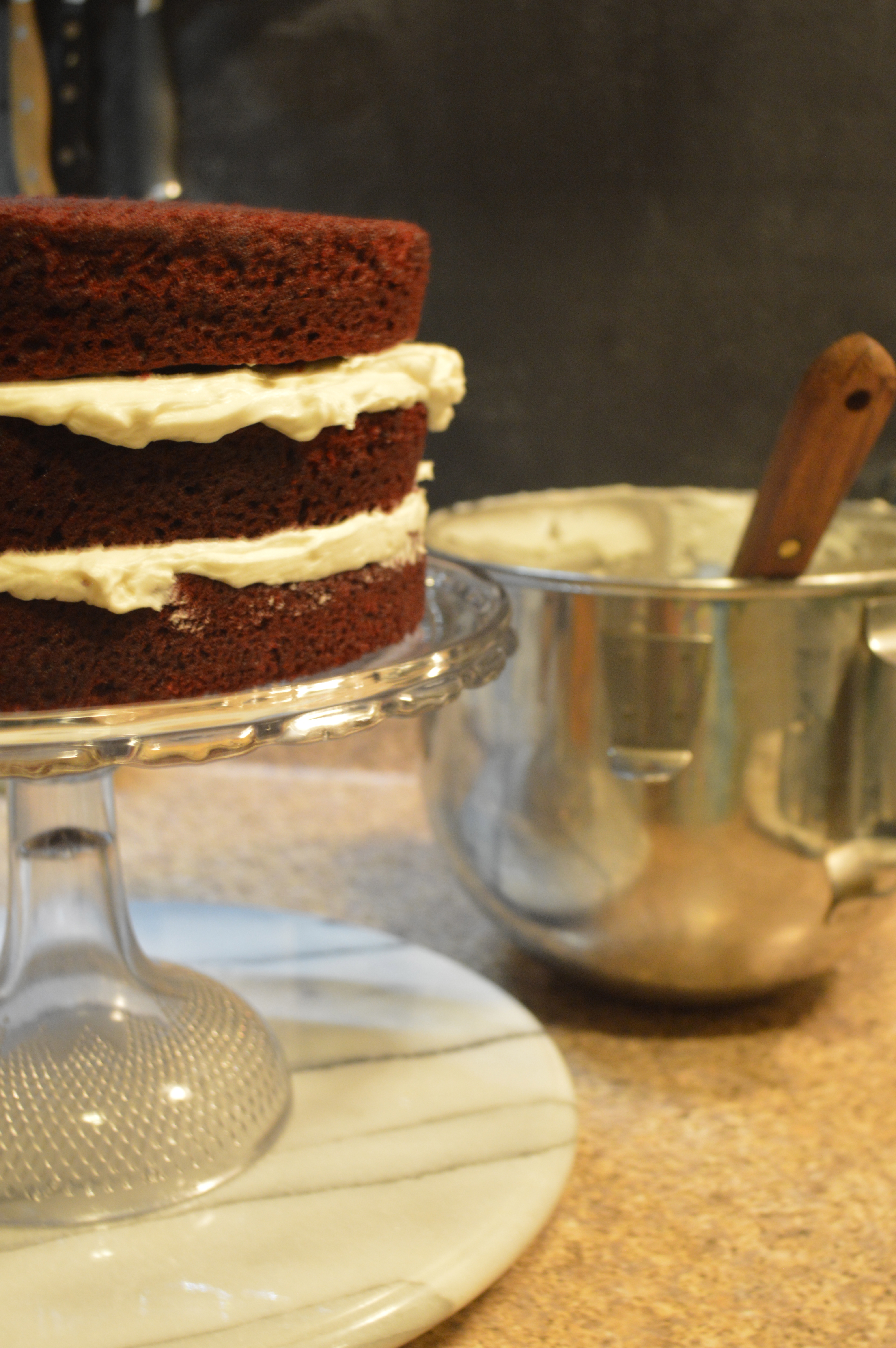
When I set out to bake my first red velvet cake, I knew I had plenty of recipes to choose from but had to decide which one would produce the cake that I wanted to end up with. I kept going back to natural cocoa and buttermilk but decided that adding red color was just fine with me. So, I checked in with my favorite food blog, Smitten Kitchen, and guess what, she had a recipe that sounded like exactly what I was looking for. I also decided I wanted to ditch the cream cheese icing and go back to the traditional ermine icing.

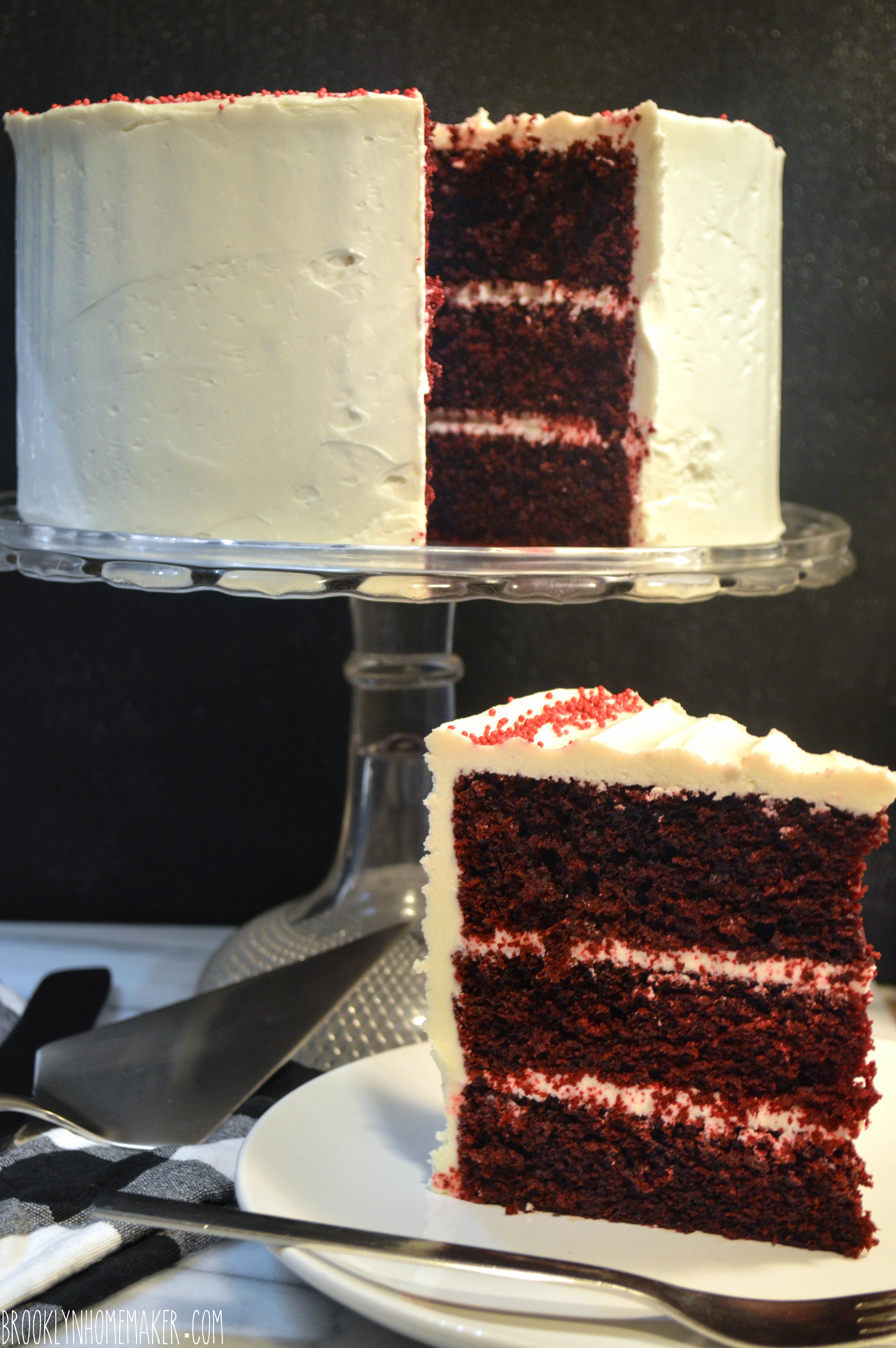
This recipe calls for a LOT of red food color. At first I thought it might be a typo. It’s not. Since there is more cocoa in this recipe than most, a lot of food color is needed to bring the red forward over the brown. Well. This cake is red alright. The batter before baking is literally beet red. It gets a bit darker in the oven, but even still, the finished cake is a deep dark RED. Pretty much the color you’d see if you sliced into an armadillo. Just sayin’.

red velvet cake with ermine icing | Brooklyn Homemaker

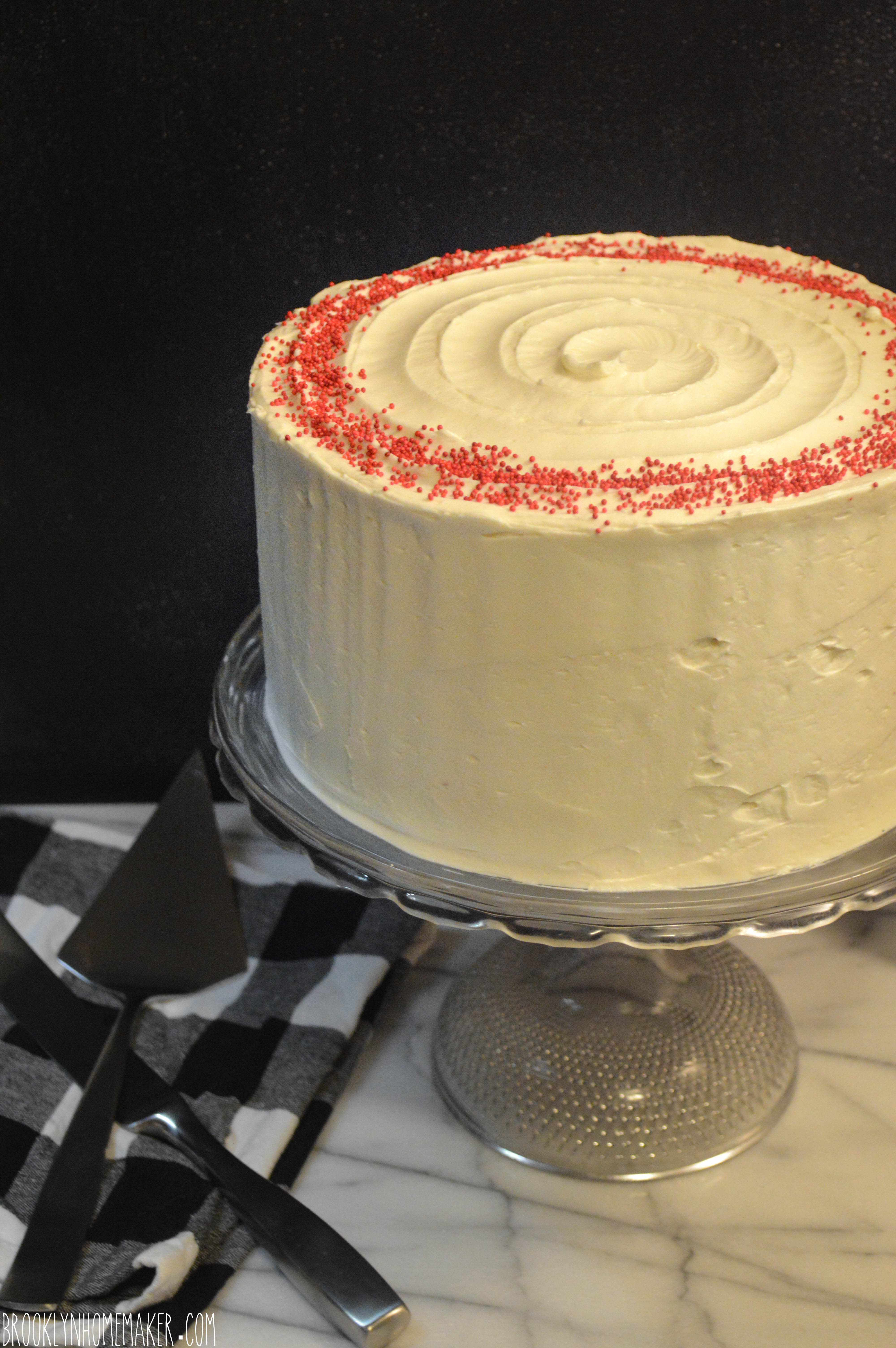
As a former red velvet naysayer, I have to admit that this cake is pretty amazing. The texture is perfect, super moist, with a very delicate light & fluffy crumb from the cake flour. You can definitely taste the cocoa, even though it doesn’t really scream chocolate. It also has a really pleasant delicate tang from the buttermilk and vinegar, which I think would be completely lost if I’d gone with the modern traditional cream cheese icing instead of the ermine. I totally love this icing, btw. It’s much easier to make than a meringue buttercream, but has a very similar stability, mouth feel and texture. It is easy to work with, frosts smoothly and tastes whipped, creamy, light and just sweet enough.

To be perfectly honest, if I’m going to make a cocoa cake I’d like even more chocolate flavor, and even though it’s kind of fun, the amount of food color that goes into this recipe makes me ever-so-slightly uncomfortable. If I’m baking a cake for me, I think I’d rather go for a devil’s food cake, which I think would be delicious (and beautiful) with this same icing. But for special occasions, or for people who love red velvet, this cake is a force to be reckoned with. Perfectly moist & fluffy, with just enough cocoa and buttermilk, and red red RED!

red velvet cake with ermine icing | Brooklyn Homemaker

Red Velvet Cake

  • Servings: makes one 3 layer 8 inch cake, feeds 12-16ish
  • Print
adapted from Smitten Kitchen

2 tablespoons butter
3 1/2 cups cake flour
1/2 cup unsweetened natural cocoa (not Dutch process)
1 1/2 teaspoons salt
2 cups peanut or canola oil
2 1/4 cups granulated sugar
3 large eggs
6 tablespoons (3 ounces) red food coloring (or 1 teaspoon red gel food coloring dissolved in 6 tablespoons of water)
1 1/2 teaspoons vanilla
1 1/4 cup buttermilk
2 teaspoons baking soda
1 tablespoon white vinegar

Preheat oven to 350 degrees. Place teaspoon of butter in each of 3 round 8-inch layer cake pans and place pans in oven for a few minutes until butter melts. Remove pans from oven, brush interior bottom and sides of each with butter and line bottoms with parchment.

Whisk cake flour, cocoa and salt in a bowl.

Place oil and sugar in bowl of an electric mixer and beat at medium speed until well-blended. Beat in eggs one at a time. With machine on low, very slowly add red food coloring, being careful it doesn’t splash. Add vanilla. Add flour mixture alternately with buttermilk in two batches. Scrape down bowl and beat just long enough to combine.

Place baking soda in a small dish, stir in vinegar and add to batter with machine running. Beat for 10 seconds.

Divide batter among pans, place in oven and bake until a cake tester comes out clean, 40 to 45 minutes. Let cool in pans 20 minutes. Then remove from pans, flip layers over and peel off parchment. Cool completely, and level layers with a cake leveler or sharp bread knife. Fill and crumb coat with ermine icing, and place in refrigerator for 30 minutes or more. Then ice and decorate as desired with remaining icing.

Ermine Icing
adapted from Tasty Kitchen 

7  tablespoons flour
1 1/2 cups milk
2  teaspoons vanilla
1 1/2 cup softened unsalted butter
1 1/2 cup Granulated Sugar

In a small saucepan, whisk flour into milk and heat, stirring constantly, until it thickens. You want it to be very thick, almost like brownie batter. Remove from heat and let it cool to room temperature. It must be completely cool before you use it in the next step. Stir in vanilla.

While the mixture is cooling, cream the butter and sugar together until light and fluffy. You don’t want any sugar graininess left. Then add the completely cooled milk/flour/vanilla mixture and beat the living daylights out of it. If it looks separated, you haven’t beaten it enough! Beat it until it all combines and resembles whipped cream.

“Gingerbread” Salt Dough Ornaments

When I was young my mom came up with an idea for my sister and I to make homemade christmas gifts without spending a lot of money. She made up a batch of dough, we rolled it out, and cut out cute Christmas shapes with cookie cutters. This wasn’t cookie dough though, it was salt dough. At the time I didn’t know the name of it, or even what was in it, but I knew we weren’t supposed to eat it. I can only imagine how hard that was for me at seven years old.   Salt dough is very simple to make, basically just flour, salt and water, and when you bake it it becomes very hard and will last forever if you keep it dry and clean.

"gingerbread" salt dough ornaments | Brooklyn Homemaker

Before we baked our “cookies”, we poked holes in the tops of each shape with a straw. After they came out of the oven we painted them with brightly colored craft paint, and strung through a piece of ribbon. Mom painted our names and the dates on the backs of each of them, and we had personalized handmade Christmas ornaments that we gave away to our family as gifts. My grandmother had those ornaments hanging on her tree each and every year until she stopped putting it up when we went away to college.

"gingerbread" salt dough ornaments | Brooklyn Homemaker

It turns out that salt dough has been around for centuries and can be traced back to ancient Egypt. Flour and water is mixed with salt as a preservative and the dough can be worked with kind of like clay. Then it’s baked at a low temperature for long enough to remove all the moisture and harden the finished product.  Some people use salt dough to make elaborate sculptures and creations, but most people use it for children’s crafts. The dough is easy to make, easy to work with, non-toxic, and can be made from things most people already have at home.

"gingerbread" salt dough ornaments | Brooklyn Homemaker

At work last year we were coming up with ideas for our Christmas window and I thought it might be fun to make a grown-up version of these ornaments. We sell a lot of bakeware so I thought it would be really cute to have pretty sugar cookie snowflakes hanging in the window. I wanted them to look as real as possible, so I used real royal icing and sprinkles to decorate them. They came out beautiful and I packed them up in boxes and took them to work with me.

To my dismay, much of the detailed royal icing piping started to flake off of the cookies when we tried to hang them. I’m not exactly sure what went wrong but I’m certain it had something to do with the super high salt content. We still had enough in tact that we were still able to use them in the window, and the display was absoultely beautiful. No one would have guessed that there had been any problems, but I learned a valuable lesson. Real royal icing on salt dough fake cookies is a big fat NO.

"gingerbread" salt dough ornaments | Brooklyn Homemaker

This year I decided to give salt dough another go, but knew I should look for a better “icing” solution. I wanted to recreate the look and texture of royal icing, but using a more permanent medium. My first thought was puff paint. In the 90s you couldn’t walk down the street without tripping over a tube of puff paint, but in 2013 it seems like it’s impossible to find. I’m sure that big craft stores sell it, but I don’t have a car and couldn’t get to a craft store. I tried using some white caulk that I had leftover from my kitchen backsplash project, but the consistency was too thick and it was difficult to work with. After that I decided to try calling the local art supply store and see if they had any suggestions. They pointed me toward a product called light molding paste, which has almost the same consistency as frosting. I tried using it as is, piping it from a pastry bag with small round tip (or writing tip) and it piped out really nicely. Sprinkles and glitter stuck to it really well too, and I got some really nice results using it. The only issue I had was that it’s slightly thicker than royal icing, more like frosting, and doesn’t smooth out the way royal icing does. Since molding paste is water soluble, I tried thinning it out just slightly with water to get a thinner consistency.

"gingerbread" salt dough ornaments | Brooklyn Homemaker

I’m so glad I called that art store. This stuff was perfect. It was very easy to thin out to the consistency I wanted, and piped just like the real thing. It was easy to work with, and simple soap and water cleaned it up with no trouble. It dried nice and hard too and stayed stuck to the salt dough with no problems. I’m assuming that puff paint would probably work well too- but this stuff was truly ideal. I’d definitely recommend it if you want to try this project yourself. You can find it at any art supply store and they have it at the big craft stores too. I used Golden brand, and it’s important that you get the light molding paste.  Since I didn’t completely cover my ornaments I didn’t use much either. I bought the smallest container the store had, and after decorating probably about 30+ ornaments I still have half a jar left.

"gingerbread" salt dough ornaments | Brooklyn Homemaker

Since I wanted my ornaments to look like gingerbread cookies and not sugar cookies, I decided to color the dough. I could have used food color or paint, but I wanted to try to achieve a more natural molasses and spice kind of brown color. I also thought that it would be great if the finished ornaments had a nice gingerbready smell, so I decided to use spices to color my dough. In my test batch I used ginger, nutmeg, clove and cinnamon. It smelled amazing in the oven, but after a long slow bake they didn’t smell like much after they cooled. I noticed that the best gingerbread color came from the cinnamon, so when I made the next batch I skipped the other spices all together.  You can use more or less depending on how dark you’d like the dough, but cinnamon is really all you need to get the color right. My advise would be to use the cheapest cinnamon money can buy. Go to the dollar store and buy the flavorless stuff you’d never actually want to bake with. Don’t waste the good stuff on these. You need a lot of it to get the color right, and you’re never going to get to eat these “cookies”.

I also noticed in my test batch that in the first half hour of baking the salt comes to the surface of the dough, bleaching out the exposed surface and fading the color I worked so hard to get right. The side that was facing down and wasn’t exposed to the air was fine though, and once most of the moisture had baked off they could be flipped and continued baking didn’t bleach the other side. So, when I made my second batch I baked them with the side I wanted to decorate facing down. Bingo!

You should totally do that too.

"gingerbread" salt dough ornaments | Brooklyn Homemaker

To decorate the ornaments I fitted a disposable pastry bag with a Wilton #3 tip and filled it with my thinned light molding paste. Then I piped out a thin even line and made some designs. Some ornaments were just outlined, others got lines and dots, some had intricate snowflake designs, but you can do whatever you like. If you’ve never used a piping bag and pastry tip, I’d definitely recommend some practice before you dive into this project. This is permanent so you want them to be pretty near perfect. I promise it’s not as scary as you might think. Just twist the top of the bag closed so your “icing” doesn’t squeeze out the top when you put pressure on the bag. Then hold your tip a small distance from your ornament and squeeze the bag with slight and even pressure. Patience and practice. You could also just “frost” your ornaments instead without thinning the molding paste and they would still look realistic and pretty.
Before the molding paste dried I covered the ornaments with glitter, nonpareils & dragees. I found a glitter that looked similar to a product I’ve seen in a cake decorating store- so the cookies still look very realistic.  I worked with a just a few ornaments at a time to make sure the molding paste didn’t dry before I put the glitter on it. Then I just shook the glitter off and set the finished ornament on a tray to dry. I completely covered each ornament in glitter, and was able to re-use the leftover glitter for the next batch of ornaments, over and over until I was finished.

Word of warning: Glitter is pretty but it’s also the devil. There is glitter everywhere. I’ve vacuumed, mopped, rinsed, showered, and scrubbed multiple times and I still see glitter everywhere. It on my floors, in the rug, on the counters, even on me. It’s been days and I still catch customers at work looking at me funny and realize I have glitter in my beard.

"gingerbread" salt dough ornaments | Brooklyn Homemaker

I couldn’t be happier with the results.

They came out beautiful. They really do look very similar to the real thing, and they look gorgeous on my tree. I’m really glad that I went with white decorations for them too. I’m sure that adding some color to the molding paste would be easy and the results would be beautiful, but these simple white ornaments go perfectly with our apartment. The white pops against the brown “cookies”, and they look chic, timeless and modern all at once. These photos don’t do them justice when the lights are on. They’re all sparkly and stuff!

You should definitely give this a try. Your Christmas tree will thank you. And then you will thank me. (You’re welcome.)

"gingerbread" salt dough ornaments | Brooklyn Homemaker

Gingerbread Salt Dough Ornaments

  • Servings: Makes about 15-20 (inedible) ornaments
  • Print
1 cup flour
1/2 cup salt
1/2 cup water
4-6 tablespoons cinnamon, or more, depending on how dark you want your dough

Preheat oven to 250 degrees. Mix all ingredients together in a medium bowl. If you want plain (non-gingerbread) dough, or want to color the dough, leave out the cinnamon. Knead the dough a few times on a lightly floured surface to be sure it’s well mixed and has a smooth consistency. Knead in more cinnamon if you want a darker color or more flour if dough feels too sticky. Lightly coat with flour (or cinnamon) and roll dough out to about 1/8 to 1/4 inch thick. These “cookies” will not rise at all- so make them as thick as you’d like the finished product to be. Cut into desired shapes, and cut a small hole with a straw or piping tip.  Transfer to a parchment lined baking sheet, making sure the side you want to decorate is face down. Bake for 2-3 hours or until completely dry.

Allow the ornaments to cool completely. Using a pastry bag with a small writing tip, pipe on desired design with light molding paste. Puff paint should also work well for this. Decorate with glitter, small beads, or whatever you like. If you’re only using this for one season, sprinkles and candies work too. Allow “icing” to dry completely, for at least 4 hours. If desired, spray with a matte sealer and let dry according to directions. String some ribbon or bakers twine, tie a knot or bow and you’re ready to decorate!

*Update: This didn’t happen to my ornaments, but one reader said her ornaments bubbled up in the oven. I read up on it and learned that this can happen if they dry too fast or if the oven temp is too high, so I’d suggest getting an oven thermometer to be sure your oven doesn’t go above 250. To be extra careful, you may even want to try baking them at a 225 for a longer period of time.

Spiced Citrus Bundt Cake with Buttered Whiskey Glaze

Blogging is hard work you guys.  Who knew?

The first thing you think of when you read a food blog is, well, the food. But there’s a lot more that goes into blogging than just making food. You have to be able to sit down and write something, and you want it to be written well enough that someone will want to read it. Being able to write for an audience and have your writing be relatable and engaging is a challenge of it’s own. I definitely don’t want to be responsible for any eye-roll-induced headaches.

You also want to be able to photograph your food, and photograph it well enough that the food will look appealing and will make people want to make it themselves. Beyond having your food look nice in a picture, it should taste great too. I would never want to recommend a recipe I don’t stand behind. I could make a beautiful looking meal that tasted terrible, and no one would know until they tried to make it themselves. But what would be the point of blogging about food that isn’t any good? I want to share recipes with you that you’ll love and that you’ll want to make for your family and friends and keep on file to make again and again in years to come.

spiced citrus bundt cake with buttered whiskey glaze | Brooklyn Homemaker

There’s also a certain amount of pressure, probably self imposed, but also probably better for the blog, to post unique and original recipes. I’d rather share something interesting, something that gives me bragging rights, than to post a recipe I copied word for word and ingredient for ingredient from someone or somewhere else. Every once in a while a recipe is so good that tweaking would be completely unnecessary, such as the Aunt Sassy Cake that was my very first post, and of course when I find such a recipe I definitely want to share it with you. For the bulk of my posts though, the meat and potatoes if you will, I want to be able to say, “Why yes I did think this up all on my own, thankyouverymuch.”

spiced citrus bundt cake with buttered whiskey glaze | Brooklyn Homemaker

Over the 15+ years I’ve been cooking, I’ve learned enough to be completely confident toying with recipes to put my own spin on them. I think that most home cooks feel more comfortable making a savory meal their own than changing baking recipes. With a savory meal you can toss in a dash of this, a sprig of that, a splash of this other thing, and if you have a little experience and comfort with it, you’ll usually end up with something good, and sometimes something great. This makes cooking more exciting, and what keeps me wanting to get back in the kitchen to cook for myself and my husband.

When it comes to baking, it gets more complicated. Baking is about formulas and chemical reactions. It’s about math and science. Flour, sugar, leavening, fat & liquid; when combined in the correct proportions, should result in a tasty end product. If you get the ratio wrong though, you can end up with something heavy and flat, or dry, or burnt, or falling apart, or tasteless, or bad tasting. I am no pastry chef, and I won’t claim to be able to come up with a cake recipe from nowhere without needing at least a point of reference. I will say that I’ve been doing this long enough now that I’m comfortable toying with flavors and ingredients in my baking.  If I have an idea in my head for a cake with a certain flavor, I try to find a similar recipe that’s tried and true, and tweak it to try to make it my own.

spiced citrus bundt cake with buttered whiskey glaze | Brooklyn Homemaker

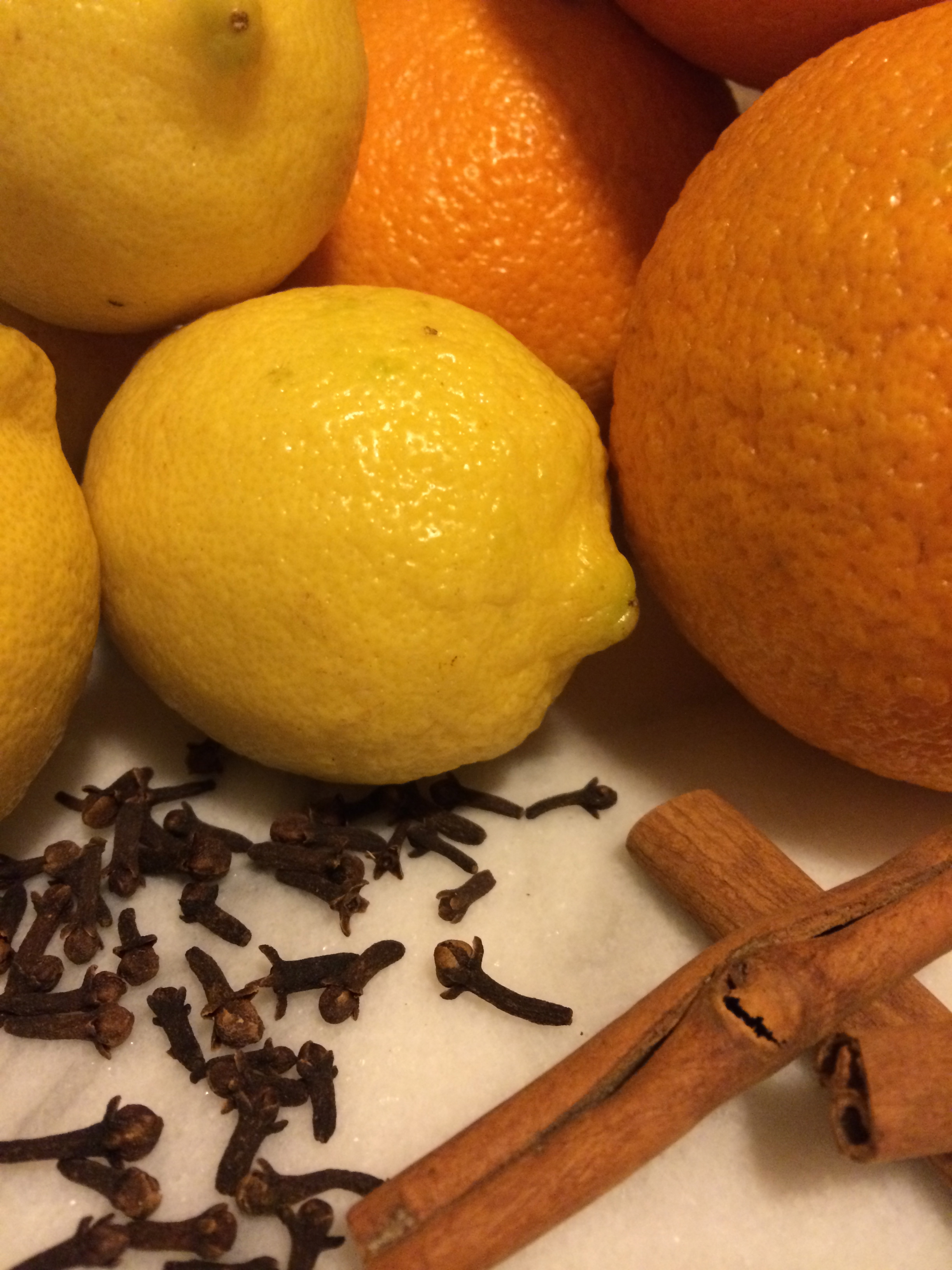
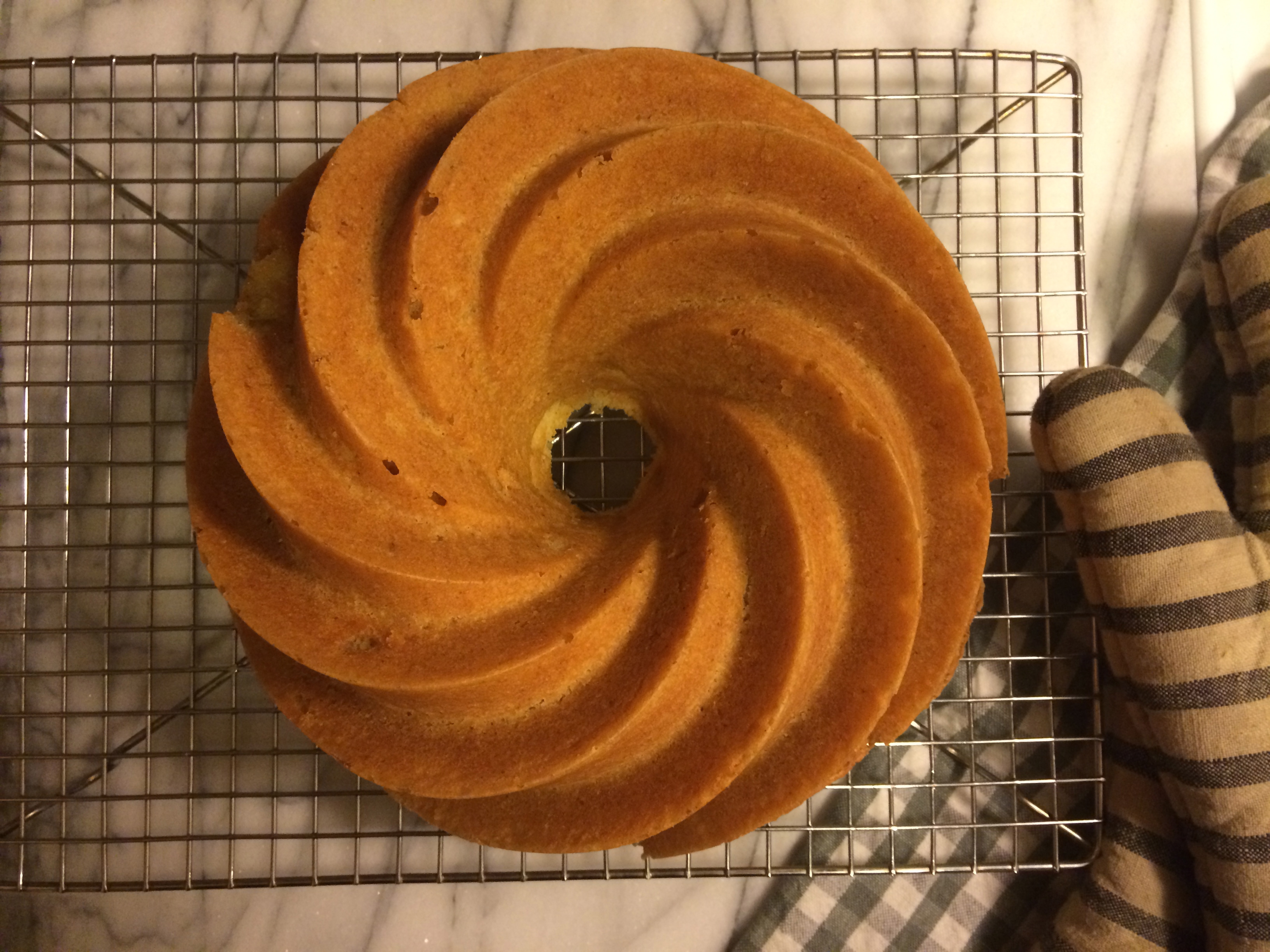
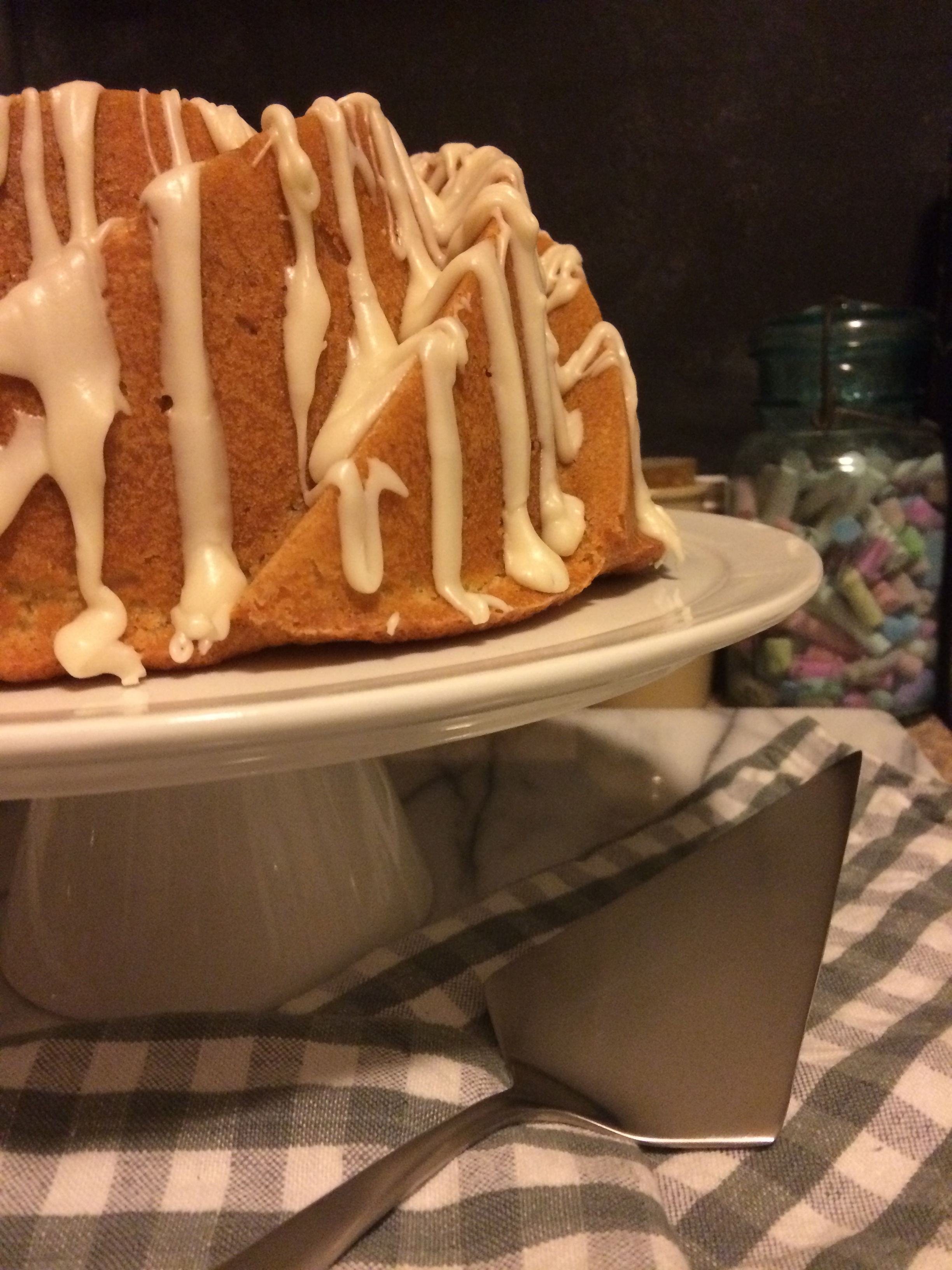
When I dreamed up this cake I was thinking about cold weather, cocktails with friends, and the smells and flavors of the holidays. I was thinking of citrus and spice and a little nip of something to warm you up. I started by finding a recipe for an orange pound cake  that I could convert. A bundt cakes tends to be slightly denser than a layer cake, so pound cake recipes usually translate well. Once I found a recipe that I thought would work well, I set to changing a few things to put my twist on it. I wanted to add a layered citrus flavor so I swapped some of the orange zest and juice for lemon. I also wanted a hint of warm homey spice, so I added some cinnamon and clove, some cardamom and bit of ginger for kick.

spiced citrus bundt cake with buttered whiskey glaze | Brooklyn Homemaker

Well. Sometimes things don’t always work out the way you expect them to. I’m not entirely sure what went wrong, but the first time around, this was a big ol’ failure with a capital FAIL. The flavor of the cake was great, with the perfect levels of citrus and spice, but the cake itself was dry dry dry. Like a loaf of bread. The original recipe called for an orange simple syrup to be brushed on the cake as it came out of the oven.  With a flat loaf-shaped pound cake it’s easy to brush on a syrup and let it soak into the cake, but with a bundt the syrup would run down the sloped sides and puddle on the bottom. I skipped the syrup, assuming wrongly that it was added mostly to boost the orange flavor and not needed to add moisture. Beyond being dry, I also thought the cake was just a bit too sweet for my taste, and if I’d used the syrup it would have been even sweeter still.

I knew though, that the idea for the cake was solid, the flavors worked really well together, and the cake was actually really pretty to boot. So, rather than admit defeat and move on, I decided it was time to try, try again. The next evening after work I went back in for another round, zesting and creaming and sifting and mixing. I dialed down the sugar just a touch, and added a bit more liquid, boosting both the citrus juice and the buttermilk for flavor. I also think that while butter adds the best flavor, cakes baked with oil usually end up impossibly moist, so I increased the amount of fat just a bit and swapped some of the butter for oil. I’ve played with this recipe so much now that I consider it completely my own.

spiced citrus bundt cake with buttered whiskey glaze | Brooklyn Homemaker

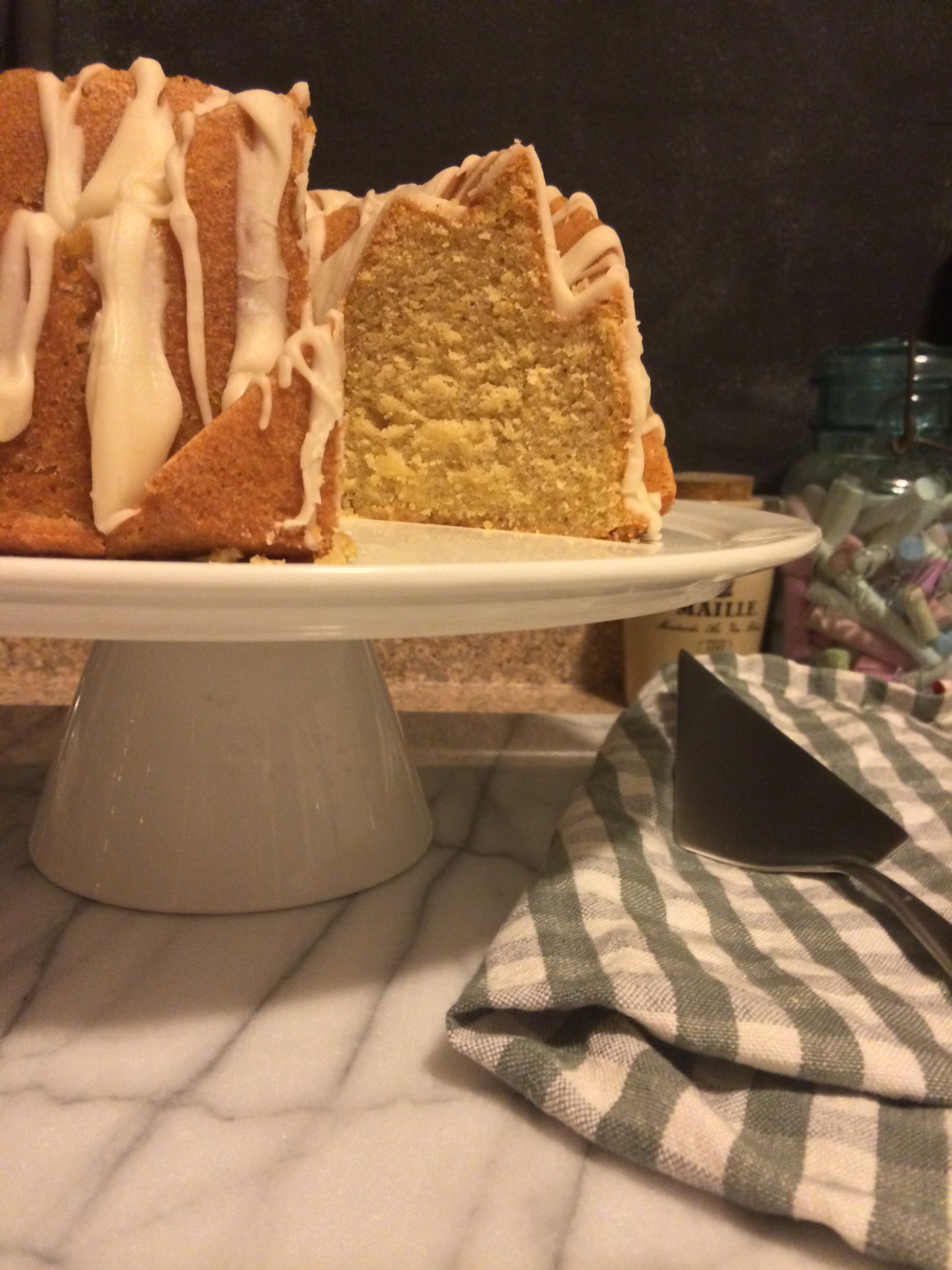
Boy did my determination pay off.  I was definitely able to fix the dryness issue, and now the cake is perfectly moist with a tender bite. This cake has it all. Good looks. Great flavor. Perfect texture. The total package. The combination of citrus and spice is comforting and somehow nostalgic. Cold weather always makes me want citrus. There’s something familiar and old fashioned about eating oranges shipped from warmer climates when the weather in the northeast is cold and windy. There is a reason that grocery stores start filling up with tangerines right around Christmas. This time of year you can usually start to find citrus married with spice too. Lemon and ginger tea, clove studded oranges, cinnamon sticks and citrus boiled on the stove to potpourri your home. Classic flavors people, now in cake form.

spiced citrus bundt cake with buttered whiskey glaze | Brooklyn Homemaker

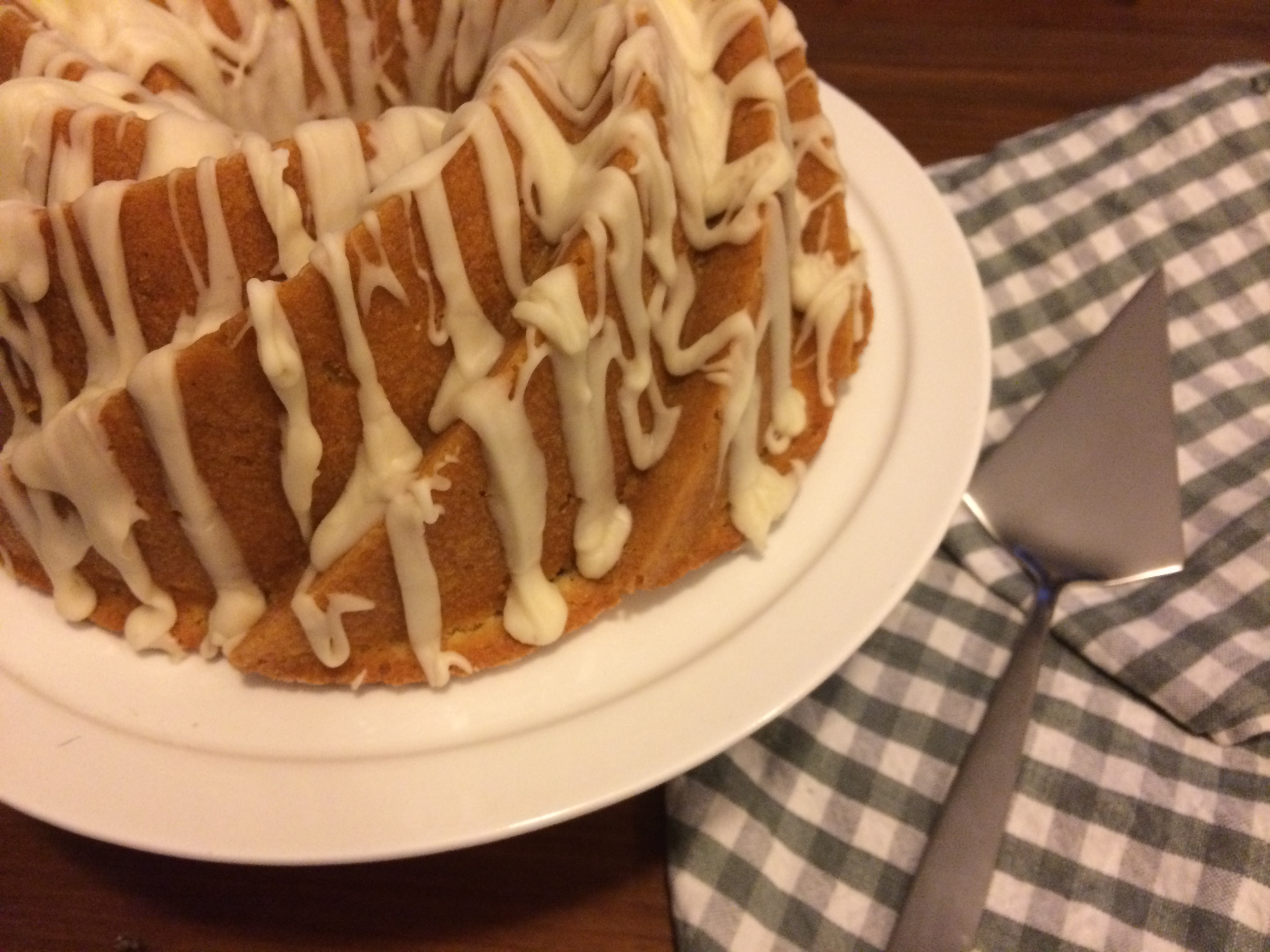
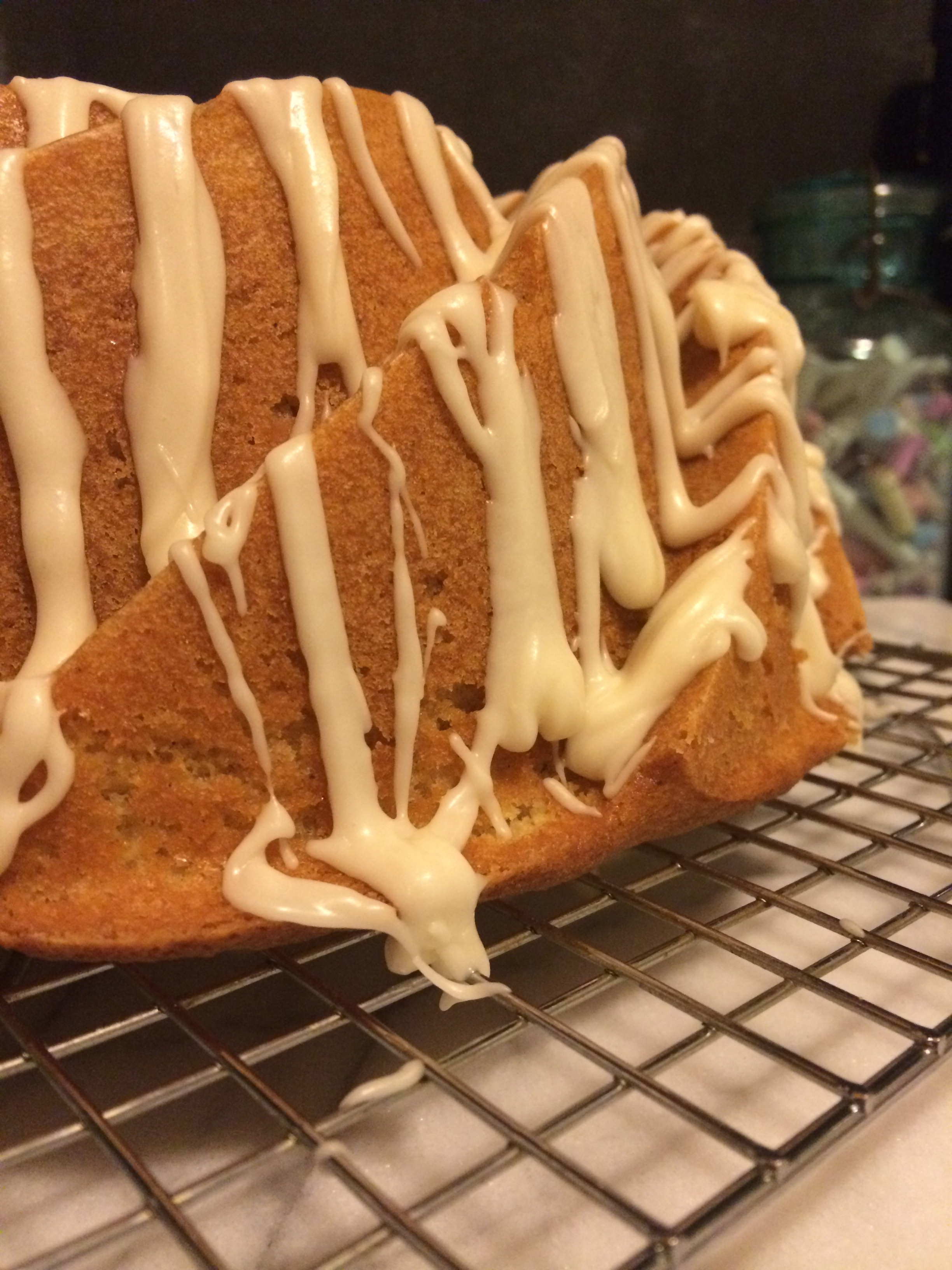
Then we have the whiskey glaze. The flavors of butter and whiskey drizzled over this cake is amazing. They marry incredibly well with the cold weather flavors of the citrus and spices, bringing to mind the flavors of a hot toddy. I used Bulliet rye, because that’s what I had on hand, but it would be amazing with Bourbon too. It’s easy to make, just a simple matter of melting some butter, mixing it with whiskey and whisking in confectioner’s sugar until there are no lumps. I melted the butter in the microwave in a pyrex measuring cup, and mixed the glaze up in the same cup for easy pouring.

The one word of warning is that this glaze is seriously boozey. Three tablespoons of whiskey might not seem like much, but there’s isn’t much else to this so the alcohol is front and center. It isn’t overwhelming since there’s just a small amount of it on each bite, but it definitely is an “adult” addition to this cake. If you want this to be a more family friendly recipe, or if you don’t like whiskey, skip it! A simple citrus glaze would be really great and just as easy- just whisk together some confectioners sugar and orange or lemon juice, maybe some zest too.

spiced citrus bundt cake with buttered whiskey glaze | Brooklyn Homemaker

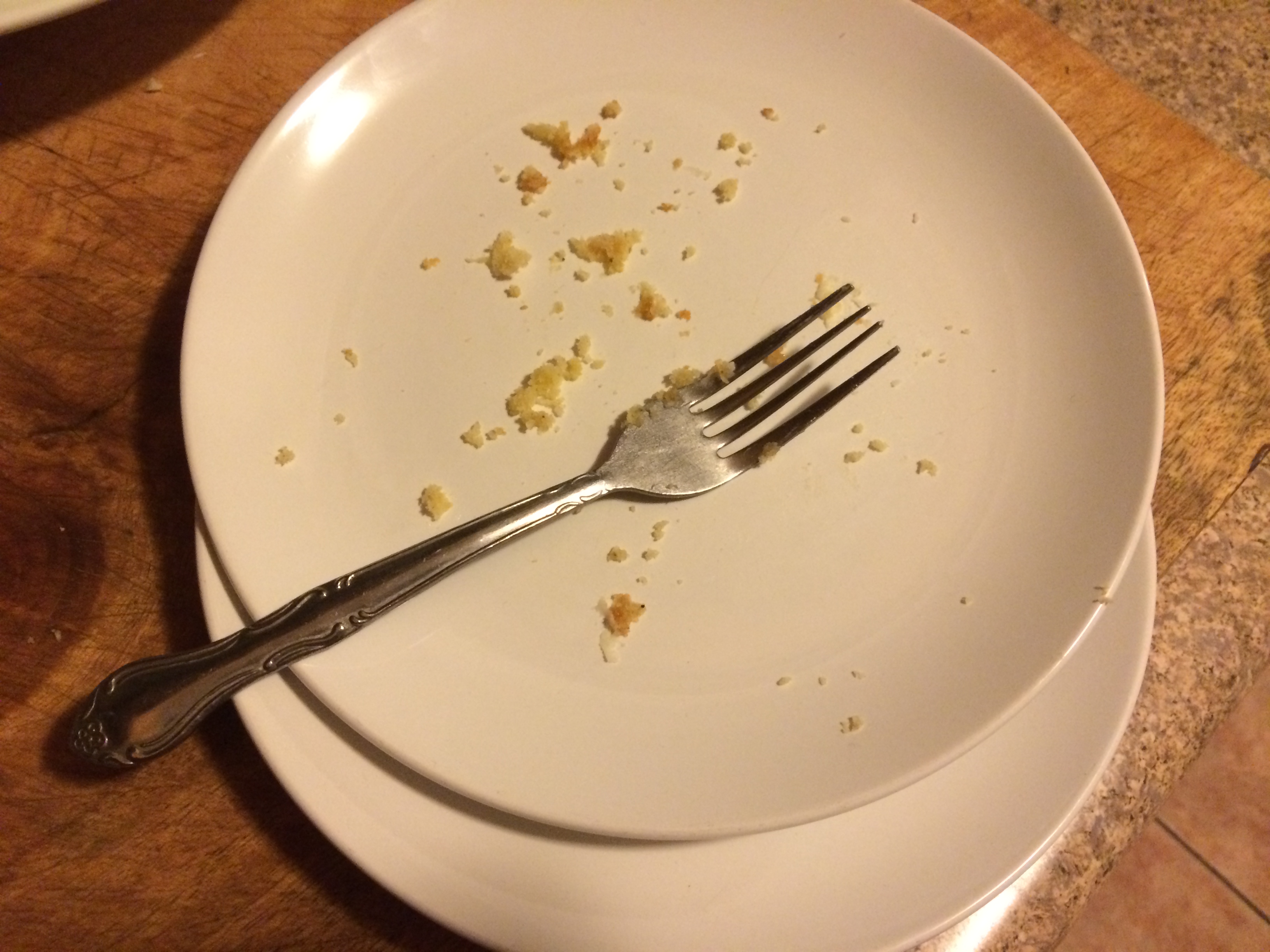
So go take some butter and eggs out of the fridge and let them come up to room temperature. Don’t kid yourself. Don’t stop yourself. You know you want to make this cake, so just give in and make it. It’s delicious and perfectly moist, and it has whiskey on top. In a couple hours you’re going to eat this cake, you’re going to eat it real good. Like this:

spiced citrus bundt cake with buttered whiskey glaze | Brooklyn Homemaker

Spiced Citrus Bundt Cake with Buttered Whiskey Glaze

finely grated zest of 3 large oranges
finely grated zest of 3 lemons
2 cups granulated sugar
1 1/2 sticks (3/4 cup) unsalted butter, at room temperature
1/2 cup peanut or vegetable oil
4 large eggs, at room temperature
3 cups all-purpose flour
1 teaspoon ground cinnamon
1 teaspoon ground ginger
1/2 teaspoon ground cloves
1/4 teaspoon ground cardamom
1/2 teaspoon baking powder
1/2 teaspoon baking soda
1 teaspoon kosher salt
1/2 cup fresh orange juice
1/4 cup fresh lemon juice
1 cup buttermilk, at room temperature
1 teaspoon pure vanilla extract

Buttered Whiskey Glaze (optional):
3 tablespoons good whiskey
3 tablespoon melted butter
1 1/4 cup confectioners’ sugar, sifted

Directions
Preheat the oven to 350 degrees. Generously grease and flour a 10-12 cup bundt pan.

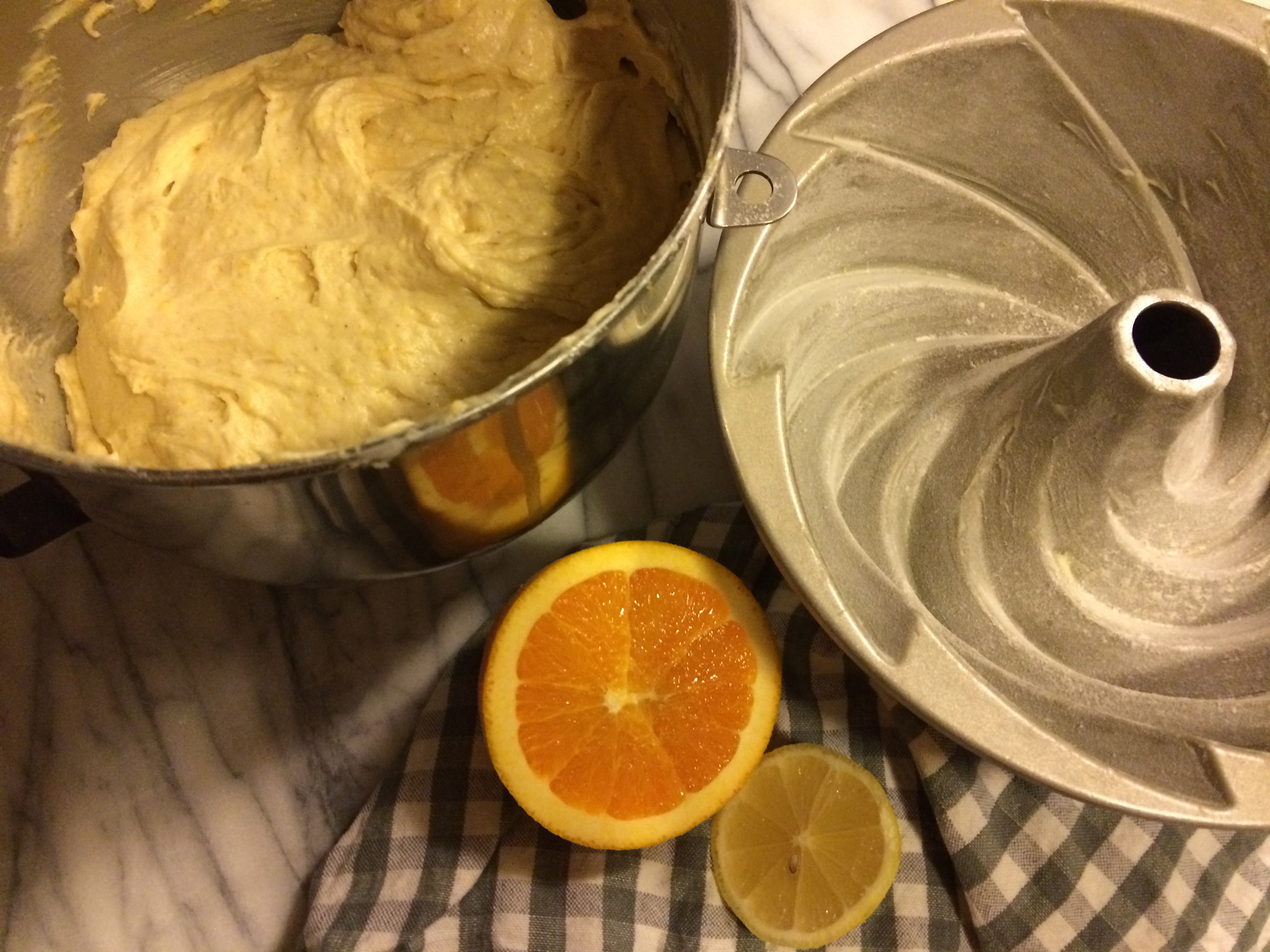
With the paddle attachment in an electric mixer, mix your citrus zests and sugar together on low for 3 minutes, or until the sugar is golden yellow and you can smell the citrus from across your kitchen. Add the soft butter and cream with the sugar for about 5 minutes, or until light and fluffy.  On low speed, add the oil and then the eggs, one at a time, until just combined.

In a large bowl, sift together the flour, baking powder, baking soda, salt, and spices. In another bowl, combine the orange and lemon juices, buttermilk, and vanilla. Add the flour and buttermilk mixtures alternately to the batter, beginning and ending with the flour. Pour batter into pan and tap on the counter to even the batter and remove air bubbles. Bake for 50 minutes to an hour, until a cake tester comes out clean.

Allow cake to cool for an hour or more before turning out onto a cooling rack. To make the glaze mix the melted butter and whiskey together in a small bowl. Whisk in confectioner’s sugar and continue to whisk until combined and free of lumps. If too thick, you can add a few more drops of whiskey to thin it for easy pouring. Pour over the top of the completely cooled cake and allow the glaze to dry before serving.